Range Rover SVR Supercharged Engine vs Ingenium Diesel: Which One Should You Choose?
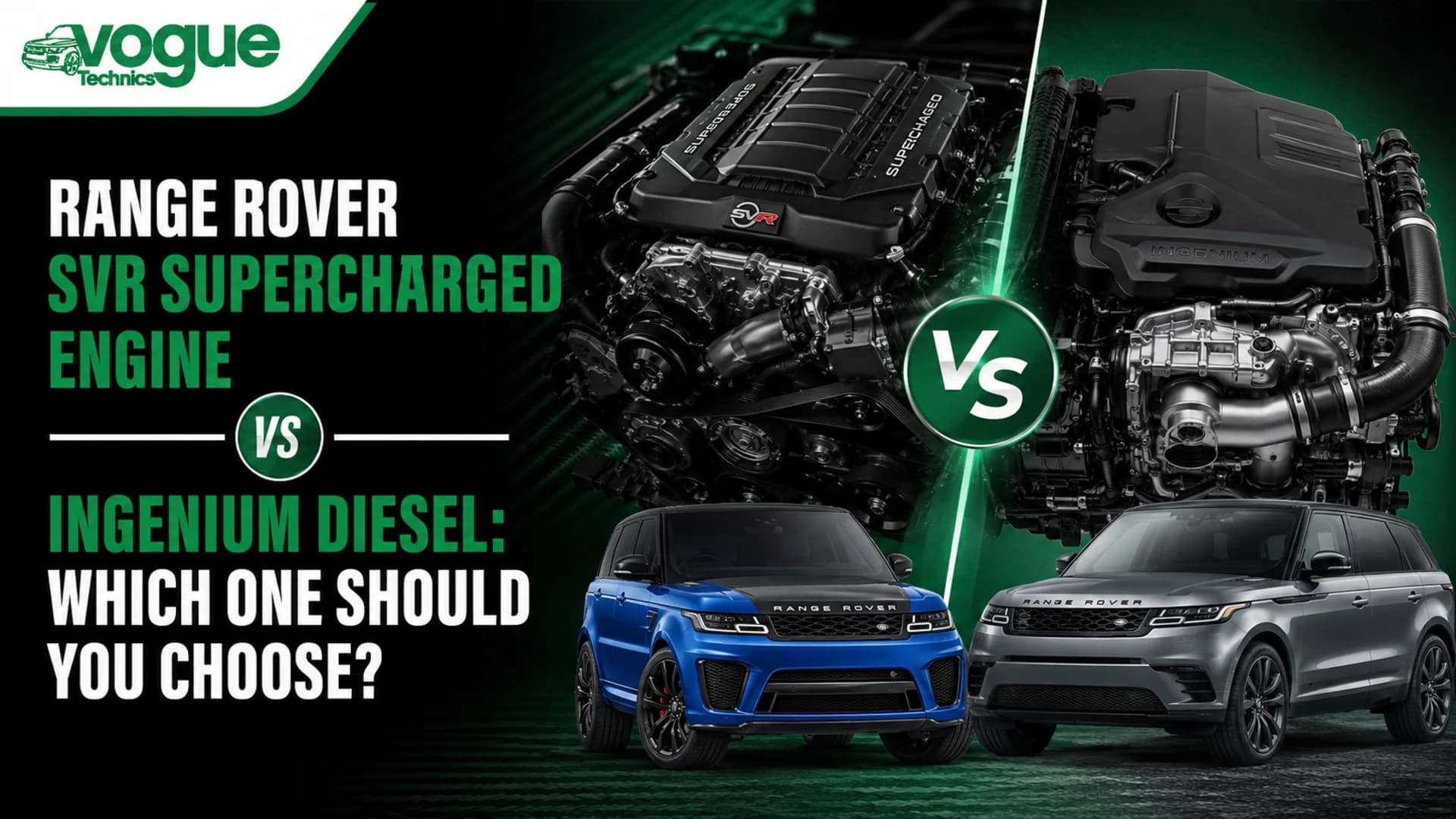
Standing in front of two Range Rover Sports on a dealer forecourt, one badged SVR, one quietly diesel-powered, most buyers freeze at the same question: do you buy with your heart or your head?
It's not a trivial decision. The Range Rover SVR supercharged engine vs Ingenium diesel debate isn't just about horsepower on a spec sheet. It's about how you actually use the car, your daily commute, your annual mileage, your fuel budget, and how long you plan to keep it before something expensive goes wrong.
We see both sides of this decision every week at our workshop in Grays, Essex. Owners bring in SVRs with supercharger whine and oil consumption issues. Others bring in Ingenium diesels with DPF warning lights and EGR faults. Both engines are excellent in their own right, but they're built for genuinely different owners. This guide breaks down exactly where they differ, what they cost to live with, and which one actually fits your driving profile.
Range Rover Sport Engine Options Explained
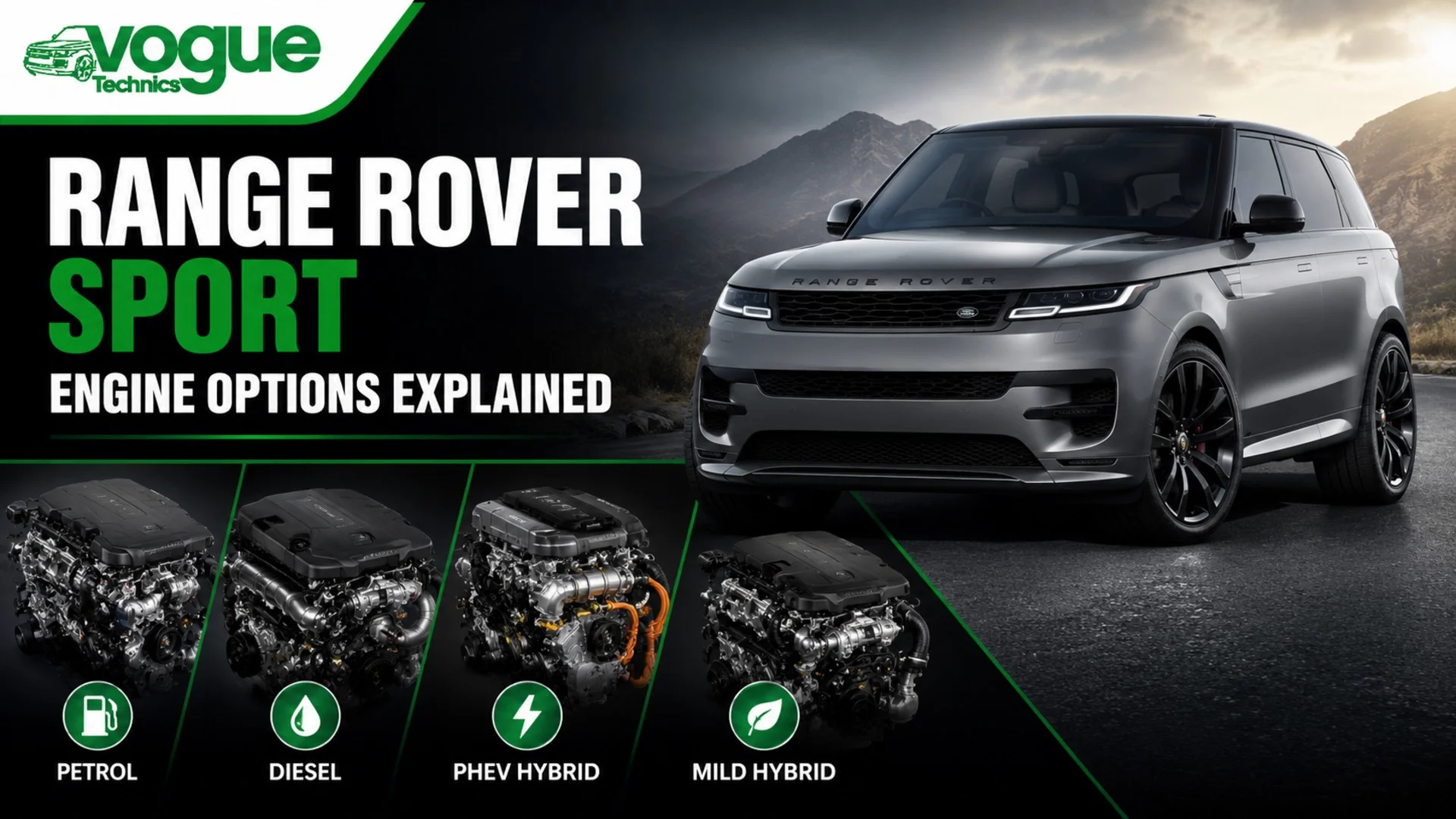
Before comparing performance figures, it helps to understand what you're actually choosing between. The Range Rover Sport range has offered a wide spread of engines over the years, but the two ends of that spectrum, the SVR's supercharged V8 and the Ingenium diesel family, represent completely opposite engineering priorities.
What Is the 5.0 Supercharged V8 in the SVR?
The Range Rover Sport SVR is built around a 5.0-litre supercharged V8, developed by Jaguar Land Rover's Special Vehicle Operations division specifically to give the Sport a genuine performance edge over the standard Range Rover lineup. This isn't a mildly tuned version of a family engine, it's a bespoke, high-output unit designed around one goal: outright power delivery.
Over its production life, the SVR's V8 output climbed from around 550PS in earlier models to 575PS in later revisions, paired with a ZF eight-speed automatic transmission that's shared across much of the Range Rover Sport range. The result is a vehicle that can sprint from 0-60mph in well under five seconds, remarkable for something the size and weight of a full-size SUV.
What Is the Ingenium Diesel Engine Range (D250, D300, D350)?
The Ingenium diesel family is Jaguar Land Rover's modern in-house engine architecture, designed with efficiency, torque delivery, and emissions compliance as the priority rather than outright speed. Within the Range Rover Sport lineup, you'll typically encounter three main diesel variants:
- D250, the entry-level six-cylinder Ingenium diesel, offering a strong balance of economy and everyday drivability.
- D300, a mid-tier variant with noticeably more torque and a slightly sportier delivery, still with efficiency in mind.
- D350, the flagship Ingenium diesel, producing around 700Nm of torque and capable of 0-100km/h in roughly 6.9 seconds, often paired with 48V mild-hybrid (MHEV) technology to soften turbo lag and improve real-world economy.
Earlier Range Rover Sport generations also used TDV6, SDV6, and SDV8 diesel units, but if you're comparing a current or recent SVR against a diesel Sport, you're almost certainly looking at the Ingenium range.
Supercharger vs Turbocharger, Core Design Differences
This is where the two engines genuinely diverge in character, not just fuel type.
A supercharger is mechanically driven directly off the engine, which means power delivery is immediate, there's no lag waiting for exhaust gases to spool a turbine. That's exactly why the SVR feels so responsive the moment you touch the throttle.
A turbocharger, used across the Ingenium diesel range, relies on exhaust gas flow to build boost. Modern Ingenium diesels use sequential and variable nozzle turbo technology to minimise lag, and the results are genuinely impressive, but the delivery still feels different from a supercharged petrol V8. Diesel turbocharging is optimised for strong low-RPM torque rather than a linear, high-revving power curve.
Petrol vs Diesel: Which Powertrain Philosophy Fits Your Driving?
If you strip away the marketing, the choice comes down to this:
- The SVR's petrol V8 is built for driving enjoyment, sound, response, and outright pace.
- The Ingenium diesel is built for efficiency and long-distance usability, strong torque, better fuel economy, and lower running costs over high mileage.
Neither is objectively "better." They're solving different problems for different owners.
SVR vs Ingenium Diesel, Performance, Power & Torque Compared
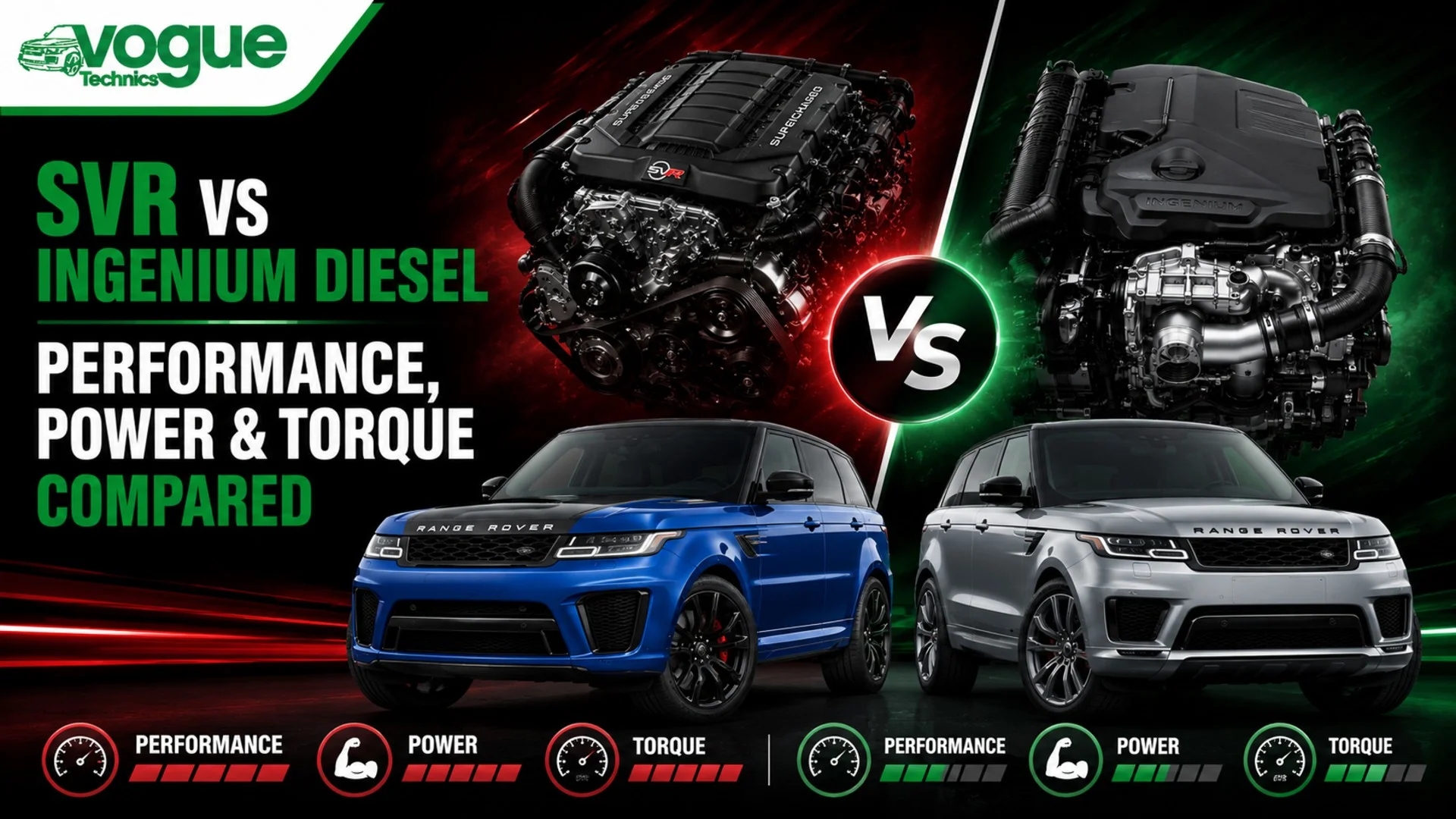
Numbers matter here, but so does how those numbers translate into real driving experience.
Horsepower and Torque: SVR vs D350
Metric | SVR 5.0 Supercharged V8 | Ingenium D350 Diesel |
| Engine layout | V8, supercharged | Straight-six, turbocharged |
| Power output | Up to 575PS | Around 350PS |
| Peak torque | High, broad delivery | Around 700Nm |
| Torque character | Strong across the rev range | Very strong low-RPM torque |
| Fuel type | Petrol | Diesel |
Interestingly, the D350 actually produces more outright torque than the SVR, it just delivers it lower down the rev range, which suits towing and motorway pulling power rather than top-end acceleration.
0–60 mph Acceleration Compared
The SVR's advantage becomes obvious the moment you look at acceleration. Most SVR models will hit 0-60mph in the 4.3 to 4.5 second range, depending on the exact model year and conditions. The D350, by comparison, is officially rated around 6.9 seconds to 100km/h, still quick for a diesel SUV of this size, but noticeably behind the SVR in outright pace.
Throttle Response and Low-RPM Torque
This is a genuine point of difference that spec sheets don't always capture well.
The supercharged V8 responds almost instantly to throttle input, with no perceptible lag, a direct result of the mechanical supercharger design. The Ingenium diesel, particularly in D300 and D350 form, delivers excellent low-RPM torque thanks to sequential turbocharging and MHEV assistance, but there's a subtly different feel: strong, immediate pulling power rather than the high-revving urgency of the V8.
Best Engine for Spirited or Performance Driving
If you're chasing genuine driver engagement, B-road overtakes, weekend drives, that unmistakable supercharger whine, the SVR is built for exactly that. It's the enthusiast's choice, and reviewers consistently highlight its handling, exhaust note, and outright pace as the reasons people fall for it despite the running costs.
Best Engine for Towing and Off-Road Use
Both engines handle towing and off-road duties well, backed by Terrain Response 2 and a capable all-wheel-drive system. But the Ingenium diesel's low-down torque delivery, especially in D300 and D350 form, often feels more natural for sustained towing and steady off-road progress, where relentless low-RPM pulling power matters more than outright horsepower.
Fuel Economy, Running Costs & Reliability Compared
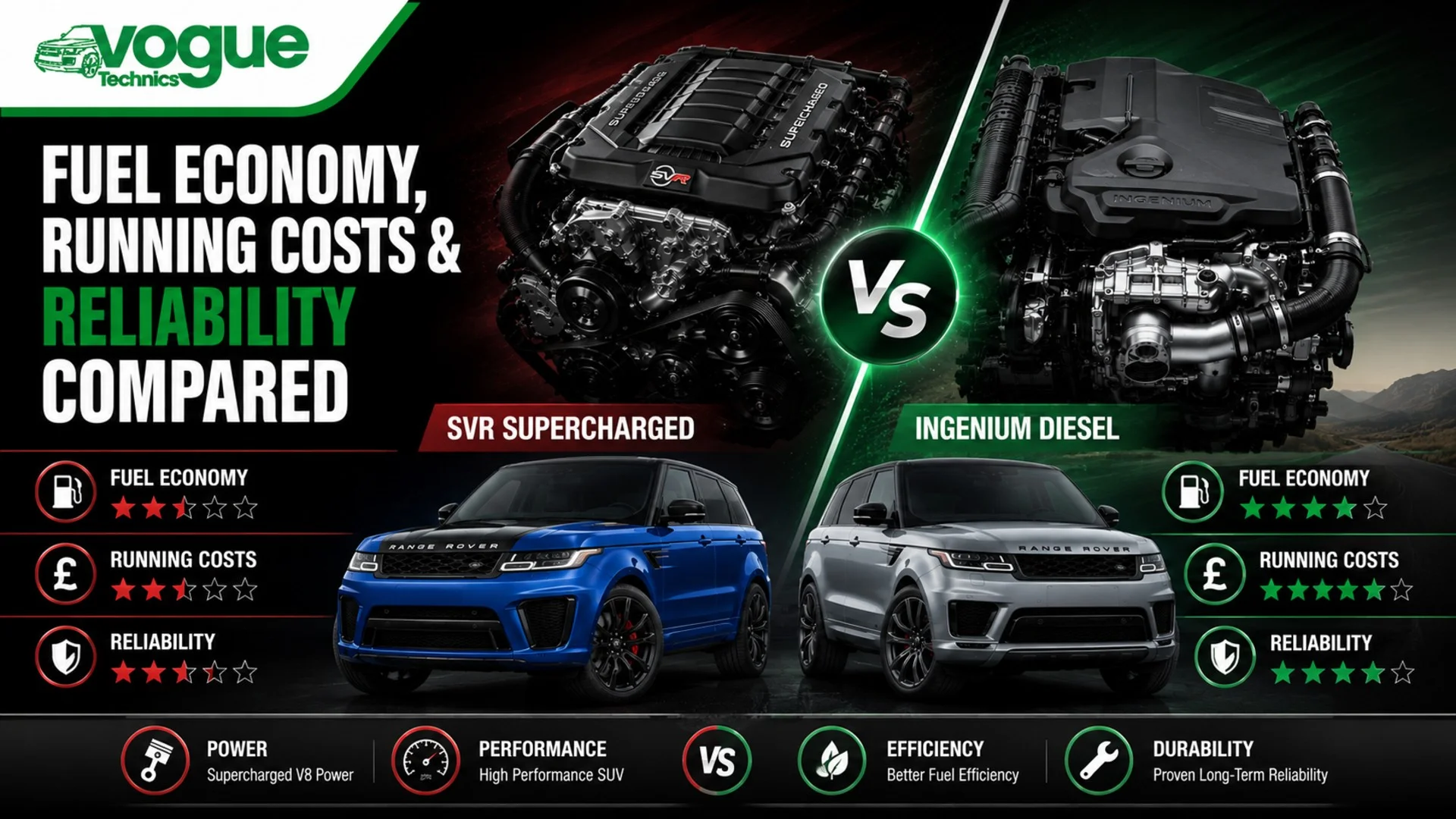
This is usually where the decision actually gets made, not on a test drive, but on a fuel receipt or a service invoice.
Real-World MPG, SVR vs Ingenium Diesel
Official WLTP figures rarely match real-world driving, but the gap between these two engines remains consistent regardless of testing conditions. The SVR, unsurprisingly, is thirsty, many owners report real-world figures in the high teens to low twenties (mpg) under mixed driving, dropping further under enthusiastic use. The Ingenium diesel range performs dramatically better, with owners commonly reporting 30-40mpg on longer motorway journeys, particularly in D250 and D300 form.
Which Engine Is Cheaper to Run Day-to-Day?
Beyond fuel, several factors shape total running costs:
- Fuel consumption, diesel wins comfortably for anyone covering meaningful annual mileage.
- Servicing, both engines require specialist attention, but SVR servicing (supercharger, high-performance cooling, uprated brakes) tends to carry a higher price tag.
- Emissions-related components, Ingenium diesels carry DPF and EGR systems that add their own maintenance considerations, which we'll cover next.
- Insurance, SVR models typically sit in a higher insurance bracket due to performance and value.
- Depreciation, SVRs often hold value well within enthusiast circles, while diesel Sports tend to have broader everyday resale appeal.
If you're covering high annual mileage, think 15,000+ miles a year, largely motorway, the diesel's fuel savings alone can be substantial over a few years of ownership.
Reliability Compared, Common Problems by Engine Type
Neither engine is problem-free, and it's worth being upfront about that. Reliability isn't about one engine being "good" and the other "bad", it's about knowing what to watch for.
SVR Supercharger, Oil Consumption & Timing Chain Issues
Common issues we see with the SVR's 5.0 supercharged V8 include:
- Supercharger wear, noise or reduced boost pressure over time, particularly on higher-mileage examples.
- Oil consumption, some owners report needing to top up oil between services more than they'd expect.
- Timing chain wear, a known area of concern on higher-mileage V8 units, worth checking during any pre-purchase inspection.
- Cooling system demands, the performance nature of the engine puts more strain on cooling components, especially under sustained hard driving.
Ingenium DPF, EGR & Turbo Issues
The Ingenium diesel range, while generally efficient and torquey, has its own known problem areas:
- DPF (diesel particulate filter) issues, common on vehicles used mostly for short journeys, where the filter doesn't get hot enough to regenerate properly.
- EGR valve problems, can cause rough idling, reduced performance, or warning lights if carbon build-up isn't managed.
- Turbocharger faults, underboost or overboost faults can appear, particularly on higher-mileage engines without consistent servicing history.
- Oil dilution, a documented concern on some earlier Ingenium diesel units, linked to regeneration cycles affecting oil quality.
Warning Signs Your Engine Needs Reconditioning or Replacement
Whichever engine you're running, certain symptoms shouldn't be ignored:
- Persistent warning lights that return after clearing
- Noticeable loss of power or rough idling
- Unusual noises, supercharger whine changing pitch, or knocking sounds
- Excessive oil consumption or visible smoke from the exhaust
- Coolant loss with no obvious external leak
If any of these sound familiar, it's worth getting the engine properly assessed before the problem escalates into something that demands a full rebuild or replacement.
Which Range Rover Sport Engine Should You Buy?
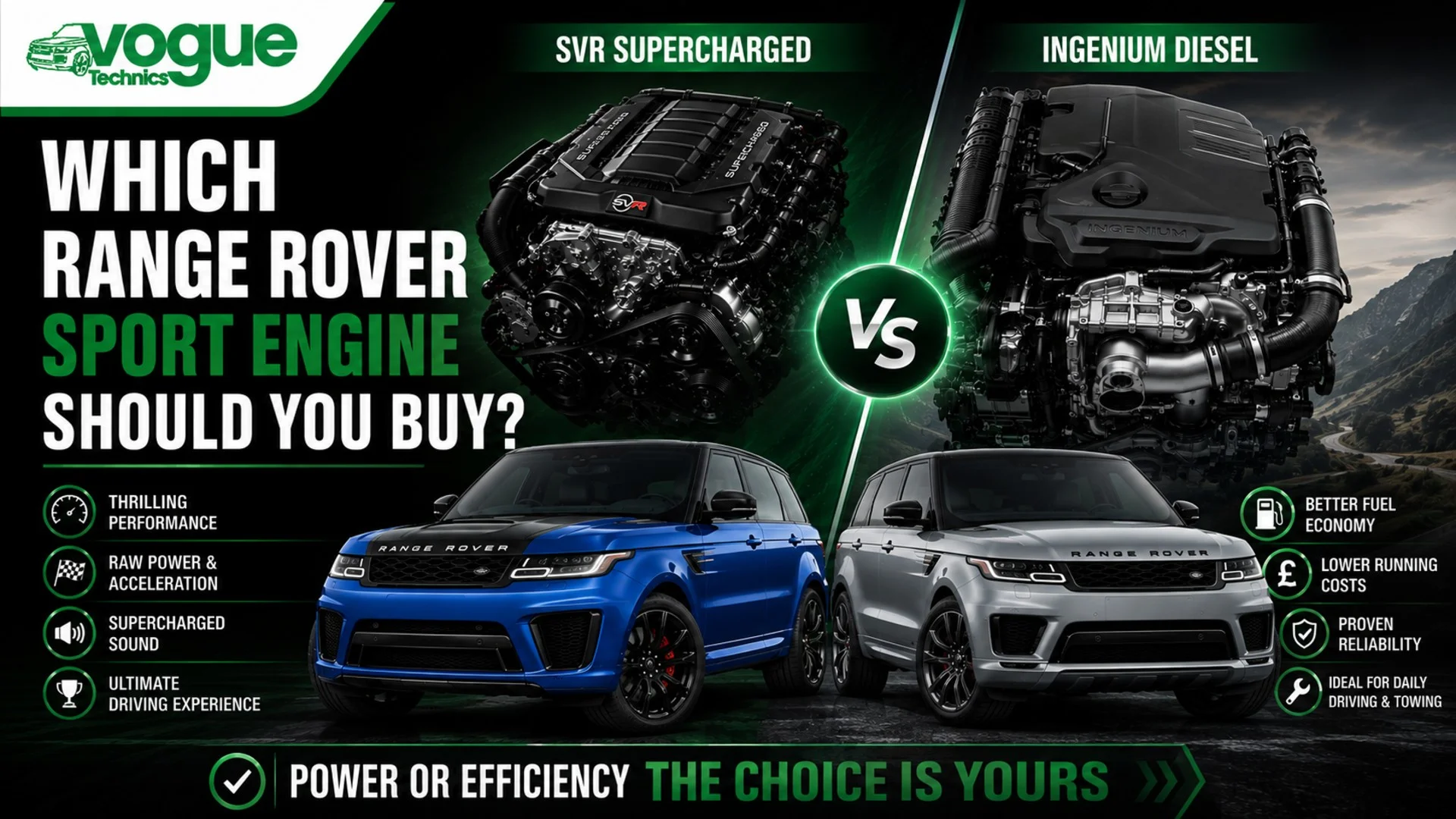
There's no universally "right" answer here, the right engine depends entirely on how you actually plan to use the car.
Best Engine by Driving Profile
- City driver, low annual mileage, either engine works, but the SVR's character may go underused in stop-start traffic.
- Motorway commuter, high annual mileage, the Ingenium diesel, particularly D300 or D350, is the more sensible long-term choice.
- Weekend enthusiast, garage queen, the SVR delivers an experience the diesel simply can't match.
- Family daily driver, the diesel's fuel economy and lower running costs typically make more sense for everyday practicality.
- Frequent towing, both are capable, though the diesel's low-end torque often feels more effortless under sustained load.
- Off-road regular, both perform well with Terrain Response 2, so this decision often comes down to fuel type preference.
Why Choose Voguetechnics for Your Range Rover Engine
Whichever engine you're running, or considering buying into, having a specialist you trust matters more than the badge on the bonnet. At Voguetechnics, based in Grays, Essex, we work on both SVR supercharged V8s and the full Ingenium diesel range, so we understand the specific failure points, servicing needs, and rebuild considerations unique to each.
Reconditioned SVR & Ingenium Engines, Supplied and Fitted
We supply and fit reconditioned engines for both the Range Rover Sport SVR and the Ingenium diesel range, along with logistics and delivery across the UK. Whether you're dealing with a failed supercharger, timing chain damage, a turbo fault, or DPF-related engine damage, we can source, recondition, and fit a replacement engine without you needing to chase parts and labour separately.
No Upfront Charges, Pay After Work Is Completed
We know engine problems are stressful enough without added financial pressure upfront. That's why we operate with no upfront charges and no deposit required, you pay after the work is completed to your satisfaction. It's a straightforward way of building trust with customers who are often already dealing with an unexpected repair bill.
Frequently Asked Questions
Is the SVR engine reliable compared to the Ingenium diesel?
Both engines are generally dependable when properly maintained, but they fail in different ways. The SVR's known concerns centre on supercharger wear, oil consumption, and timing chain wear at higher mileages. The Ingenium diesel's concerns are more often related to DPF, EGR, and turbo components, especially on vehicles used for short journeys. Neither is inherently "more reliable", it depends on usage patterns and maintenance history.
Which engine is cheaper to maintain long-term?
Generally, the Ingenium diesel costs less to run day-to-day thanks to better fuel economy, but its emissions hardware (DPF, EGR) can add its own maintenance costs, especially if the car is mostly used for short trips. The SVR's servicing tends to be more expensive overall due to its performance-focused components.
Which engine has more torque, the SVR or the D350?
The D350 actually produces more peak torque (around 700Nm) than the SVR, though the SVR's power delivery feels more urgent at higher revs. The diesel's torque arrives earlier and lower in the rev range, which suits towing and cruising rather than outright acceleration.
Is the 3.0 Ingenium diesel reliable?
Generally yes, when serviced on schedule and not used exclusively for short journeys that prevent proper DPF regeneration. Most reported issues relate to emissions system components rather than the core engine architecture.
Can Voguetechnics supply and fit a reconditioned engine for both models?
Yes. We supply and fit reconditioned engines for both the Range Rover Sport SVR's supercharged V8 and the full Ingenium diesel range (D250, D300, D350), with UK-wide logistics and no upfront payment required.
How much fuel does an SVR use compared to a diesel Range Rover Sport?
Real-world SVR economy typically sits in the high teens to low twenties mpg, while Ingenium diesels, particularly D250 and D300, regularly achieve 30-40mpg on longer journeys, making the diesel significantly cheaper to run for high-mileage drivers.
Final Verdict: SVR or Ingenium Diesel?
If you're chasing outright performance, exhaust note, and the kind of driving experience that makes every school run feel like an event, the SVR's supercharged V8 is genuinely hard to beat. If you're covering serious mileage, watching fuel costs, and want a Range Rover Sport that works as a practical daily companion, the Ingenium diesel, particularly the D300 or D350, makes far more financial and practical sense.
Either way, both engines demand proper specialist care to stay reliable over time. If yours is already showing warning signs, power loss, unusual noise, warning lights that won't clear, don't wait for a manageable issue to become an engine rebuild.
Get in touch with our team at Voguetechnics in Grays, Essex, to talk through your options, whether that's diagnosis, a full service, or a reconditioned engine supplied and fitted with no upfront cost to you.