Range Rover SVR Engine Oil Leak: Causes, Diagnosis & Repair Guide (UK)

You've noticed a dark patch on the driveway. Or maybe it's a faint burning smell drifting into the cabin on a warm run, or an oil pressure warning that flashed up and then disappeared. Whatever brought you here, one thing's clear, your Range Rover SVR is leaking oil, and you want to know how bad it is before it gets worse.
That's the right instinct. The 5.0 Supercharged V8 in the SVR is a phenomenal engine, but it's also a complex one, with a lot of gaskets, seals, and oil lines packed into a tight engine bay. Some leaks are minor and cheap to sort. Others, left unattended, can starve the engine of oil pressure and cause real damage. This guide walks you through exactly where SVR oil leaks tend to come from, how to work out which one you're dealing with, and what it typically takes to fix it properly.
Why Is My Range Rover SVR Leaking Engine Oil?
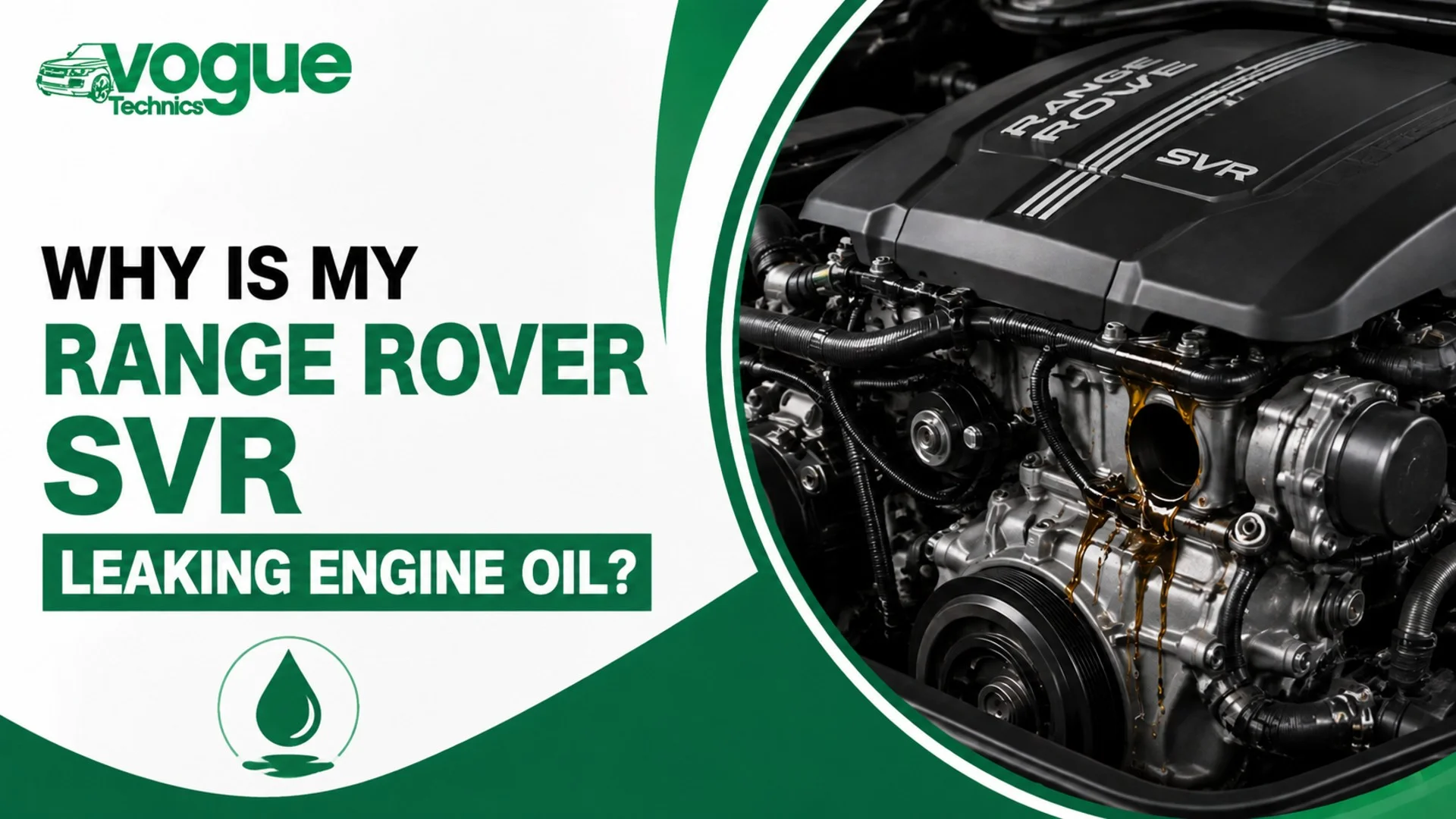
At its core, an oil leak happens when a seal, gasket, or housing that's meant to keep oil contained starts to fail, usually due to age, heat cycling, or a component simply wearing out. The AJ133 5.0 Supercharged V8 runs hot and works hard, especially in an SVR that's been driven the way it was built to be driven. That combination of heat, pressure, and mileage is exactly what wears out gaskets and seals over time.
Is an Oil Leak on a Range Rover SVR Serious?
It depends on where it's coming from and how much oil you're losing. A small weep from a valve cover gasket is a nuisance more than an emergency, it's not going to strand you on the M25. But a leak from the rear main seal or oil cooler that's dropping your oil level quickly is a different story entirely, because low oil pressure can cause serious engine wear in a very short space of time.
The safest approach is to treat any active leak as worth investigating, even if it looks minor. What looks like "just a drip" today can be a bigger seal failure six months from now.
Can I Still Drive My Range Rover SVR With an Oil Leak?
For a minor, slow seep, short journeys are usually fine while you arrange an inspection, just keep an eye on the oil level. But there are situations where you shouldn't drive at all.
Signs an Oil Leak Has Become an Emergency
Stop driving and arrange recovery if you notice any of the following:
- The oil pressure warning light comes on, this means the engine may not be getting adequate lubrication right now
- A strong burning oil smell in the cabin, oil is likely dripping onto a hot exhaust component
- Visible smoke from the engine bay, a clear sign oil has reached something very hot
- A rapidly dropping oil level between checks, rather than a slow gradual loss
- Knocking or ticking noises from the engine, which can indicate oil starvation has already begun affecting internal components
If any of these apply, continuing to drive risks turning a gasket replacement into a full engine rebuild.
What Causes Oil Leaks in the Range Rover SVR's 5.0 Supercharged V8?
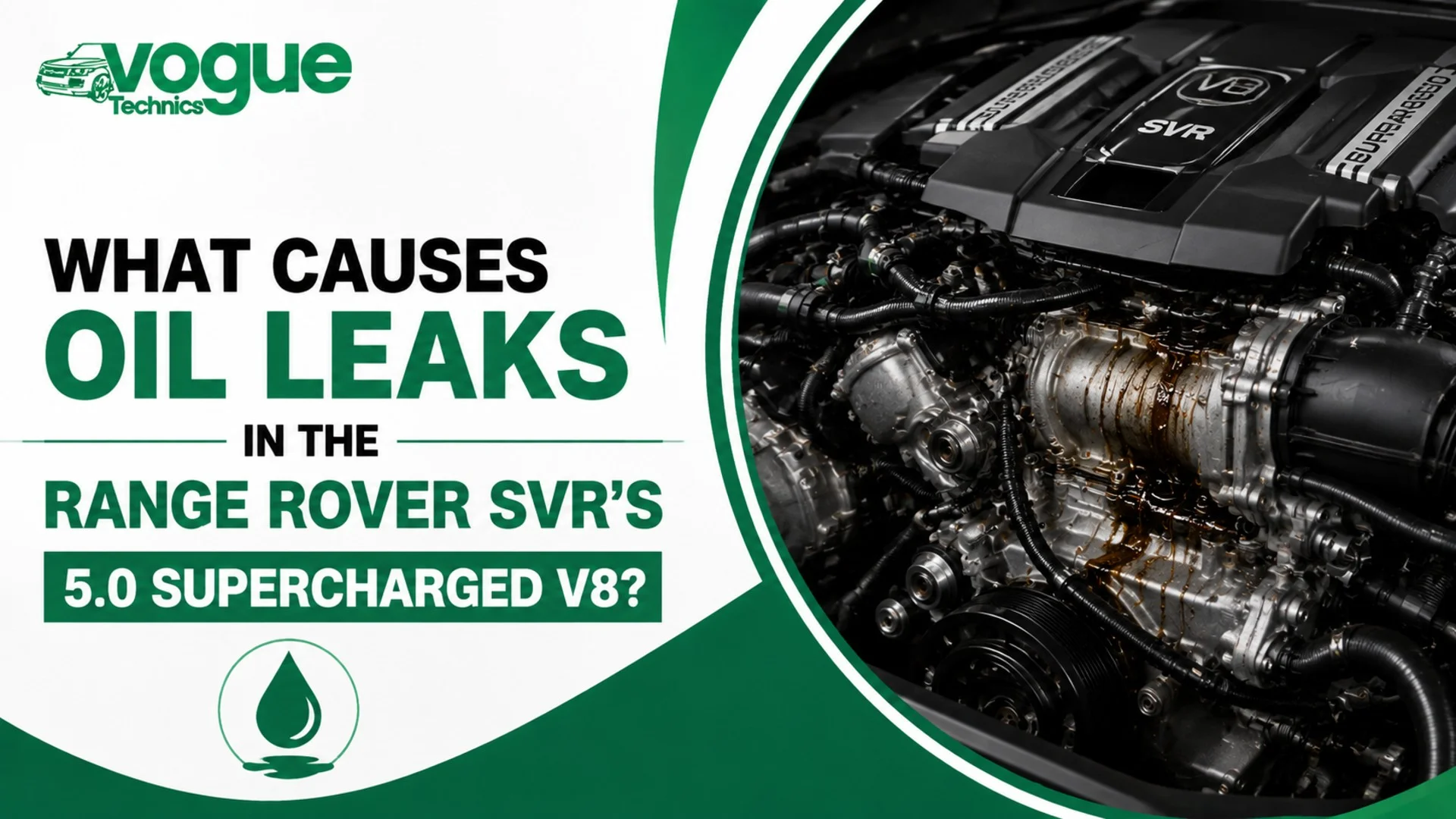
The AJ133 engine has a handful of well-known points where oil leaks tend to develop. Knowing them helps you understand what a mechanic is likely to find, and gives you a realistic idea of cost before you even book an inspection.
Valve Cover (Rocker Cover) Gasket Leak
The valve cover gasket seals the rocker cover to the cylinder head, and it's one of the most common sources of oil leaks on the SVR's V8. Heat cycling causes the gasket material to harden and shrink slightly over years of use, which eventually lets oil seep out along the edges.
How to Spot a Valve Cover Gasket Leak Early
Look for oil residue pooling around the top edges of the engine, near where the rocker covers sit, or a faint burning smell after the car's been running for a while, that's often oil dripping onto the exhaust manifold below. Caught early, this is one of the more affordable fixes on this list.
Rear Main Seal & Front Crankshaft Seal Failure
The rear main seal sits where the crankshaft exits the engine block at the back, and the front crankshaft seal does the same job at the front, near the timing cover. Both are subjected to constant rotation and heat, and both can harden or wear over time, allowing oil to seep past.
A rear main seal leak is usually spotted as oil pooling toward the back of the engine, sometimes near the bellhousing. It's a more labour-intensive repair than a valve cover gasket because of what has to come apart to reach it, worth factoring into your expectations on cost.
Oil Cooler & Oil Cooler Housing Leaks
The oil cooler and its housing manage engine oil temperature, and the seals around this assembly are another known weak point on the supercharged V8. A failing oil cooler seal often shows up as oil pooling lower in the engine bay, sometimes mixed with a small amount of coolant residue if the cooler itself has developed a fault.
Sump Gasket and Timing Cover Gasket Leaks
The sump gasket seals the oil pan to the bottom of the engine block, and it's exposed to constant heat and, over time, road debris and general wear. The timing cover gasket, similarly, seals the timing chain housing at the front of the engine. Leaks here tend to show up as oil directly beneath the lowest point of the engine, often more visible after the car's been parked overnight.
Oil Filter Housing Leaks
The oil filter housing has its own seals, and these can degrade, particularly if the housing has been opened during a previous oil change and not resealed correctly. This is one to specifically mention if your leak appeared shortly after a service, since it points directly at this area.
Leaks Around the Eaton Supercharger
The Eaton supercharger sits on top of the V8 and has its own oil lubrication for the internal rotors, separate from the main engine oil system in some respects. Leaks here can sometimes be mistaken for a valve cover leak because of how close the two sit to each other.
Is a Supercharger Oil Leak the Same as an Engine Oil Leak?
Not quite, the supercharger has its own lubrication reservoir, distinct from the engine's main oil supply, so a leak here doesn't necessarily mean your engine oil level is dropping. That said, it still needs proper diagnosis, because the symptoms can look identical from the outside, and getting the source wrong means paying for the wrong repair.
How to Diagnose Where Your Range Rover SVR Is Leaking Oil From
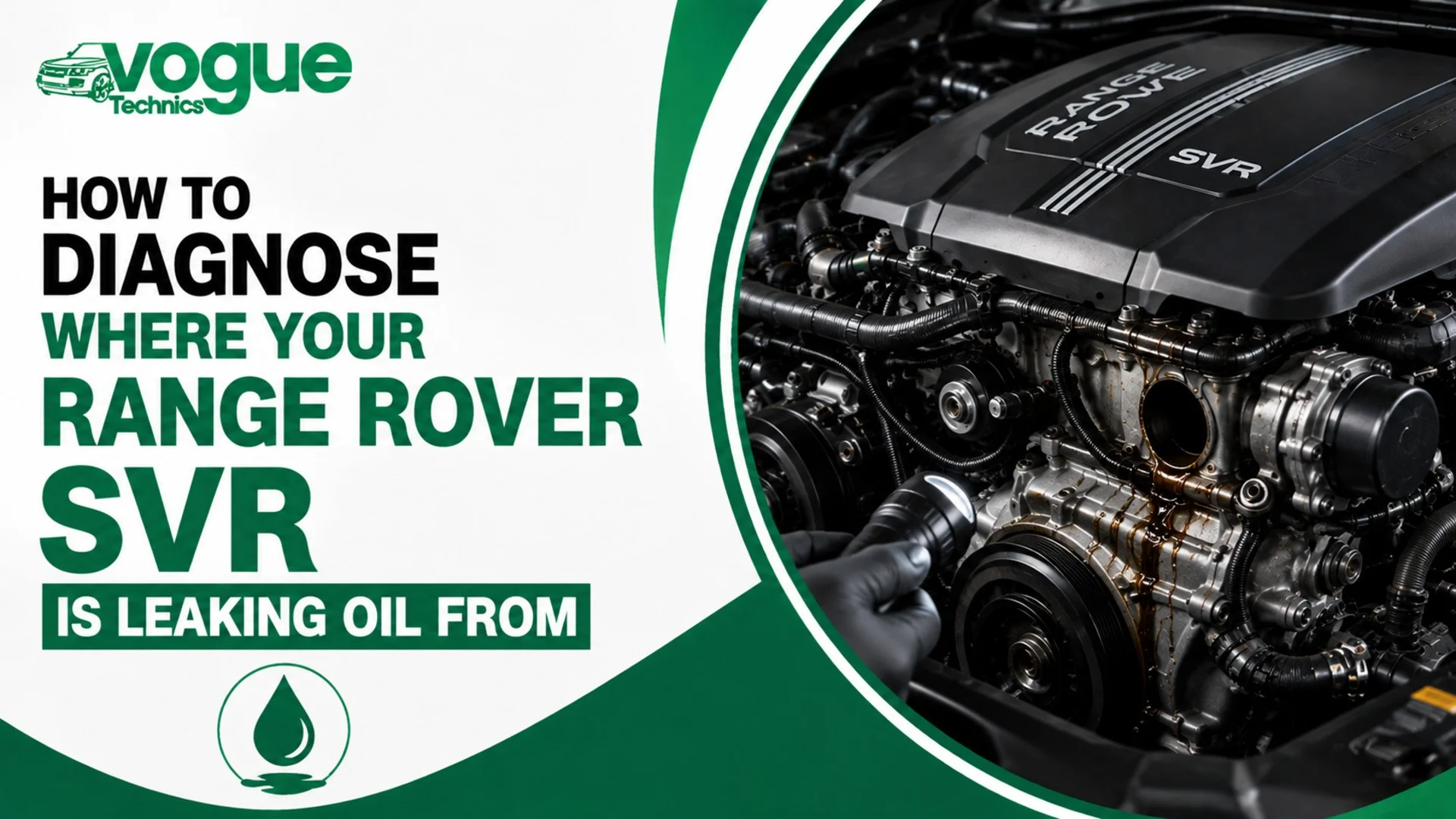
With so many possible sources in a fairly compact engine bay, guessing rarely gets you the right answer, and can lead to paying for a gasket replacement that wasn't actually the problem.
Common Warning Signs, Oil Pressure Light, Burning Smell & Puddles
Before booking an inspection, it helps to note down what you're actually seeing, because this speeds up diagnosis considerably:
- Where the puddle sits under the car, front, middle, or back, gives a strong clue as to which seal or gasket is involved
- Colour and consistency of the oil, thin and dark suggests engine oil; anything mixed with coolant residue points toward the oil cooler
- When it appears, straight after parking, only after long drives, or constantly, helps narrow down whether it's a slow seep or an active leak
- Any accompanying smell or smoke, which usually means oil has reached a hot surface like the exhaust
How Professionals Trace an Oil Leak Using UV Dye Testing
Rather than relying on visual inspection alone, a proper diagnostic typically involves adding a UV-reactive dye to the oil system and running the engine. Once the dye has circulated, a UV light reveals exactly where oil is escaping, which gasket, which seal, which housing, rather than relying on where the oil happens to have dripped to. This is the difference between a targeted, accurate repair and a guess that might miss the actual source entirely.
Oil Leak vs Oil Consumption, How to Tell the Difference
It's worth distinguishing between an oil leak and oil consumption, because they're diagnosed and treated differently. A leak means oil is physically escaping the engine and ending up somewhere visible, under the car, in the engine bay, on the ground. Oil consumption, by contrast, means the engine is burning oil internally, often through worn piston rings or valve seals, with no visible external leak at all. If you're topping up oil regularly but never see a puddle, you may be dealing with consumption rather than a leak, and that's a different conversation with your mechanic entirely.
How to Fix a Range Rover SVR Oil Leak, Repair Costs & Options
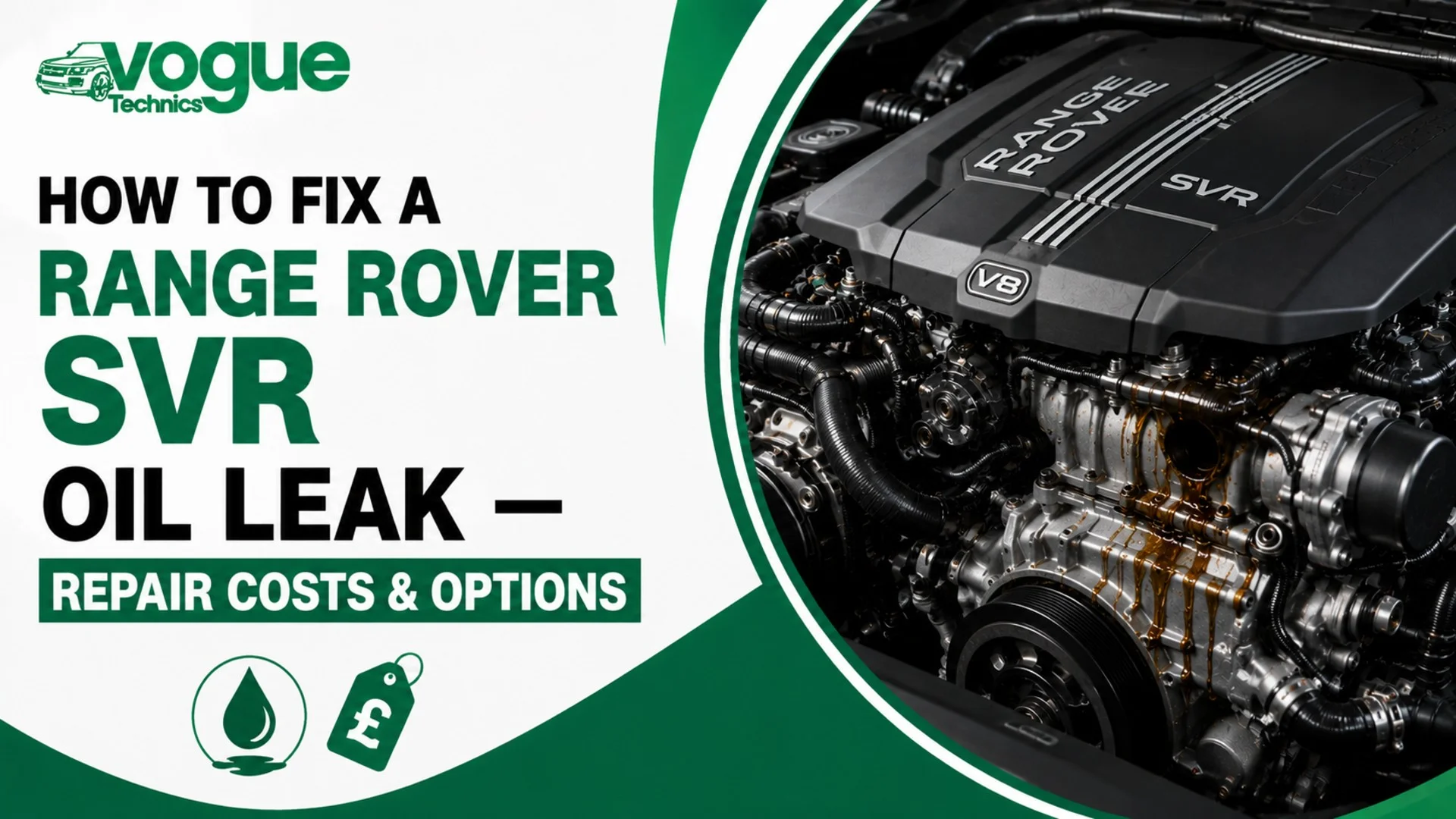
Once you know where the leak is coming from, the next question is naturally what it's going to cost to put right, and whether it's worth doing now versus waiting.
Typical Repair Costs, Gasket, Seal & Oil Cooler Replacement
Costs vary depending on exactly which component has failed and how much labour is involved in accessing it:
Leak Source | Typical Repair Complexity | Notes |
| Valve cover gasket | Low to moderate | Relatively accessible, often the most affordable fix |
| Oil filter housing seal | Low to moderate | Quick to address if caught early |
| Sump gasket | Moderate | May require partial engine bay disassembly |
| Timing cover gasket | Moderate to high | More involved due to timing chain access |
| Rear main seal | High | Labour-intensive due to positioning near the bellhousing |
| Oil cooler / housing | Moderate | Depends on accessibility on the specific SVR model year |
| Supercharger seals | Moderate to high | Requires careful handling of supercharger unit |
We'd always recommend a proper quote based on an actual inspection rather than working from general estimates, SVR oil leak repair costs can shift quite a bit depending on which seal or gasket is involved and how much else needs to come apart to reach it.
Gasket/Seal Repair vs Full Engine Reseal, Which Do You Need?
If you're dealing with a single, isolated leak, say, just the valve cover gasket, a targeted repair is usually all that's needed. But if your SVR has multiple ageing seals showing signs of wear at once, which isn't unusual on a higher-mileage supercharged V8, it can actually make more sense to have a full engine reseal done in one visit. This addresses several potential failure points together, rather than paying for labour to access the same area of the engine multiple times over the following years as each seal fails in turn.
Book a Range Rover SVR Oil Leak Inspection in Essex
If you're seeing oil under your SVR and you'd rather have a definitive answer than keep topping up and hoping, a proper UV dye leak test will tell you precisely where it's coming from, and whether it's a quick fix or something that needs more attention.
Why Choose Voguetechnics for Range Rover SVR Oil Leak Repairs?
We work specifically on Range Rover and Land Rover engines, including the 5.0 Supercharged V8 found in the SVR, from our workshop in Grays, Essex. That specialism means we already know the common leak points on this engine before we even lift the bonnet, valve cover, rear main seal, oil cooler, sump gasket, timing cover, and we test rather than guess. Whatever the source turns out to be, we'll give you a clear, honest breakdown of what's needed and what it'll cost, rather than the most expensive option by default.
Frequently Asked Questions
Why is my Range Rover SVR leaking oil?
Most commonly it's a worn valve cover gasket, rear main seal, oil cooler seal, sump gasket, or timing cover gasket, all of which can harden and degrade over time due to the heat the 5.0 Supercharged V8 generates during normal driving.
Is an oil leak serious?
It depends on the source and rate of loss. A slow weep from a valve cover gasket is a low-urgency repair. A leak that's dropping your oil level quickly, or triggering the oil pressure warning light, should be treated as urgent.
Can I drive with an engine oil leak?
Short trips are usually fine with a minor, slow leak, provided you're monitoring oil levels. Stop driving and arrange recovery if the oil pressure light comes on, you notice smoke, or you smell burning oil in the cabin.
Can a valve cover gasket leak oil?
Yes, it's one of the most common oil leak points on the SVR's V8, caused by the gasket material hardening over years of heat exposure.
Can the oil cooler leak?
Yes, the oil cooler and its housing seals are a recognised weak point on the supercharged V8, and a leak here can sometimes appear alongside a small amount of coolant residue.
How much does it cost to repair an oil leak on a Range Rover SVR?
It depends entirely on which seal or gasket has failed and how accessible it is, a valve cover gasket is generally more affordable than a rear main seal, which involves more labour to reach. A proper inspection is the only way to get an accurate figure.
How do I diagnose where an oil leak is coming from?
The most reliable method is a UV dye leak test, where dye is added to the oil system and a UV light is used to trace exactly where it's escaping, rather than guessing based on where oil has pooled.
Final Thoughts
An oil leak on a Range Rover SVR isn't something to leave until "it gets worse", because with the 5.0 Supercharged V8, worse can happen faster than you'd expect. The good news is that most leaks on this engine come from a known, identifiable handful of points, and a proper diagnostic test will tell you exactly which one you're dealing with, rather than leaving you guessing.
If you've spotted oil under your SVR, or that warning lights flickered on more than once, get it checked properly before it becomes a bigger job. Get in touch with Voguetechnics in Grays, Essex, we'll trace the leak accurately and talk you through the most sensible way to fix it, whether that's a single gasket replacement or a full engine reseal.