Range Rover SVR Turbo Replacement Cost & Repair Guide (UK)
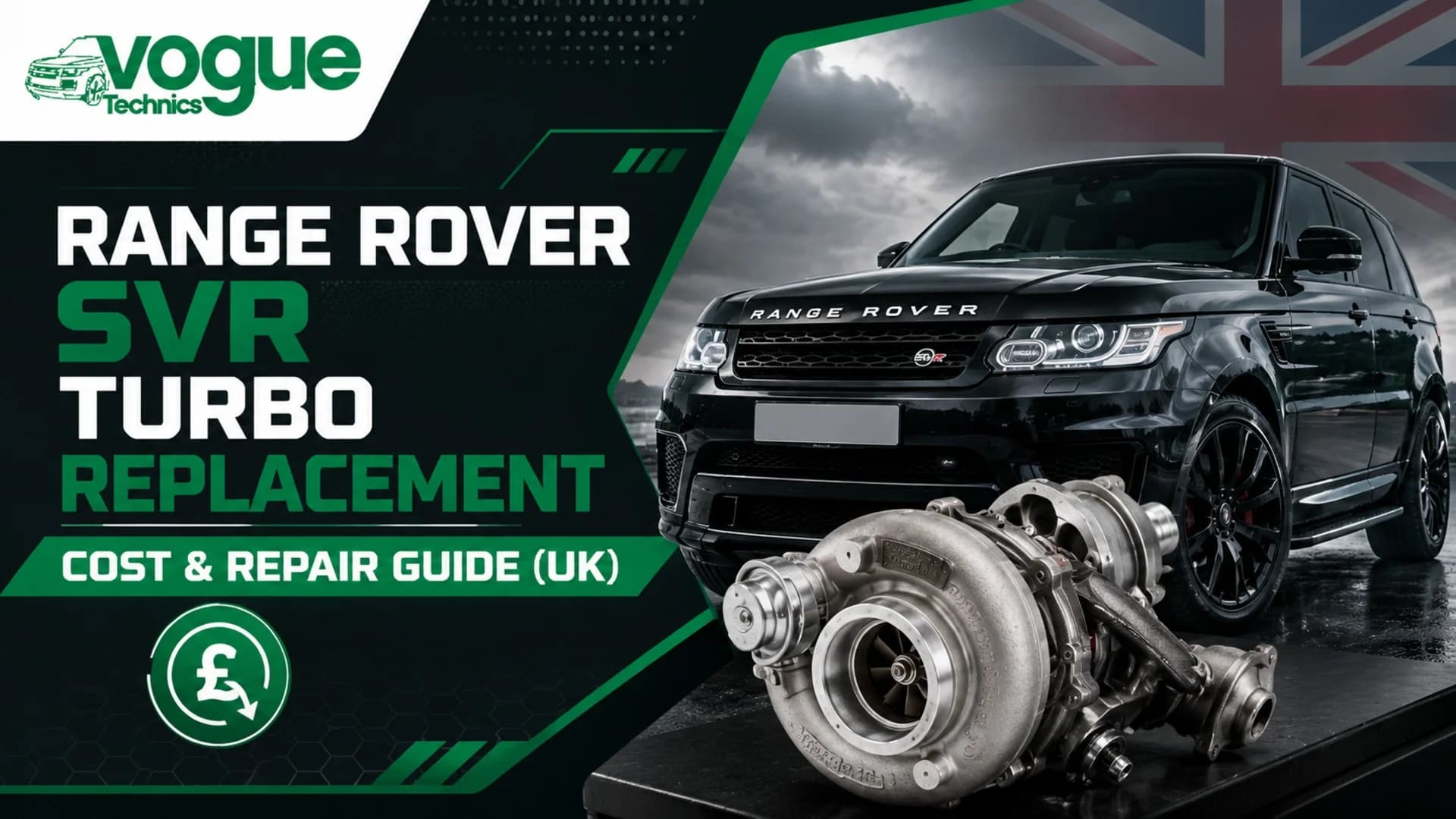
If your Range Rover SVR has started whining under acceleration, losing boost, or throwing a check engine light out of nowhere, you're probably searching for one thing: how much is this going to cost, and how fast can it be fixed. You're not alone. It's one of the most common issues we hear about from SVR owners, and it rarely gets better on its own.
Here's the part most guides skip: what you're dealing with almost certainly isn't a turbo at all. It's a supercharger. That distinction matters more than you'd think, and it affects everything from diagnosis to parts to cost. This guide walks through exactly what's going on under the bonnet, what a repair or replacement should cost in the UK, and how to avoid overpaying or getting the wrong fix.
Does the Range Rover SVR Have a Turbo or a Supercharger?
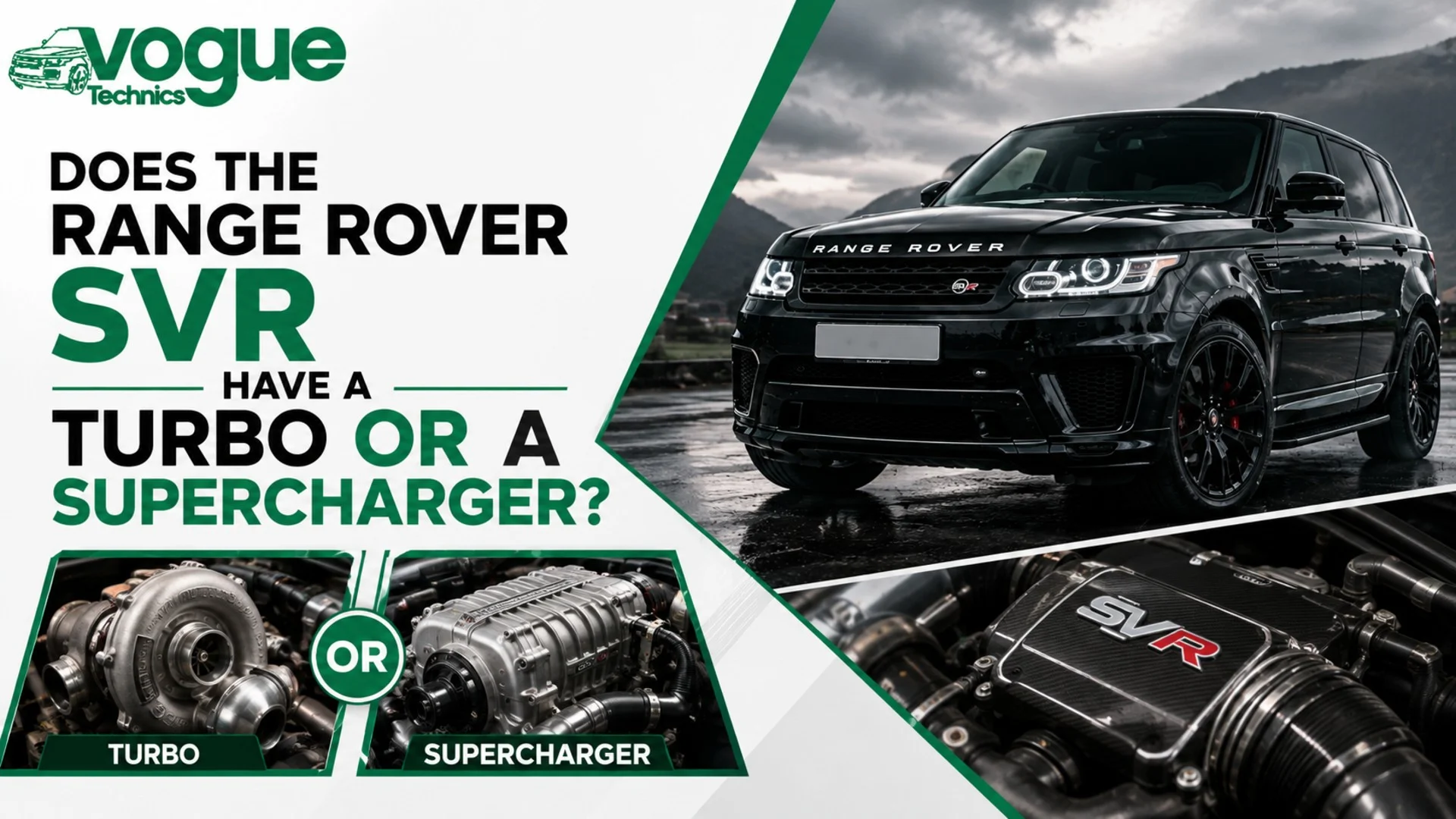
Short answer: no turbo. The Range Rover SVR and Range Rover Sport SVR are both powered by a supercharged engine, not a turbocharged one. If you've been searching for "turbo replacement," you're in the right place, you just need to know what you're actually replacing.
What Forced Induction System Does the SVR's 5.0 V8 Use?
The SVR runs a 5.0-litre supercharged V8, badged internally as the AJ133. Instead of using exhaust gases to spin a turbine like a turbocharger does, this engine uses an Eaton supercharger, driven directly off the crankshaft by a belt and pulley system.
That difference in design is exactly why supercharger problems feel different from turbo problems. There's no turbo lag to speak of, but there is a very distinct whine when the unit starts wearing out, something turbocharged engines simply don't produce in the same way.
Why "Turbo Replacement" and "Supercharger Replacement" Mean the Same Job Here
This is where a lot of confusion creeps in, and honestly, some repair listings don't help. It's common to see a workshop advertise "turbo repair" for an SVR when the job sheet underneath is really an Eaton supercharger rebuild. The search term stuck around because that's how most drivers instinctively describe any boost-related fault, regardless of the actual hardware.
So when you're comparing quotes or reading reviews, don't assume a "turbo replacement" listing is wrong for your SVR, just confirm the workshop actually knows it's working on a supercharger, not a turbo. That distinction affects the parts they order, the diagnostic approach, and the labour involved.
AJ133 Engine and Eaton Supercharger Explained
The AJ133 is Jaguar Land Rover's petrol V8, built in multiple states of tune across Range Rover, Range Rover Sport, and select Jaguar models. In SVR form, it's tuned for maximum output, which means the supercharger works harder and runs hotter than in a standard Range Rover Sport.
Inside the supercharger housing, you've got a compressor rotor assembly, a set of bearings, an internal coupler, and its own dedicated oil supply, separate from the engine oil. Wear in any one of these components is usually what starts the chain of symptoms owners notice first.
Signs Your Range Rover SVR Needs Turbo/Supercharger Replacement
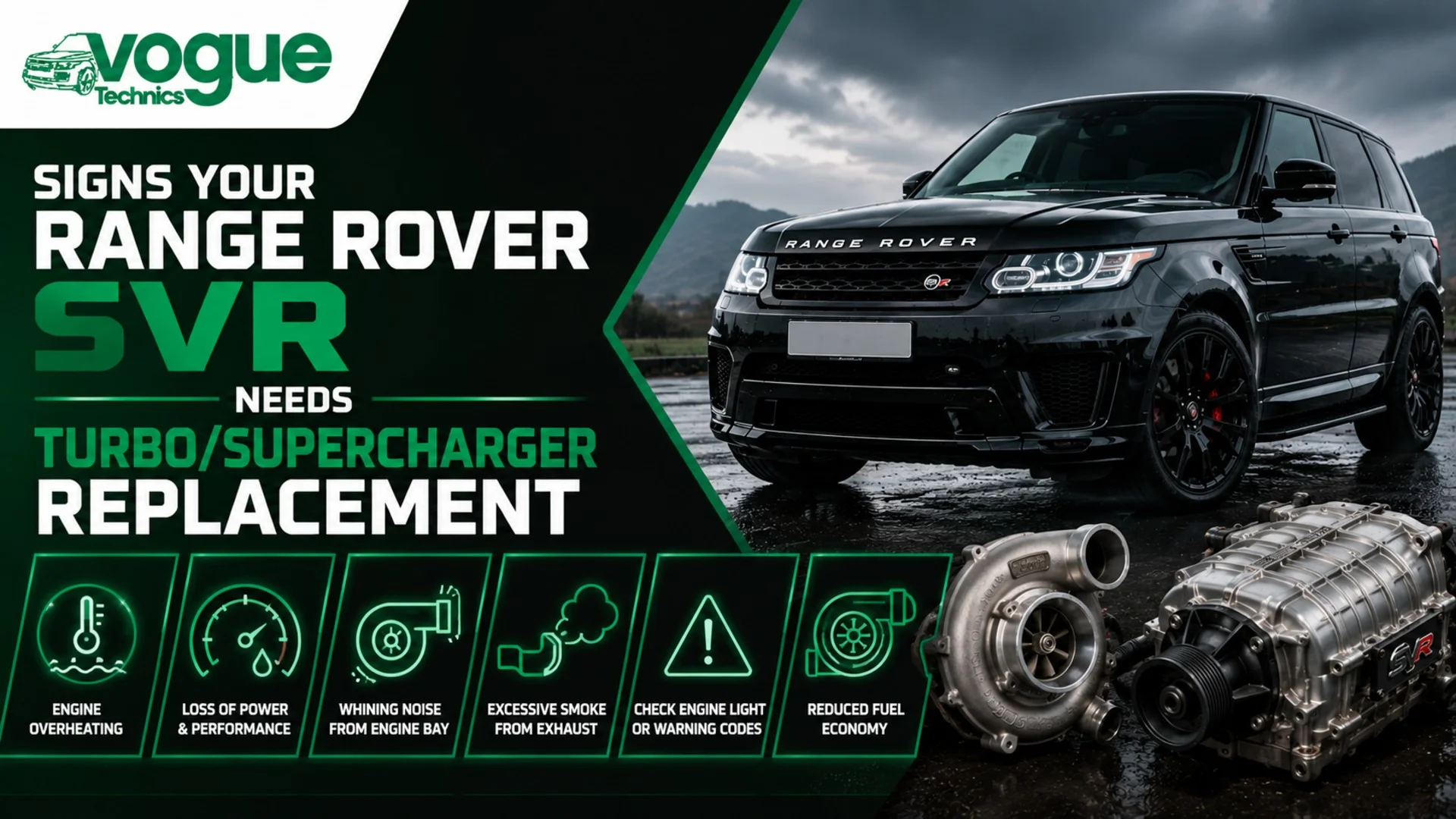
Catching supercharger problems early can be the difference between a repair and a full replacement. Most SVR owners notice a pattern of symptoms building up over weeks or months before the fault becomes impossible to ignore.
Common Symptoms of Supercharger Failure
Whining or Bearing Noise from the Engine
A rising whine under acceleration, often described as sounding like a jet engine spooling up, is the classic early warning sign of supercharger bearing wear. It typically gets louder as revs increase and can become audible even at idle in more advanced cases.
Loss of Boost or Reduced Acceleration
If your SVR suddenly feels sluggish, like the power delivery you're used to has gone soft, that's often boost pressure loss. This can come from worn internals, a slipping pulley, or a leak somewhere in the intake system between the supercharger and the engine.
Check Engine Light and Limp Mode
When the ECU detects boost pressure outside its expected range, it will usually store a fault code and can trigger limp mode to protect the engine. If your SVR suddenly caps its power output and the check engine light comes on, a boost pressure test and diagnostic scan should be your first step, not a guess.
What Causes SVR Boost Loss or Power Loss?
Boost and power loss on an SVR usually trace back to one of a small handful of causes:
- Worn supercharger bearings, these carry constant load at high RPM and are a known wear item on high-mileage or hard-driven SVRs
- Stretched or slipping supercharger belt, a worn auxiliary belt or tensioner reduces how efficiently the supercharger spins
- Boost leaks, cracked hoses, loose clamps, or a failing seal in the charge air path let pressure escape before it reaches the cylinders
- Supercharger coupler wear, this component absorbs torque and can degrade over time, causing inconsistent boost delivery
Getting an accurate diagnosis usually means combining a boost pressure test with a visual inspection and, where needed, a smoke test to trace any leaks in the intake system.
Worn Supercharger Pulley or Belt
The drive pulley and belt system transfers crankshaft power directly to the supercharger. A worn belt, degraded tensioner, or damaged pulley reduces rotor speed, which shows up as inconsistent or reduced boost, even if the supercharger itself is otherwise healthy.
Boost Leaks in the Intake System
Boost leaks are sneaky because the supercharger might be working perfectly fine while pressure still escapes downstream. A pressure test under controlled conditions is the most reliable way to isolate a leak from an actual mechanical fault inside the unit.
Can I Still Drive with a Failing Supercharger?
Technically, yes, in most cases, the engine will keep running, often in a reduced-power or limp mode. But we'd steer you away from putting it off. Continuing to drive with worn bearings or a boost leak tends to accelerate wear on other components, and what starts as a repairable fault can turn into a full replacement if left too long. If you're noticing symptoms, book a diagnostic sooner rather than later.
Range Rover SVR Turbo Replacement Cost
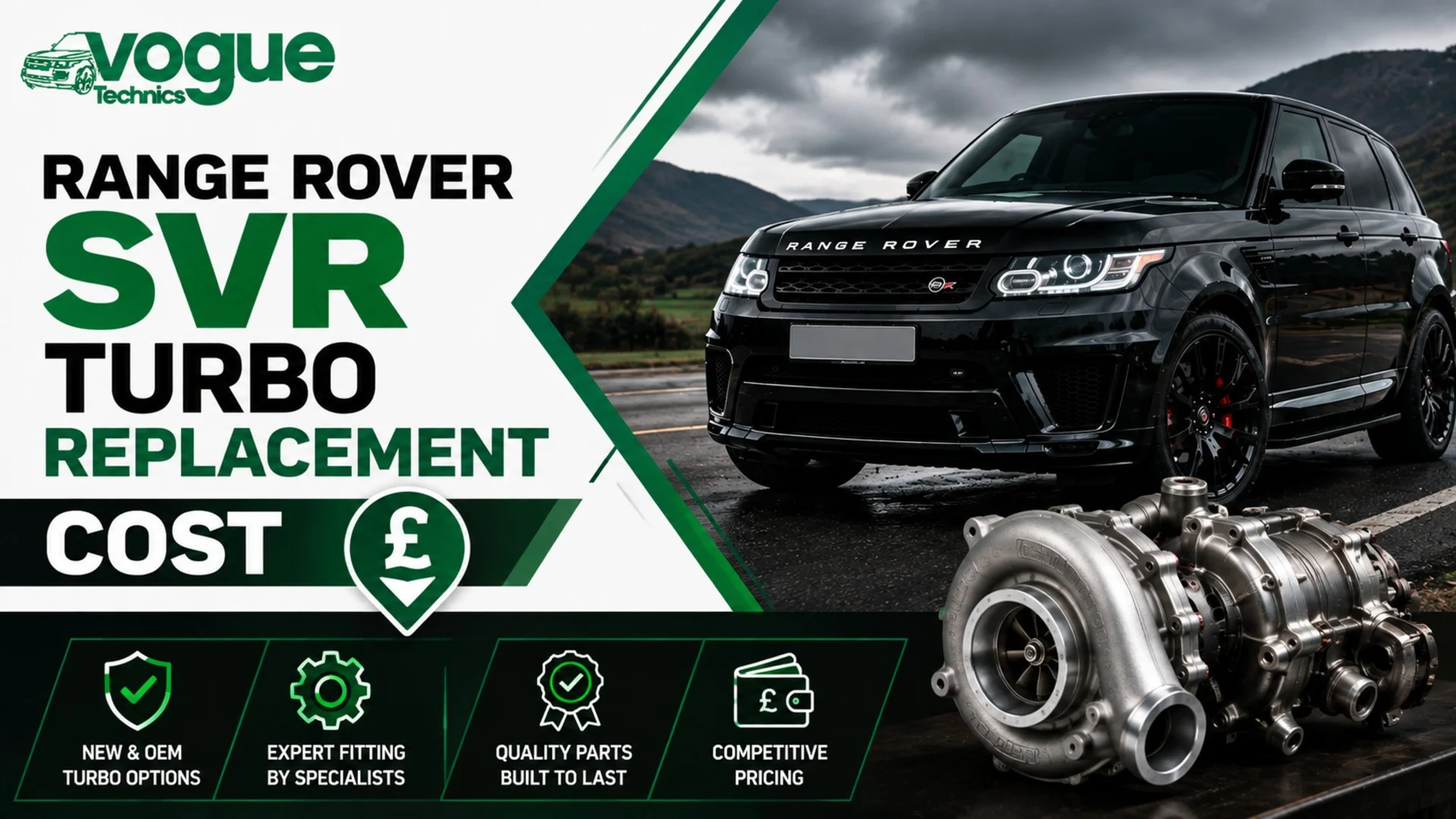
This is usually the question that brought you here, so let's get into real numbers. Costs vary depending on whether you need a full replacement, a rebuild, or a targeted repair, and whether you go with a new or reconditioned unit.
Average Supercharger Replacement Cost in the UK
As a general guide, UK owners can expect the following ranges, though your final quote will depend on the specific fault, parts availability, and labour rates in your area:
Service Type | Typical UK Cost Range | What's Included |
| Diagnostic & boost pressure test | £100 – £250 | Fault code scan, boost test, visual inspection |
| Supercharger belt/pulley replacement | £250 – £600 | Parts and labour for drive components |
| Supercharger rebuild | £1,200 – £2,500 | Bearings, seals, coupler, internal rebuild |
| Full supercharger replacement (reconditioned unit) | £2,000 – £3,500 | Unit exchange, fitting, testing |
| Full supercharger replacement (new/OEM unit) | £3,500 – £5,500+ | New unit, fitting, testing |
These figures are indicative rather than fixed, always get a written quote once a proper diagnostic has confirmed the actual fault.
Repair vs Rebuild vs Full Replacement, Cost Comparison
Not every fault needs a brand-new supercharger, and it's worth understanding your options before committing to the most expensive route:
- Repair (belt, pulley, hose, minor components), the cheapest option, suitable when the core unit is still healthy
- Rebuild (bearings, seals, coupler replaced within the existing housing), a middle-ground option that restores performance without buying a whole new unit
- Full replacement, necessary when the internal rotor assembly or housing itself is damaged beyond economical repair
A good workshop should walk you through which category your SVR falls into, rather than jumping straight to a full replacement quote.
What Affects the Final Price?
Reconditioned vs New Supercharger Units
Reconditioned units cost significantly less than brand-new OEM parts and, when sourced from a reputable rebuilder, offer comparable reliability. New units carry a higher price tag but come with the longest expected lifespan and full warranty backing.
Range Rover SVR vs Range Rover Sport SVR Cost Differences
Both models share the same AJ133 engine and Eaton supercharger architecture, so parts costs are broadly similar. Labour time can vary slightly due to differences in engine bay access and ancillary components between the two body styles, which may shift the final invoice by a few hundred pounds either way.
Range Rover SVR Turbo/Supercharger Replacement at Voguetechnics
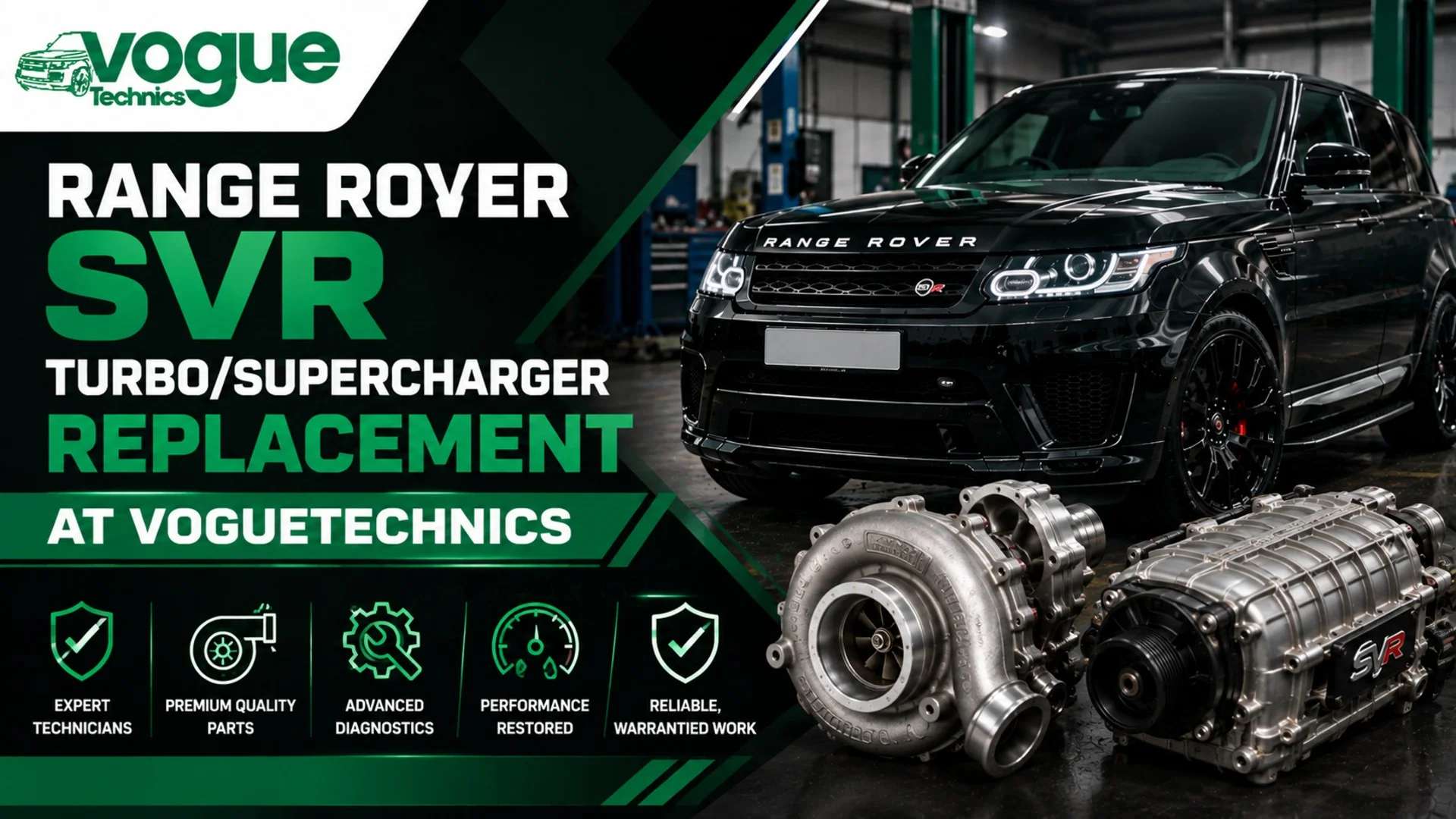
If you're dealing with any of the symptoms above, getting an accurate diagnosis from someone who actually understands the AJ133 platform matters. This isn't a generic V8, the supercharger, cooling system, and ECU calibration all interact in ways that a specialist will recognise faster than a general workshop will.
Why Choose a Range Rover SVR Specialist in Essex
Working on a supercharged performance V8 like the SVR's isn't the same as servicing a standard Range Rover. It requires the right diagnostic equipment for boost pressure testing, familiarity with Eaton supercharger internals, and access to genuine or high-quality reconditioned parts. Based in Grays, Essex, we work specifically with Range Rover and Range Rover Sport SVR owners across the region who want a straight answer and a fair price, not a guessing game.
Our Diagnostic and Replacement Process
- Initial diagnostic scan, reading fault codes and checking for stored boost-related faults
- Boost pressure and leak testing, isolating whether the issue is the supercharger itself or a leak downstream
- Visual and physical inspection, checking belt, pulley, coupler, and housing condition
- Clear, itemised quote, no work starts until you know exactly what's being replaced and why
- Replacement or rebuild, using the right-grade parts for your budget and mileage
- Post-repair testing, confirming boost pressure and performance are back to spec before handover
Get a Fixed Quote for Your SVR Repair
If your Range Rover SVR is showing signs of supercharger trouble, don't wait for it to get worse. Get in touch with our team in Grays, Essex, for a proper diagnostic and a fixed, written quote before any work begins.
Frequently Asked Questions
Does the Range Rover SVR have a turbo? No. The SVR uses a supercharged 5.0-litre V8 (AJ133 engine) with an Eaton supercharger, not a turbocharger. Many people search for "turbo replacement" out of habit, but the correct term is supercharger replacement.
How much does Range Rover SVR turbo replacement cost? UK costs typically range from around £2,000 for a reconditioned supercharger replacement up to £5,500+ for a new OEM unit, depending on parts and labour. Rebuilds and belt/pulley repairs cost considerably less.
What are the symptoms of a failing SVR supercharger? The most common signs are a rising whine under acceleration, reduced power or sluggish response, and a check engine light accompanied by limp mode. These often appear gradually before becoming constant.
Can a Range Rover SVR supercharger be rebuilt instead of replaced? Yes, in many cases. If the housing and rotor assembly are still in good condition, a rebuild replacing bearings, seals, and the coupler can restore performance at a lower cost than a full unit replacement.
Can I still drive my SVR with a failing supercharger? You can usually still drive it, often in a reduced-power state, but continuing to do so risks further damage. It's best to get a diagnostic as soon as symptoms appear rather than waiting for a breakdown.
Why do some workshops call this a "turbo repair" if the SVR doesn't have a turbo? It comes down to how customers search and speak, not the actual hardware. The industry term for the correct component is a supercharger, and any reputable specialist will clarify this during diagnosis, even if the listing uses "turbo" for search visibility.
How long does a Range Rover SVR supercharger last? There's no fixed lifespan, but bearing and coupler wear tend to show up more in high-mileage vehicles or those driven hard consistently. Regular servicing and prompt attention to early symptoms help extend the unit's working life.
A failing supercharger won't fix itself, and the longer it's left, the more it tends to cost. If your Range Rover SVR is showing any of the signs covered above, get it looked at by a specialist who knows the AJ133 platform properly. Based in Grays, Essex, our team can diagnose the issue accurately and give you a clear, fixed quote before any work starts, no guesswork, no inflated "turbo" charges for a job that's really about the supercharger. Get in touch today to book your SVR in for diagnosis.