Range Rover SVR Performance Engine Tuning in Essex
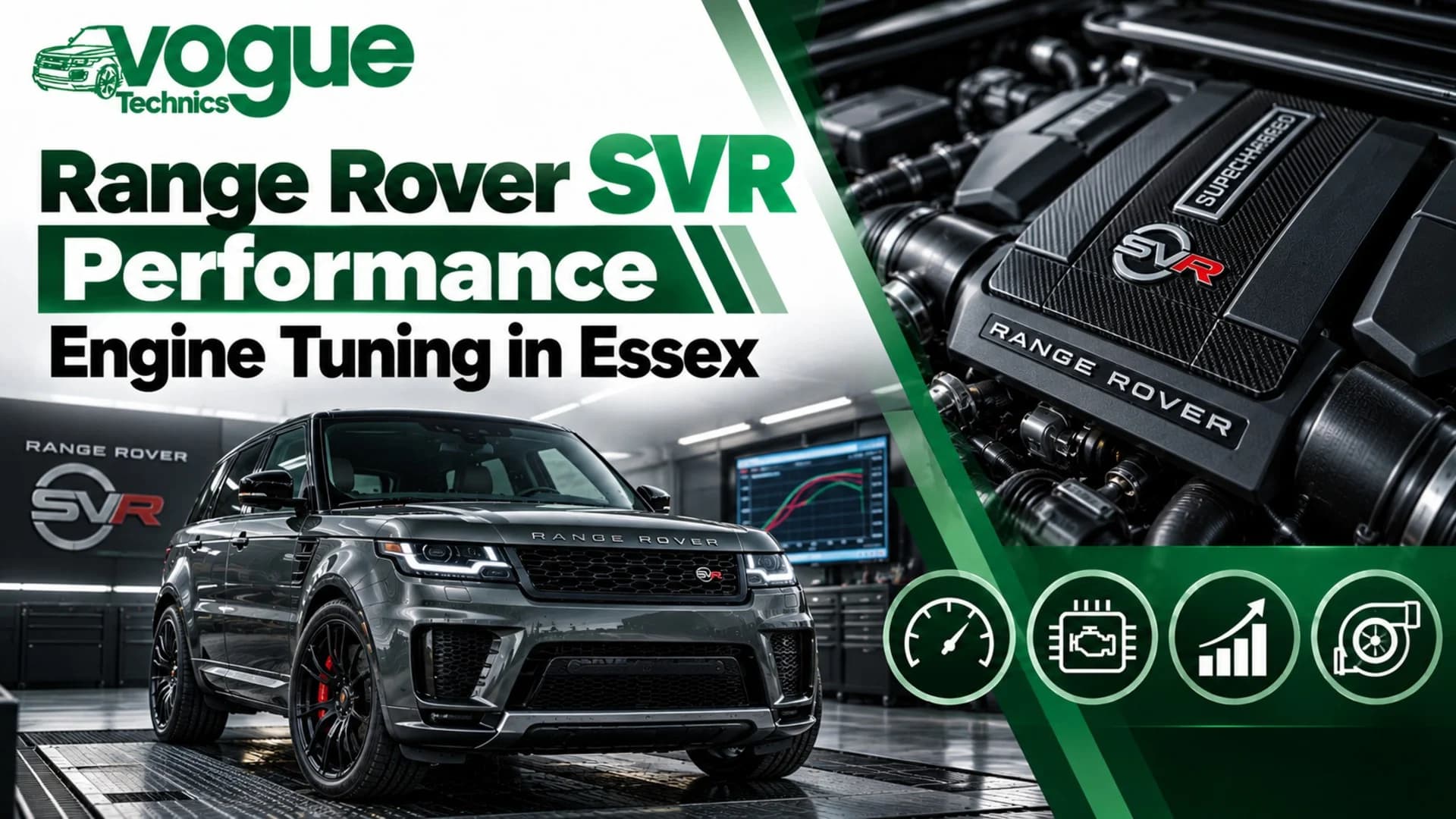
Your Range Rover SVR already turns heads. That 5.0-litre supercharged V8 under the bonnet was built by Special Vehicle Operations to be one of the fastest SUVs on the road. But if you've driven one for a while, you probably know there's more in it. The throttle feels slightly held back off the line. The mid-range punch could hit harder. And when you look at what similar V8 platforms are producing after a proper remap, it's hard not to wonder what your SVR is really capable of.
That's exactly where Range Rover SVR performance engine tuning comes in.
At Voguetechnics in Grays, Essex, we work exclusively with high-performance Land Rover and Range Rover models, and the SVR is one of the platforms we know inside out. This guide walks you through exactly what tuning does to the AJ133 engine, which stage suits your driving, what kind of power gains are realistic, and what it actually costs, so you can make a decision based on facts, not marketing numbers.
What Is Range Rover SVR Performance Engine Tuning?
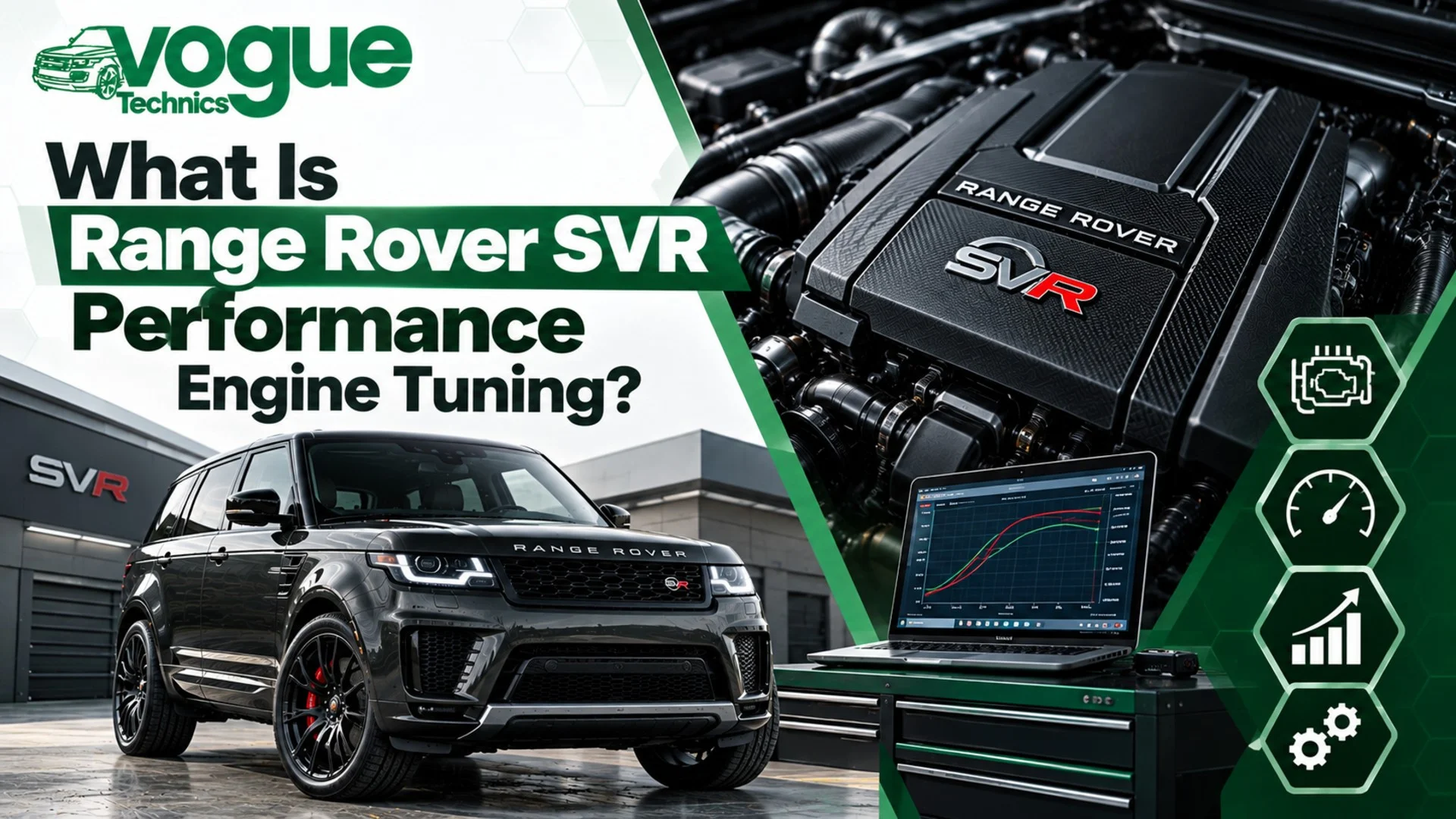
Range Rover SVR performance engine tuning is the process of recalibrating and, where needed, physically upgrading your vehicle's engine management system and supporting hardware to unlock power, torque, and responsiveness that the factory setup leaves on the table.
Every SVR leaves the factory with a conservative tune. Jaguar Land Rover has to account for hot climates, poor fuel quality, high mileage, and long warranty periods across every market the car is sold in. That means the factory ECU calibration is deliberately restrained, it's tuned for the worst-case customer, not for your specific car running on UK forecourt fuel with proper servicing behind it.
Performance tuning removes that built-in margin through custom ECU calibration, and in higher stages, through supporting hardware changes that let the engine breathe, cool, and respond more efficiently.
How ECU Remapping Changes the 5.0L Supercharged AJ133 V8
The AJ133 is a 5.0-litre supercharged V8, paired with an Eaton TVS supercharger, that powers the entire SVR range. When we remap it, we're not just "adding power" in some abstract sense, we're adjusting a specific set of parameters that the factory ECU manages conservatively:
- Ignition timing, advanced within safe limits to improve combustion efficiency
- Fuel mapping and air-fuel ratio (AFR), recalibrated for cleaner, more complete combustion
- Boost pressure targets, optimised to work with the supercharger's actual capability
- Throttle response mapping, sharpened so the accelerator pedal translates to power more directly
- Torque management, the electronic ceiling the factory places on torque output is raised in a controlled way
- RPM and speed limiter settings, adjusted where relevant to the tuning stage
None of this is guesswork. Every change is verified through dyno testing and data logging, which means we can show you exactly what changed and why, rather than asking you to take it on faith.
Factory Power vs Tuned Power, SVR Specifications Explained
Before you can appreciate the gains, it helps to know the baseline. SVR power output varies slightly depending on model year:
- Pre-facelift Range Rover Sport SVR (2015–2017): approximately 550 PS and 680 Nm of torque
- Facelift Range Rover Sport SVR (2018 onwards): approximately 575 hp and 700 Nm of torque
These are strong figures from the factory. But the AJ133's supercharged architecture has proven, time and again on the dyno, that it has meaningful headroom left, provided the tuning is done properly and the supporting components (cooling, fuelling, drivetrain) are respected rather than ignored.
Which SVR Tuning Stage Is Right for Your Vehicle?
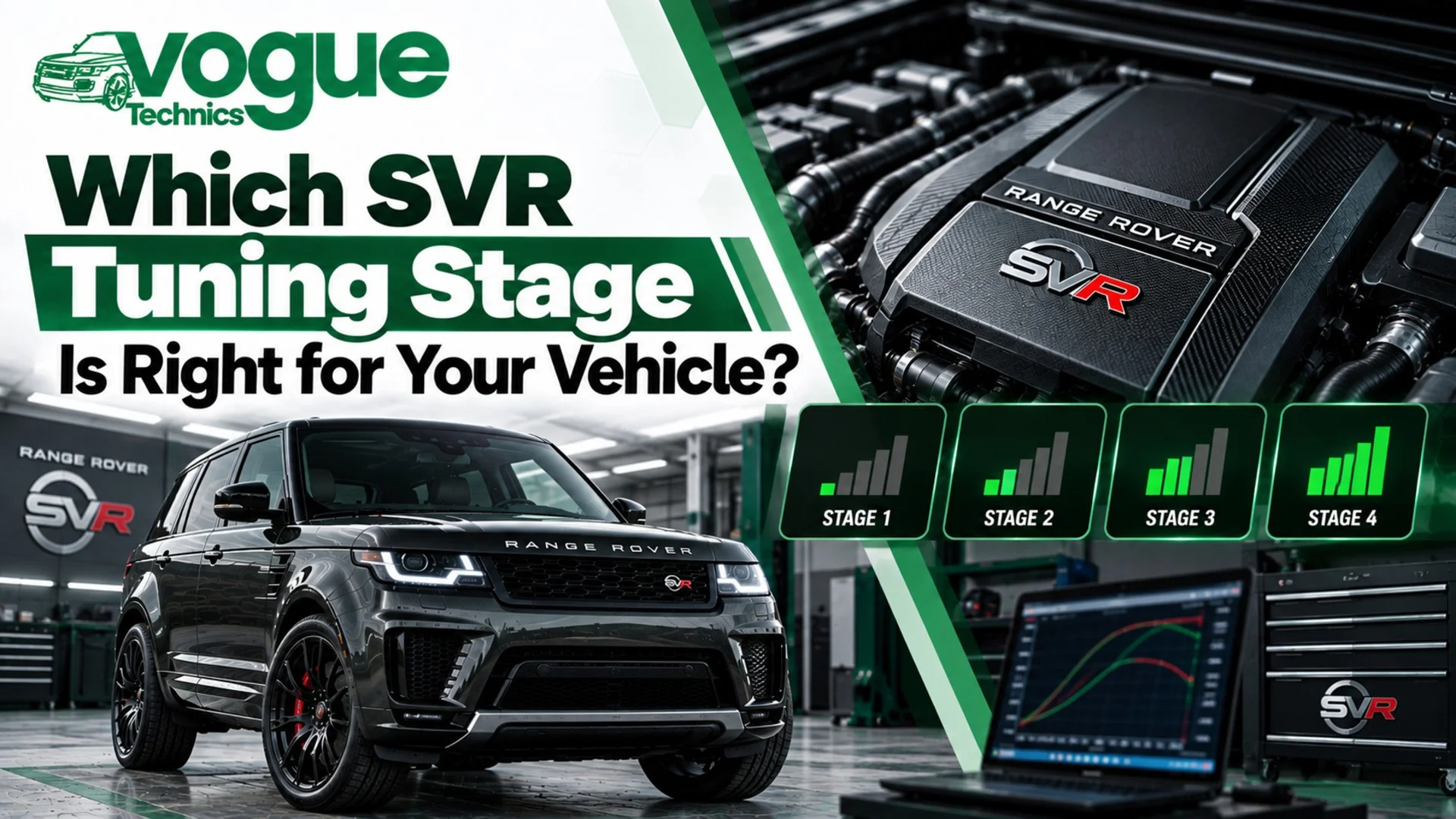
Not every SVR owner wants, or needs, the same level of tuning. Some just want a sharper daily drive. Others want maximum output for track days or serious performance builds. That's why tuning is broken into stages, each targeting a different combination of hardware, calibration, and use case.
Stage 1 Remap, Software-Only Power Gains for Daily Driving
Stage 1 is a pure ECU remap with no hardware changes required. It works entirely within the limits of the standard supercharger, exhaust, and intake system, which makes it the most accessible entry point into SVR tuning.
This stage focuses on:
- Sharper throttle response for everyday driving
- Improved mid-range torque delivery
- Smoother power curve without hardware wear-and-tear concerns
- Fully reversible calibration if you ever need to return to factory settings
Stage 1 suits owners who drive their SVR daily, want a noticeably more engaging car, and don't want to touch the hardware. It's also the sensible starting point if you're tuning for the first time and want to feel the difference before committing further.
Stage 2 Tuning, Supercharger Pulley, Exhaust & Custom Calibration
Stage 2 introduces hardware changes alongside a custom ECU calibration, and this is where the real performance gains start to show.
Typical Stage 2 components include:
- Supercharger pulley upgrade, a smaller pulley spins the Eaton TVS supercharger faster, increasing boost pressure and available airflow
- Performance exhaust system, reduces backpressure and improves exhaust gas flow, often with a noticeably improved exhaust note
- Upgraded intake or air filter, improves airflow into the supercharger
- Custom ECU calibration, built specifically around the new hardware, not a generic off-the-shelf map
Because you've physically changed how air moves through the engine, the ECU needs to be recalibrated to match, running Stage 2 hardware on a Stage 1 map (or worse, no remap at all) leaves real performance on the table and can create fuelling inconsistencies.
Stage 3 Tuning, Bespoke Dyno Calibration for Maximum Output
Stage 3 is for owners who want the most the AJ133 platform can reasonably give while keeping the engine reliable. This stage involves more extensive hardware upgrades, supporting the cooling system, fuel delivery, and supercharger internals, paired with a fully bespoke dyno calibration built around your specific combination of parts.
Stage 3 tuning isn't a checkbox package. It's built through baseline dyno testing, incremental adjustment, data logging, and verification, because at this power level, small calibration errors have real consequences for engine longevity.
Stage 1 vs Stage 2 vs Stage 3, Quick Comparison Table
Stage | Hardware Required | ECU Approach | Best For |
| Stage 1 | None (stock hardware) | Custom remap | Daily driving, first-time tuning |
| Stage 2 | Pulley, exhaust, intake | Custom calibration matched to hardware | Enthusiast driving, weekend performance |
| Stage 3 | Extensive supporting upgrades | Bespoke dyno-built calibration | Track use, maximum performance builds |
If you're unsure which stage fits your driving, our advice is simple: tell us how you actually use the car. A daily commuter SVR has very different needs from a car built for occasional track days.
How Much Power Can a Range Rover SVR Make After Tuning?
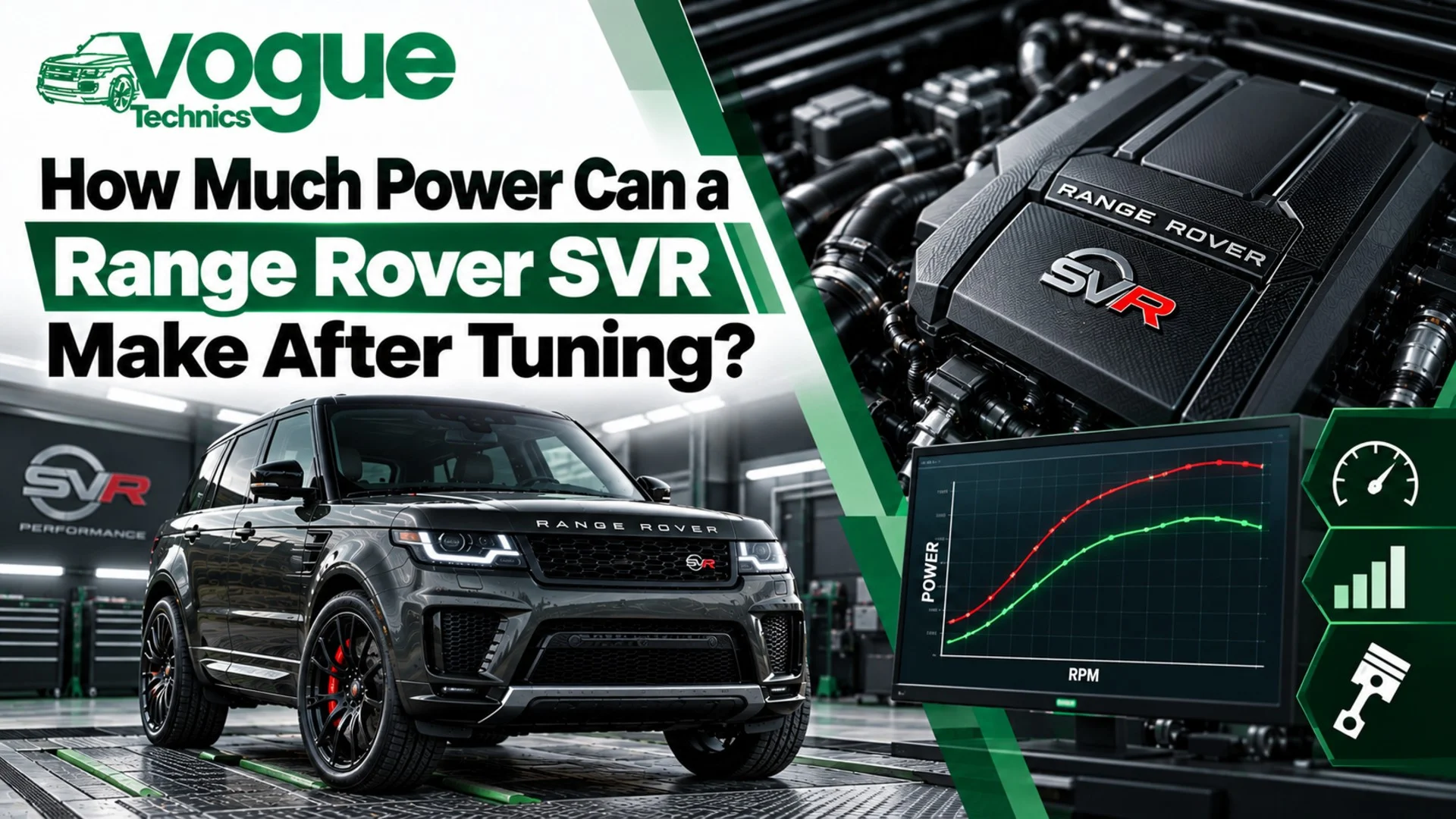
This is the question almost every SVR owner asks first, and it's fair, but the honest answer depends on your starting point, your stage, and your specific vehicle's condition.
Realistic BHP and Torque Gains by Tuning Stage
Rather than quoting one inflated number, here's a realistic breakdown based on what each stage typically achieves when done properly:
- Stage 1: Meaningful gains in throttle response and mid-range torque, with a moderate but noticeable increase in peak BHP over standard
- Stage 2: A substantial jump in both BHP and torque, driven by the combination of increased boost from the pulley upgrade and a calibration built specifically to exploit it
- Stage 3: The largest gains available on the platform, dependent on the full hardware specification and verified individually on the dyno
We deliberately avoid quoting single "guaranteed" power figures without context, because your results depend on your car's condition, fuel quality, and exact spec. What we can promise is a baseline dyno run before any work starts, and a verified post-tune dyno run afterward, so you see real numbers from your own car, not a marketing average.
Does Performance Tuning Affect Reliability or the ZF 8-Speed Gearbox?
This is the question that separates a good tuner from a risky one, and it deserves a straight answer.
Poorly executed tuning absolutely can affect reliability. The areas most at risk are:
- The supercharger and its belt/pulley system, if boost is pushed beyond what the cooling and lubrication can support
- The ZF 8HP automatic gearbox, which has its own torque management limits, a remap that ignores transmission torque limits can create excess strain
- Cooling and charge-cooling systems, since higher boost generates more heat that the standard cooling setup needs to manage
- Long-term engine components like the timing chain and injectors, if fuelling isn't calibrated correctly
Here's the important distinction: these risks come from bad tuning, not from tuning itself. Properly executed calibration respects the gearbox's torque limits, accounts for thermal management, and is verified through data logging rather than guesswork. That's why we build torque management adjustments into every calibration rather than treating the gearbox as an afterthought, and why we recommend supporting cooling upgrades at Stage 2 and above rather than pushing boost without them.
Why Choose Voguetechnics for Range Rover SVR Tuning?
[Note: the sections below reference our process and credentials, please review and confirm specifics (years trading, technician qualifications, dyno equipment brand, specific parts brands stocked such as Milltek/Larini exhausts) so we can make these claims fully accurate before publishing.]
Our Dyno-Tested, Data-Logged Tuning Process
Every SVR that comes through our workshop in Grays, Essex follows the same disciplined process:
- Baseline dyno run, we measure your car's actual current output before touching anything
- Health check, we inspect the supercharger, cooling system, and any existing wear before tuning, so we're not building performance on top of an underlying fault
- Calibration, custom ECU work built around your car and chosen stage, not a generic off-the-shelf file
- Data logging during the tune, we monitor AFR, boost, knock, and temperatures throughout, not just at the end
- Post-tune dyno verification, you see the before-and-after numbers from your own vehicle
This process is why we can talk about reliability with confidence rather than just crossing our fingers. A rushed remap without baseline testing is how engines get damaged; a verified process is how you get real power safely.
Range Rover SVR Tuning Cost & Packages in Essex
[Insert actual current pricing here, e.g., Stage 1 from £X, Stage 2 packages from £X, Stage 3 quoted individually. Suggest presenting as a simple pricing table once real figures are confirmed.]
Pricing for SVR tuning varies by stage, chosen hardware, and whether you're combining tuning with an exhaust or pulley upgrade in the same visit. As a general guide across the industry, Stage 1 remaps sit at the lower end of the cost scale since no hardware is involved, while Stage 2 and Stage 3 packages cost more due to the parts, labour, and bespoke dyno time required.
We're happy to provide a written quote once we know your SVR's model year and which stage you're considering, get in touch and we'll talk you through the options with no pressure.
Book Your Range Rover SVR Tuning Consultation in Grays, Essex
If you're ready to find out what your Range Rover SVR is really capable of, the next step is a conversation, not a sales pitch. Bring your car in, we'll run a baseline dyno check, talk through which stage actually fits how you drive, and give you honest numbers before you commit to anything.
Based in Grays, Essex, we work with SVR and Range Rover Sport owners from across the region who want tuning done properly, verified on the dyno, respectful of the gearbox and cooling system, and backed by a process you can actually see rather than just take our word for.
Frequently Asked Questions
Is Range Rover SVR tuning safe? Yes, when it's done through a proper dyno-verified process that accounts for boost, fuelling, temperature, and torque management. Risk comes from rushed, unverified remaps, not from tuning itself.
How much does Range Rover SVR tuning cost in the UK? Cost depends on the stage chosen. Stage 1 (software-only) is the most affordable entry point, while Stage 2 and Stage 3 cost more due to the hardware and bespoke dyno calibration involved. Contact us for a specific quote based on your model year.
Does an SVR remap void the warranty? Modifying the ECU calibration can affect manufacturer warranty coverage on tuning-related components. If your vehicle is still under factory warranty, it's worth discussing this with us before booking, so you understand exactly what's affected.
Can a Range Rover SVR reach 600–650bhp? Higher output figures are achievable at Stage 2 and Stage 3 with the right combination of supercharger pulley, supporting hardware, and bespoke calibration, but exact numbers depend on your car's individual condition and are confirmed on the dyno rather than promised in advance.
Does a supercharger pulley upgrade require an ECU remap? Yes. Changing the pulley alters boost delivery, and running that hardware on the factory calibration (or a generic map not built for it) risks incorrect fuelling. A custom remap matched to the new hardware is essential.
What's the difference between Stage 1 and Stage 2 tuning? Stage 1 is a software-only remap using stock hardware. Stage 2 adds physical upgrades, typically a supercharger pulley, performance exhaust, and intake improvements, paired with a custom calibration built around that hardware.
Will tuning affect my SVR's fuel economy? Tuning is generally aimed at performance rather than economy, and how it affects fuel consumption depends heavily on driving style. Most owners see little meaningful change in gentle daily driving, with the difference showing more under enthusiastic use.