Range Rover SVR Engine Warning Light: Causes, Fault Codes & Repair Guide
That amber glow on your dashboard has a way of ruining an otherwise perfect drive. One minute you're enjoying the pull of that supercharged V8, and the next you're staring at a warning symbol wondering whether you've just watched your bank balance take a hit or whether it's nothing to worry about at all.
Here's the honest answer: it depends. A Range Rover SVR engine warning light can mean something as minor as a loose fuel cap or as serious as a timing chain fault that needs immediate attention. The trick is knowing which one you're dealing with before it turns into a much bigger repair bill.
We've diagnosed and repaired more SVRs than we can count at our workshop in Grays, Essex, and the same pattern shows up again and again, owners either panic and assume the worst, or ignore the light because "it's still driving fine." Both approaches can cost you. This guide walks through exactly what the light means, what's likely causing it, how to read the fault codes yourself, and when it's time to get it looked at professionally.
What Does the Range Rover SVR Engine Warning Light Mean?
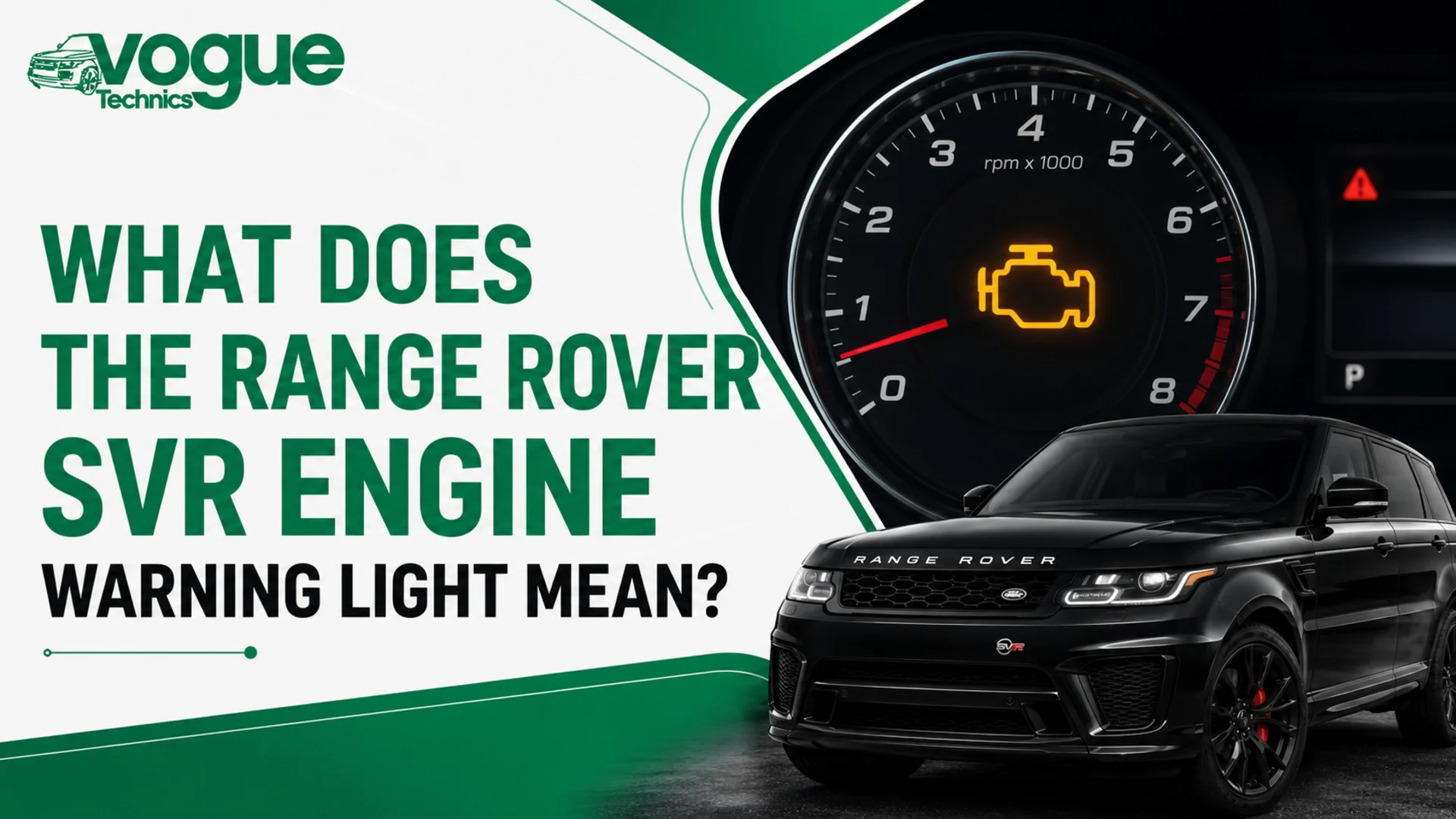
The engine warning light, sometimes called the engine management light or check engine light, is your SVR's way of telling you that one of its electronic control modules has picked up a reading outside its expected range. The ECU (engine control unit) constantly monitors dozens of parameters across the 5.0-litre supercharged V8, from fuel-air mixture to camshaft timing, and the moment something falls outside tolerance, it logs a diagnostic trouble code (DTC) and lights up the dash.
It doesn't tell you exactly what's wrong on its own. That's the job of a proper diagnostic scan. But the way the light behaves, and what else is happening with the car at the same time, gives you a strong clue about how urgent the problem actually is.
Solid vs Flashing Engine Warning Light: What's the Difference?
This distinction matters more than almost anything else on this page, so it's worth getting right.
- A solid, steady amber light usually means the fault is being monitored but isn't causing immediate harm. This could be anything from a sensor drifting out of range to an emissions-related fault. It's worth diagnosing soon, but you're not likely to cause further damage by driving carefully to a specialist.
- A flashing engine light is a different story entirely. This typically indicates an active misfire, which is dumping unburned fuel into the exhaust system. That unburned fuel can overheat and destroy your catalytic converters within minutes of continued driving, turning a modest repair into an expensive one fast.
If your light is flashing, the safest move is to reduce load, avoid hard acceleration, and get the car to a specialist as soon as possible rather than continuing your journey as normal.
Is the Range Rover SVR Engine Warning Light Serious?
Sometimes yes, sometimes no, and that's genuinely the most accurate answer anyone can give you without scanning the car. What tips the scale toward "serious" is what else is happening alongside the light:
- Loss of power or the car entering restricted/limp mode
- Rough idling or noticeable vibration
- Unusual knocking or ticking sounds from the engine bay
- A rising temperature gauge or coolant warning appearing at the same time
- A burning smell or visible smoke
If the SVR is driving completely normally and the light appeared on its own, it's often a sensor fault, an emissions component, or something similarly moderate. If it's paired with any of the symptoms above, treat it as high priority.
Can You Drive With the Engine Warning Light On?
Generally, yes, if the light is solid and the car is behaving normally, most owners drive it to a specialist without issue. What you shouldn't do is ignore it indefinitely. A minor fault left unaddressed, particularly a misfire or a lean-running condition, tends to cause knock-on damage to components like the catalytic converters or oxygen sensors over time, turning a £150 diagnostic into a far more expensive repair.
If the light is flashing, or you notice restricted performance, overheating, or an oil pressure warning alongside it, stop driving and arrange recovery rather than pushing on.
What Causes the Range Rover SVR Engine Warning Light to Come On?
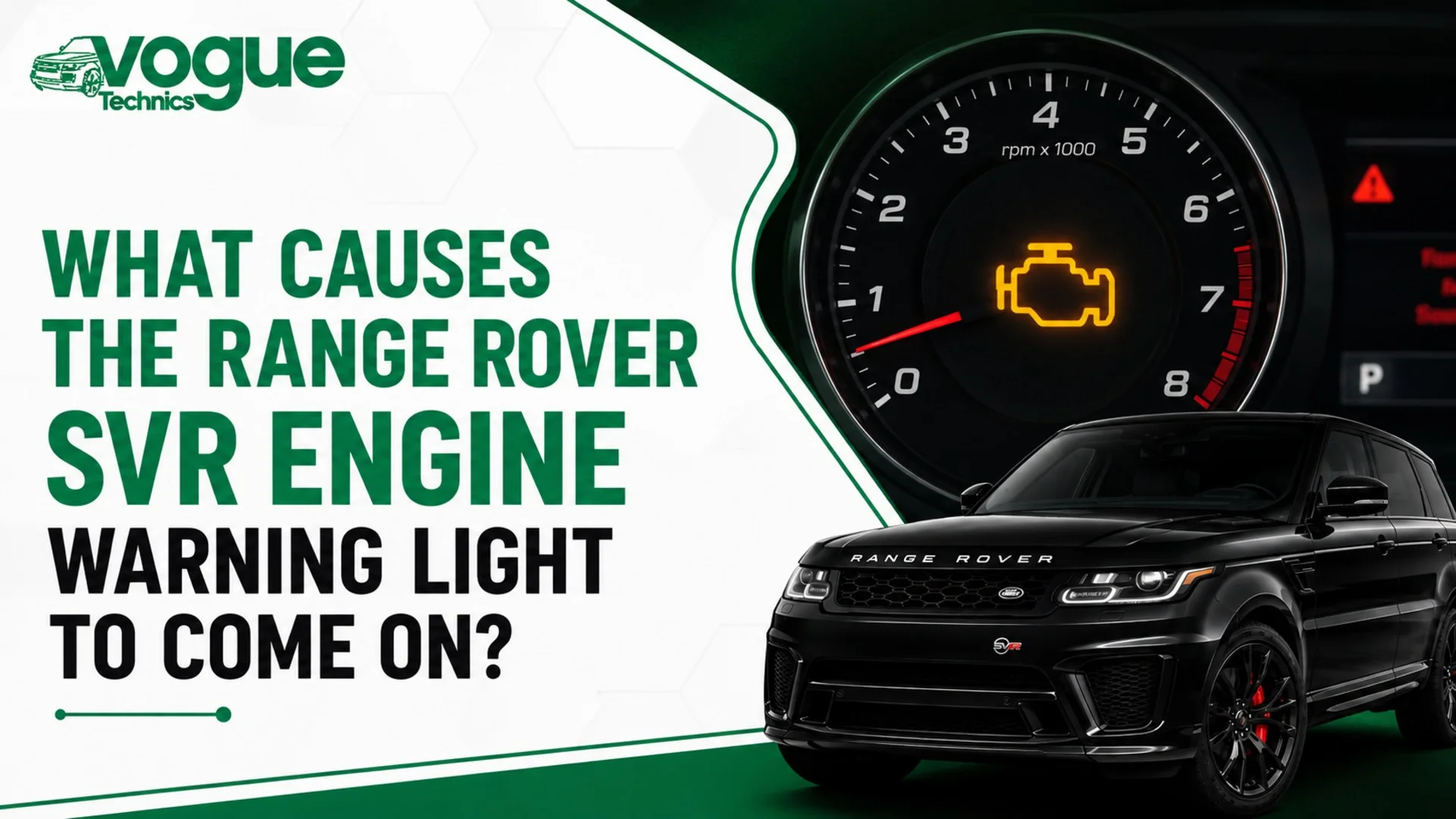
The AJ133 5.0-litre supercharged V8 fitted to the Range Rover Sport SVR (chassis code L494) is a genuinely strong engine when it's properly maintained, but like any high-output performance unit, it has known weak points. Special Vehicle Operations tuned this engine hard for performance, and that extra stress shows up in a handful of predictable places.
Common Mechanical Causes
Engine Misfire, Spark Plugs & Ignition Coils
A misfire happens when one or more cylinders fail to combust fuel properly. On the SVR, this is commonly traced back to worn spark plugs, a failing ignition coil, or a faulty fuel injector. You'll often notice a rough idle, a slight judder under acceleration, or reduced power alongside the warning light. Misfires generate the P0300 to P0308 code range, more on that shortly.
Timing Chain & Camshaft/Crankshaft Correlation Faults
The timing chain and its tensioner are a well-documented wear point on this engine family. As the chain stretches with age and mileage, the camshaft and crankshaft position sensors can no longer agree on where they should be relative to each other, triggering what's known as a correlation fault. Left unaddressed, this can lead to a rattling noise on startup and, in worst-case scenarios, engine damage, so this is one cause worth taking seriously.
Supercharger & Cooling System Issues
The supercharger belt and pulley system work hard to feed boost into the V8, and belt wear or tensioner failure can trigger fault codes tied to boost pressure. Separately, the cooling system on these engines has a reputation for water pump and coolant-related failures, which can bring on both a temperature warning and an engine warning light simultaneously, a combination that should never be ignored.
Common Electronic & Sensor Causes
Oxygen Sensor & Catalytic Converter Faults
Oxygen (lambda) sensors monitor the exhaust gases and tell the ECU how to adjust the fuel mixture. When one fails or reads incorrectly, you'll typically see a P0420, P0430, or a more specific code like P2276 (which owners have reported as a lean-condition fault on a specific bank/sensor position). Left unresolved, a failing oxygen sensor can cause the catalytic converter to run inefficiently, which eventually triggers its own fault code and a costly replacement.
MAF, MAP & Throttle Body Faults
The mass airflow (MAF) and manifold absolute pressure (MAP) sensors tell the ECU how much air is entering the engine. A dirty or failing sensor here throws off the entire fuel-air calculation, often resulting in rough running, hesitation, or reduced power alongside the warning light. Throttle body faults produce similar symptoms and are a fairly straightforward diagnostic check.
Does a Remap or Decat Cause the Engine Management Light?
If your SVR has had an aftermarket exhaust modification, a decat pipe, or an ECU remap, this is genuinely one of the most common reasons for an engine management light on a modified car. Removing or replacing the catalytic converters changes the exhaust gas readings the oxygen sensors expect to see, which frequently triggers catalyst-efficiency codes even though nothing is mechanically wrong.
This isn't necessarily a fault, it's the ECU flagging a legitimate change in exhaust behaviour that it wasn't calibrated for. The fix usually involves proper ECU calibration work to account for the modification, rather than replacing parts that aren't actually broken. It's worth mentioning any modifications when you book a diagnostic, since it changes how the fault codes should be interpreted.
How to Diagnose a Range Rover SVR Engine Warning Light
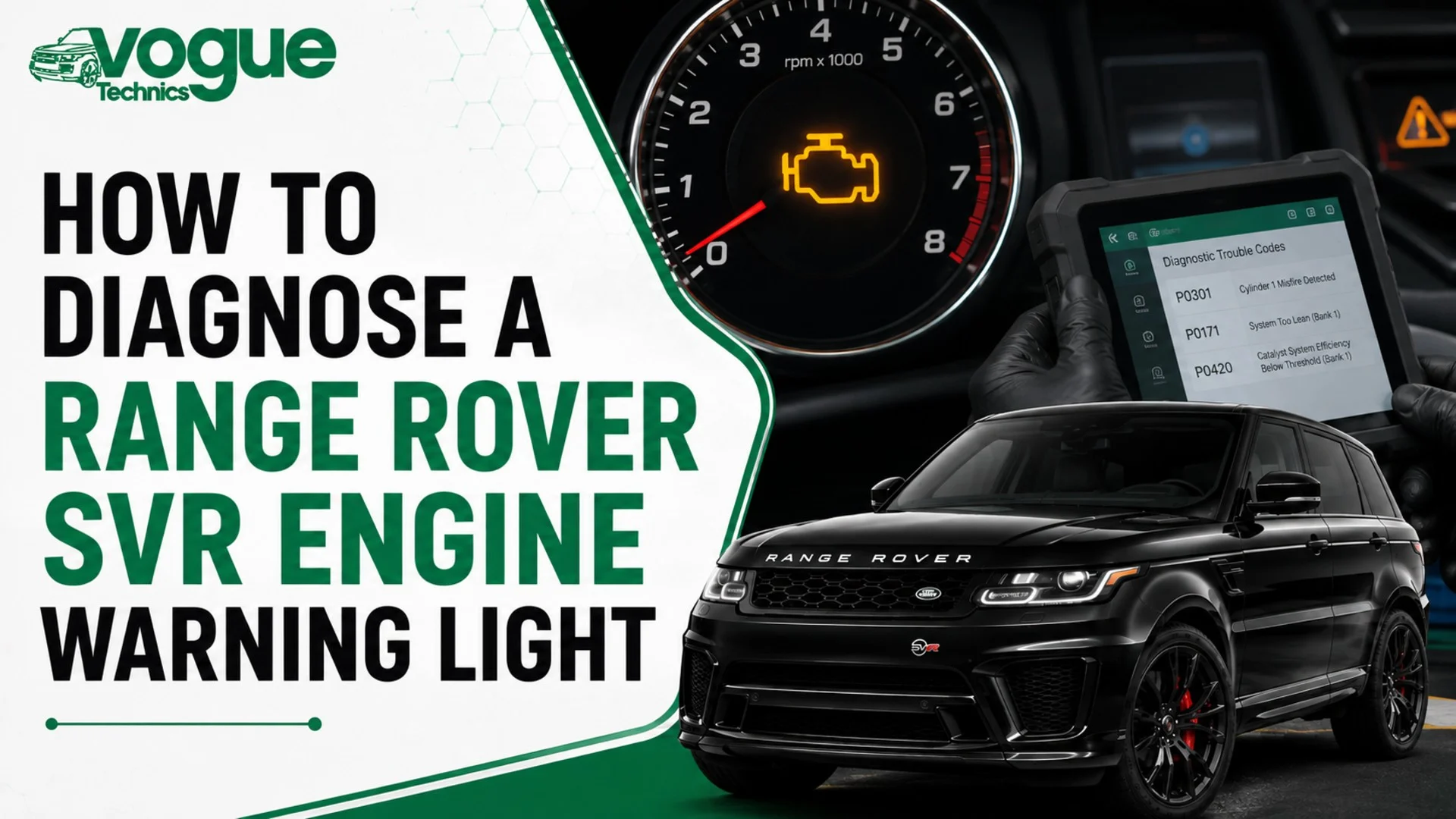
Guesswork is expensive on a performance V8 like this. A proper diagnostic scan takes the guesswork out of the equation and tells you exactly which system triggered the light.
Understanding Range Rover SVR Fault Codes
When the ECU logs a fault, it stores a diagnostic trouble code (DTC) that specialist equipment can read. Here's a quick reference for the codes that come up most often on the SVR:
Fault Code | What It Means | Typical Cause |
| P0300 | Random/multiple cylinder misfire | Ignition, fuel, or vacuum issue |
| P0301–P0308 | Misfire on a specific cylinder | Spark plug, coil, or injector fault |
| P0420 | Catalyst efficiency below threshold (Bank 1) | Failing catalytic converter or O2 sensor |
| P0430 | Catalyst efficiency below threshold (Bank 2) | Failing catalytic converter or O2 sensor |
| P2276 | O2 sensor circuit lean (specific bank/sensor) | Oxygen sensor fault or exhaust leak |
Misfire Codes (P0300–P0308)
These codes point directly to a combustion problem on one or more cylinders. P0300 indicates a random misfire across multiple cylinders, while P0301 through P0308 pinpoint the exact cylinder having trouble. Left unresolved, misfires push unburned fuel into the exhaust, which can overheat and permanently damage the catalytic converters, one of the more expensive components on this car.
Catalyst & Oxygen Sensor Codes (P0420, P0430, P2276)
These codes relate to the exhaust and emissions system. They can mean the catalytic converter itself is failing, but just as often they point to an oxygen sensor giving an inaccurate reading, or, as mentioned above, a modified exhaust that hasn't been recalibrated. Getting this distinction right during diagnosis can save you from replacing an expensive catalytic converter unnecessarily.
Step-by-Step Diagnostic Process (Scan to Repair)
A proper diagnosis on an SVR isn't just "plug in a scanner and read a code." Here's the process we follow:
- Connect diagnostic equipment capable of reading manufacturer-specific Land Rover fault codes, not just generic OBD-II codes.
- Retrieve stored and pending fault codes, along with freeze-frame data showing exactly what the engine was doing when the fault occurred.
- Carry out a visual inspection of the relevant system, checking for obvious issues like leaks, damaged wiring, or worn components.
- Test the suspected component directly rather than assuming the code tells the whole story.
- Repair the root cause, not just the symptom.
- Clear the fault code once the repair is complete.
- Road test and rescan to confirm the fault doesn't return under real driving conditions.
Skipping straight from "code read" to "part replaced" is how owners end up paying for components that were never actually faulty.
How Much Does It Cost to Diagnose the Warning Light?
Diagnostic costs vary depending on complexity, but a proper scan with manufacturer-level equipment is a modest investment compared to guessing and replacing parts that turn out not to be the issue. It's genuinely the most cost-effective first step you can take, a 30-to-60-minute diagnostic session can save hundreds of pounds in unnecessary parts.
Range Rover SVR Engine Warning Light Repair in Essex
Why Choose Voguetechnics for SVR Diagnostics & Repair?
We work on Range Rover Sport SVR regularly at our workshop in Grays, Essex, and we've built our diagnostic process specifically around this engine's known weak points, timing chain wear, supercharger reliability, cooling system faults, and the misfire and sensor issues covered above. Rather than a generic OBD-II read, we use manufacturer-capable diagnostic software to pull the full picture, including live data and freeze-frame information, so repairs target the actual root cause.
If you're local to Essex, or within reach of Grays, and your SVR's warning light has come on, we're happy to run a full diagnostic and walk you through exactly what it's showing before any work goes ahead.
When Should You Stop Driving Your SVR?
As a rule of thumb, stop driving and arrange recovery if you notice any of the following alongside the warning light:
- The light is flashing rather than solid
- The temperature gauge is climbing or a coolant warning appears
- You hear knocking, ticking, or grinding from the engine bay
- The oil pressure warning illuminates
- The car enters a noticeably restricted performance or limp mode
In any of these situations, continuing to drive risks turning a repairable fault into a much more serious, and expensive, engine problem.
Frequently Asked Questions
How much does it cost to fix an SVR engine warning light? It depends entirely on the cause. A sensor replacement might be a relatively small job, while a timing chain repair or catalytic converter replacement sits at the higher end. A proper diagnostic scan is the only way to get an accurate figure for your specific car.
Can I drive my Range Rover SVR with the engine light on? If the light is solid and the car drives normally, most owners continue driving carefully to a specialist. If the light is flashing, or you notice power loss, overheating, or unusual noises, stop driving and arrange recovery instead.
What is the most common cause of an SVR engine warning light? Misfires, oxygen sensor faults, and timing chain-related correlation faults are among the most frequently seen causes, alongside catalytic converter efficiency codes on modified cars.
Will the engine light come back after clearing the fault code? If the underlying cause hasn't been repaired, yes, the ECU will detect the same fault again and re-illuminate the light, sometimes within a few miles. This is why root-cause diagnosis matters more than simply clearing codes.
How do I book a diagnostic with Voguetechnics? Get in touch with our team in Grays, Essex, and we'll arrange a diagnostic slot to get to the bottom of your SVR's warning light before recommending any work.
Final Thoughts
An engine warning light on a Range Rover Sport SVR isn't something to panic over, but it's not something to ignore either. The difference between a straightforward, affordable fix and a major repair bill usually comes down to one thing: how quickly you get it properly diagnosed.
Whether it's a worn spark plug, a timing chain starting to stretch, an oxygen sensor giving a false reading, or a supercharger belt on its way out, knowing exactly what triggered the light puts you back in control of the situation, and your budget.
If your SVR's warning light has come on and you're in or around Grays, Essex, get in touch with the team at Voguetechnics. We'll run a full diagnostic, explain exactly what's going on in plain English, and give you a clear picture of what it'll take to put right.