Range Rover SVR Engine Problems: Symptoms, Causes, Costs & Fixes
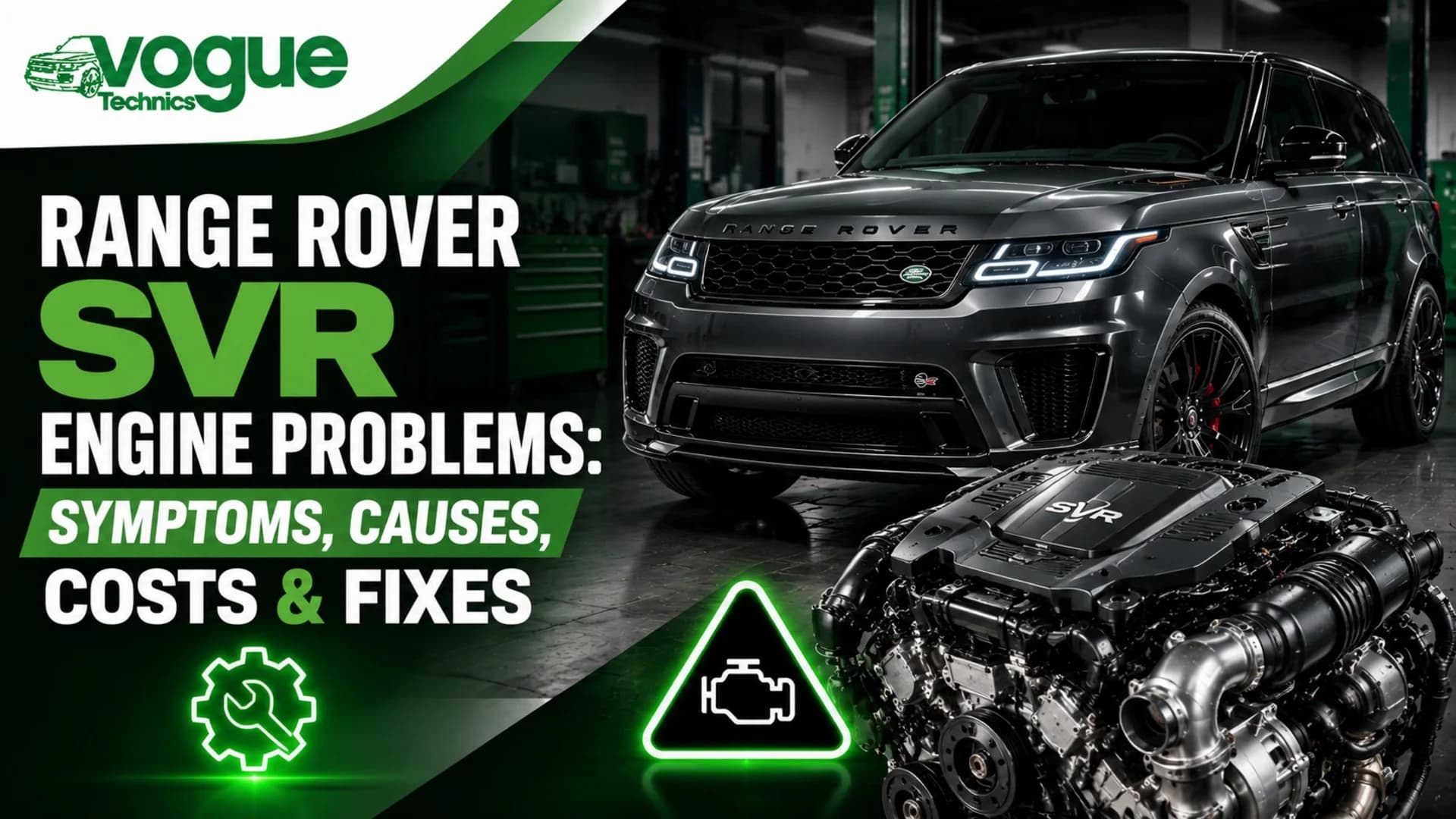
If your Range Rover Sport SVR has started making a noise you don't recognise, is drinking coolant faster than it should, or has thrown up a warning light on the dash , you're probably here because something feels off, and you want a straight answer before it turns into a five-figure repair bill.
You're not alone. The AJ133 5.0-litre supercharged V8 that powers the SVR is one of the most exhilarating engines Land Rover has ever fitted to a production SUV, but it's also one that owners need to understand properly if they want to avoid nasty surprises. This guide walks through exactly what goes wrong, why it happens, what it costs to put right, and how to tell the difference between a minor fault and something that needs urgent attention.
We've written this from a workshop perspective, not a marketing one. Everything below reflects what we actually see coming through the door at our garage in Grays, Essex.
Is the Range Rover SVR Engine Reliable?
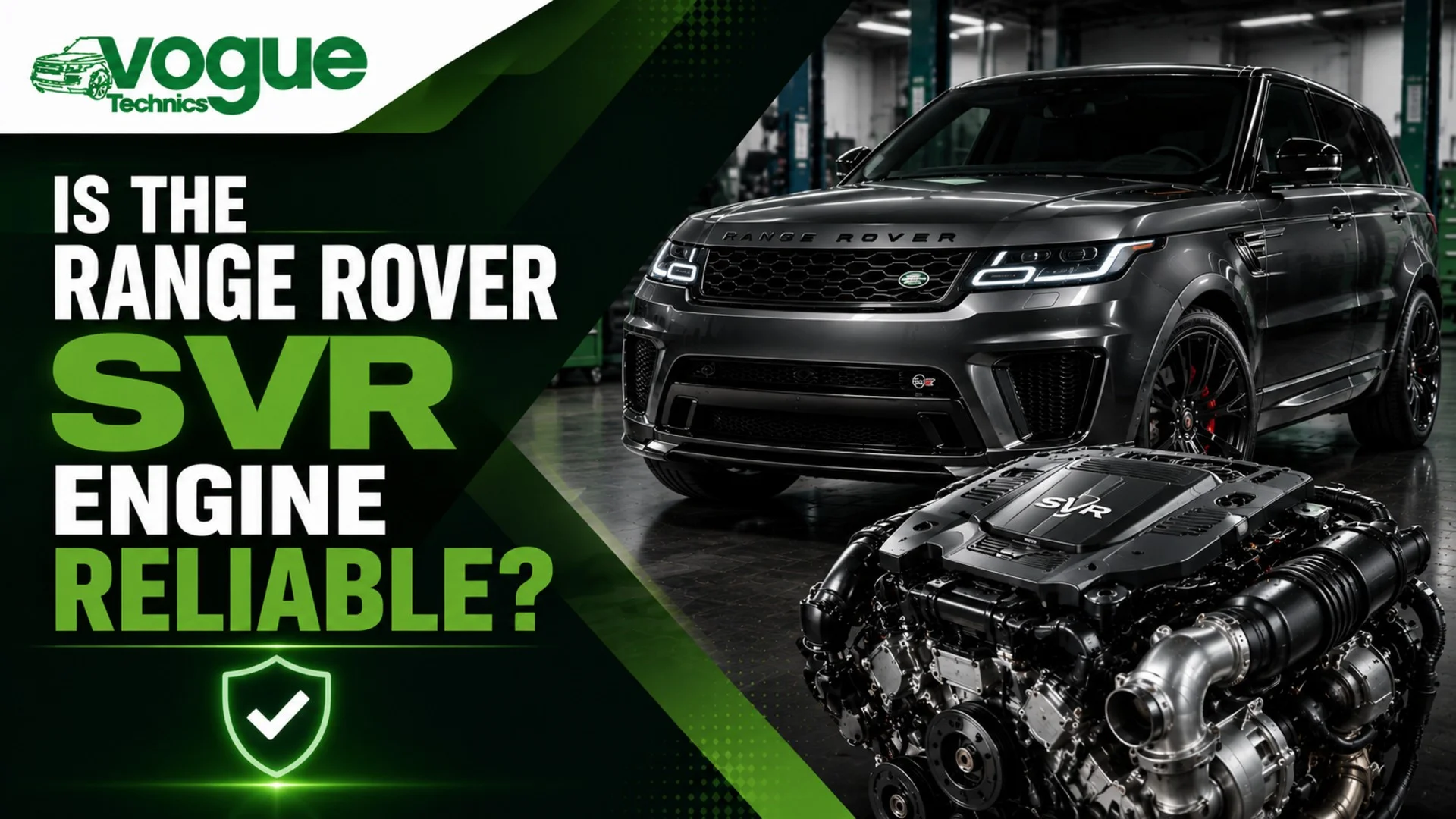
The short answer: reasonably reliable when maintained properly, but it has known weak points that catch owners out , especially on used examples where service history is patchy.
The AJ133 is a fundamentally strong engine block borrowed from Jaguar Land Rover's wider performance range, but the SVR's state of tune (producing over 550bhp) puts more stress on cooling, lubrication, and forced-induction components than the standard Range Rover Sport ever sees. That extra strain is exactly why SVR-specific problems tend to show up earlier than they would on a lower-powered sibling.
What Engine Does the Range Rover SVR Have? (The AJ133 5.0L Supercharged V8 Explained)
The Range Rover SVR uses the AJ133, a 5.0-litre supercharged V8 shared across several JLR performance models, including the Jaguar F-Type R, XJR, and XFR. It's not a BMW-sourced unit, despite a common misconception , it's a Jaguar Land Rover in-house design, built at the Ford Engine Plant in Bridgend before production moved.
In SVR trim, this engine is paired with an Eaton TVS R1900 supercharger and a ZF 8HP70 eight-speed automatic gearbox, delivering the instant, linear power the SVR is known for. It's a genuinely well-engineered unit , but like any high-output forced-induction engine, it has a shorter list of tolerances than a naturally aspirated equivalent.
How the Eaton TVS Supercharger Affects Long-Term Reliability
The Eaton TVS supercharger is a twin-vortex, roots-type unit that compresses intake air to boost power. It's a proven design used across multiple performance platforms, but it does introduce extra wear points that a non-supercharged engine simply doesn't have:
- Supercharger drive belt , under constant tension and heat cycling, this wears faster than a standard accessory belt
- Bearing wear inside the supercharger housing , can develop a whining or rattling noise over time
- Intercooler and coolant crossover pipe , the supercharger runs hot, and its cooling circuit is a common source of leaks
None of this makes the supercharger unreliable outright. It does mean the cooling and belt-driven components around it need to be inspected more regularly than most owners expect.
How Long Do Range Rover SVR Engines Typically Last?
With consistent servicing, an AJ133 engine can comfortably reach 100,000–150,000 miles, and we've seen well-maintained examples go further. The engines that fail early are almost always the ones that missed oil changes, ran on stretched service intervals, or had a coolant leak that went unnoticed for too long.
Think of it less like a fixed mileage ceiling and more like a maintenance-dependent outcome , two identical SVRs can have very different lifespans depending entirely on how they were looked after.
Most Common Range Rover SVR Engine Problems
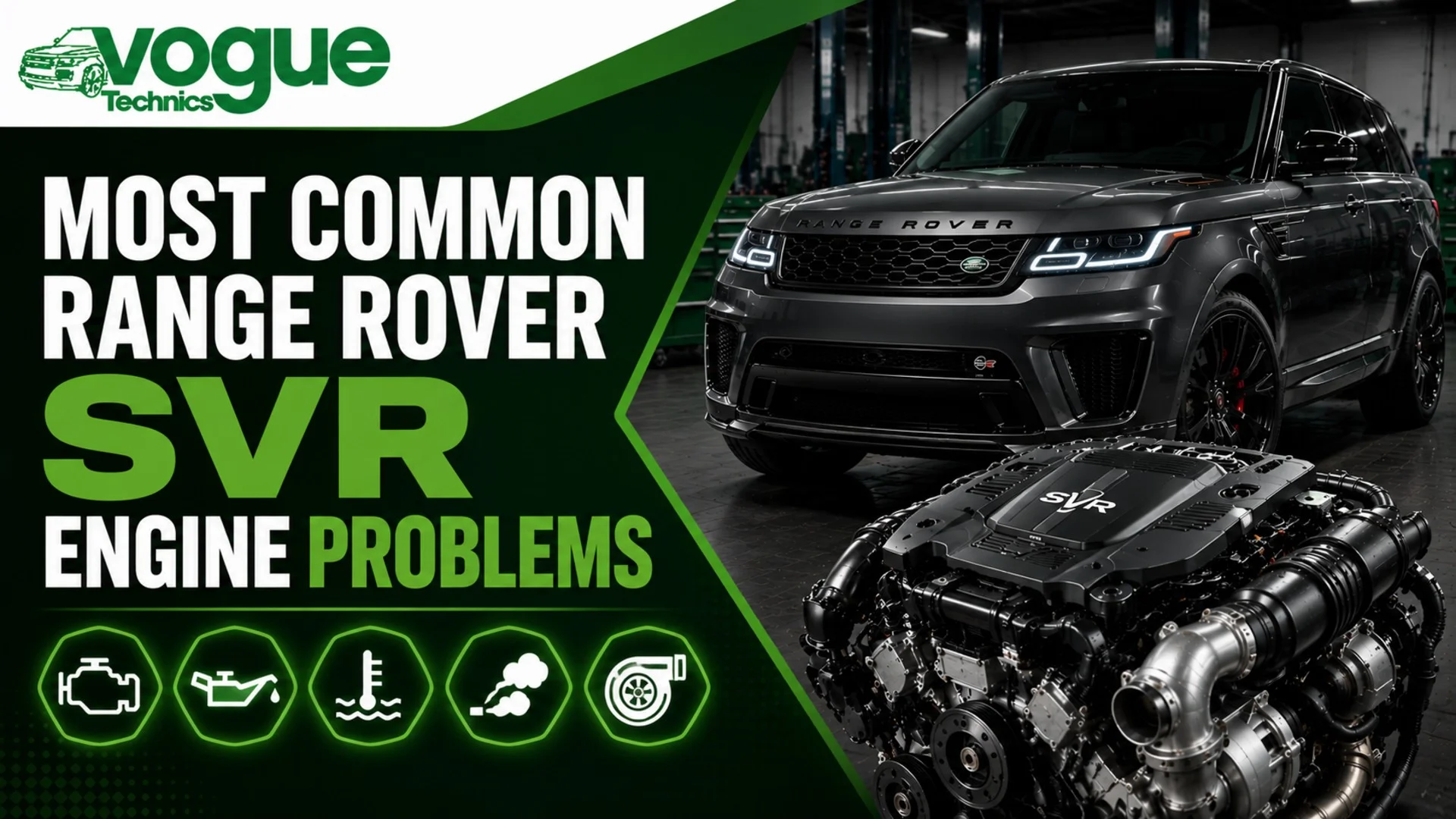
This is the section most owners actually come here for. Below are the faults we see most often on the AJ133, roughly in order of frequency.
Cooling System Failures and Coolant Loss
Cooling problems are, by a wide margin, the most common issue we diagnose on Range Rover SVRs. The supercharged V8 generates significant heat, and the cooling system has several failure points:
- Coolant crossover pipe , a known weak spot that can crack or degrade with age, causing slow coolant loss
- Water pump failure , often develops gradually, with a whining noise before it fails completely
- Thermostat sticking , causes erratic temperature readings and can trigger limp mode
- Radiator and expansion tank leaks , usually age-related rather than a design flaw
Left unaddressed, coolant loss is one of the fastest routes to a blown head gasket or catastrophic overheating damage , which is exactly why this deserves its own warning section.
Warning Signs of an Overheating SVR Engine
Catching an overheating issue early is the difference between a £300 repair and a £15,000 engine replacement. Watch for:
- Temperature gauge creeping higher than normal on motorway runs
- A sweet smell inside the cabin (coolant leaking near the heater matrix)
- White smoke from the exhaust on start-up
- Coolant level dropping between services with no visible puddle underneath
- The engine dropping into limp mode unexpectedly
If you notice any of these, stop driving the vehicle and have it inspected. Continuing to drive an overheating SVR is the single most common cause of turning a minor coolant leak into a full engine rebuild.
Timing Chain and Tensioner Wear
The AJ133 uses a timing chain rather than a belt, which in theory should mean less scheduled maintenance. In practice, the timing chain tensioner can wear prematurely, particularly on engines that have run low on oil pressure at any point in their life.
Symptoms typically include a rattling noise on cold start-up that quietens as the engine warms , a sound many owners dismiss as "normal" for a supercharged V8, when it's actually an early warning sign worth having checked.
Oil Leaks and Excessive Oil Consumption
Oil-related faults on the SVR generally fall into two categories: leaks and consumption.
Common leak points include:
- Rocker cover gaskets
- Oil cooler seals
- Sump gasket
Consumption issues are a separate concern and tend to point toward piston ring wear or valve seal degradation on higher-mileage engines. If you're topping up oil between services more than once, it's worth investigating rather than assuming it's "normal for a big V8."
What Causes Oil Starvation in the AJ133 Engine
Oil starvation happens when the engine's moving parts , bearings, camshaft, timing chain , aren't receiving adequate lubrication under load. On the SVR, this is most often caused by:
- Extended oil change intervals beyond the recommended schedule
- Using the wrong oil specification (this engine is sensitive to spec, not just viscosity)
- A failing oil pump or blocked oil pickup
- Aggressive driving on cold oil before it's reached operating temperature
Oil starvation is one of the more serious faults because it accelerates wear on the crankshaft and rod bearings , components that are expensive to replace and, if damaged, often point toward a full rebuild rather than a repair.
Supercharger Belt, Pulley and Carbon Build-Up Issues
Alongside the supercharger's own wear points covered earlier, direct-injection engines like the AJ133 are prone to carbon build-up on the intake valves over time. Because fuel is injected directly into the cylinder rather than across the valves, there's nothing to naturally clean carbon deposits away.
Symptoms include a rough idle, reduced throttle response, and occasionally a misfire under load. Regular carbon cleaning (often done via walnut blasting) is a preventative step worth budgeting for, particularly on SVRs used for shorter, stop-start journeys.
Engine Knocking, Misfires and Rough Idle Explained
These symptoms can stem from several different faults, which is exactly why proper diagnostics matter rather than guesswork:
Symptom | Likely Cause | Urgency |
| Knocking on cold start | Timing chain tensioner wear | Investigate soon |
| Knocking under load | Rod bearing wear (oil starvation) | Urgent |
| Misfire at idle | Carbon build-up, ignition coil, or spark plug fault | Moderate |
| Rough idle | Carbon build-up, PCV valve fault, or vacuum leak | Moderate |
| Misfire under acceleration | Fuel injector fault or coil pack failure | Investigate soon |
A knocking noise under load is the one to take most seriously. It's frequently linked to bearing wear from historic oil starvation and rarely resolves itself.
Range Rover SVR Engine Problems by Mileage (30k / 60k / 100k+)
Owners often ask what to expect at different mileage points. Here's a realistic breakdown based on the patterns we see:
- Around 30,000 miles , Mostly minor. Coolant crossover pipe leaks and early carbon build-up symptoms tend to appear first.
- Around 60,000 miles , Supercharger belt and pulley wear become more common, along with the first signs of oil consumption on harder-driven examples.
- Around 100,000 miles , Timing chain tensioner wear, water pump failure, and rocker cover gasket leaks become more likely, particularly if servicing has been inconsistent.
- 150,000+ miles , Engines with full service history are still on the road and performing well. Engines with gaps in maintenance are far more likely to need a rebuild by this point.
What Typically Fails First on High-Mileage SVRs
If we had to name the single most common high-mileage failure point, it's the cooling system , specifically the coolant crossover pipe and water pump. These are wear items rather than defects, but they're frequently the trigger for a chain of problems if ignored, since coolant loss is what ultimately leads to head gasket failure and, in worst cases, a seized or badly damaged engine.
Diagnosing and Fixing Range Rover SVR Engine Problems
Knowing something's wrong is one thing. Knowing exactly what's wrong , and what it's actually going to cost to fix , is where proper diagnostics matter.
How We Diagnose Engine Faults
Guesswork on a performance V8 like this usually costs more in the long run than it saves. A proper diagnostic process typically involves:
- OBD fault code reading , a starting point, not a final answer, since codes often point to a symptom rather than root cause
- Live diagnostic data interpretation , checking real-time oil pressure, coolant temperature, and fuel trims under load
- Visual inspection , checking for coolant staining, oil weeping, and belt condition
- Compression and leak-down testing , the most reliable way to assess actual engine health
Compression Testing and Leak-Down Testing Explained
A compression test measures how well each cylinder holds pressure during the compression stroke , low or uneven readings across cylinders can point toward worn piston rings or valve issues.
A leak-down test goes a step further by pressurising each cylinder and measuring how quickly air escapes, and where. This tells us specifically whether a problem lies in the piston rings, valves, or head gasket , information a compression test alone can't fully provide.
Together, these two tests give a much clearer picture than fault codes alone, and they're an essential step before recommending any major repair.
Engine Rebuild vs Engine Replacement: Which Do You Actually Need?
This is the question every owner facing a serious engine fault eventually asks, and the honest answer is: it depends on what's actually failed.
A rebuild is usually the right call when:
- The engine block and crankshaft are undamaged
- The fault is isolated to bearings, piston rings, gaskets, or the timing chain
- The vehicle has strong service history and is otherwise in good condition
Replacement tends to make more sense when:
- There's been catastrophic damage from overheating or oil starvation
- The cylinder block itself is cracked or scored beyond repair
- The cost difference between rebuild and replacement is marginal, and a replacement offers more certainty going forward
Neither option is automatically "better" , it comes down to the specific damage, the vehicle's overall condition, and how long you plan to keep it. This is exactly the kind of decision worth getting a proper inspection for rather than assuming the worst from a warning light alone.
How Much Does an SVR Engine Rebuild or Replacement Cost?
Costs vary significantly depending on the extent of damage, but as a general guide:
Repair Type | Typical Cost Range | Notes |
| Minor repair (gasket, leak, sensor) | £300–£1,200 | Most common outcome for early-caught faults |
| Timing chain/tensioner replacement | £1,000–£2,500 | Labour-intensive due to engine layout |
| Supercharger service/rebuild | £1,500–£3,500 | Depends on internal wear |
| Partial engine rebuild | £4,000–£8,000 | Bearings, gaskets, timing components |
| Full engine rebuild | £8,000–£12,000 | Where the block is reusable |
| Full engine replacement | £12,000–£18,000+ | Where damage is catastrophic |
These figures are indicative rather than fixed quotes , genuine pricing depends on the vehicle, the parts required, and whether OEM or quality aftermarket components are used. The one consistent pattern we see: catching a fault early is always cheaper than waiting for it to escalate.
Book a Range Rover SVR Engine Inspection in Grays, Essex
If any of the symptoms above sound familiar, the most useful next step is a proper diagnostic inspection rather than a guess based on forum posts. At Voguetechnics, based in Grays, Essex, we work specifically with Range Rover and Jaguar Land Rover V8 engines, including the AJ133 fitted to the SVR , from early symptom diagnosis through to full engine rebuild and replacement.
Getting ahead of a coolant leak or an early timing chain rattle is almost always more cost-effective than waiting for a warning light or limp mode to force the issue. If you're noticing any of the symptoms covered in this guide, get in touch and we'll talk you through what's likely going on before you commit to any repair.
Frequently Asked Questions
Are Range Rover SVR engines reliable?
Generally yes, when serviced on schedule and not run with ignored coolant or oil issues. The AJ133 is a well-engineered unit, but its high-output tune means small maintenance lapses tend to cause problems sooner than they would on a lower-powered engine.
What is the most common engine fault on an SVR?
Cooling system issues , particularly coolant crossover pipe leaks and water pump wear , are the most frequently diagnosed faults, especially on higher-mileage examples.
How much does it cost to rebuild a Range Rover SVR engine?
A partial rebuild typically falls between £4,000 and £8,000, while a full rebuild can run from £8,000 to £12,000, depending on the extent of the damage and parts required.
How many miles does a Range Rover SVR engine last?
With consistent servicing, 100,000 to 150,000 miles is realistic, and well-maintained examples can go beyond that. Lifespan depends far more on maintenance history than on mileage alone.
Is it worth repairing a blown SVR engine, or should I replace it?
It depends on the damage. If the block and crankshaft are undamaged, a rebuild is usually more cost-effective. If there's been catastrophic overheating or oil starvation damage, replacement often provides better long-term value and certainty.
Does the AJ133 engine burn oil?
Some oil consumption can occur, particularly on higher-mileage engines, and is often linked to piston ring or valve seal wear. Topping up oil more than once between services is worth having investigated rather than dismissed.
Final Thoughts
The Range Rover SVR is a genuinely brilliant piece of engineering , but it rewards owners who stay ahead of maintenance and punishes those who don't. Most of the serious, expensive failures we see didn't start as major problems. They started as a small coolant leak, a slightly delayed oil change, or a cold-start rattle that got ignored for a few too many months.
If you're noticing any of the warning signs covered in this guide, the smartest move is getting it looked at properly before it becomes a bigger job. We've been diagnosing and repairing Jaguar Land Rover supercharged V8 engines at our Grays, Essex workshop for years, and we'd rather talk you through an honest assessment now than see you facing a full engine replacement down the line.
Get in touch with Voguetechnics today to book a diagnostic inspection for your Range Rover SVR , whatever the fault turns out to be, you'll at least know exactly what you're dealing with.