Range Rover P2263 Fault Code: Causes, Fixes and Expert Turbo Repair in Grays, Essex
Your Range Rover suddenly feels flat, the engine warning light is on, and the scanner shows a Range Rover P2263 fault code. Acceleration is dull, the car may be in limp mode, and you're wondering whether it's safe to drive.
In short, P2263 means the turbo isn't delivering the boost pressure the engine computer is asking for. The cause can be as small as a split hose or as serious as a failing turbocharger. At Voguetechnics in Grays, Essex, we diagnose the real cause first, so you don't pay for parts you don't need.
This guide explains what the code means, what triggers it, how to fix it and when to get a specialist involved.
What Does the Range Rover P2263 Fault Code Mean?
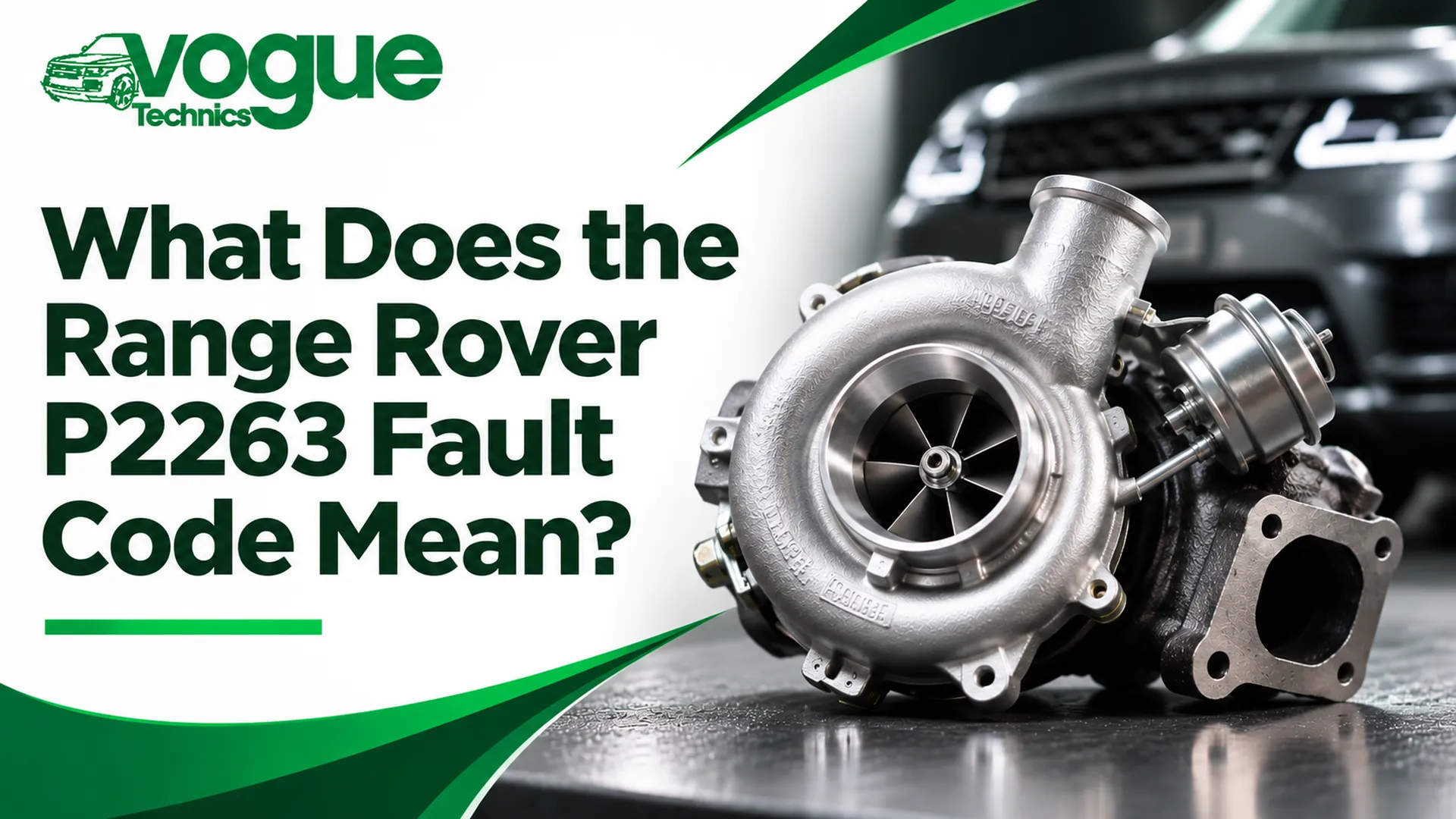
P2263 is the generic OBD-II code for turbo/supercharger boost system performance. The ECU (engine control unit) compares the boost it requests with the boost the sensors actually measure. If the two don't match for long enough, it stores the code and lights the warning lamp.
Owners also search for it as the Range Rover fault code P2263 or the Land Rover fault code P2263. These are the same fault. It appears across the range, from the Evoque and Freelander 2 to the Discovery 4 and Range Rover Sport.
Typical symptoms include:
- Noticeable loss of power, especially when overtaking or climbing hills
- Limp mode, where the ECU limits power to protect the engine
- Black or grey smoke from the exhaust
- A whistling, fluttering or siren-like noise from the turbo
- Poor fuel economy and a rough or hesitant throttle response
These symptoms matter because they tell us which way the fault points. Low power with a hiss usually suggests a boost leak. A whine with oil smoke points towards the turbo itself.
Why Is My Land Rover Showing P2263-21 or P2263-22 on an Evoque, Discovery 4 or Freelander 2?
Jaguar Land Rover systems add a suffix to the base code. That suffix describes how the fault is showing up, which helps narrow down the cause.
In general, a Land Rover P2263-21 points to boost that is lower than the ECU requested (underboost). A P2263-22 usually points to boost that is higher than expected (overboost). Exact definitions can vary by system, so we always confirm the cause with live data.
Code | Typical vehicle | General meaning | Common starting points |
| P2263-21 | Range Rover Evoque, Freelander 2 | Boost lower than requested | Boost leak, sticking actuator, weak turbo |
| P2263-22 | Land Rover Discovery 4 | Boost higher than expected | Stuck vanes, actuator or control fault |
| P2263 (no suffix) | Range Rover Sport, Range Rover | Boost does not match demand | Sensor, hose, DPF or turbo |
Take the P2263-21 Range Rover Evoque case. It's often linked to the 2.2 diesel's variable-geometry turbo, where carbon build-up can stop the vanes moving freely. On a P2263-21 Freelander 2, which shares much of that engine, we see the same pattern, often with a split intercooler hose alongside.
A P2263-22 Land Rover Discovery 4 is different. The twin-turbo V6 diesels make overboost faults harder to pin down, so each turbo's actuator and the vacuum or electronic control side must be tested separately.
Which Other Fault Codes Appear With P2263, Such as P0915, P3032-62 and C1A18-64?
Warning lights rarely come alone. If you're searching a Range Rover fault codes list, you'll often find other codes stored alongside P2263. Some are related and some are not.
- P0915: This is normally a gear shift position circuit code, so it relates to the transmission rather than the turbo. A Range Rover fault code P0915 appearing with P2263 usually means two separate issues, or limp mode affecting both systems.
- P3032-62 (Range Rover): The P3032 62 Range Rover code is manufacturer-specific. Treat it as a pointer, not a diagnosis, and check it against live data.
- C1A18-64: The Range Rover error C1A18 64 has a "C" prefix, which means a chassis-category code. It's normally separate from boost faults, but it can add to the warning lights on the dash.
Turbo faults aren't exclusive to Land Rover. The fault code P2263 Ford Mondeo owners search for appears on that car too, because the Mondeo's 2.2 TDCi diesel shares its engine family with the Freelander 2 and Evoque. The fix logic is much the same.
How Do I Fix Error Code P2263 on a Range Rover?
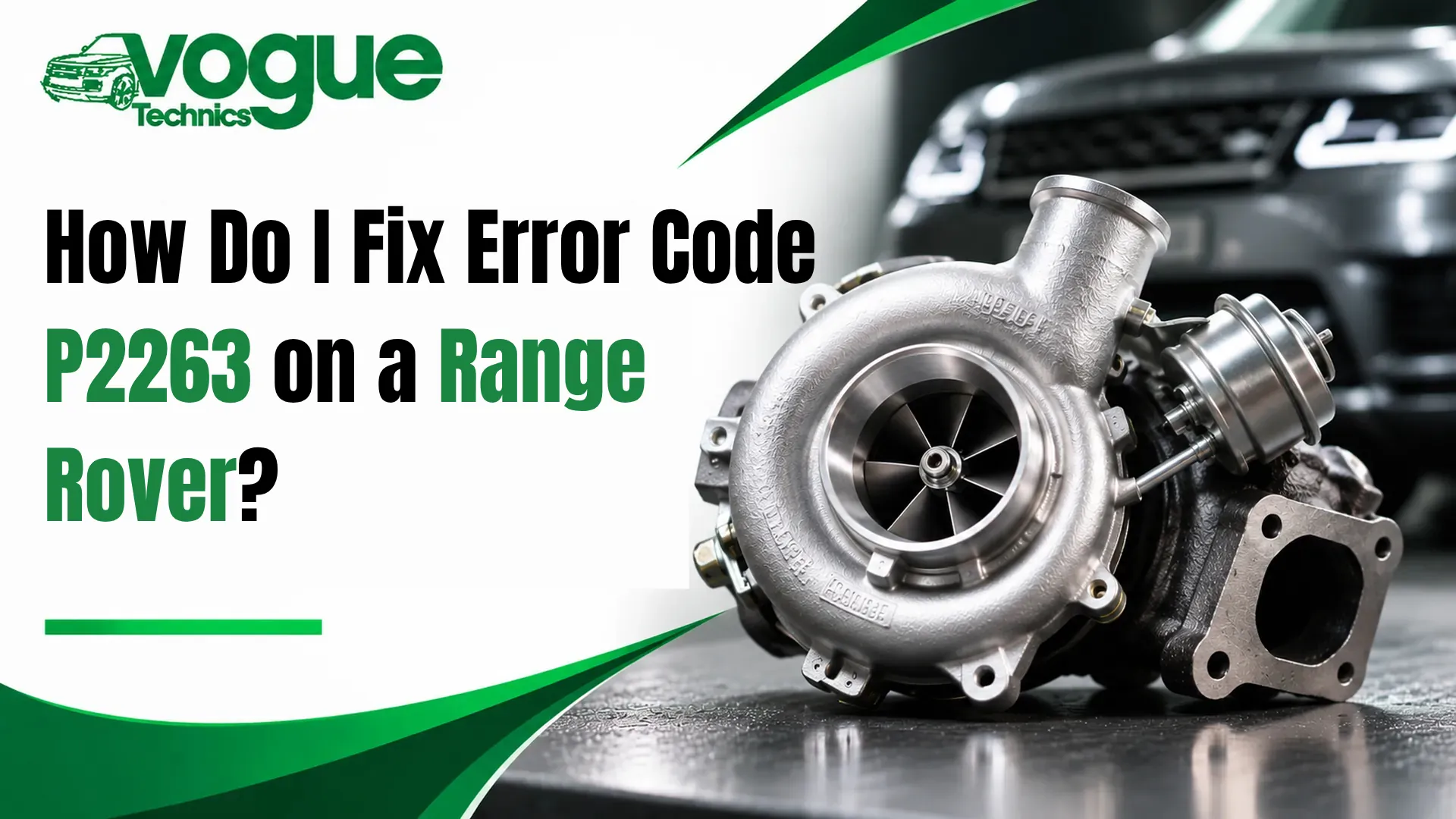
If you've been asking "how do I fix error code P2263?", the honest answer is that the fix depends on the cause. A code reader tells you the symptom. It doesn't tell you the reason.
The causes we see most often are:
- Boost leaks: split or loose intercooler hoses, cracked pipes and failed clamps
- Sticking turbo actuator or vanes: carbon build-up or a failed actuator stops the turbo responding
- Faulty sensors: a boost pressure or air mass sensor feeding the ECU wrong data
- Restricted exhaust or intake: a blocked DPF, a clogged air filter or a stuck EGR valve
- Worn turbocharger: bearing wear, shaft play and oil leaking into the intercooler pipes
Cheap fixes come first, but only after testing. Replacing a turbo on a guess can cost thousands and leave the fault unchanged if the real problem was a hose.
How Do I Diagnose and Repair a Range Rover P2263 Fault Step by Step?
This is the process we follow, and the order matters because it saves time and money.
- Read all stored codes with JLR-compatible diagnostic software, and note any related codes such as those listed above.
- Compare requested and actual boost on live data. A large gap under load tells us where to look.
- Inspect hoses, clamps and the intercooler for splits, oil residue and loose fittings.
- Test for leaks with a pressure or smoke test.
- Check the actuator and vane movement to see whether the turbo responds smoothly.
- Test the sensors for correct readings against known values.
- Check the DPF, EGR and air intake for restrictions.
- Decide on repair, rebuild or replacement only once the evidence is clear.
A real-world example shows why this matters. An owner brought in a Freelander 2 with P2263-21 and limp mode. They'd been quoted for a new turbo elsewhere. A pressure test found a split intercooler hose. A hose replacement and a code clear fixed it, and the turbo was fine.
Other cars aren't so lucky. If the turbo shows shaft play or oil in the intercooler pipework, repair or replacement is the right call, because continued driving can damage the engine.
Can I Reset the Range Rover P2263 Fault Code Myself?
Technically, yes. A scan tool can clear it. But a Range Rover P2263 fault code reset without a repair is a short-term fix at best. The ECU keeps testing boost, so the code and limp mode return as soon as the fault is detected again.
Clearing the code also removes the stored data a technician uses to diagnose it. If you reset it to see whether it comes back, note down the codes first. For a lasting Range Rover P2263 fault code fix, the cause has to be repaired, not just cleared.
Is It Safe to Keep Driving With P2263 Showing?
Short, gentle trips to a garage are usually acceptable if the car is in limp mode and otherwise running smoothly. Don't make a habit of it.
Stop driving and call for help if you see:
- Blue or white smoke, or heavy black smoke
- A loud grinding or screaming noise from the turbo
- Oil loss with no visible leak
- Warning lights for oil pressure or coolant temperature
A failing turbo can send metal fragments or oil into the engine. Early diagnosis is far cheaper than an engine repair.
Why Choose Voguetechnics for P2263 Diagnosis and Repair in Grays, Essex?
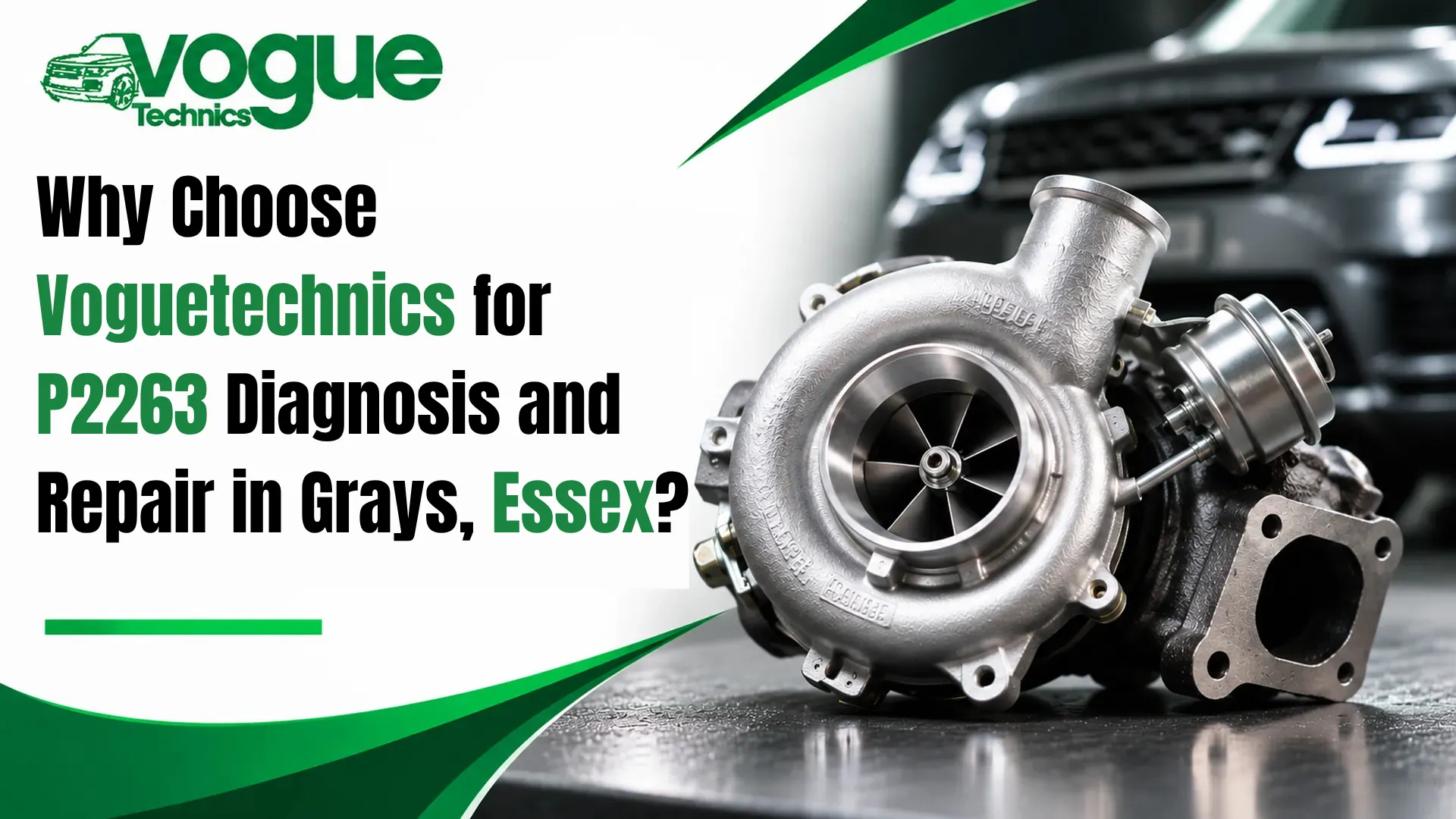
Fault codes only help when the person reading them knows what to do next. We work on Land Rover and Range Rover turbo and diagnostic faults from our base in Grays, Essex, and we explain what we find in plain language.
What you can expect from us:
- Evidence-led diagnosis: we test before we replace anything
- Clear explanations: you'll know what failed, why, and which options you have
- Written quotes: no surprise additions to the bill
- Model knowledge: Evoque, Freelander 2, Discovery 4, Range Rover Sport and full-size Range Rover
A good diagnosis also saves money. Fixing a boost leak costs far less than replacing a turbocharger, and a correct diagnosis stops you paying for the wrong repair.
How Much Does It Cost to Fix a Land Rover P2263 Fault, and How Do I Book?
The cost depends on the cause, which is why we don't quote before testing. A hose or clamp repair sits at the lower end. Sensor, actuator or DPF-related work costs more. Turbo repair or replacement is the largest job, and the price varies with the model and engine.
Booking is simple:
- Call or message us with your model, year and the codes you've seen.
- Bring the car in to our Grays, Essex workshop for diagnosis.
- Approve the repair once you've seen the findings and the quote.
Ready to get your Range Rover's power back? Book your P2263 diagnostic with Voguetechnics and get a clear answer on what's wrong.
Internal linking opportunities: Land Rover diagnostics page, turbo repair and replacement page, DPF cleaning and repair page, Range Rover servicing page, contact and booking page.
Frequently Asked Questions About the Range Rover P2263 Fault Code
What does P2263 mean on a Range Rover?
It means the turbo or supercharger boost system isn't performing as the ECU expects. Boost pressure doesn't match what the engine is requesting.
Can I drive with a P2263 code?
Short, careful trips are usually possible in limp mode, but continued driving risks turbo and engine damage. Stop if you see heavy smoke, hear grinding noises or notice oil loss.
How do I fix error code P2263?
Diagnose first. Check for boost leaks, test the actuator and sensors, inspect the DPF and intake, and assess the turbo. Repair what the evidence points to.
Will clearing the code fix it?
No. The ECU will detect the fault again, and the code will return if the cause remains.
Is P2263 only a Range Rover problem?
No. It appears across Land Rover models and on other diesel cars, including the Ford Mondeo.
What's the difference between P2263-21 and P2263-22?
The suffix describes how the fault presents. P2263-21 generally points to low boost and P2263-22 to excess boost, but the cause still needs testing.
Conclusion
The Range Rover P2263 fault code isn't something to ignore, but it isn't always expensive either. The key is finding the true cause before spending money. A leak, a sticking actuator and a worn turbo all produce the same code and need very different repairs.
If your warning light is on or your car is in limp mode, contact Voguetechnics in Grays, Essex and book a proper diagnosis.