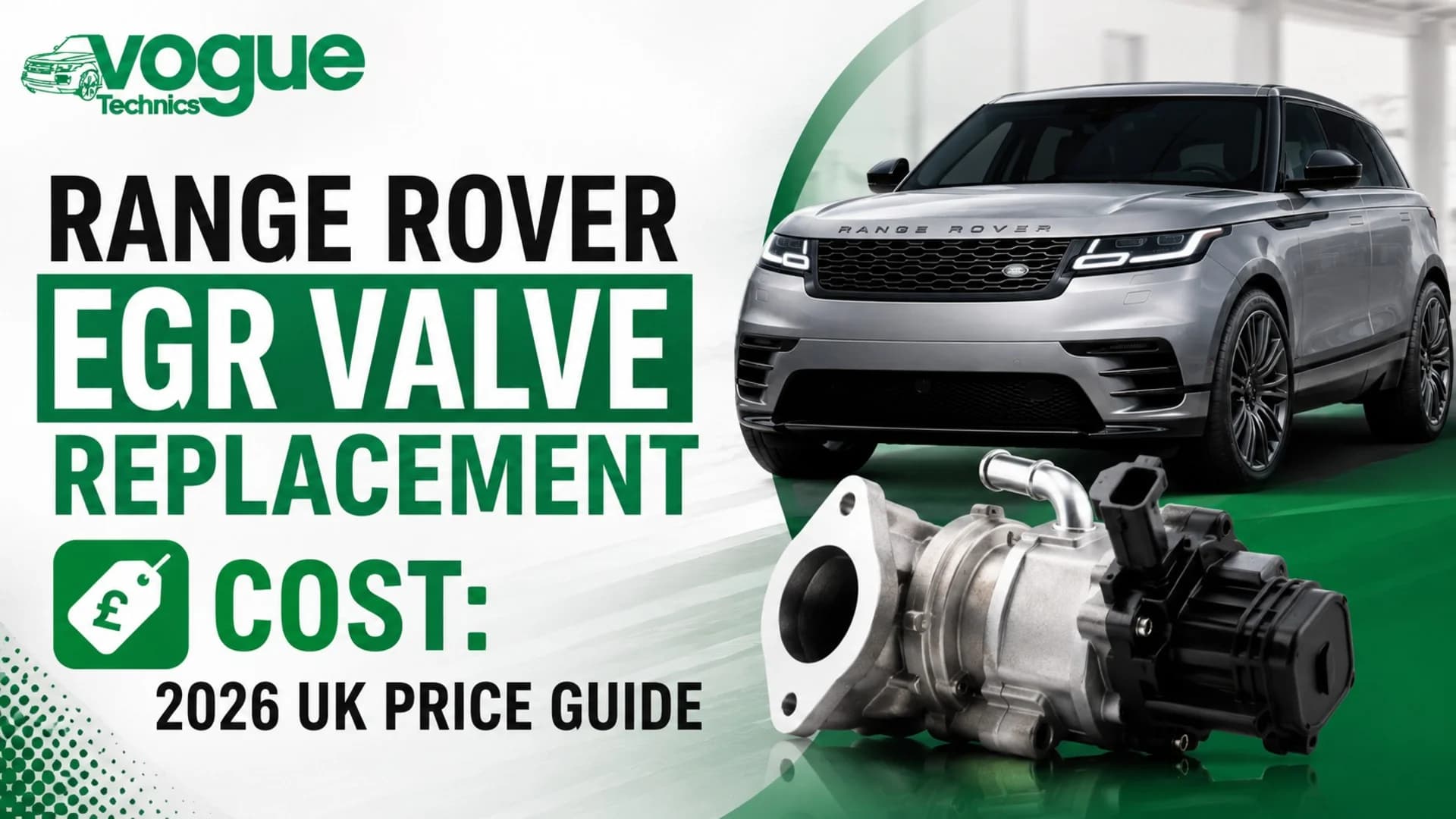
Range Rover EGR Valve Replacement Cost: 2026 UK Price Guide
If your Range Rover has started running rough, lost power, or thrown up a warning light on the dash, there's a good chance the EGR valve is behind it. It's one of the most common faults on Land Rover diesel engines, and it's rarely cheap to ignore.
The good news? You don't need to guess what a repair should cost, or hand over your keys without knowing whether you're being quoted fairly. This guide breaks down real UK pricing for EGR valve replacement across the Range Rover, Range Rover Sport, Evoque, Velar, and Discovery range, explains why the fault happens in the first place, and helps you decide whether cleaning or full replacement is the right call.
Whether you're dealing with a flashing engine light right now or just want to understand what you're in for before it happens, you're in the right place.
How Much Does a Range Rover EGR Valve Replacement Cost?
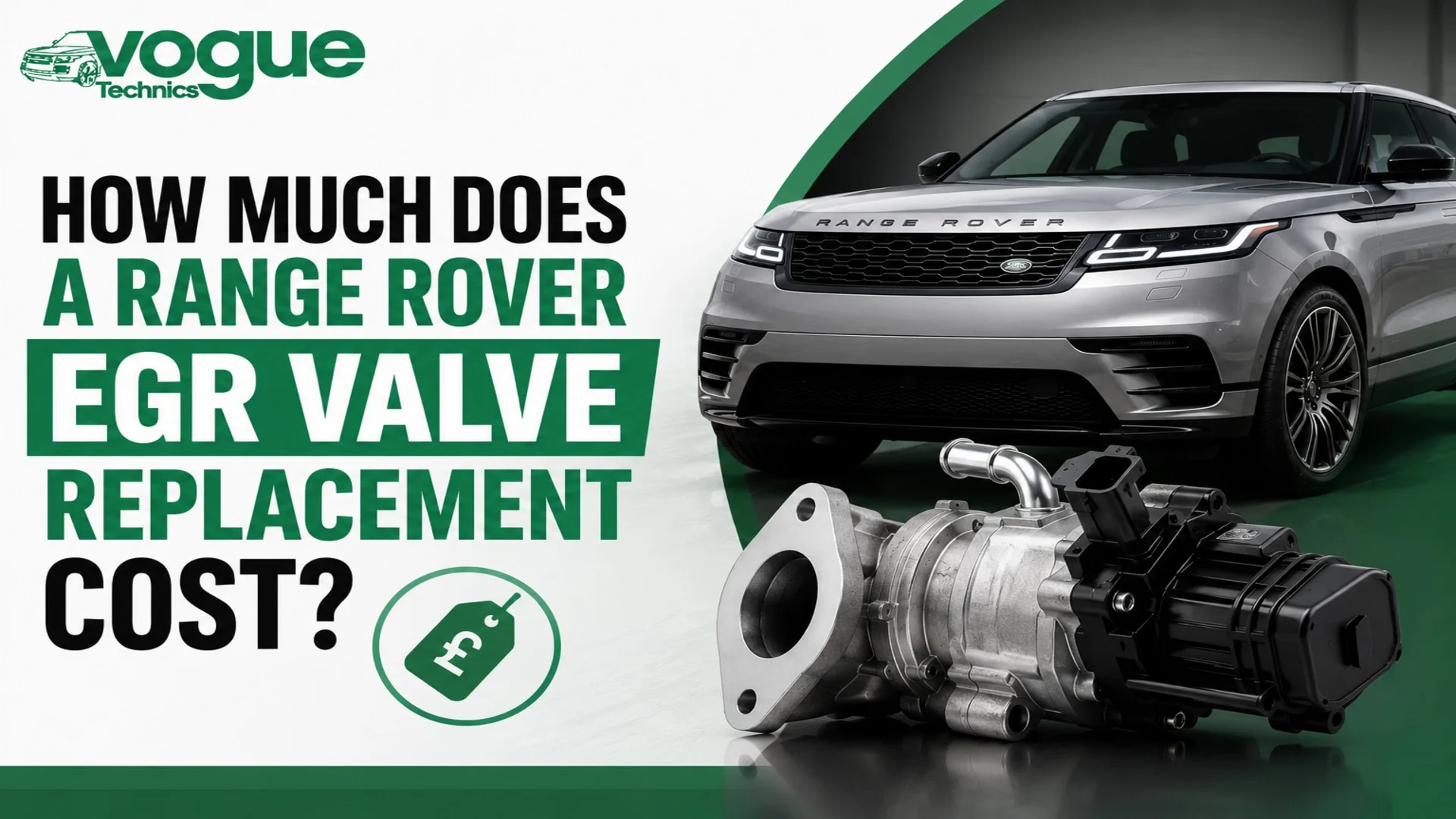
On average, a Range Rover EGR valve replacement cost sits between £350 and £750, depending on the model, engine size, and whether you go to a main dealer or an independent specialist. That figure typically covers parts and labour for a straightforward valve swap. If the EGR cooler needs replacing alongside the valve, or if carbon buildup has caused damage to surrounding components, costs can climb toward £900–£1,200.
Here's a quick snapshot of what most owners can expect to pay:
Range Rover Model | Estimated EGR Valve Replacement Cost |
| Range Rover Sport (3.0 TDV6/SDV6) | £400 – £750 |
| Range Rover Evoque (2.0 Ingenium) | £350 – £650 |
| Range Rover Vela | £450 – £800 |
| Discovery 3 / Discovery 4 | £350 – £700 |
| Discovery Sport | £350 – £650 |
These figures are UK-wide estimates and can shift based on your location, the age of the vehicle, and whether genuine or aftermarket parts are used. Dealer pricing at the top end, independent Land Rover specialists usually land somewhere in the middle.
Average EGR Valve Replacement Cost by Model
Not every Range Rover model handles EGR failure the same way, and the cost reflects that. Larger V6 diesel engines tend to have more complex EGR assemblies, which pushes up both parts and labour time.
Range Rover Sport EGR Valve Replacement Cost
The Range Rover Sport, particularly models fitted with the 3.0 TDV6 or SDV6 engine, typically costs £400 to £750 for a full EGR valve replacement. Because the valve sits close to the turbo and intake manifold on these engines, labour time runs slightly higher than on smaller-engined models.
Range Rover Evoque EGR Valve Replacement Cost
The Evoque, especially with the 2.0 Ingenium diesel, is generally the most affordable to repair in the range. Expect to pay £350 to £650. The Ingenium engine's EGR valve is more accessible, which keeps labour costs down compared to the older V6 units.
Range Rover Velar, Discovery 3/4 & Discovery Sport EGR Valve Costs
The Velar sits closer to the Sport in terms of pricing, at £450 to £800, largely due to its more complex emissions system. Discovery 3 and Discovery 4 models, often fitted with older TDV6 units, typically fall between £350 and £700. Discovery Sport, sharing much of its platform with the Evoque, tends to price similarly at £350 to £650.
EGR Valve Parts Cost vs Labour Cost
It helps to understand where your money is actually going. Roughly speaking, the EGR valve part itself accounts for 40-60% of the total bill, with labour making up the rest. Labour typically runs 1.5 to 3 hours, depending on accessibility and whether the intake manifold needs removing to reach the valve.
Genuine vs OEM vs Aftermarket EGR Valve Prices
This is where a lot of owners get caught out by unclear quotes. Here's how the three main options compare:
- Genuine Land Rover parts , Sourced directly through the manufacturer, these typically cost the most but come with the highest confidence around fitment and longevity. Expect to pay a premium, often 20-40% more than aftermarket equivalents.
- OEM parts (Pierburg, Delphi, Denso, Bosch, Mahle, Valeo) , These are made by the same suppliers who manufacture parts for Land Rover originally, just sold outside the dealer network. Quality is usually comparable to genuine parts at a lower price point, making this the sweet spot for most owners.
- Aftermarket parts , The cheapest option upfront, but quality varies significantly between brands. Some aftermarket EGR valves fail again within 12-18 months, which can end up costing more in the long run through repeat labour charges.
For most Range Rover owners, an OEM valve from a recognised brand like Pierburg or Delphi offers the best balance of cost and reliability , you're not paying dealer markup, but you're also not gambling on an unknown manufacturer.
Signs Your Range Rover EGR Valve Needs Replacing
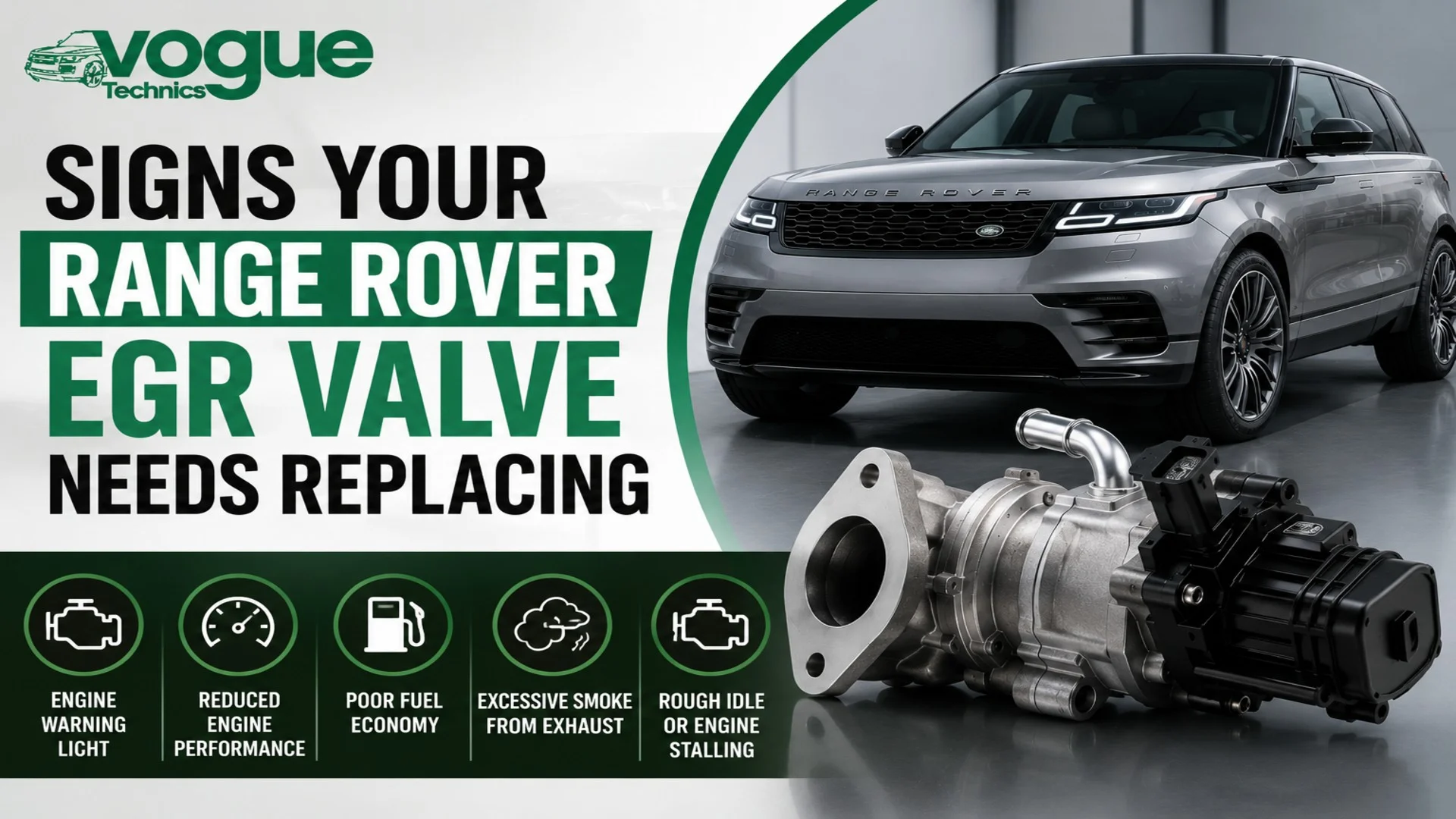
Catching EGR failure early can save you from more expensive repairs down the line, including potential damage to the turbocharger or DPF. Here are the symptoms worth watching for.
Common EGR Valve Fault Codes (P0401, P0402, P0403)
If your Range Rover has thrown a warning light, a diagnostic scan will usually point to one of these codes:
- P0401 , Indicates insufficient EGR flow, often caused by a stuck or carbon-clogged valve restricting exhaust gas recirculation.
- P0402 , The opposite issue, signalling excessive EGR flow, which can happen if the valve sticks open.
- P0403 , Points to an electrical fault in the EGR valve circuit, such as a faulty actuator or wiring issue rather than a mechanical blockage.
Knowing which code has come up can help you (or your mechanic) narrow down whether you're dealing with carbon buildup, a mechanical failure, or an electrical fault , each of which affects the repair approach and cost.
EGR Valve Symptoms: Limp Mode, Black Smoke & Rough Idle
Beyond a warning light, a failing EGR valve tends to announce itself through noticeable changes in how the car drives:
- Rough or unstable idle , the engine feels like it's hunting for the right RPM at a standstill.
- Reduced power or limp mode , the ECU restricts engine output to protect the drivetrain once it detects an emissions fault.
- Black smoke from the exhaust , usually a sign the air-fuel mixture has been thrown off by incorrect EGR flow.
- Poor fuel economy , a stuck-open valve can disrupt combustion efficiency, increasing consumption.
- Engine hesitation or misfire under acceleration, particularly noticeable on motorway inclines.
Any one of these on its own isn't necessarily a smoking gun, but two or more together, especially alongside a check engine light, are a strong indicator the EGR system needs attention.
Can You Drive With a Faulty EGR Valve?
Technically, yes, for short periods, but it's not advisable. A faulty EGR valve puts your engine into limp mode more often than not, which limits power and can make motorway driving genuinely unsafe when merging or overtaking. There's also a knock-on risk: prolonged EGR faults can contribute to turbocharger strain and DPF blockages, turning a few-hundred-pound repair into a much larger bill.
If your Range Rover has an active engine light and any of the symptoms above, it's worth getting it looked at within a few days rather than waiting for an MOT to flag it.
Will a Faulty EGR Valve Cause an MOT Failure?
Yes , a malfunctioning EGR valve can cause your Range Rover to fail its MOT, either through excessive emissions readings or an illuminated engine management light, both of which are checked as part of the emissions and warning light sections of the test. If you're due an MOT soon and suspect an EGR issue, it's worth addressing beforehand to avoid a failed test and a second visit.
EGR Valve Cleaning vs Replacement: Which Do You Need?
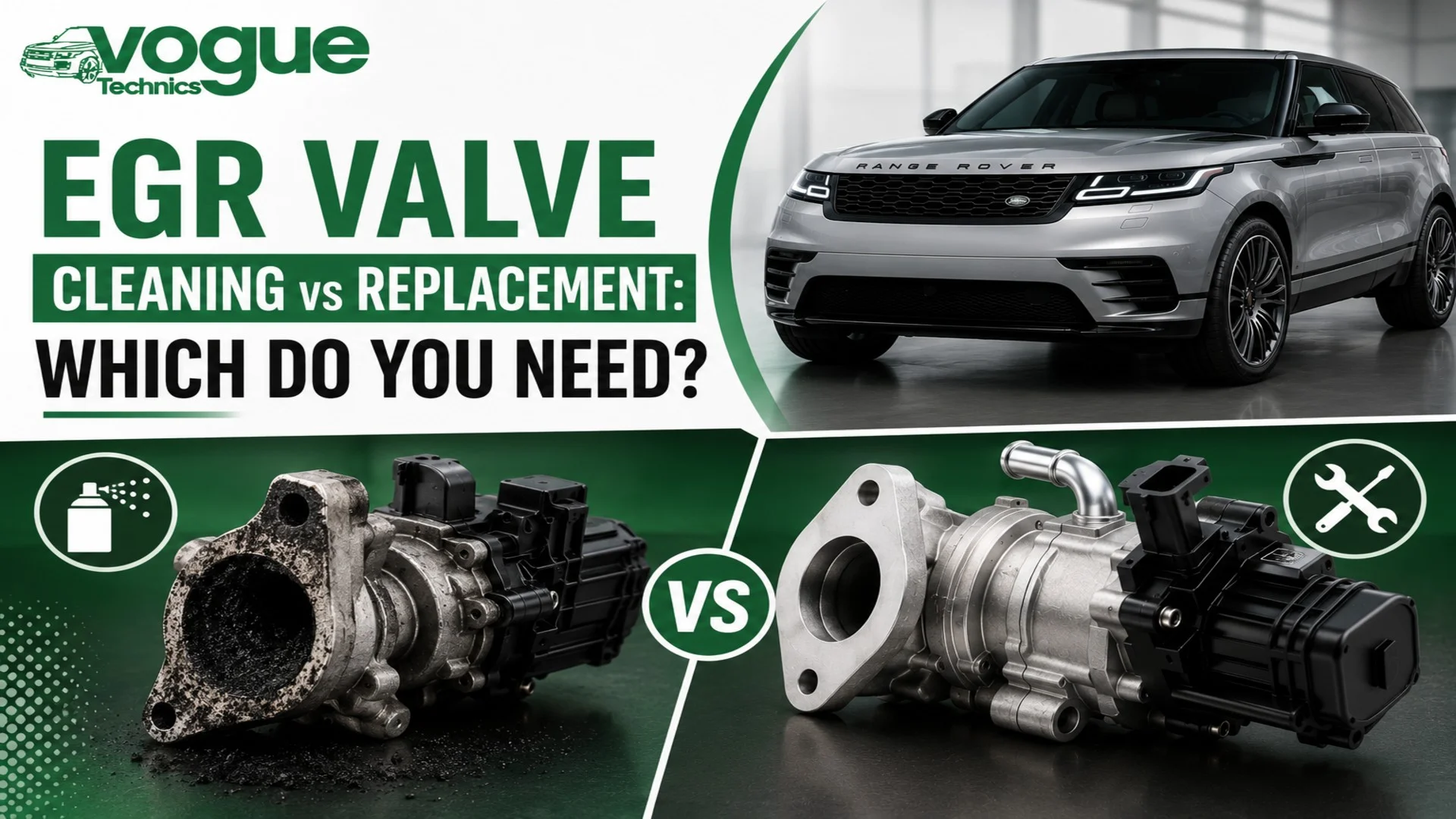
This is one of the most common questions Range Rover owners ask, and the honest answer is: it depends on how far the fault has progressed.
When Cleaning Is Enough
If the valve itself is mechanically sound but restricted by carbon deposits, cleaning can restore proper function at a fraction of the replacement cost, typically £80 to £150 for a professional carbon clean. This works best when:
- The fault is caught early, often flagged by a P0401 code before any drivability symptoms appear.
- There's no physical damage to the valve's internal components or actuator.
- The vehicle has relatively low mileage since its last service.
When Replacement Is Necessary
Cleaning won't help once the valve itself has mechanically failed. Replacement becomes the only real fix when:
- The actuator or electronic control has failed (often flagged by a P0403 code).
- The valve is stuck open or closed and cleaning doesn't restore movement.
- Carbon buildup has caused physical wear or cracking within the valve housing.
- The vehicle has recurring EGR faults despite previous cleaning attempts.
As a rule of thumb, if this is the first EGR-related issue your Range Rover has had, cleaning is worth trying first. If it's a repeat problem, replacement is almost always the more cost-effective long-term solution.
EGR Cooler Replacement: Costs & Considerations
The EGR cooler and EGR valve work as a system, and a failing cooler can mimic or worsen valve symptoms, particularly coolant loss, white exhaust smoke, or a sweet smell from the engine bay. Replacing the EGR cooler alongside the valve typically adds £150 to £350 to the total bill, depending on the model. On V6 diesel engines like those in the Range Rover Sport and Discovery, cooler and valve replacement are often recommended together, since the failure of one frequently accelerates wear on the other.
Get a Trusted EGR Valve Replacement Quote from Voguetechnics
Reading about EGR valve costs online is useful, but nothing beats getting an accurate quote based on your specific vehicle, mileage, and fault. At Voguetechnics, based in Grays, Essex, we work specifically with Land Rover and Range Rover vehicles, which means we're familiar with exactly how EGR faults present across different engines and model years, from the Ingenium-powered Evoque to the TDV6 units found in older Discovery and Range Rover Sport models.
Why Choose an Independent Land Rover Specialist for Your EGR Repair
Independent specialists like Voguetechnics typically offer a meaningful cost advantage over main dealers without compromising on parts quality, since most independent garages fit genuine or OEM components sourced from the same suppliers dealers use. The difference usually comes down to labour rates and overheads rather than the quality of the repair itself.
Dealer vs Independent Garage: What's the Difference in Cost?
Factor | Main Dealer | Independent Specialist |
| Typical labour rate | Higher | Lower to moderate |
| Parts used | Genuine only | Genuine or OEM options |
| Diagnostic familiarity | Model-specific | Often broader hands-on experience |
| Turnaround time | Can involve longer wait times | Often faster booking availability |
| Overall cost | Highest | Typically 20-35% lower |
For most EGR valve replacements, an independent Land Rover specialist offers the same quality repair at a noticeably lower price, provided they have genuine experience working on your specific model.
Book Your Range Rover EGR Valve Replacement Today
If your Range Rover is showing any of the warning signs covered above, don't wait for it to get worse. Get in touch with the team at Voguetechnics for a clear, no-pressure quote based on your model, engine, and symptoms. We'll talk you through whether cleaning or replacement is the right call before any work begins.
Frequently Asked Questions
What is an EGR valve and what does it do? The EGR (Exhaust Gas Recirculation) valve reduces harmful nitrogen oxide emissions by redirecting a portion of exhaust gas back into the intake manifold, lowering combustion temperature. It's a core part of your Range Rover's emissions control system, working alongside the DPF and catalytic converter.
How much does an EGR valve cost on its own, without labour? The part itself typically costs £150 to £400, depending on whether it's genuine, OEM, or aftermarket, and which model it's fitted to.
How long does an EGR valve replacement take? Most replacements take between 1.5 and 3 hours, though this can extend if the intake manifold needs removing for access, which is common on V6 diesel engines.
Does a faulty EGR valve affect fuel economy? Yes. A stuck or malfunctioning EGR valve disrupts the air-fuel mixture, which commonly leads to noticeably reduced fuel efficiency until it's repaired.
Can a faulty EGR valve damage the turbocharger? It can contribute to it. Excess carbon and soot from a malfunctioning EGR system can accumulate in the intake tract and around the turbo, gradually reducing performance and increasing wear over time.
How long does an EGR valve typically last? There's no fixed lifespan, but many Range Rover owners see EGR-related faults appear somewhere between 60,000 and 100,000 miles, particularly on vehicles used mostly for short journeys, which don't allow carbon deposits to burn off naturally.
Ignoring an EGR fault rarely makes it cheaper to fix. What starts as a simple valve issue can, left unaddressed, spread to the cooler, turbo, or DPF, turning a few hundred pounds into a much bigger bill. If you're seeing any of the symptoms covered here, get a proper diagnostic check sooner rather than later. It's the one thing that consistently keeps repair costs on the lower end of the scale.