New Defender D250 Engine Problems: Common Faults, Reliability and Expert Help in Essex
A warning light on the dash of a vehicle that cost this much is stressful. The engine drops into limp mode, a message about the emissions system appears, and the dealer's quote lands with a thud. If that sounds familiar, you are probably searching for new Defender D250 engine problems to find out whether it is a minor glitch or the start of something expensive.
This guide gives you a straight answer. It covers what owners and workshops actually report, how serious each issue is, what to do when a warning appears, and when to get a specialist involved. We work on Land Rover engines from our workshop in Grays, Essex, so the advice comes from the repair side, not the brochure.
Key takeaways
- The D250 is a 3.0-litre six-cylinder mild-hybrid diesel, not the older Puma engine.
- Most reported faults involve software, emissions hardware and electrical systems rather than the engine's core mechanical parts.
- Many warnings are fixable if you act early. Ignoring them is what turns small faults into big bills.
- A proper diagnosis reads live data and software versions. It does not simply clear codes.
What Are the Most Common New Defender D250 Engine Problems?
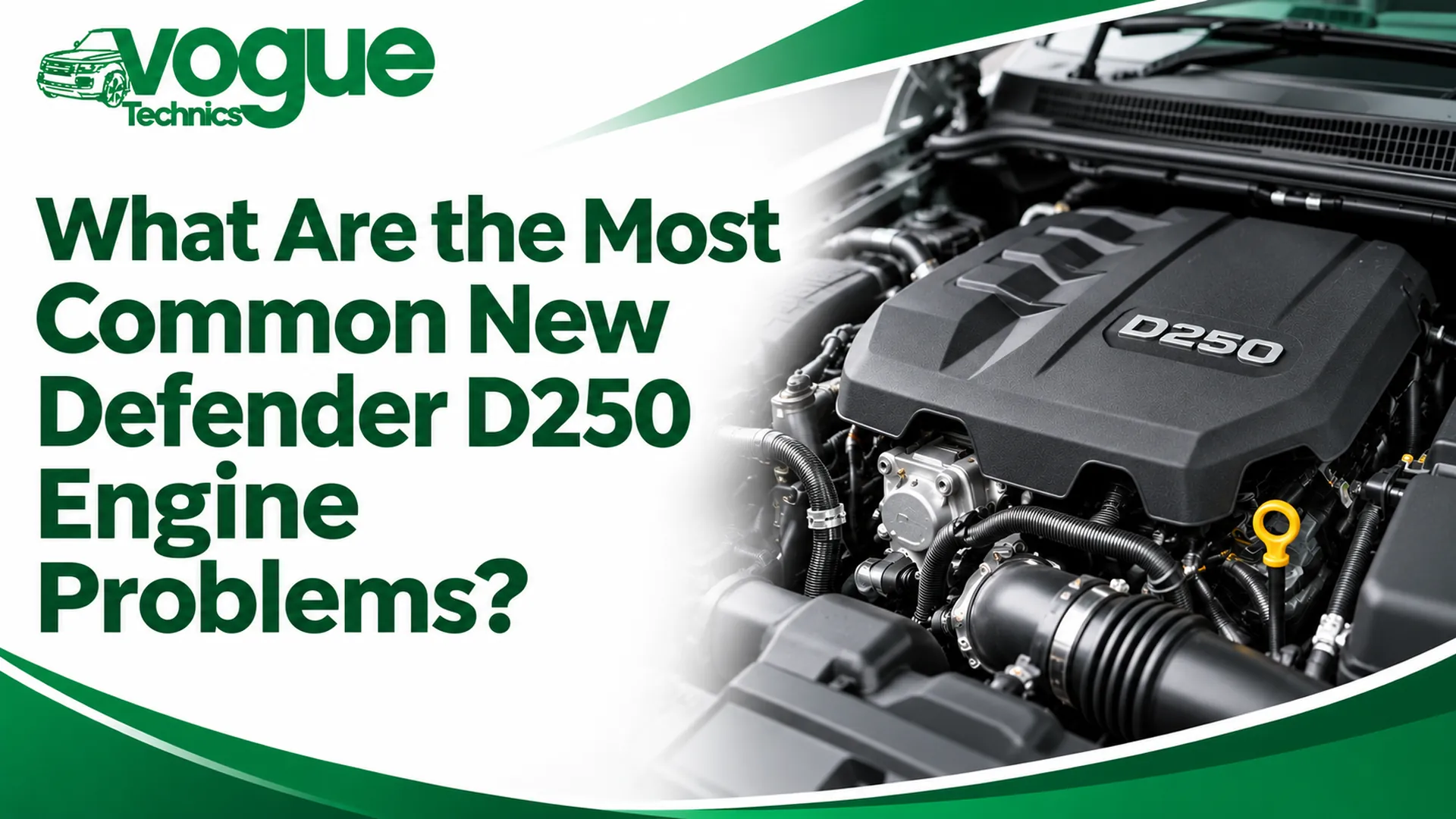
Start with what you are dealing with. The D250 is the six-cylinder diesel in the new-shape Defender, sold from around 2021. It pairs a turbocharged 3.0-litre Ingenium engine with a 48V mild-hybrid system and a modern emissions setup. That is a lot of technology working together, and most of the problems owners describe sit in the systems around the engine rather than inside it.
Is the Defender D250 Engine Reliable? What 2021 and 2022 Owners Report
Short answer: the core engine has not earned a bad reputation, but the supporting electronics and emissions systems generate most of the complaints. Reliability varies by vehicle, software version and how the Defender is used. Short, cold, stop-start journeys are harder on a modern diesel than steady motorway miles.
When owners post in forums or bring vehicles to independent workshops, the same themes appear again and again. Treat the list below as areas to watch, not a guarantee that your vehicle will suffer from any of them. Confirm anything specific to your VIN against current recalls and service bulletins.
- Software and control module glitches. These can cause false warnings, rough running or limp mode. Updates often resolve them, so check your software level early.
- DPF and emissions faults. Diesel particulate filters block when a vehicle rarely gets the sustained run needed to regenerate.
- AdBlue and SCR warnings. Faults in the dosing system or sensors can trigger countdown messages and, eventually, restricted starting.
- Mild-hybrid and 48V system faults. Battery or converter issues may show as warning messages or reduced assistance.
- Turbo and boost-related faults. Sensor, actuator or pipe issues can cause a loss of power long before the turbo itself fails.
- Fuel, injector and oil or coolant concerns. These are less common, but they are the ones to take most seriously.
Here is a quick reference you can screenshot before calling a workshop.
Symptom | Possible cause | Urgency | Typical next step |
| Limp mode or sudden loss of power | Boost sensor, turbo actuator, software or EGR fault | High: stop driving soon | Full diagnostic with live data |
| DPF warning light | Blocked filter after short journeys | Medium | Regeneration drive or forced regen, then inspection |
| AdBlue countdown message | Dosing pump, sensor or quality fault | High: can restrict restart | Diagnose before the countdown ends |
| Hybrid system message | 48V battery or converter fault | Medium | Scan and test the mild-hybrid system |
| Rough idle or hesitation | Injector, fuel or software issue | Medium | Check codes, fuel data and software version |
| Oil or coolant loss | Leak or internal fault | High | Stop and inspect immediately |
Defender D250 vs Old Puma Engine Problems: What Is the Difference?
Searches like Land Rover Defender Puma engine problems and Land Rover Defender engine issues often mix two very different vehicles. The Puma was a 2.2 and 2.4 four-cylinder diesel in the old-shape Defender built until 2016. Its known weak points include oil leaks, turbo wear and ageing cooling and electrical parts.
The D250 is a completely different engine with different strengths and different weaknesses. Older Defenders tend to suffer from mechanical wear and corrosion. The new one is more likely to throw electronic and emissions-related faults. If you are comparing the two, judge them separately.
A note on model years. If you searched for "2013 new Defender D250 engine problems" or similar with 2017 or 2018, be aware the new-generation Defender only arrived in 2020. Searches with those years almost always refer to the old Defender. The D250 only exists from the 2021 model year onwards.
How Do You Diagnose and Fix a Problem With Your Defender D250 Engine?
Knowing the likely faults is useful. Knowing what to do in the first ten minutes is more useful.
What Should You Do When Your New Defender Shows a Warning Light or Goes Into Limp Mode?
Stay calm and follow a simple order.
- Stop safely. If the engine is running roughly, or an oil pressure or coolant warning appears, switch off as soon as you can do so safely.
- Note the message. Photograph the dash. Exact wording helps a technician more than "it threw a fault."
- Check the obvious. Look at oil level, coolant level and the AdBlue gauge. Check that the fuel cap is closed properly.
- Try a restart. A one-off sensor glitch sometimes clears. If the warning returns, it is real.
- Know when to stop driving. Red warnings, loss of oil pressure, coolant loss or heavy smoke mean the vehicle stays parked. Amber warnings with normal driving usually allow a careful drive to a workshop.
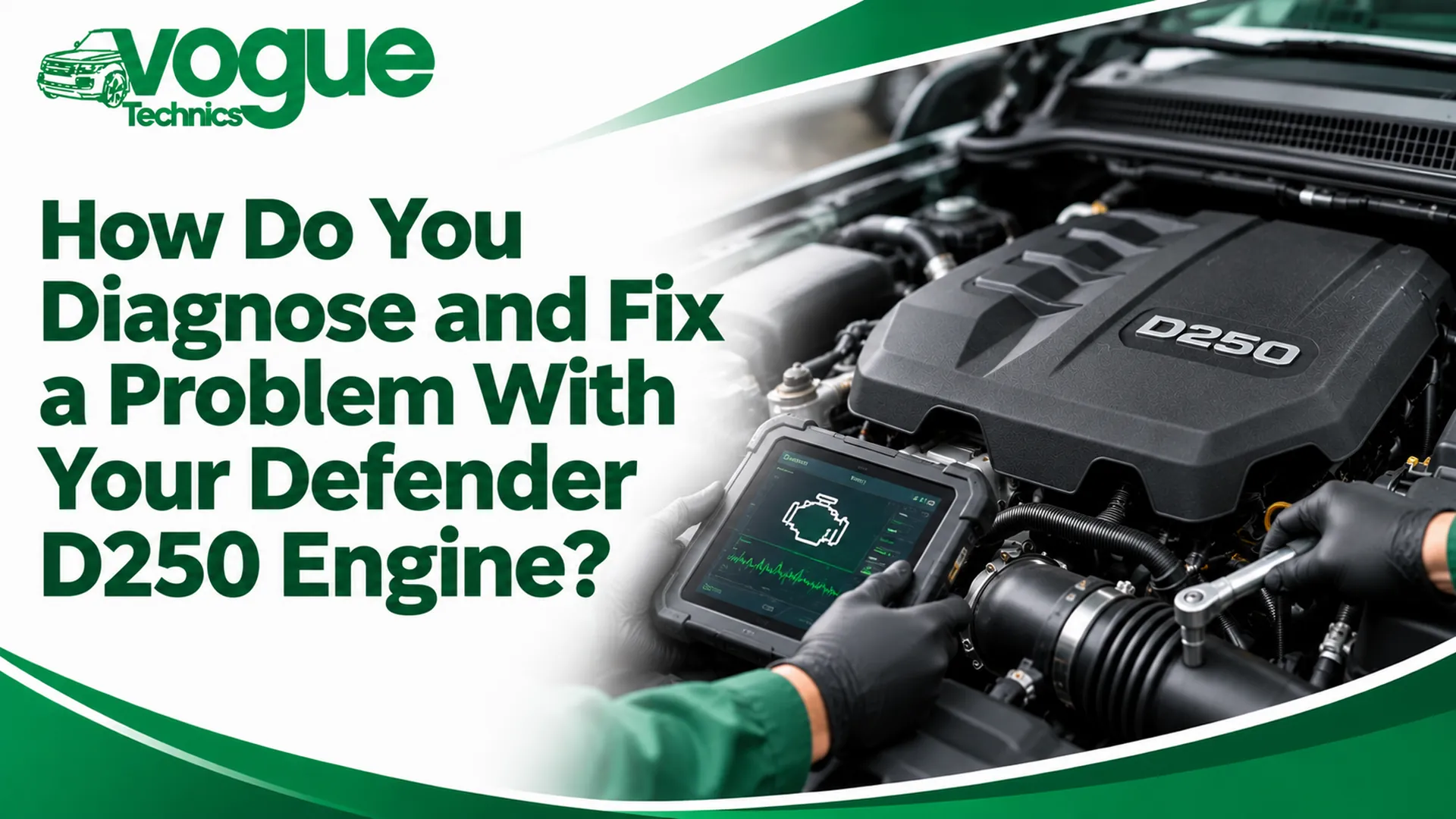
What a proper diagnostic involves. Plugging in a cheap code reader and clearing the fault tells you very little. A proper diagnostic reads fault codes across modules, checks live data from sensors, confirms the software version and then tests the suspect component. Clearing codes without finding the cause only makes the fault come back, usually at a worse moment.
Warranty and dealer versus independent. A new Land Rover normally carries a manufacturer warranty, typically three years from new, so check your paperwork before paying for anything. If the Defender is still covered, the dealer is the right first call for a covered fault. Once the warranty ends, an independent Land Rover specialist can often diagnose and repair for less, and you should still ask exactly what is being replaced and why.
A typical scenario. An owner uses a Defender for short school and shop runs, then notices a DPF warning and a slight loss of power. The cause is rarely a failed engine. More often the filter has not been given the long run it needs to clear. A forced regeneration plus a check of the related sensors fixes it, and the owner is advised to include a regular longer drive. Early action costs a fraction of replacing a blocked filter later.
Why Choose Voguetechnics for Land Rover Defender Engine Diagnostics and Repair in Essex?

Plenty of garages say they work on Land Rovers. Fewer can explain the fault in plain language, show you the evidence and give you options. That is what we aim to do from our base in Grays, Essex, for owners across Essex, East London and the wider UK.
What Does a Defender D250 Diagnostic and Repair Service With Voguetechnics Include?
Our approach is simple: find the real cause, tell you honestly what it is and let you decide.
- Full diagnostic check. Fault codes, live data and software version review.
- A clear explanation. You get the findings in plain English, including what is urgent and what can wait.
- Repair or sourcing options. Where parts are needed, we discuss quality options and costs before work starts.
- A written estimate. No surprises on the final invoice.
- Support after the repair. If something does not seem right, you can call us.
For older Land Rovers, see our guides on reconditioned engines, including the reconditioned 200Tdi engine for classic Defenders and Discoveries.
How Do You Book a Defender Engine Check With Us?
- Send your details. Give us the model, year, mileage and a description of the warning or symptom.
- Get an estimate. We confirm the diagnostic cost and timescale.
- Book your slot. Bring it to our workshop in Grays, Essex.
- Receive your report. You get a clear explanation of the fault and your options for fixing it.
Call, message or use the enquiry form today. The sooner a warning is checked, the cheaper it usually is to fix.
Frequently Asked Questions About Defender D250 Engine Problems
Is the Defender D250 reliable?
The core 3.0-litre engine has not built a poor reputation. Most complaints involve software, emissions and electrical systems, which are often fixable with updates or targeted repairs.
Is the new Defender more reliable than the old one?
They fail in different ways. The old Defender suffers more from mechanical wear and corrosion. The new one is more complex and tends to show electronic and emissions faults.
How many miles will a Defender D250 last?
With regular servicing, correct oil and sensible driving, a modern diesel can cover very high mileage. Maintenance history matters more than the number on the clock.
Are Defender D250 engine problems covered by warranty?
Within the manufacturer warranty period, genuine defects are generally covered. Wear items and damage from neglect usually are not, so read your warranty terms.
What should I check before buying a used new-shape Defender?
Ask for a full service history, check for open recalls, scan for stored fault codes, confirm the software is up to date and test-drive it fully warmed up.
Do owner forums reflect real D250 reliability?
Forums are useful for spotting patterns, but people mostly post when something goes wrong. Use them as a prompt for questions to ask, not as proof of how every vehicle behaves.
Final Word
New Defender D250 engine problems are rarely as frightening as the first warning light makes them feel. Most of the common faults involve software, emissions or electrical systems, and most are manageable when caught early and diagnosed properly.
If your Defender is showing a warning, running rough or you are about to buy a used one, get in touch with Voguetechnics in Grays, Essex, and we will tell you plainly what is wrong and what it will take to fix it.