
Land Rover 300Tdi Engine: Specs, Common Problems, Rebuild and Replacement Options in the UK
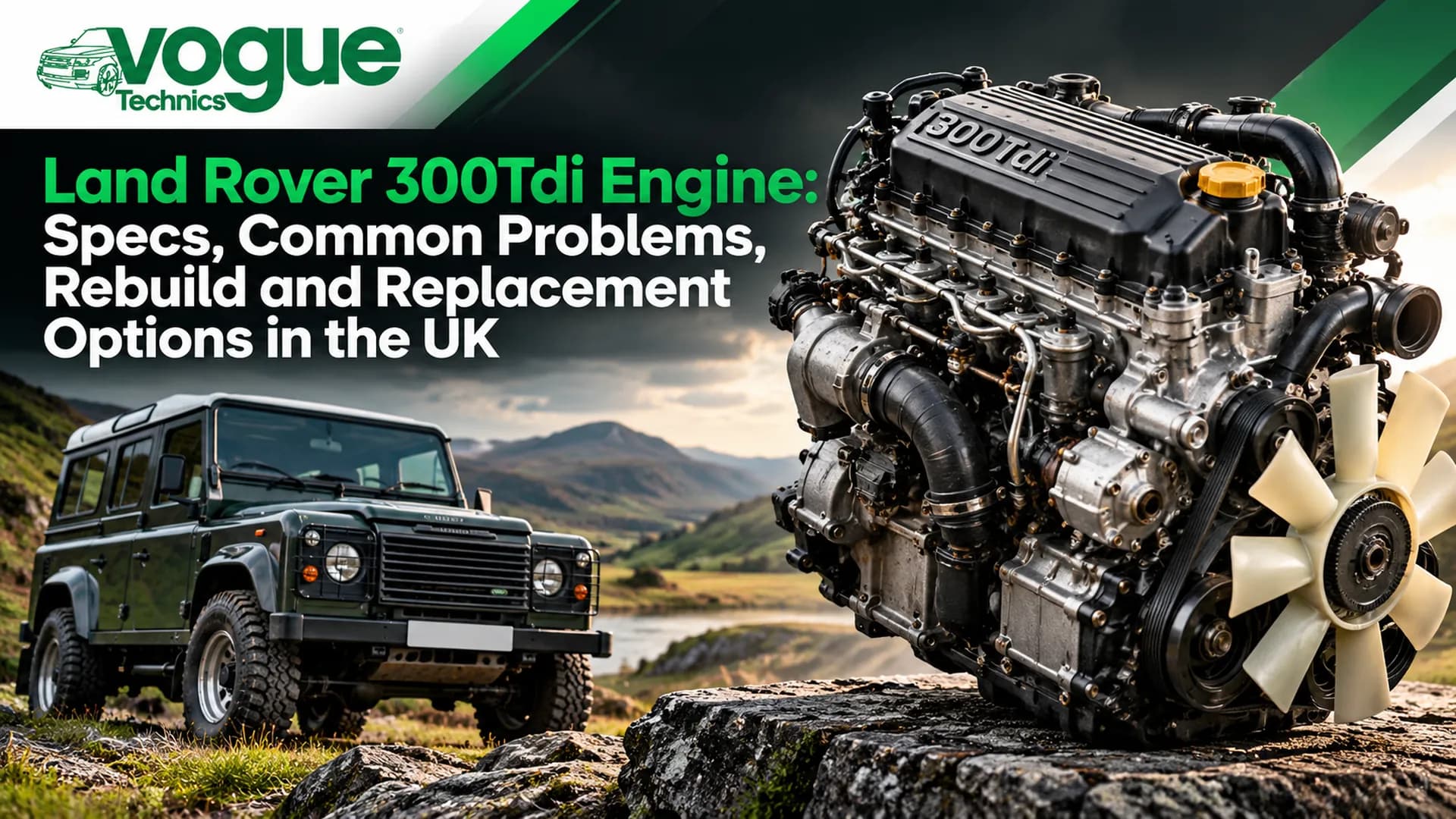
Your 300Tdi is losing coolant, smoking on start-up, or has just been quoted a figure that made you wince. Now you're trying to work out whether to repair it, rebuild it or swap it for another engine.
This guide is for owners of the Defender, Discovery 1 and Range Rover Classic who want a straight answer. It covers what the Land Rover 300Tdi engine is, where it fails, what each fix costs, and how to buy a replacement without getting burned. At Vogue Technics in Grays, Essex, we see these engines on the bench every week, so what follows comes from workshop experience rather than forum hearsay.
What Is the Land Rover 300Tdi Engine and Which Models Use It?
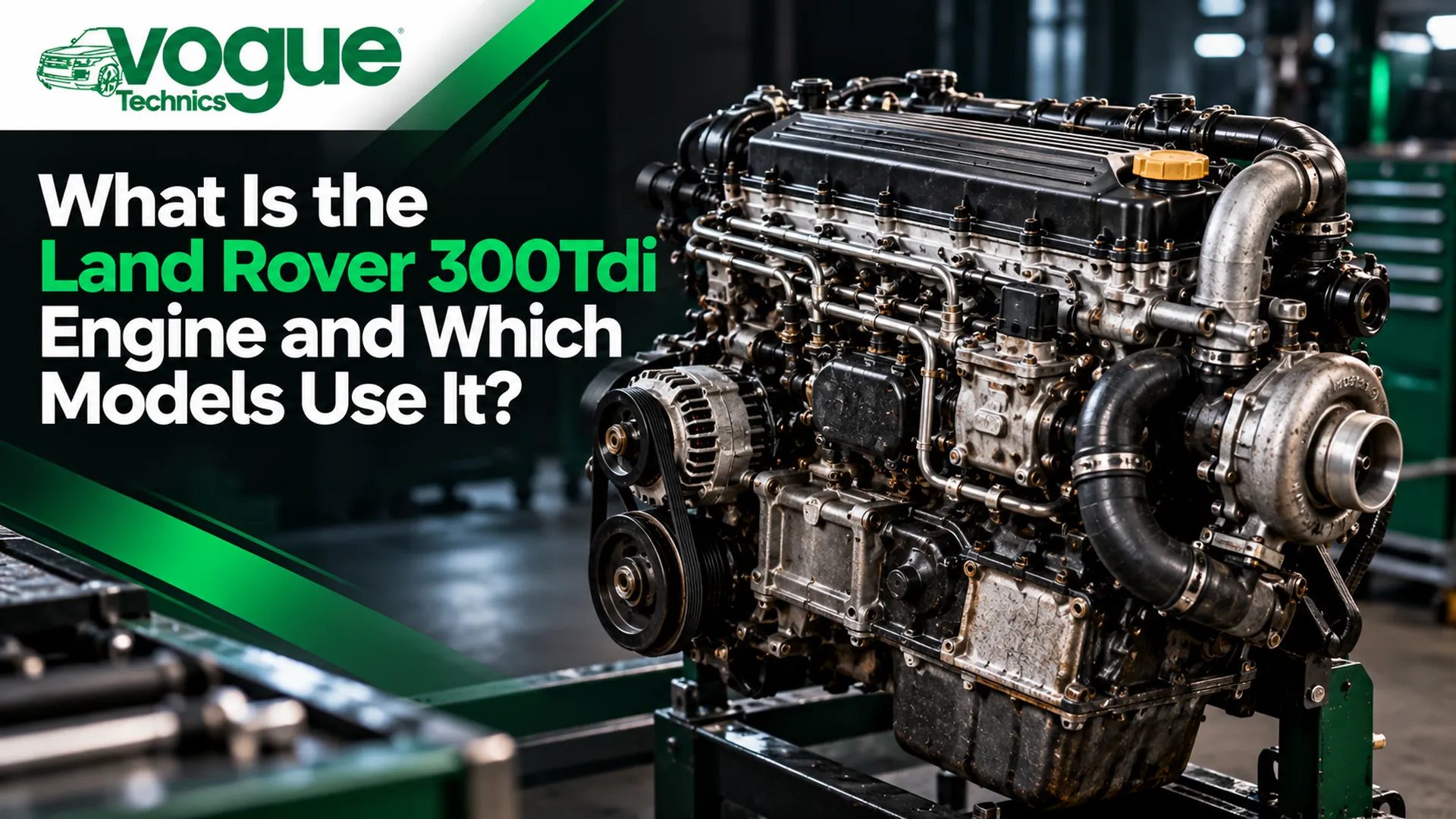
The Land Rover 300Tdi is a 2.5-litre (2495cc), four-cylinder, turbocharged and intercooled direct-injection diesel. It replaced the 200Tdi in the mid-1990s and uses a mechanical injection pump. A later version added electronic diesel control (EDC) on some Discovery models. It is a simple, robust, mechanical diesel engine that a competent mechanic can work on with ordinary tools, and that simplicity is why owners still choose it over later engines.
It was fitted to the Defender 90, 110 and 130, the Discovery Series I and the Range Rover Classic.
Quick facts
Feature | 300Tdi detail |
| Capacity | 2495cc, 2.5 litre |
| Layout | Inline four-cylinder, direct injection |
| Induction | Turbocharged with intercooler |
| Output | Approximately 111 bhp, around 195 lb ft of torque |
| Fuel system | Mechanical injection pump (EDC on some Discovery versions) |
| Cam drive | Timing belt |
Figures vary slightly by application and tune, so check your vehicle's paperwork.
Which 300Tdi Engine Codes and Variants Exist, and How Do I Identify Mine?
Every 300Tdi carries a stamped engine number on the block. The prefix, such as 16L, 23L or 24L, tells a specialist which variant you have, and the codes differ by vehicle and fuel system. Always read the stamping on your own block rather than trusting a seller's description. Ordering a "300Tdi" without confirming the code is how people end up with the wrong ancillaries or the wrong injection setup.
Here is what to check:
- Engine number: stamped on the block. Photograph it before you speak to any supplier.
- Injection type: mechanical pump or EDC. They are not interchangeable without extra work.
- Donor application: Defender, Discovery and Range Rover Classic engines can differ in brackets, sump and ancillaries, so tell us which vehicle it's going into.
How it compares with its siblings
200Tdi | 300Tdi | Td5 | |
| Cylinders | 4 | 4 | 5 |
| Injection | Mechanical | Mechanical (some EDC) | Electronic |
| Appeal | Older, very simple | Refined, easy to maintain | More power, more electronics |
Many owners prefer the 300Tdi because it avoids the complexity of the Td5 while improving on the 200Tdi's refinement. For tasks like 300Tdi engine for sale searches, matching the code is step one.
What Are the Most Common Land Rover 300Tdi Engine Problems?
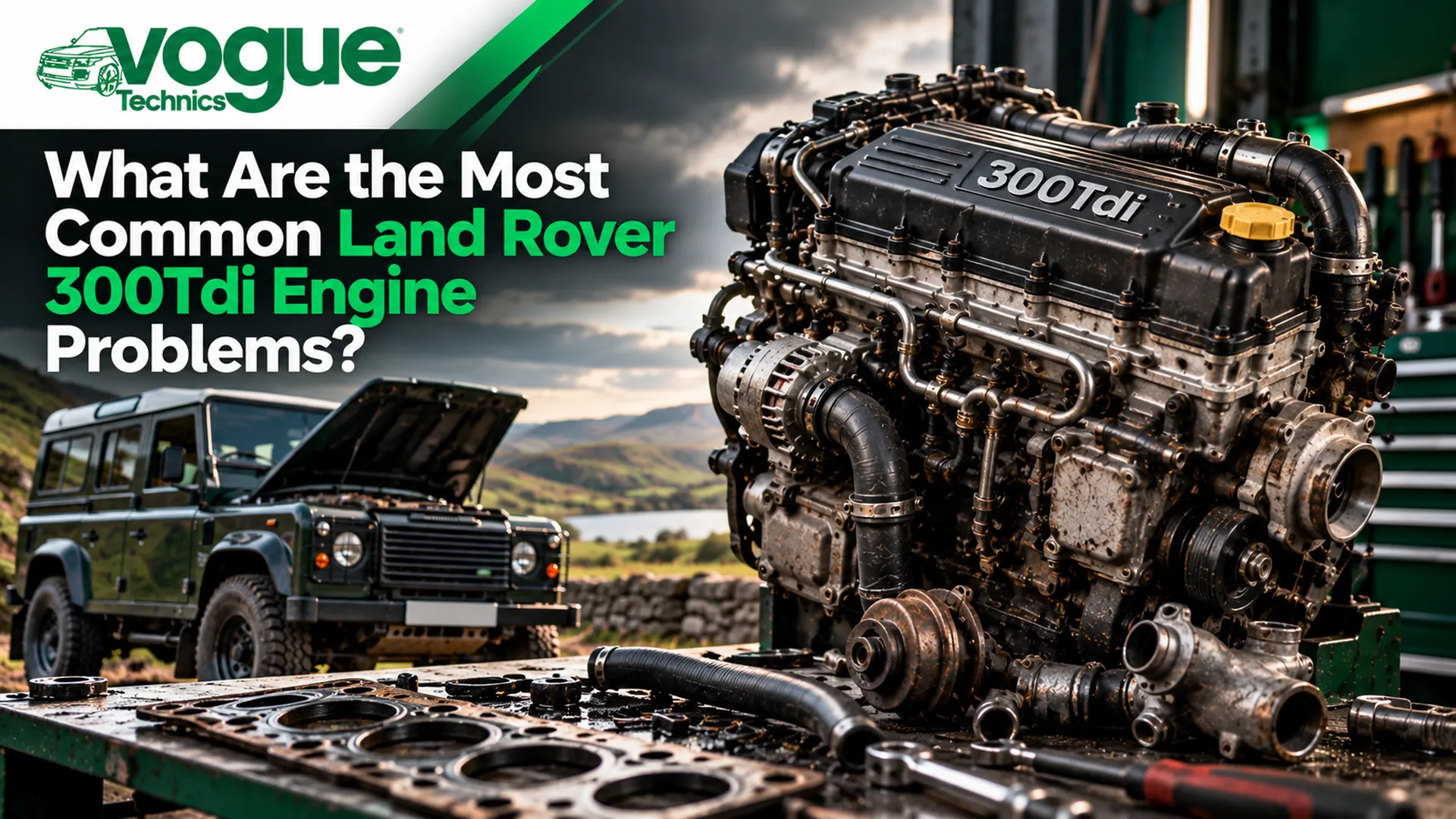
Is the 300Tdi reliable? Yes, when it is maintained. Most failures trace back to a few known weak points rather than random breakdowns. Many engines have passed several hundred thousand miles in the hands of owners who change the belt on time, keep the cooling system clean, and use decent oil. The ones that fail are usually the ones that were neglected.
The recurring faults are:
- Coolant loss and overheating (P-gasket, head gasket, radiator silting)
- Timing belt failure
- Oil leaks, notably from the rear main seal
- Turbocharger wear
- Injector and fuel pump wear, causing smoke, hard starting or low power
Why Does a 300Tdi Lose Coolant or Overheat?
This is the most common complaint we hear. There are three usual culprits.
1. P-gasket failure. The small P-gasket at the front of the engine is a known weak spot. When it fails, coolant escapes, often with no obvious puddle. It is worth checking early, because it is a cheap part that can cause expensive damage.
2. Head gasket failure. Signs include white smoke, a milky residue under the oil filler cap, pressurised coolant system, and unexplained coolant loss. A failed head gasket often follows overheating that went unnoticed.
3. Radiator silting. Over the years, scale and debris restrict the radiator core. Temperatures climb under load, towing or in traffic, and the gauge creeps up.
Real-world example: A Discovery came to us with a "slow coolant leak" that the owner had topped up for months. Compression was fine at first, but the engine had overheated repeatedly, and by the time it arrived the head had begun to distort. A P-gasket and a radiator service would have solved it early. Instead it needed head work.
Our advice: If the temperature gauge rises or you are losing coolant, stop driving. Overheating a diesel with an aluminium-based head can turn a small repair into a rebuild very quickly.
What Happens If a 300Tdi Timing Belt Breaks?
If the belt snaps, the pistons and valves can collide, which may bend valves, damage pistons and wreck the head. The repair bill can then climb from a few hundred pounds of preventative work to a full cylinder head rebuild, or worse.
Many specialists recommend changing the belt well before the maximum interval, roughly every 60,000 miles or five years, whichever comes first, and sooner if the history is unknown. Replace the tensioner, idler pulley and water pump at the same time.
Warning signs include:
- Ticking or rattling from the front of the engine
- Visible cracking or fraying on the belt
- Oil contamination around the timing case
If you have just bought a vehicle with no belt history, treat the belt as due.
How Do I Know If My 300Tdi Needs Repair, a Rebuild or a Replacement?
Use this checklist before you decide:
- Compression test: uneven or low readings point to rings, valves or head gasket trouble.
- Oil pressure: low pressure when hot suggests worn main or big end bearings.
- Blow-by: heavy crankcase fumes indicate worn bores or rings.
- Turbo shaft play: side-to-side movement means the turbo needs replacing.
- Oil leaks: a leaking rear main seal means gearbox removal.
- Smoke: white suggests coolant, blue suggests oil burning, and black points to fuel or air issues.
If one item fails, repair is likely. If several fail, a rebuild or replacement is usually better value. Send us your symptoms and we'll give you an honest recommendation, even when the answer is a simple repair.
Should I Rebuild or Replace My Land Rover 300Tdi Engine, and What Does It Cost?
Four routes are open to you. Which one wins depends on the condition of the block, how many faults you have, and how long you plan to keep the vehicle.
Option | Best for | Trade-off |
| Repair | A single, isolated fault | Doesn't address underlying wear |
| Rebuild | A sound block with worn internals | Longer lead time |
| Reconditioned replacement | Fast turnaround with a warranty | Higher upfront cost than used |
| Used replacement | Tight budgets or short-term use | Unknown history, so inspect carefully |
What a proper rebuild involves: strip, clean, crack test, machine, rebore or hone, crankshaft grinding, new bearings, pistons and rings, cylinder head reconditioning, oil pump and timing system renewal, careful assembly, and testing. Skipping steps, particularly crack testing and machining, is how cheap rebuilds fail within months.
Rebuild or replace? If the block is sound and parts are available, a rebuild gives you an engine that is as good as new and can retain your original numbers. If the block is cracked or the bores are beyond limits, a reconditioned replacement is more sensible. A used engine only makes sense if you can verify its condition.
How Much Does a 300Tdi Rebuild or Replacement Engine Cost in the UK?
Prices vary by supplier, specification and whether you need fitting. As a guide, these are the factors that move the figure:
- Engine type: a complete engine costs more than a stripped/long or short engine, which you complete with your own ancillaries.
- Condition: reconditioned and rebuilt units cost more than used ones but come with proper backing.
- Fitting: supply-and-fit adds labour but removes the risk of installation errors.
- Warranty and returns: longer cover costs more, and is worth paying for.
Before you buy any engine, check:
- The engine number matches your vehicle
- Mileage and donor vehicle history
- Compression and oil pressure results
- Timing belt and P-gasket history
- Smoke on start-up and any coolant contamination in the oil
- Warranty length and return policy in writing
A suspiciously cheap listing with vague history is how most buyers get caught. Ask for the numbers, in writing.
Where Can I Buy a Reconditioned 300Tdi Engine in Grays, Essex?
Vogue Technics is based in Grays, Essex, and supplies customers across the UK. We handle 300Tdi engines for the Defender, Discovery and Range Rover Classic, including reconditioned units, rebuilds, and supply-and-fit.
Here is what you get when you deal with us:
- Specialist knowledge: we work on Land Rover diesels daily and know the weak points.
- Tested engines: every unit is inspected before it leaves.
- Clear warranty terms: you'll know what's covered before you pay.
- UK delivery or fitting: collect, have it delivered, or book it in with us.
- Honest advice: if repair makes more sense than replacement, we'll say so.
Call us, use the enquiry form, or request a free quote. Have your registration and engine number ready and we can usually advise quickly.
What Are the Most Frequently Asked Questions About the Land Rover 300Tdi Engine?
How long does a 300Tdi last?
With regular oil changes, a timely belt and a clean cooling system, many reach 200,000 miles or more. Neglect shortens that dramatically.
Is the Land Rover 300Tdi a good engine?
Yes. It's simple, strong and easy to maintain, which is why owners keep choosing it over more complex alternatives.
Can a 300Tdi head gasket be repaired?
Usually, yes. The head must be checked for flatness and cracks first. If it has overheated badly, reconditioning or replacement may be needed.
Is a reconditioned 300Tdi engine worth it?
For most owners, yes. You get tested components and a warranty, which a used engine can't match.
How often should the timing belt be changed?
Many specialists suggest around 60,000 miles or five years, or immediately if the history is unknown.
Does Vogue Technics fit engines?
Yes. We offer supply-only and supply-and-fit. Contact us with your vehicle details for availability.
Conclusion
The Land Rover 300Tdi engine has earned its reputation. Look after the belt, the P-gasket and the cooling system, and it will keep your Defender, Discovery or Range Rover Classic working for years. When it does fail, the right decision comes down to a proper diagnosis, not guesswork.
If yours is smoking, losing coolant or just worrying you, contact Vogue Technics in Grays, Essex today. Send us your registration and symptoms and we'll tell you whether you need a repair, a rebuild or a reconditioned 300Tdi replacement engine, with a clear price and warranty.