Land Rover 2.0 Ingenium Engine Problems: Symptoms, Causes and Repair Options in Essex
Hearing a metallic rattle on a cold start, watching your oil level creep up between services, or seeing "Restricted Performance" flash across the dash is worrying, and it usually means something is already wearing. Most Land Rover 2.0 Ingenium engine problems start small and get expensive if ignored. This guide covers the common faults, what they feel like, how they are diagnosed, and what repair really involves. If your car is already misbehaving, Vogue Technics in Grays, Essex can book a diagnostic inspection.
What Are the Most Common Land Rover 2.0 Ingenium Engine Problems?
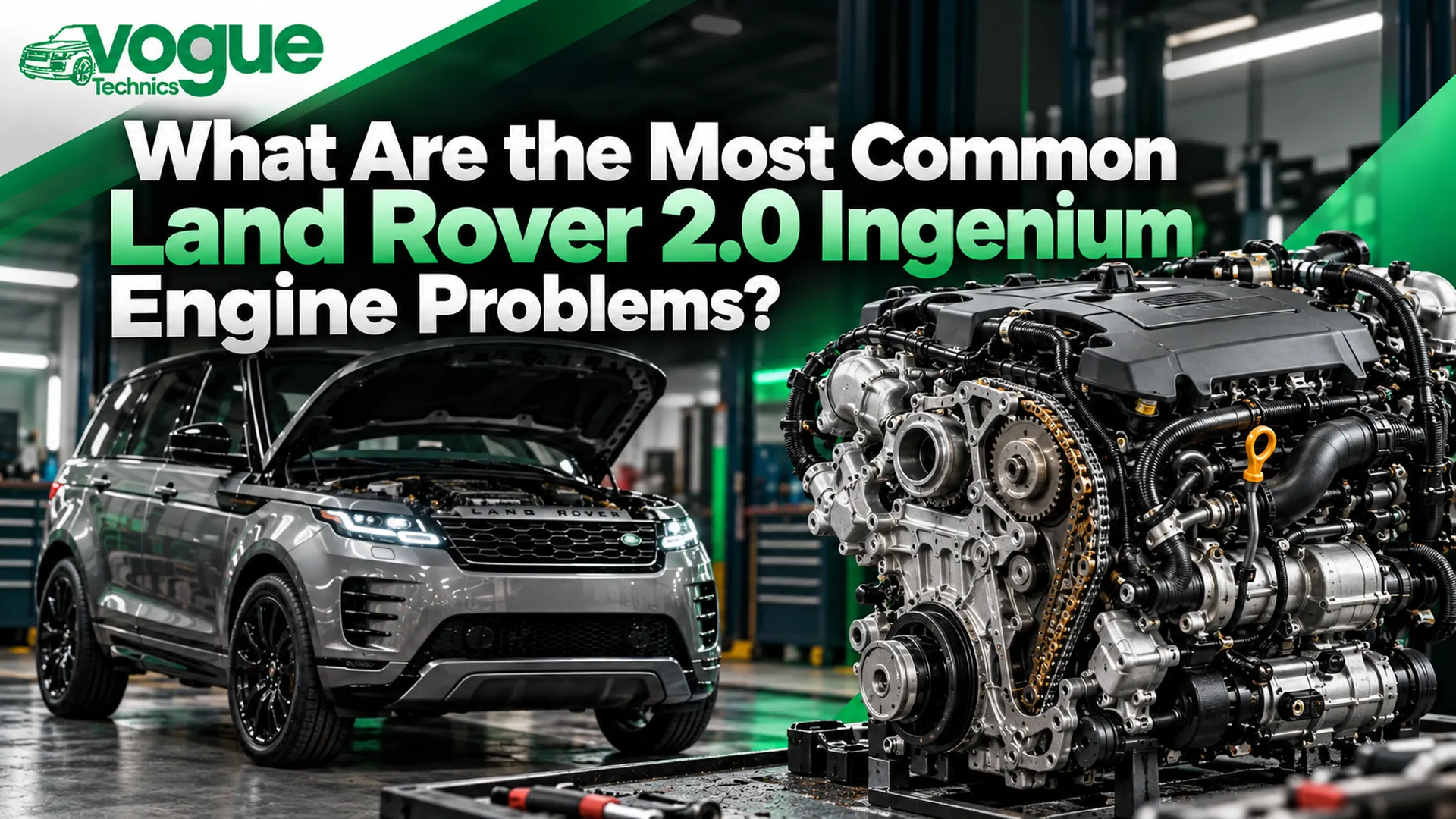
The most common faults on the 2.0 Ingenium diesel are timing chain stretch, oil dilution caused by DPF regeneration, DPF blockages, turbocharger wear and EGR valve or cooler issues. These problems often feed each other, so a single warning light can have a deeper cause.
Here is what we see most often:
- Timing chain wear: the chain, tensioner and plastic guides stretch or wear, throwing off valve timing.
- Oil dilution: unburnt diesel reaches the sump, thins the oil and reduces protection.
- DPF problems: soot builds up, and regeneration fails or is interrupted.
- Turbocharger wear: often a result of poor lubrication, producing whine, smoke or loss of boost.
- EGR faults: carbon buildup, a sticking valve or a leaking cooler.
- AdBlue and SCR faults: emissions-system warnings that can limit performance.
These problems affect the Range Rover Evoque (L538 and L551), Velar (L560), Discovery Sport (L550), Discovery 5 (L462), the new Defender (L663) and Range Rover Sport. The same engine family also appears in the Jaguar XE, XF, F-Pace and E-Pace.
Why Does My Ingenium Rattle on Cold Start, and Is It the Timing Chain?
A metallic rattle for a few seconds after a cold start is the classic sign of Ingenium timing chain problems. When oil pressure hasn't built up, a worn tensioner or slack chain slaps against its guides. The noise often fades as the engine warms, which is why many owners dismiss it.
Don't. The timing chain on these engines sits at the rear of the engine, on the gearbox side. That layout makes the chain hard to reach. On many vehicles the engine or gearbox has to be moved before the job can be done, which is why timing chain replacement is labour-heavy.
Three things typically go wrong:
- Chain stretch: the chain lengthens, and the valve timing drifts.
- Tensioner failure: the hydraulic tensioner can't hold proper chain tension.
- Guide wear: the plastic guides wear or break, adding slack and debris.
If the chain jumps a tooth or breaks, pistons and valves can collide. At that point you are looking at major engine damage, not a repair. Early diagnosis is far cheaper than recovery.
Can Short Journeys and DPF Regeneration Cause Oil Dilution in a 2.0 Ingenium Diesel?
Yes, and it is one of the most important things to understand about this engine. The chain of events looks like this:
- Short journeys stop the exhaust reaching the temperature needed for a full regeneration.
- The DPF fills with soot and the engine tries to clean it by injecting extra fuel.
- Some of that fuel washes past the piston rings into the sump.
- Diesel in the engine oil thins it and cuts lubrication.
- Thinner oil accelerates wear on the timing chain, bearings and turbo.
Watch for these signs of Ingenium oil dilution:
- The oil level on the dipstick rises instead of falling.
- The oil smells of diesel.
- The oil looks thin and watery.
- Regeneration happens often, or the fan runs after you switch off.
Fresh oil alone doesn't fix this. If the driving pattern and DPF behaviour stay the same, the oil dilutes again. A proper oil analysis and a check of regeneration behaviour will show how bad it is.
Which Warning Signs Mean You Should Stop Driving Immediately?
Pull over safely and don't continue if you see or hear any of the following:
- An oil pressure warning, even briefly. Low pressure means low lubrication.
- Knocking or heavy mechanical noise from the engine.
- "Restricted Performance" with rough running, or a sudden loss of boost.
- Visible smoke with a burning or fuel smell.
Driving on with these warnings can turn a repair into a rebuild. If one has appeared, book an urgent inspection with our Essex workshop before using the car again.
How Do You Diagnose Ingenium Engine Failure Symptoms Before It Gets Expensive?
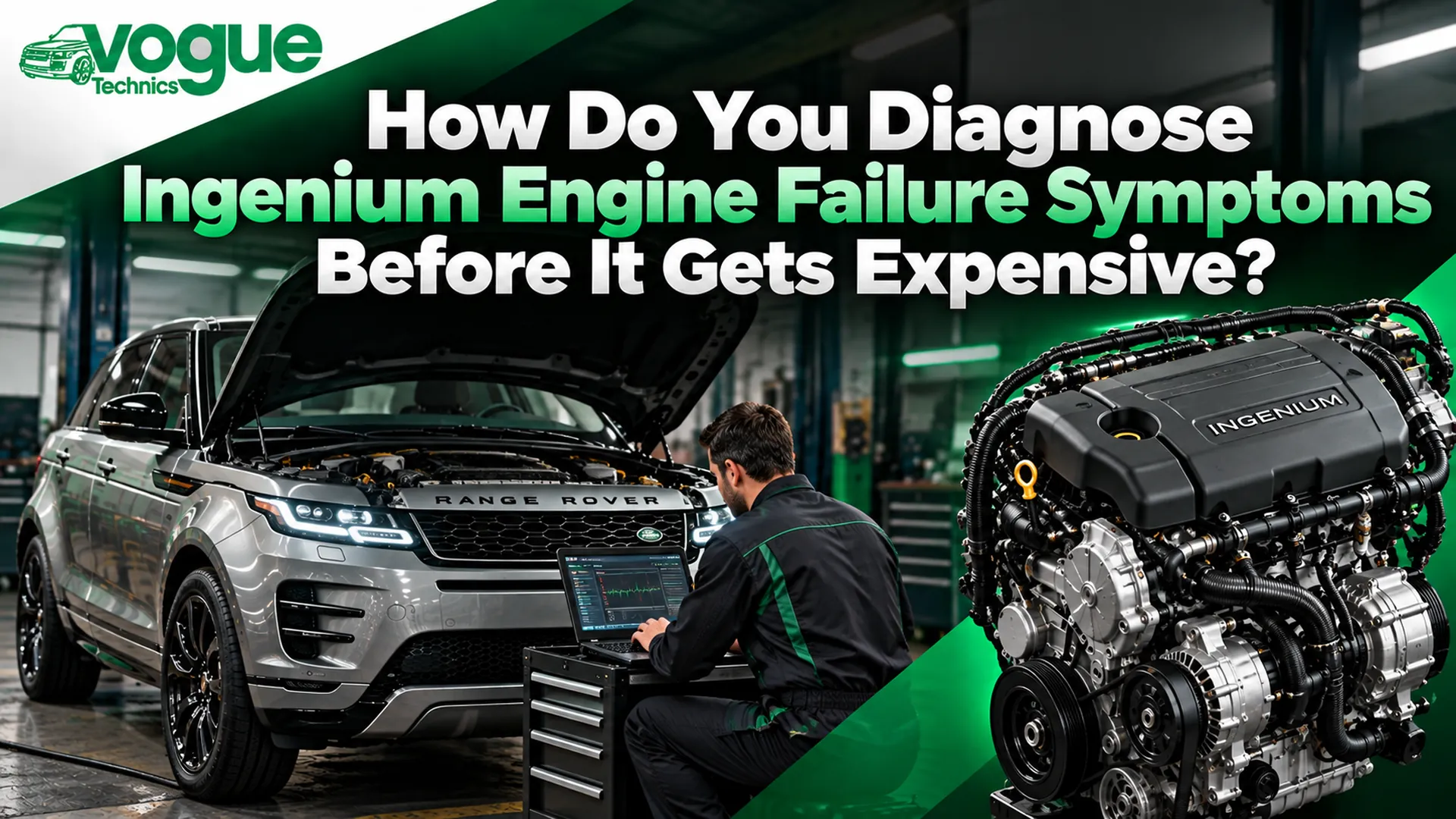
You diagnose Ingenium engine failure symptoms by matching what you notice to likely causes, then confirming with scans and mechanical checks. A fault code alone rarely tells the whole story.
This table links common symptoms to causes and the checks that confirm them:
Symptom | Possible cause | Diagnostic check |
| Cold-start rattle | Timing chain or tensioner wear | Timing correlation data and mechanical inspection |
| Rising oil level | Fuel dilution from DPF regeneration | Oil level, condition and analysis |
| Diesel smell in oil | Failed or frequent regeneration | Oil analysis and regeneration history |
| Loss of boost | Turbo, DPF or EGR fault | Boost, intake and exhaust diagnostics |
| Blue smoke | Turbo seal wear or oil consumption | Turbo and compression inspection |
| Restricted Performance | Several possible faults | Full diagnostic scan |
| Oil pressure warning | Degraded oil or lubrication problem | Mechanical oil pressure test |
Use the table as a guide, not a diagnosis. The same warning light can come from very different faults.
Is Your Land Rover a 2.0 Ingenium Diesel or Petrol, and Why Does It Matter?
It matters because the two engines fail in different ways. A 2.0 Ingenium diesel is not the same as a 2.0 Ingenium petrol, even though both carry the Ingenium name.
Engine codes also vary by model and year (for example AJ200D, 204DTD and 204DTA on diesels, and 204PT on petrols). Check your exact engine code against the VIN or logbook before buying parts or quoting a repair.
2.0 Ingenium diesel | 2.0 Ingenium petrol | |
| Typical weak points | Timing chain, oil dilution, DPF, EGR, turbo, AdBlue/SCR | Timing system, turbo, cooling system, thermostat, coolant leaks |
| Driving pattern risk | Short journeys | Cold running and carbon deposits |
| Other issues | Soot and regeneration faults | Direct injection carbon deposits, PCV, GPF on later cars |
Diesel owners should pay most attention to oil condition and regeneration. Petrol owners should watch the cooling system and breather components.
What Does an Ingenium Fault Code Like P0016 Mean?
P0016 refers to a crankshaft and camshaft position correlation fault. In simple terms, the engine computer sees the two shafts out of step. On an Ingenium, that can point to timing chain stretch, a failing tensioner or worn guides.
It isn't proof by itself. A faulty sensor or an oil-related problem can set a similar code. This is where a scan alone isn't enough: the code must be read alongside live timing data, oil condition and a mechanical inspection. A fault code with an engine management light is a reason to book a diagnosis, not to clear the code and carry on.
How Much Does Ingenium Engine Repair Cost, and Who Can Fix It Near Grays, Essex?
Cost depends on what failed and how early it was caught. A diagnosis and DPF or EGR service costs far less than a chain job, and a chain job costs far less than a rebuild.
Because the chain sits at the rear of the engine, Ingenium timing chain replacement is mostly labour. Turbo replacement, DPF cleaning and EGR cleaning vary by model and fault.
Here is what to look for in an Ingenium engine specialist:
- A written diagnosis that explains the root cause, not just the symptom.
- Willingness to check oil condition and regeneration history, not just clear codes.
- A clear quote that separates parts and labour.
- Honest advice on whether repair makes sense for the car's value.
Should You Repair, Rebuild or Replace a Failing 2.0 Ingenium Engine?
The right choice depends on the damage, your budget and how long you plan to keep the car.
Option | Best when | Main trade-off |
| Repair (e.g. timing chain replacement) | Damage is caught early, the rest of the engine is sound | Lowest cost, but only if no further wear exists |
| Rebuild | Bearings, liners or the block are damaged | Higher cost and longer downtime |
| Reconditioned engine replacement | Widespread wear or catastrophic failure | Higher upfront cost, but a fresh start |
A quick example: an owner hears a brief cold-start rattle and has it checked early. The fix is a chain, tensioner and guide job plus an oil service. If the same car had been driven on until the chain jumped, the bill could have included pistons, valves and a cylinder head. Catching it early is usually the cheapest option.
Prevention helps too. Take longer drives regularly so the DPF can regenerate fully. Use the correct oil specification and check the dipstick often. Don't postpone servicing, and treat any rising oil level as a warning.
Frequently asked questions
Is the Land Rover 2.0 Ingenium engine reliable?
Reliability varies by engine version, service history and how the car is driven. Many run well, but the diesel is sensitive to short journeys and neglected oil changes.
How long does a 2.0 Ingenium engine last?
There is no fixed figure. Regular oil changes, suitable driving and prompt attention to warnings make the biggest difference.
Should I buy a used Land Rover with a 2.0 Ingenium diesel?
Yes, if you can check the evidence. Ask for full service history, listen for a cold-start rattle, check oil level and smell, and scan for stored codes. A pre-purchase inspection is worth it.
Can you drive with an Ingenium timing chain rattle?
We advise against it. The rattle means wear that can worsen, and a jumped chain can cause serious damage.
Why is my Ingenium oil level rising?
Most often, diesel is entering the oil during DPF regeneration. Get the oil checked and the regeneration behaviour diagnosed.
Which Ingenium engine is most reliable?
It depends on the model, year and use, so confirm the exact engine code and service record before deciding.
Final word: Most Ingenium failures give warning first: a rattle, a rising dipstick, a light on the dash. Acting on those signs is what separates a manageable repair from an engine replacement. If your Land Rover is showing any of them, contact Vogue Technics in Grays, Essex for a diagnostic inspection and a clear, honest quote.