Range Rover White Smoke From Exhaust: Causes, Safety and Expert Diagnosis in Essex
You walk back to your car, glance in the mirror and see a cloud of white smoke trailing behind. Your stomach drops. Is it harmless, or is the engine about to cost you thousands?
Range Rover white smoke from exhaust can be either. On a cold morning it is often just water vapour. Thick, lingering, sweet-smelling smoke is a different story, and it usually points to coolant entering the engine. This guide shows you how to tell the two apart, what causes the problem, how long you can safely drive, and how to get it fixed in Grays, Essex.
What Does White Smoke From the Exhaust Mean on a Range Rover?
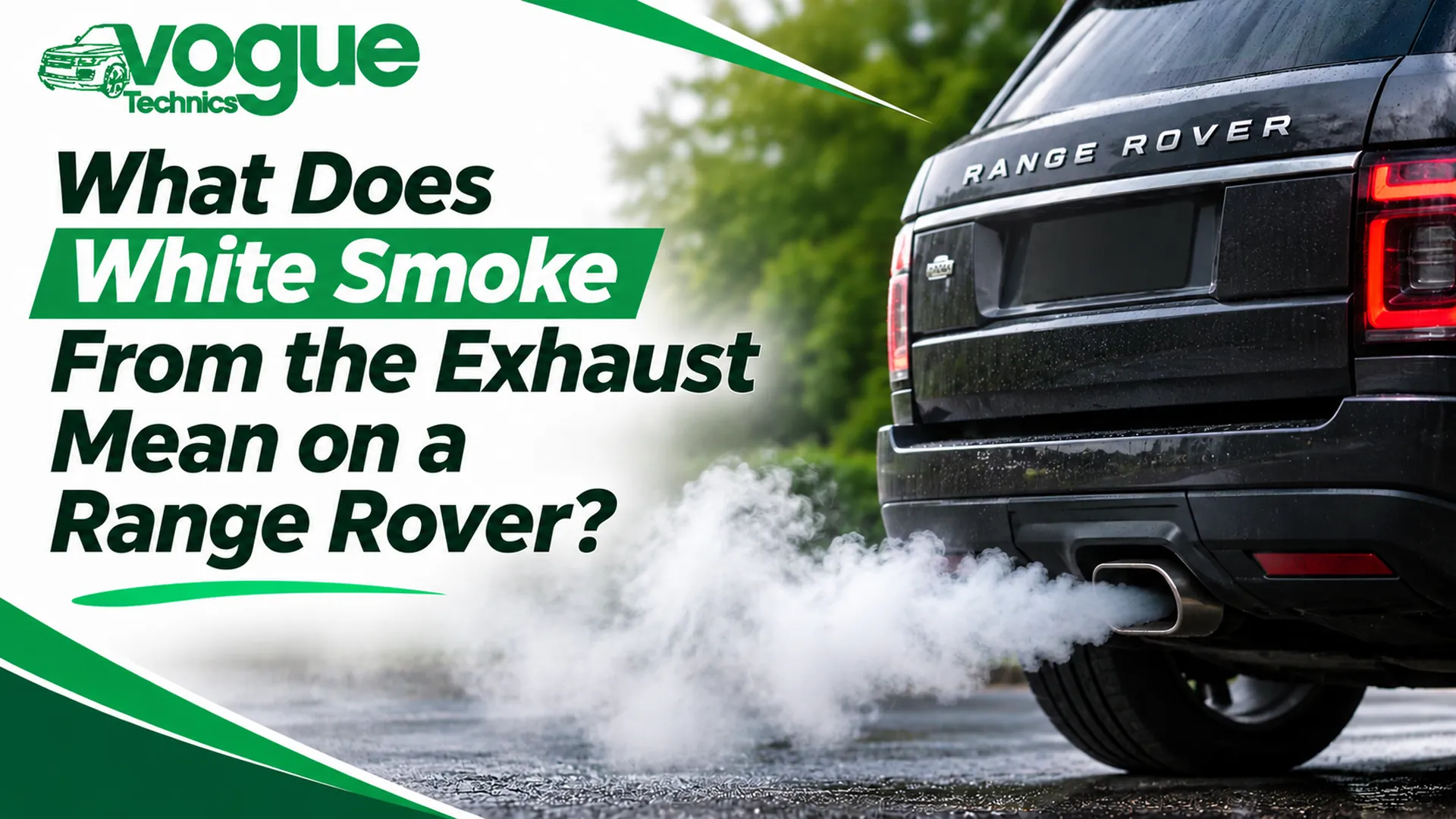
White smoke from the exhaust means something other than normal exhaust gas is leaving the tailpipe. That something is either harmless water vapour or burning coolant, fuel or oil. The colour, thickness, smell and timing tell you which.
Drivers searching what does white smoke from exhaust mean or what does white smoke mean in a car usually want one answer: should I worry? The honest reply is that it depends on how long the smoke lasts. The same applies to any Range Rover exhaust smoke you notice, whatever the colour.
Is It Normal Condensation or a Real Fault?
Thin, odourless white vapour that vanishes within a minute or two is normally condensation. Exhaust systems collect moisture overnight. Once the engine and exhaust warm up, that moisture burns off as a light puff.
Thick, lingering smoke is not condensation. If it hangs in the air, smells sweet or keeps going after the engine is warm, treat it as a fault.
Condensation | Coolant smoke | Fuel or oil smoke | |
| Appearance | Thin, wispy vapour | Thick, dense white cloud | White to grey or bluish haze |
| Smell | Little or none | Sweet, syrupy | Raw diesel or burnt oil |
| Duration | Disappears within 1 to 2 minutes | Continues once warm | Often worse under load |
| Urgency | Low | High, stop driving | Medium to high, get it checked |
A quick tip from workshop experience: watch the tailpipe, not just the mirror. Condensation also drips as water from the pipe. Coolant smoke tends to leave a greasy residue and a sweet odour.
Why Does My Range Rover Show White Smoke on Startup, Then It Goes Away?
If your Range Rover shows white smoke on startup and it clears as the engine warms, condensation is the most likely reason. This is especially common on cold, damp mornings and on short journeys where the exhaust never gets fully hot.
It becomes a concern when:
- The smoke continues once the engine is hot
- The coolant level keeps dropping with no visible leak
- The temperature gauge climbs higher than normal
- The engine runs rough or struggles to start
The same logic applies to white smoke from exhaust when starting a car, when the engine is hot, and even when reversing. Smoke that appears only when you pull away or reverse after a cold night is rarely a problem. Smoke that appears every time, at any temperature, is.
Scenario: An owner brings in a Range Rover Sport that puffs white smoke every morning for about 30 seconds. Coolant level is stable, there is no sweet smell and the smoke clears quickly. That is condensation. Another owner arrives with a car that smokes on startup, keeps smoking when hot and needs a coolant top-up every week. That is a different job entirely.
What Causes Thick White Smoke From a Range Rover Exhaust, and Which Models Are Affected?
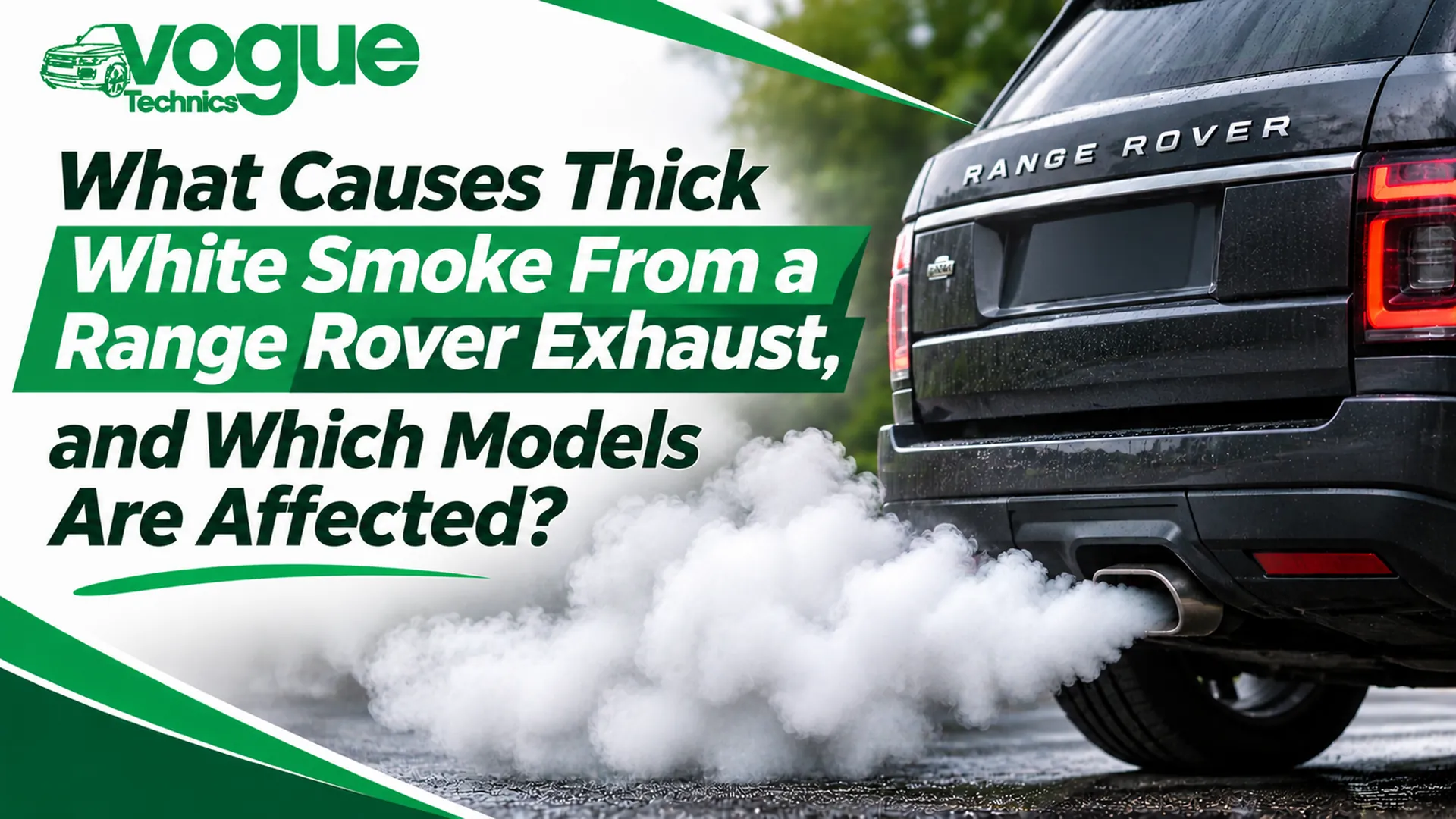
Thick white smoke is most often caused by coolant entering the combustion chamber and burning off. If you have asked what causes white smoke from exhaust or what causes thick white smoke from exhaust, this is the usual culprit.
The problem is seen across the range, including the Range Rover Evoque, Range Rover Sport, Velar and Discovery models. Older, higher-mileage diesel engines are more exposed, which is why the 2011 Range Rover white smoke from exhaust query is so common.
Can a Head Gasket, Cracked Block or Coolant Leak Cause White Smoke on a Range Rover Evoque or Sport?
Yes. Whether you drive an Evoque or a Sport, the same mechanical failures can send coolant where it does not belong. This also answers what causes white smoke from diesel exhaust, because diesel engines run high compression and place heavy stress on seals.
Likely cause | What happens | Typical warning signs |
| Blown head gasket | Coolant leaks into the cylinders | Thick white smoke, overheating, milky oil |
| Cracked cylinder head or block | Coolant seeps into the combustion chamber | Coolant loss, bubbles in the expansion tank |
| Failed EGR cooler | Coolant passes into the exhaust or intake path | Smoke, coolant loss, sweet smell |
| Damaged radiator, hoses or connectors | Coolant leaks externally or onto hot parts | Visible leaks, steam, low coolant |
Warning signs to watch for:
- Coolant disappearing with no puddle under the car
- Milky, mayonnaise-like residue on the oil filler cap or dipstick
- Overheating or a fluctuating temperature gauge
- Bubbles in the coolant expansion tank
- A sweet smell from the exhaust or engine bay
If two or more of these appear together, stop driving and book a diagnostic. Catching a failing gasket early often means a smaller repair than waiting for the engine to overheat.
Why Does White Smoke Appear When Accelerating, or After an Oil Change?
Context matters here, because the cause changes with the situation.
White smoke from exhaust when accelerating can point to:
- A coolant leak that only opens up under pressure and heat
- Injector or fuel delivery faults, producing unburnt diesel vapour
- Boost-related problems that change how the fuel burns
If your Range Rover shows white smoke from the exhaust when accelerating, note whether it is thick or thin and whether it smells sweet. Share that detail with your technician. It saves diagnostic time.
Range Rover white smoke after an oil change is often less alarming. The usual reasons:
- Spilled oil burning off on hot exhaust or engine parts
- Overfilled oil, which can create smoke and pressure problems
- Wrong grade or poor-quality oil for the engine
Light smoke that fades within a few drives after a service is usually spilled oil burning away. If it persists, check the dipstick level and have the car inspected.
Is It Safe to Drive With White Smoke From the Exhaust, and Who Can Fix It Near Grays, Essex?
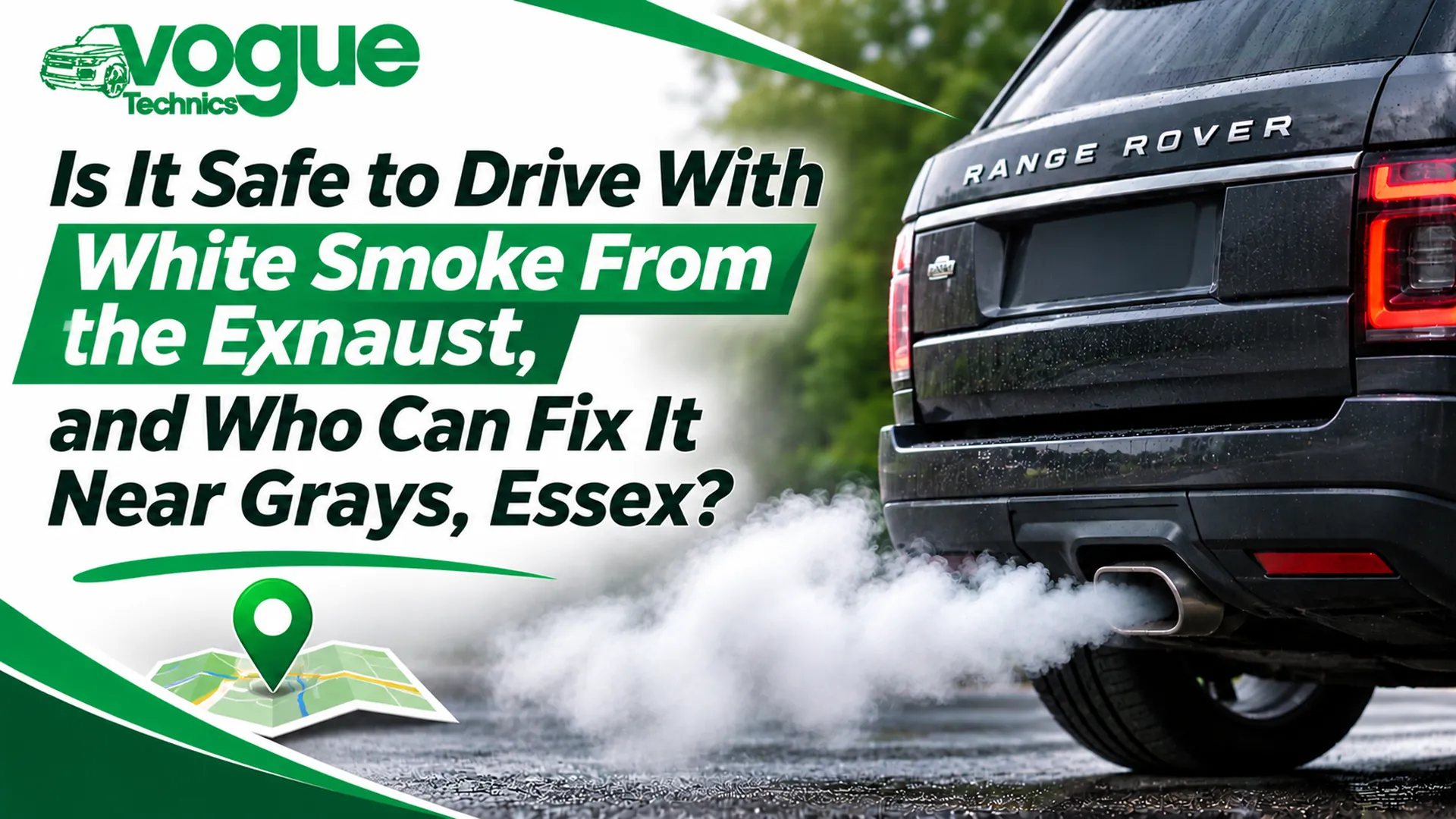
If the smoke is thick or the temperature gauge is rising, do not keep driving. Light condensation on a cold start is fine. Anything else deserves attention.
How Long Can I Drive With White Smoke From the Exhaust?
For a harmless cold-start puff, you can carry on as normal. For thick, persistent smoke, the safe answer is not at all, or only the shortest distance to a safe place.
Driving with a failing head gasket or coolant leak can lead to severe overheating, warped components and engine damage. That turns a manageable repair into a major one.
Safe checks before your next drive:
- Coolant level: check only when the engine is cold, never with a hot cap
- Oil on the dipstick: look for a milky or creamy colour
- Temperature gauge: watch for readings above normal
- Warning lights: note any coolant, engine or limp mode messages
- Smell: a sweet, syrupy odour points towards coolant
If any of these look wrong, call a specialist rather than testing your luck on the motorway.
How Does Vogue Technics Diagnose and Repair White Smoke on a Range Rover?
At Vogue Technics in Grays, Essex, we find the cause before recommending any repair.
Our process:
- Cooling system pressure test to find leaks and pressure loss
- Combustion gas test to check whether exhaust gases are entering the coolant
- Fault-code scan to read stored engine management data
- Inspection of the EGR cooler, hoses, injectors and oil condition
- Clear explanation and quote before work begins
- Repair and road test to confirm the smoke is gone
This approach separates a simple condensation concern from a head gasket or cooling system fault, so you pay only for what the car needs.
Worried about the smoke on your Range Rover? Call Vogue Technics or book a diagnostic online. Tell us the model, year and when the smoke appears, and we will advise you on the next step.
Frequently Asked Questions
What causes white smoke from exhaust?
Condensation is the harmless cause. Burning coolant from a head gasket, cracked head or EGR cooler fault is the serious one.
What does white smoke from the exhaust indicate?
Thin vapour that clears quickly suggests condensation. Thick, sweet-smelling smoke that persists suggests coolant entering the engine.
What causes thick white smoke from exhaust?
Usually coolant burning in the combustion chamber, often from a head gasket failure, cracked cylinder head or block, or a failed EGR cooler.
How long can I drive with white smoke from exhaust?
Not long if it is thick or the engine is overheating. Stop and get it checked. Light cold-start vapour is not a concern.
Why is there white smoke from my exhaust when accelerating?
It could be a coolant leak under pressure, or fuel and injector issues. A diagnostic scan will pinpoint the cause.
Is white smoke on startup that goes away normal?
Often yes. Condensation burns off as the exhaust warms. It is a concern only if it continues when the engine is hot.
Why is my Range Rover smoking after an oil change?
Spilled oil burning off is the usual reason. Overfilling or the wrong grade can also cause it, so check the level.
Does white smoke mean a Range Rover Evoque or Sport has a blown head gasket?
Not always. A blown head gasket is one possible cause, so confirm with a pressure and combustion gas test before assuming.
Final Thoughts: Read the Smoke, Then Act
White smoke from a Range Rover is a clue. Thin and brief usually means condensation. Thick, persistent and sweet-smelling means stop driving and investigate. Acting early is almost always cheaper than waiting for overheating to cause further damage.
If your Range Rover Evoque, Sport or another model is producing white smoke, contact Vogue Technics in Grays, Essex today for a proper diagnosis and a clear quote.