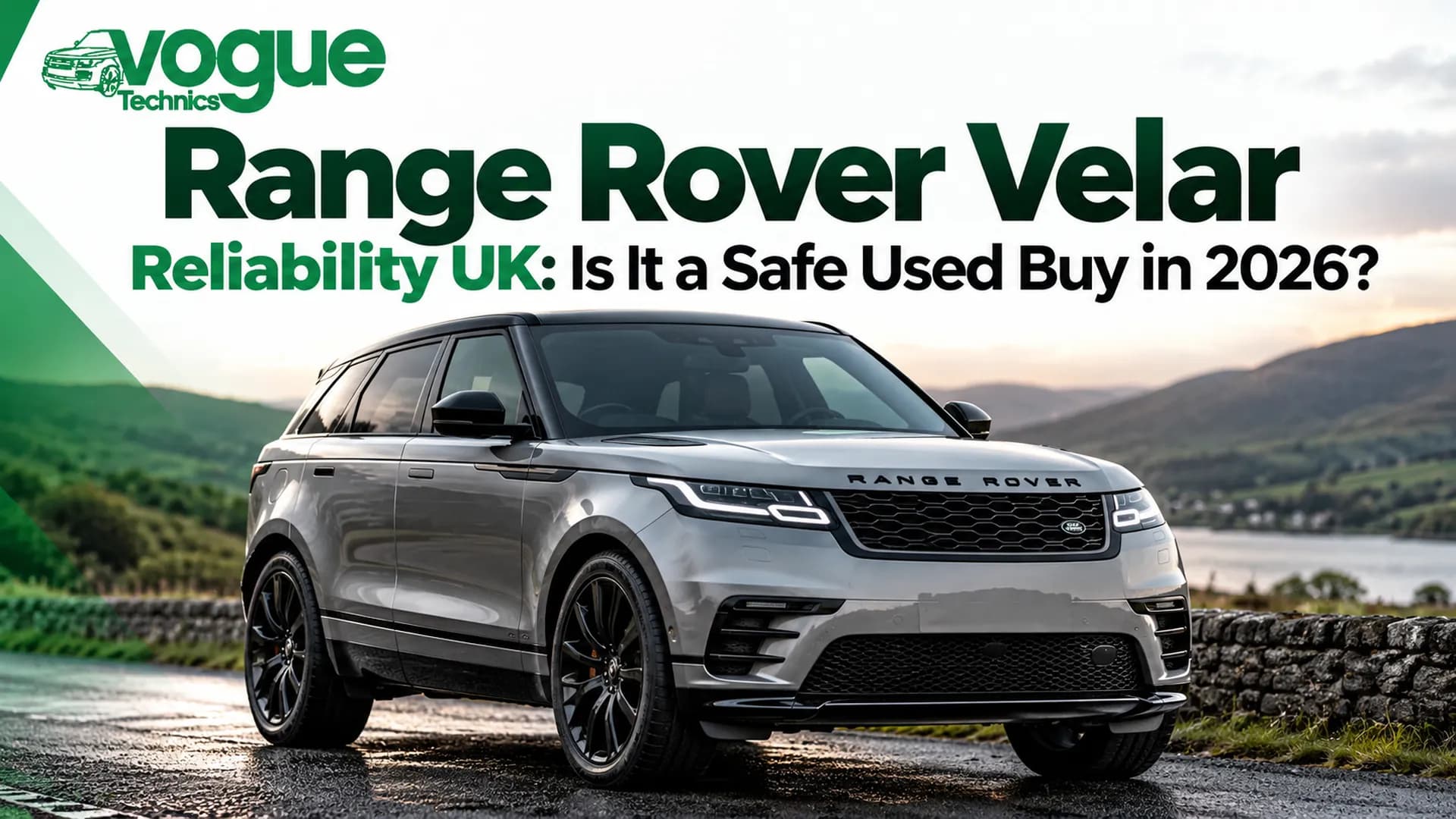
Range Rover Velar Reliability UK: Is It a Safe Used Buy in 2026?
You love the look of the Velar. The clean lines, the flush door handles, the cabin that feels like a lounge. Then you open a forum thread and read about air suspension faults, timing chain worries and warning lights. Suddenly a £20,000 purchase feels like a gamble.
Here is the straight answer. Range Rover Velar reliability is mixed, and it depends heavily on the model year, the engine and how the car has been maintained. A well-serviced, later-year Velar can be a rewarding ownership experience. A neglected early diesel can become an expensive lesson.
This guide breaks down what goes wrong, when it goes wrong and what to check before you hand over any money. It draws on what mechanics see when Velars come through the workshop door, not just what brochures say. At voguetechnics.co.uk, our team in Grays, Essex, works on Land Rover products regularly, so the patterns below are ones we recognise first-hand.
How Reliable Is the Range Rover Velar? The Straight Answer for UK Buyers
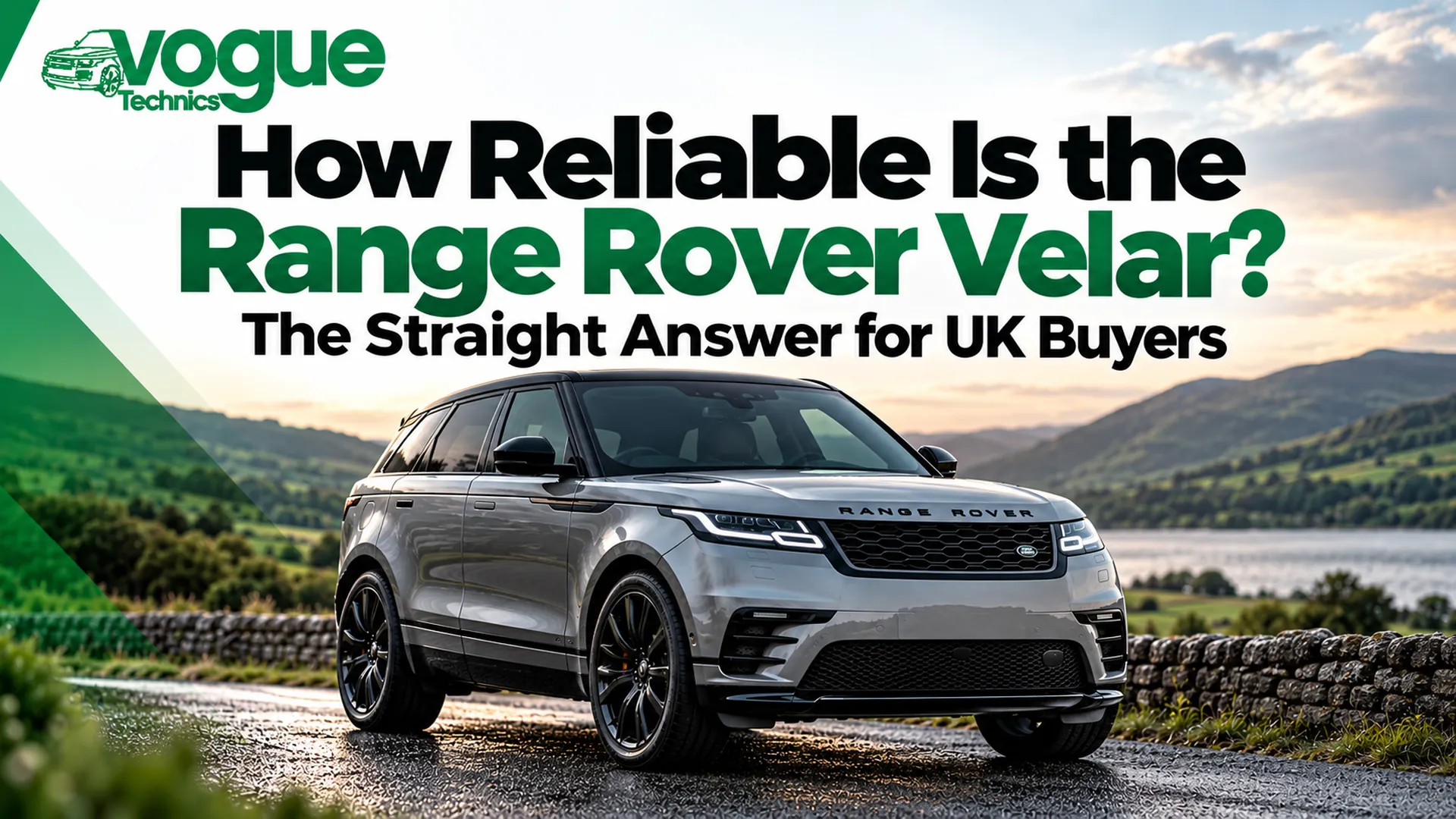
Start with context. The Velar launched in 2017 and sits between the Evoque and the Range Rover Sport. Built by Land Rover (part of Jaguar Land Rover, JLR) at Solihull, it shares its D7a platform with the Jaguar F-Pace.
Premium SUVs of this complexity tend to score below average in owner surveys such as the What Car? Reliability Survey, and Land Rover as a brand has historically sat in the lower half of those rankings. The Velar is no exception to that general pattern. But "below average" does not mean "avoid it". It means you must buy carefully.
Range Rover Velar Reliability by Year: Which Model Years Are Safer?
The table below summarises what we typically see across the production run. It is a guide, not a guarantee, because service history matters more than the badge year.
Model Years | General Picture | Main Watch-Points |
| 2017–2018 | Highest risk. Early production cars with teething problems. | Infotainment glitches (Touch Pro), electric door handle faults, air suspension, software bugs, battery drain |
| 2019–2020 | Improved. Many early faults addressed through updates and recalls. | 2.0 diesel Ingenium concerns, DPF and EGR issues on short-trip cars |
| 2021–2023 | Generally the sweet spot for value and reliability. | Mild-hybrid system checks, Pivi Pro software updates, suspension components as mileage climbs |
| 2024 onwards | Facelifted, with updated tech. Often still under manufacturer or approved-used cover. | Limited long-term data, so check warranty status carefully |
If you are searching for range rover velar reliability by year because you want one clean answer, it is this: aim for 2021 or later if your budget allows. The cars are newer, the software is more mature and fewer owners have had a chance to neglect them.
Range Rover Velar Years to Avoid: What Went Wrong With the Early Cars?
When people ask about range rover velar years to avoid, they usually mean 2017 and 2018. These were launch-period cars, and launch-period cars from any manufacturer carry extra risk.
Common complaints on those early cars included:
- Infotainment lag and freezing. The original Touch Pro system could be slow and occasionally crashed.
- Deployable door handles. Sensor and motor faults left some handles stuck or unresponsive.
- Air suspension faults. Compressors and air springs wear, and a sagging corner is a classic warning sign.
- Electrical gremlins. Battery drain and random warning messages were frequent topics among owners.
Many of these problems were reduced through recalls and software revisions on later cars. If you are considering an early Velar, check the gov.uk recall checker using the registration number and ask for evidence that outstanding work was completed. A cheap early car with gaps in its history is usually cheap for a reason.
Range Rover Velar Common Problems and Which Engine Lasts Longest
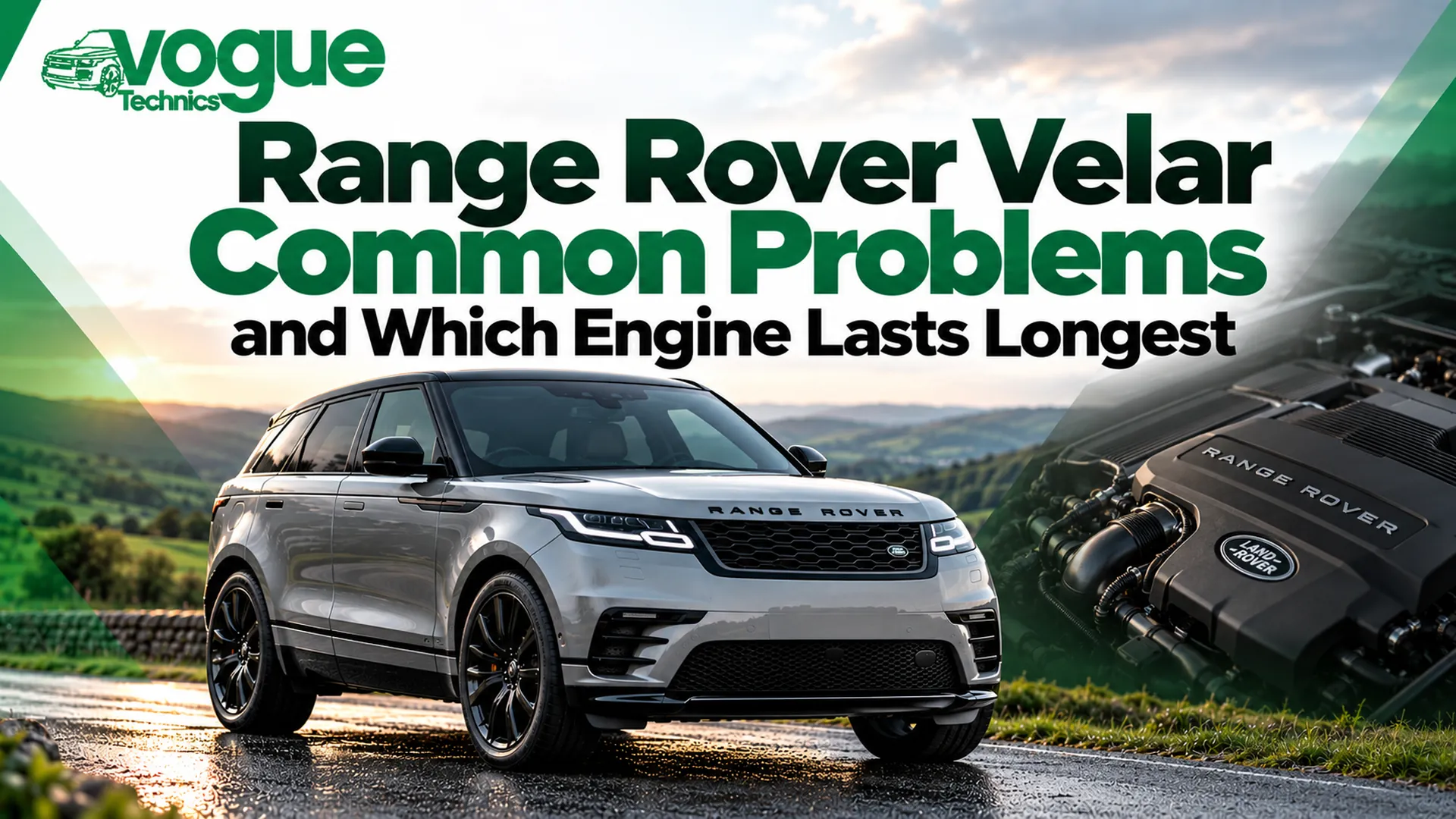
Reliability is not just about the year. The engine under the bonnet changes the ownership picture considerably, and so does mileage.
What Are the Most Common Range Rover Velar Faults by Mileage?
Faults tend to arrive in stages. Knowing the stage helps you budget instead of being surprised.
Under 40,000 miles
- Software and infotainment glitches
- Door handle sensor faults
- Early warning-light issues that a dealer or specialist can often resolve with updates
40,000 to 80,000 miles
- Air suspension wear (leaks, compressor strain, uneven ride height)
- Diesel particulate filter (DPF) and EGR problems on cars used mostly for short journeys
- AdBlue system faults on diesels, including NOx sensor failures
- Brake wear and tyre cost, which is heavier than on a typical family SUV
Over 80,000 miles
- Engine mount and suspension bush wear
- Timing chain concerns on higher-mileage 2.0 diesels, particularly if oil changes were stretched
- Cooling system components such as water pumps and hoses
- Oil leaks around seals and gaskets
Here is a real-world scenario we see often. A buyer picks up a 2018 diesel with 62,000 miles, mainly short school-run use. Six months later the DPF warning appears. The car never got long enough runs to burn off soot. The fix is not always a new part. Sometimes it is a forced regeneration and a change in driving habits. A proper diagnostic scan tells you which one you are facing before you spend money on guesswork.
Which Velar Engine Is Most Reliable: 2.0 Diesel, 3.0 D300 or Petrol?
Engine choice is the biggest single lever you control. Here is a plain comparison:
Engine | Typical Strengths | Typical Concerns |
| 2.0 diesel (Ingenium, D180/D200/D240) | Good economy, plenty of used stock | Timing chain concerns at higher mileage, DPF and EGR clogging on short trips, oil dilution if poorly maintained |
| 3.0 diesel (D300 straight-six) | Smooth, strong torque, newer design | Fewer long-term data points, mild-hybrid system adds complexity |
| 2.0 petrol (P250/P300) | Simpler emissions hardware than diesel | Heavy fuel use in a car this size, turbo and ancillary wear if serviced late |
| 3.0 petrol (P380 V6 supercharged, P400 straight-six mild hybrid) | Strong performance, refined | Higher running costs, supercharger or mild-hybrid components to inspect |
If you are asking whether the D300 shares the 2.0's problems, the short answer is that it is a different engine family, so the specific timing chain concern does not simply carry over. It is still a modern, complex diesel, so servicing discipline matters just as much.
For most UK buyers doing a mix of town and motorway driving, a well-maintained 3.0 D300 or a later 2.0 with full service history is a sensible starting point. If most of your driving is short urban hops, a petrol or mild-hybrid may suit better than any diesel.
Should You Buy a Used Range Rover Velar? Checks, Costs and Expert Help

A Velar rewards the buyer who does their homework. It punishes the one who falls for a low price and a shiny finish.
What Should You Check Before Buying a Used Range Rover Velar?
Work through this list before agreeing a price. Each point exists because it has caught out real buyers.
- Full service history. Look for oil changes at or inside the recommended interval, not stretched ones. On Ingenium diesels, regular oil changes matter a lot.
- Recall and MOT history. Use the gov.uk MOT history check and the manufacturer recall checker. Recurring advisories on suspension or corrosion are red flags.
- Air suspension behaviour. Park the car, return after an hour and check the ride height has not dropped. Cycle through the height settings.
- Infotainment and driver aids. Test the screen, cameras, parking sensors and every door handle several times.
- Cold start and idle. Listen for rattles on a cold diesel start, especially a chain-like rattle in the first few seconds.
- Dashboard messages. A clean cluster after start-up is a good sign. Ask the seller to clear nothing before you arrive.
- Tyres and brakes. Uneven wear can reveal alignment or suspension issues.
- Diagnostic scan. A professional scan can reveal stored fault codes that a short test drive will not.
On cost, budget for running costs that match a premium SUV, not a family hatchback. Annual servicing, tyres, brakes and a contingency fund for age-related wear are all realistic expectations. Insurance and road tax also sit higher than average for the segment. Treat any repair figure you read online as indicative and get a written quote for your specific car.
How Can Voguetechnics Help With Velar Inspections, Repairs and Servicing in Essex?
If you are buying, owning or already struggling with a Velar, a specialist who understands these cars can save you far more than the cost of an inspection.
At voguetechnics.co.uk, we are based in Grays, Essex, and can help with:
- Pre-purchase inspections before you commit to a car, including a full diagnostic scan
- Fault diagnosis for warning lights, suspension, electrical and engine issues
- Servicing and preventative maintenance to protect long-term reliability
- Repair guidance with transparent quotes before any work begins
Not sure about a car you are viewing? Send us the registration and the listing, and we will tell you honestly what to look for. [Internal link opportunity: link "pre-purchase inspection" to your inspection service page, "diagnostics" to your diagnostics page, and "Land Rover servicing" to your servicing page.] Request a quote today and buy with confidence rather than hope.
Frequently Asked Questions About Range Rover Velar Reliability
Are Range Rover Velars reliable?
They are reliable enough when chosen carefully and maintained properly, but they are not among the most dependable SUVs on the market. Later cars (2021 onwards) generally give owners fewer headaches than early ones.
What are the most common Range Rover Velar problems?
Air suspension wear, infotainment glitches, door handle faults, DPF and EGR issues on diesels, and timing chain concerns on higher-mileage 2.0 diesels.
Which year Range Rover Velar should I avoid?
Treat 2017 and 2018 with the most caution. If you buy one, insist on full history, recall completion and a professional inspection.
Is the Range Rover Velar expensive to maintain in the UK?
Yes, compared with mainstream SUVs. Expect premium pricing for servicing, tyres, brakes and any suspension work. A specialist garage is usually more economical than main dealer labour rates.
Is a Velar worth buying in 2026?
Yes, for the right car at the right price. A later-year, full-history example, checked by a specialist, offers the style and comfort that made the Velar popular without the biggest early risks.
Final Thought
The Velar is a car you buy with your eyes and protect with your head. Choose a later model year if you can, match the engine to how you actually drive and never skip the inspection. Do that and Range Rover Velar reliability becomes a manageable question rather than a worry.
Ready to check a Velar before you buy, or keep the one you own running well? Contact voguetechnics.co.uk in Grays, Essex, for a quote today.