Range Rover SVR Reliability Issues: What Every Owner Needs to Know
That warning light on your dash didn't appear out of nowhere. If you're reading this, chances are your Range Rover SVR has thrown up a fault, made a noise it shouldn't, or you're weighing up whether a used one is worth the risk. Either way, you deserve a straight answer, not a marketing brochure.
The Range Rover Sport SVR is one of the most capable performance SUVs on the road. A 5.0-litre supercharged V8, sub-4.5-second 0-60 times, and genuine off-road ability packed into a luxury shell. But that same complexity, supercharging, air suspension, adaptive dynamics, and a dense electrical architecture, means reliability isn't as simple a question as it is with a standard Range Rover Sport.
This guide breaks down exactly where Range Rover SVR reliability issues tend to show up, what they cost to fix, how to spot them early, and what genuinely reliable ownership looks like. We've written this from hands-on diagnostic and repair experience working on these vehicles, not from spec sheets.
Is the Range Rover SVR Reliable?
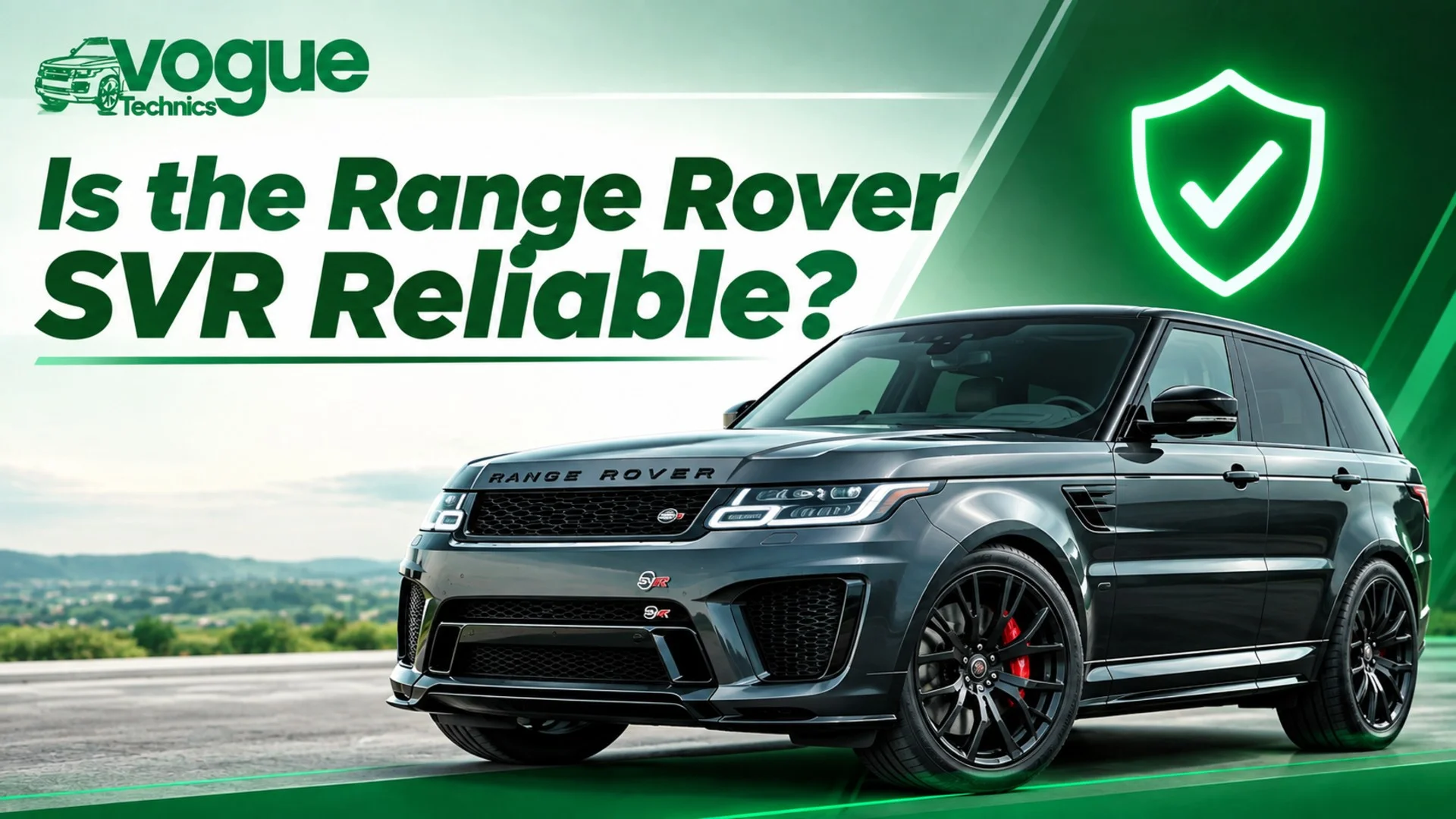
Short answer: reasonably, if it's been maintained properly. Not as reliable as a Toyota Land Cruiser, and it was never designed to be.
The SVR shares its platform and much of its mechanical DNA with the standard Range Rover Sport, but Special Vehicle Operations added a supercharger, stiffer suspension tuning, carbon ceramic brake options, and performance-focused electronics. Every one of those additions is a potential extra failure point. That's the trade-off you make for the performance.
Owners who service their SVR on schedule, address warning signs early, and use a specialist who actually understands the AJ133 engine and its supporting systems tend to report far fewer serious issues than owners who defer maintenance or rely on generic garages unfamiliar with JLR platforms.
How Does the SVR Compare to Standard Range Rover Sport Models?
The standard Range Rover Sport (particularly diesel variants) is generally considered more dependable simply because it runs fewer high-stress components. The SVR's supercharged V8 runs hotter, under more load, with tighter tolerances. Its air suspension is tuned more aggressively for performance, which means the compressor and air springs work harder over time.
That doesn't make the SVR unreliable. It makes it a performance vehicle that needs performance-level care.
What Do Long-Term SVR Owners Say About Reliability?
Across owner forums and workshop feedback, a consistent pattern emerges: SVRs that receive regular servicing, prompt attention to warning lights, and genuine or OEM-quality parts tend to run well past 100,000 miles without major failures. The vehicles that end up with expensive engine or suspension work are almost always the ones where a coolant leak, a suspension warning, or a misfire was ignored for months.
Which Model Years Have the Most Reported Issues?
Early SVR models (2015–2017) tend to show more coolant system and supercharger coupling issues, largely because these were first-generation solutions to a genuinely difficult engineering problem. Later models (2018 onward) benefited from running production changes, though electrical gremlins and air suspension faults persist across the range regardless of year. If you're buying used, the service history matters more than the model year.
Common Range Rover SVR Reliability Issues by System
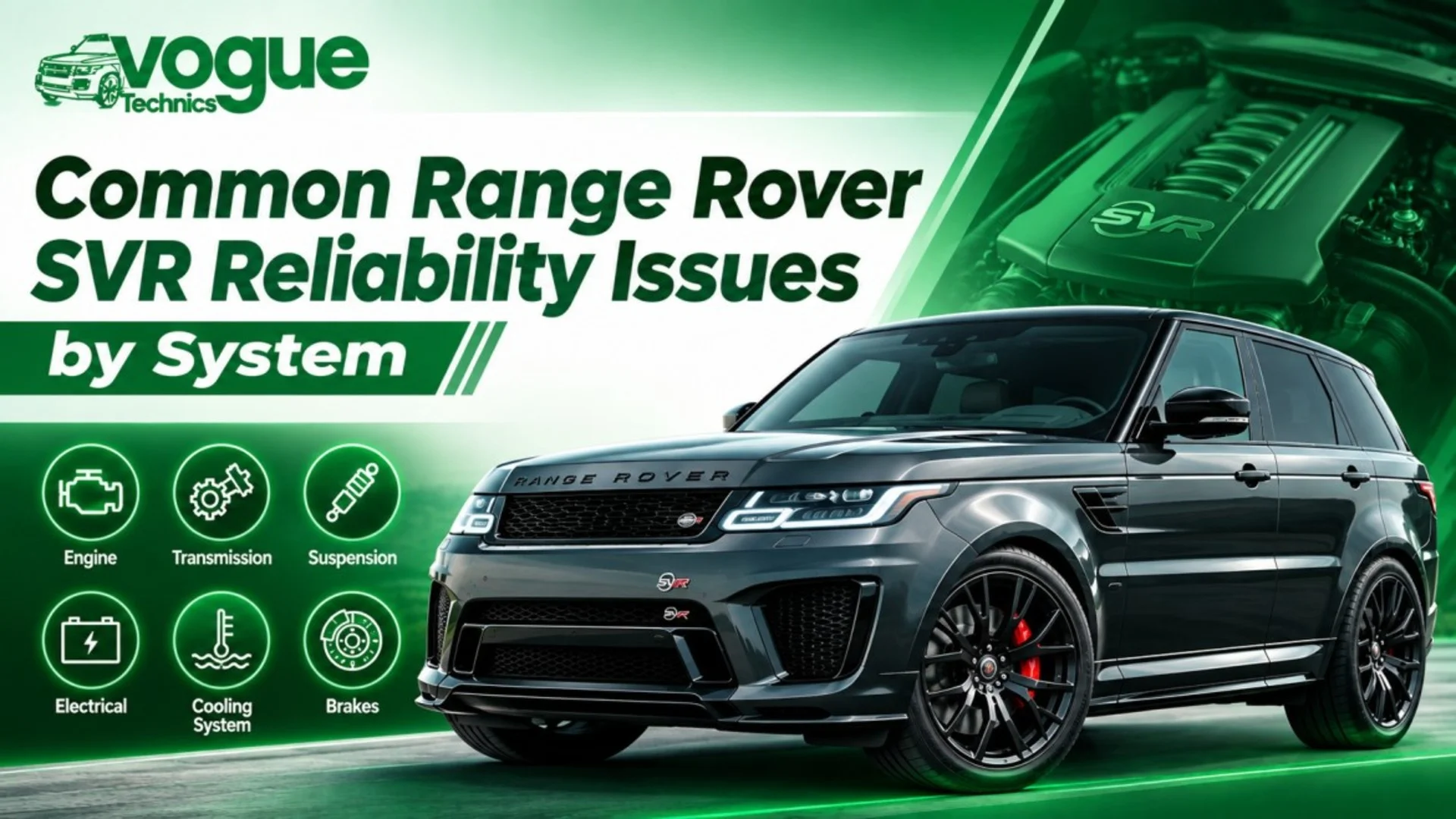
This is the section most owners actually come here for. Below is a breakdown of where SVR reliability issues most commonly originate, system by system.
Engine and Supercharger Problems
The 5.0-litre supercharged V8 (AJ133) is a genuinely strong engine when properly maintained, but it has known weak points.
Coolant Leaks and Overheating Causes
Coolant leaks are one of the most frequently reported Range Rover SVR problems. They typically stem from:
- Degraded coolant pipes – the plastic and rubber coolant lines around the engine bay harden and crack with age and heat cycling
- Auxiliary radiator failures – the SVR uses additional cooling capacity to manage supercharger heat, and these units can develop leaks
- Water pump wear – a failing water pump reduces coolant flow and can trigger overheating warnings under load
If you spot a low coolant warning, don't top it up and forget about it. A slow leak today is an overheated cylinder head tomorrow, and that repair bill looks very different.
Misfires, Rough Running, and Loss of Power
Ignition coils and spark plugs on the supercharged V8 work under significant heat and boost pressure, and they don't last forever. A misfire, a rough idle, or a sudden loss of power under acceleration is often traced back to a failing coil pack rather than anything more serious, but it should always be diagnosed properly rather than guessed at.
Supercharger coupling and isolator wear is another common culprit behind a whining or rattling noise from the engine bay, particularly on higher-mileage examples.
Air Suspension Failures
The SVR's air suspension system delivers the ride quality and dynamic handling this vehicle is known for, but it's also one of the more failure-prone systems on the vehicle.
What Triggers a Suspension Fault Warning?
Most air suspension warnings trace back to one of these:
- A failing suspension compressor, often signalled by the vehicle sitting unevenly or refusing to rise to normal ride height
- Leaking air springs, which lose pressure overnight and cause a "low vehicle" warning each morning
- A faulty height sensor, which feeds incorrect data to the suspension control module
A vehicle that sits noticeably lower on one corner, or that lowers itself overnight, is telling you the air suspension needs attention before it fails completely, usually at the least convenient moment.
Electrical System Complications
Modern Range Rovers are dense with electronics, and the SVR is no exception. Battery drain, infotainment freezes, and intermittent warning lights are among the most commonly reported electrical faults.
Battery Drain and Infotainment Faults
A battery that won't hold charge overnight is rarely actually about the battery. More often it's a module that isn't sleeping properly, drawing current when the vehicle is parked. The InControl infotainment system is also known for occasional freezes or slow responsiveness, which usually points to a software fault rather than a hardware failure.
Transmission and Gearbox Hesitation
The ZF 8-speed automatic transmission is generally regarded as robust, but SVR owners occasionally report delayed gear changes or momentary hesitation, particularly when the transmission fluid hasn't been changed within recommended intervals. This is a system where preventative maintenance genuinely prevents expensive failures.
Brake Wear and Performance Concerns
Given the SVR's weight and performance, brakes work hard. Standard brake discs and pads wear faster than on a regular Range Rover Sport, and vehicles fitted with carbon ceramic brakes need specialist knowledge to service correctly. Brake vibration under heavy braking is a common early warning sign worth addressing quickly.
Warning Signs Your Range Rover SVR Needs Attention
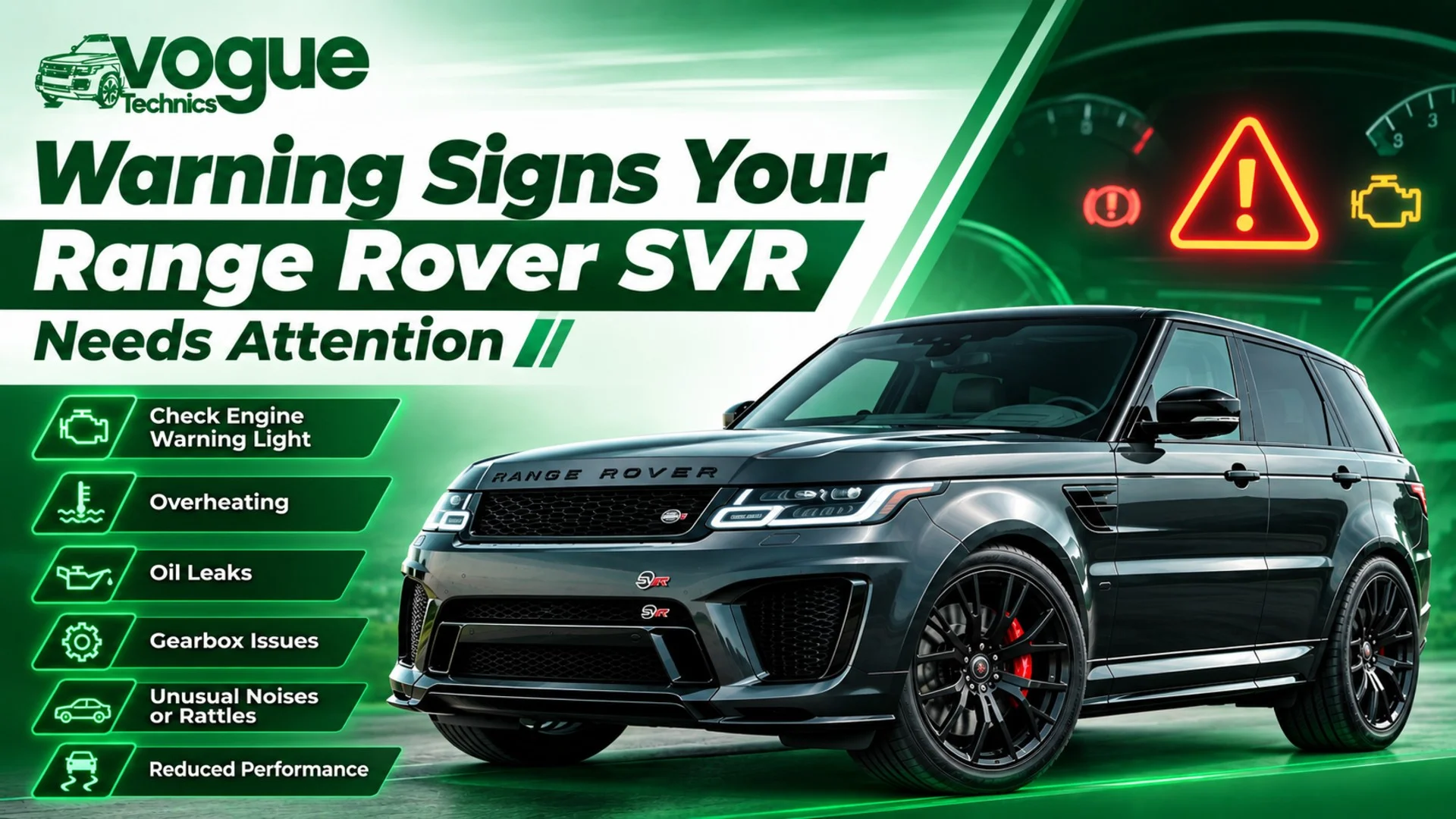
Catching a problem early is the single biggest factor in keeping SVR ownership affordable. Here's what to watch for.
Dashboard Warning Lights You Shouldn't Ignore
- Check engine light – could indicate anything from a sensor fault to a misfire; always worth a proper diagnostic read rather than assumptions
- Suspension warning – don't keep driving on a fault; it can affect handling and ride height stability
- Coolant temperature warning – stop and let the engine cool; continuing to drive risks head gasket damage
Unusual Noises That Signal a Developing Fault
A whine from the supercharger, a knock from the suspension over bumps, or a clunk from the transmission on gear changes are all early indicators worth investigating. None of these noises are "normal wear" that should be ignored, even if the vehicle still drives fine.
When a Problem Needs a Specialist, Not a Guess
Generic garages without JLR-specific diagnostic equipment often misread SVR fault codes or replace the wrong component entirely. This is a vehicle where accurate diagnosis genuinely saves money, because guesswork on a supercharged V8 or air suspension system gets expensive fast.
Keeping Your Range Rover SVR Reliable: Servicing, Costs & Local Support
Reliability with an SVR isn't really about luck. It's about consistent, informed maintenance from people who understand the platform.
How Much Does It Cost to Fix a Range Rover SVR?
Costs vary significantly depending on the fault, but here's a general comparison to help you budget realistically:
Issue | Typical Cause | Relative Repair Cost |
| Coolant leak | Degraded pipes, auxiliary radiator | Low–Medium |
| Air suspension fault | Compressor, air spring, sensor | Medium |
| Ignition coil / misfire | Worn coil pack, spark plugs | Low |
| Supercharger coupling | Wear from heat/mileage | Medium–High |
| Timing chain issues | High mileage, delayed servicing | High |
| Transmission service | Overdue fluid change | Low (preventative) |
Figures are relative comparisons, not fixed quotes. Always get a proper inspection before assuming worst-case cost.
Are SVR Parts More Expensive Than Standard Range Rover Components?
Generally, yes. Performance-specific parts, supercharger components, carbon ceramic brake hardware, and SVR-tuned suspension parts cost more than their standard Range Rover Sport equivalents, largely due to lower production volumes and higher performance specifications. This is exactly why choosing a specialist who sources parts correctly matters, both for cost and for getting genuine longevity out of the repair.
How Long Do Range Rover SVR Engines Typically Last?
With regular servicing and prompt attention to coolant and oil-related warnings, the AJ133 V8 can comfortably reach and exceed 100,000 miles. Engines that fail prematurely are almost always the result of ignored coolant leaks or extended service intervals, not inherent design flaws.
Range Rover SVR Diagnostics and Repairs in Grays, Essex
If any of the symptoms above sound familiar, don't wait for a small issue to become an expensive one. At Voguetechnics, based in Grays, Essex, we work specifically with Range Rover and Land Rover performance models, including the SVR, and we understand the AJ133 engine, air suspension systems, and JLR-specific diagnostics in detail. That means accurate fault-finding from the first visit, not guesswork billed by the hour.
Whether you need a coolant leak traced, a suspension fault diagnosed, or a full pre-purchase inspection before buying a used SVR, our team can give you a clear, honest assessment before any work begins.
Frequently Asked Questions
How often should I service my Range Rover SVR?
Most SVRs should be serviced every 12 months or 10,000–16,000 miles, whichever comes first, though vehicles used for spirited driving benefit from more frequent oil and fluid checks.
What's the most expensive repair on an SVR?
Timing chain-related work and full supercharger replacement rank among the costliest repairs, though both are largely preventable with regular servicing and prompt attention to early warning signs.
Are SVR parts more expensive than regular Range Rover components?
Yes, performance-specific parts typically cost more due to their specialised engineering and lower production volumes compared to standard Range Rover Sport components.
How long do SVR engines typically last?
With proper maintenance, the supercharged V8 can reliably exceed 100,000 miles. Longevity depends heavily on how quickly coolant and oil-related issues are addressed.
Should I buy an extended warranty for my SVR?
For a used SVR outside its original manufacturer warranty, an extended warranty or dedicated maintenance plan is worth considering, particularly for covering supercharger, suspension, and electrical components.
Final Recommendation
The Range Rover SVR isn't a vehicle that punishes you for owning it, it's a vehicle that rewards attentiveness. Most of the reliability issues covered here share a common thread: they start small, they're diagnosable early, and they become genuinely expensive only when ignored.
If your SVR is showing any of the warning signs above, or you're due a service and want it done by people who actually specialise in these vehicles, get in touch with Voguetechnics in Grays, Essex. A proper inspection now is almost always cheaper than a repair later.