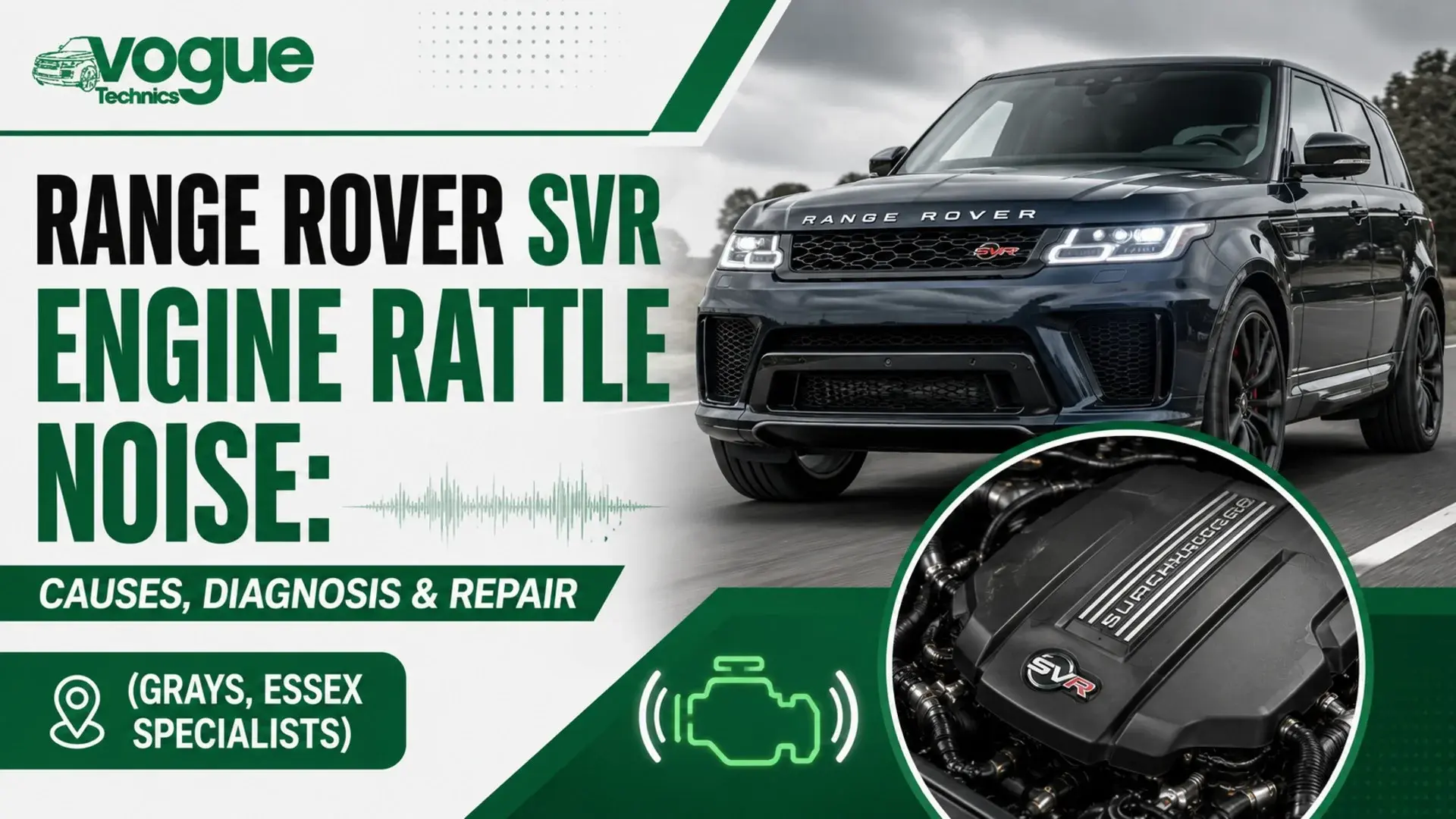
Range Rover SVR Engine Rattle Noise: Causes, Diagnosis & Repair (Grays, Essex Specialists)
You turn the key, the AJ133 V8 fires up, and there it is, that metallic rattle from somewhere under the bonnet. It lasts a second or two, sometimes longer, and then quietens down once the engine warms up. If you've been searching for answers about Range Rover SVR engine rattle noise, you're probably wondering one of two things: is this normal, or is my engine about to cost me thousands?
The honest answer is: it depends. Some startup rattle on a supercharged V8 is expected. Some is an early warning sign of a timing chain problem that gets far more expensive the longer it's ignored. This guide walks through exactly what's happening inside your engine, how to tell the difference between harmless and serious, and what a proper diagnosis looks like, based on how we actually inspect these vehicles at our workshop in Grays, Essex.
Why Is My Range Rover SVR Making a Rattling Noise?
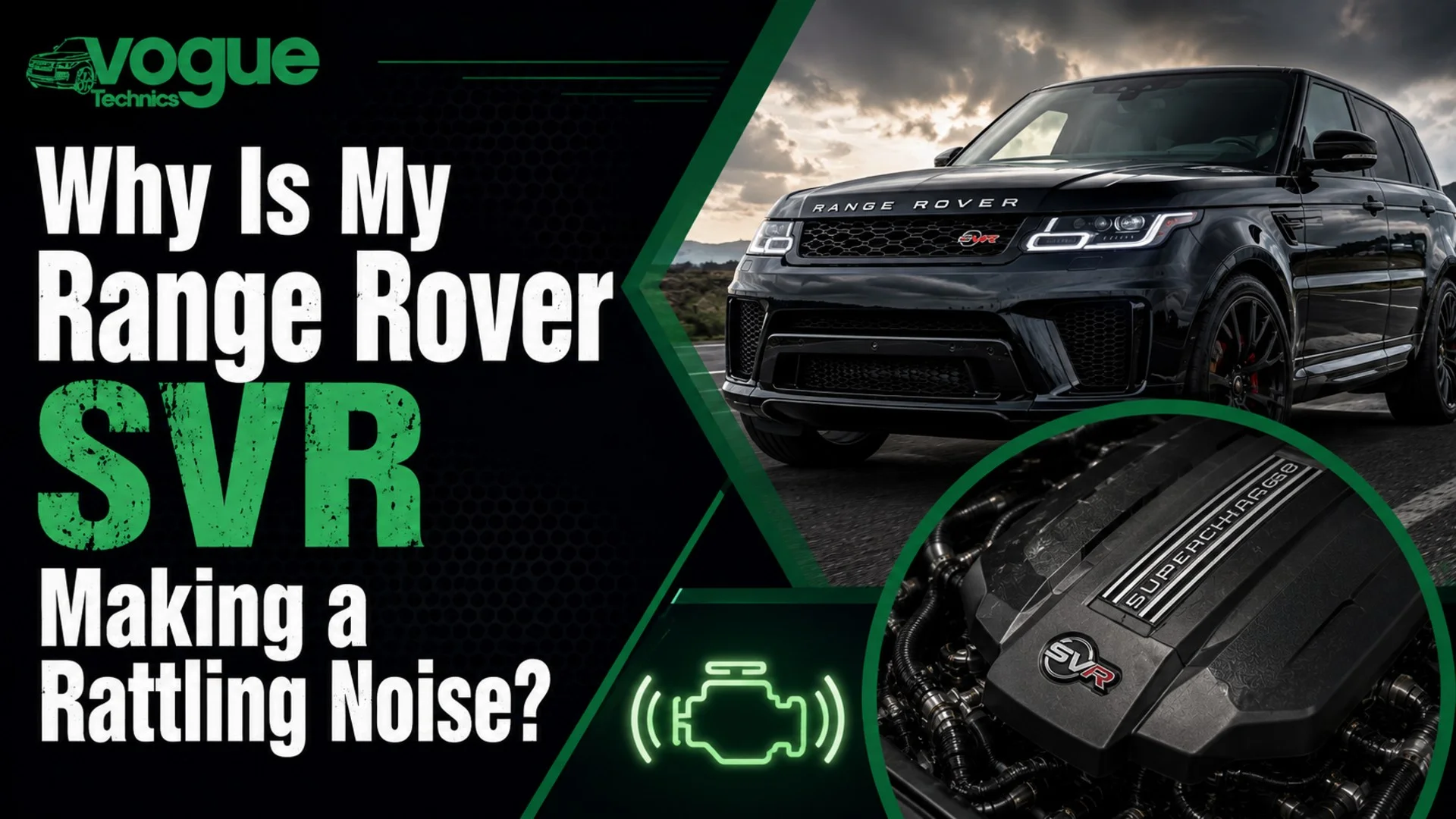
The Range Rover SVR is built around the 5.0-litre supercharged V8, badged AJ133, paired with an Eaton supercharger. It's a fantastic engine when it's healthy, but it's also mechanically complex, with a lot of moving parts that can each produce their own distinct noise. Before assuming the worst, it helps to understand what's actually rattling.
Is a Startup Rattle on a Range Rover SVR Normal?
A brief rattle lasting one to three seconds on cold startup is common on these engines and is usually related to oil drain-back overnight. When the engine sits for several hours, oil drains out of the upper valve train components, including the hydraulic lifters and tensioners. For the first moment or two after ignition, these parts run with reduced lubrication until oil pressure builds and refills them.
That said, "usually normal" isn't the same as "always fine." If the rattle is getting longer, louder, or starting to happen even after a short drive, that's a different situation entirely.
Common Causes of AJ133 V8 Engine Rattling
Several components can cause a rattling or ticking noise on this engine. Here's what tends to be responsible, starting with the most frequent culprits we see:
- Timing chain stretch and worn guides, Over time and mileage, the timing chain can stretch slightly and the plastic guides that keep it aligned can wear down, causing a rattly, almost "loose chain" sound, particularly noticeable on startup.
- Faulty timing chain tensioners, The hydraulic tensioner is meant to keep constant pressure on the chain. When it fails or loses pressure, the chain has slack, and slack means noise.
- Supercharger pulley or bearing wear, A worn pulley bearing on the supercharger can produce a rattle or whine, especially under load or at idle, that's separate from the engine's internal noise.
- Hydraulic lifter tick, A lighter, more consistent ticking (rather than a rattle) often points to lifters that haven't fully pumped up with oil, or are starting to wear.
Each of these has a slightly different sound signature, which is exactly why a proper inspection, rather than guesswork, matters here.
Why Does the Rattle Disappear Once the Engine Warms Up?
This is one of the most common questions SVR owners ask, and it comes down to oil viscosity and pressure. Cold oil is thicker and slower to circulate, so components that rely on hydraulic pressure, tensioners and lifters especially, take longer to reach full operating pressure. As the engine warms and oil thins slightly, pressure normalises and the noise fades.
The catch is that a worn tensioner or a stretched chain can hide behind this same "goes away when warm" pattern for a long time before it gets noticeably worse. Warm-engine silence isn't proof that everything's fine, it's just less obvious.
Cold Weather vs Warm Engine Rattle, What's the Difference?
Condition | Typical Cause | Should You Be Concerned? |
| Rattle only on cold mornings, gone within 2-3 seconds | Normal oil drain-back | Usually not, but worth monitoring |
| Rattle lasting 5+ seconds, even in warm weather | Weak tensioner or chain slack | Worth a diagnostic check |
| Rattle that returns after the engine is fully warm | Supercharger bearing or pulley wear | Needs inspection |
| Rattle plus a warning light or rough idle | Possible timing chain fault or misfire | Book an inspection promptly |
Is Your Range Rover SVR Engine Rattle a Serious Problem?
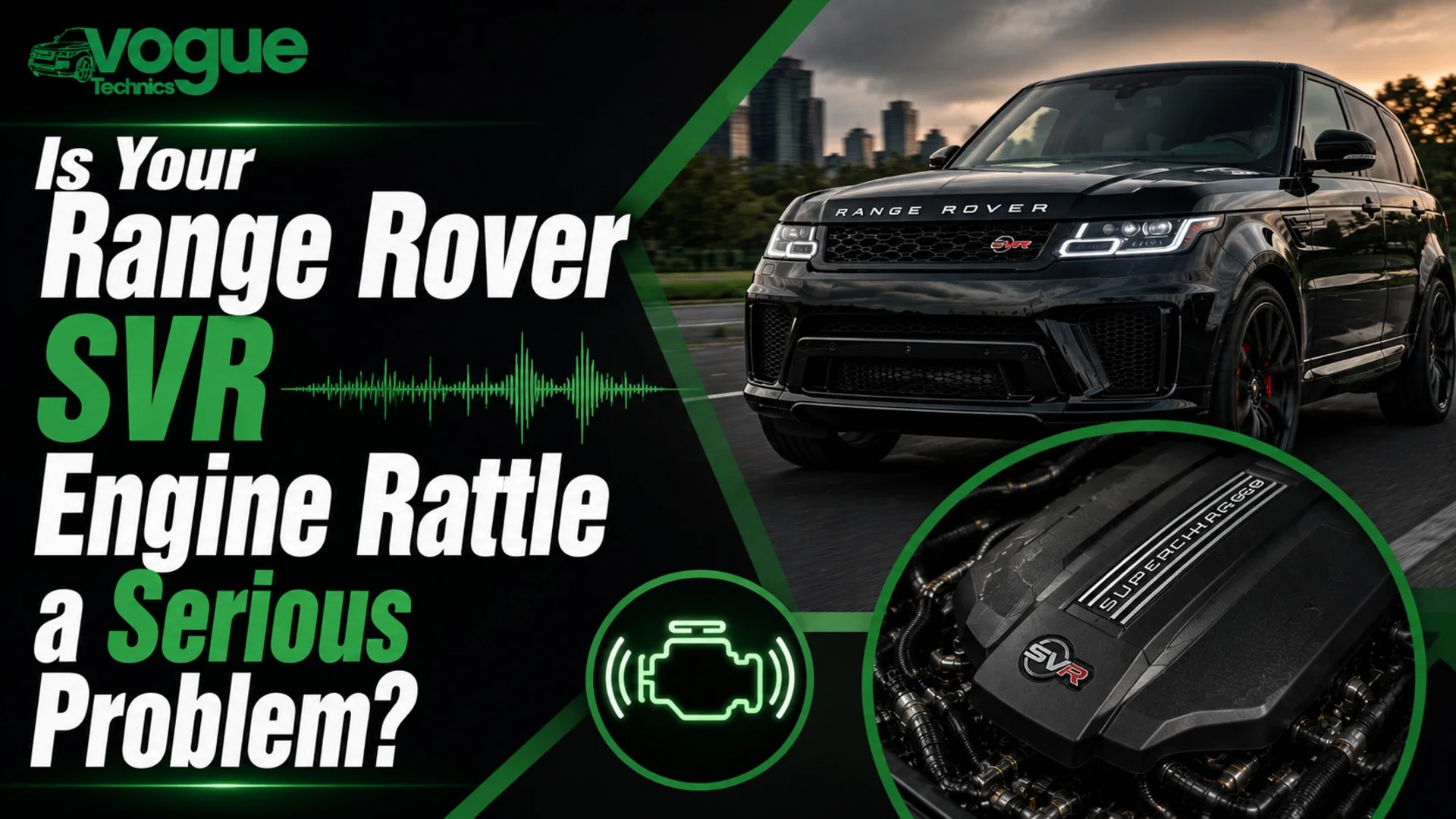
This is really the question behind the question. Nobody searching "Range Rover SVR engine rattle noise" just wants a list of causes, they want to know whether they can keep driving or whether they need to act now.
Engine Tick vs Knock vs Rattle, How to Tell Them Apart
These three terms get used interchangeably, but mechanically they mean different things:
- Ticking is a light, rhythmic sound, often linked to lifters, injectors, or valve train components. Usually less urgent, but still worth noting.
- Rattling is a looser, more metallic sound, often chains, guides, or loose pulleys. This is the sound most associated with timing chain wear.
- Knocking is a deeper, heavier sound, and it's the one that should get your attention fastest, since it can indicate bearing wear or, in rarer cases, piston slap.
If you're not sure which category your noise falls into, that uncertainty alone is a good reason to get it checked rather than guess.
Can You Continue Driving With an Engine Rattle?
A brief, consistent cold-start rattle that disappears within a couple of seconds is generally something you can monitor rather than panic about. But there are situations where continuing to drive isn't a good idea:
- The rattle is getting progressively longer or louder over days or weeks
- You notice a warning light on the dashboard alongside the noise
- The engine feels rough, hesitant, or underpowered
- The noise is now present at idle even when the engine's fully warm
Timing chain problems, in particular, don't fix themselves. Left unaddressed, a stretched chain or failed tensioner can jump timing, which risks contact between pistons and valves, a failure mode that turns a relatively affordable repair into a full engine rebuild or replacement.
Warning Signs You Shouldn't Ignore
Low oil pressure symptoms often accompany a worsening rattle. Watch for a flickering oil pressure warning light, a rattle that intensifies under acceleration, or oil pressure readings (if you're monitoring them) that dip lower than usual at idle.
When a rattle signals timing chain failure, it's typically accompanied by a check engine light with codes related to cam timing or variable valve timing correlation faults, a rougher idle than normal, and a rattle that's now audible during driving, not just at startup.
How Long Should a Startup Rattle Last?
As a general guide, anything beyond 3 to 4 seconds on a cold start is worth having looked at. It's not an automatic emergency, but it's outside what's typically considered normal oil drain-back behaviour on a healthy AJ133 engine.
How We Diagnose Range Rover SVR Engine Rattle Noise in Grays, Essex
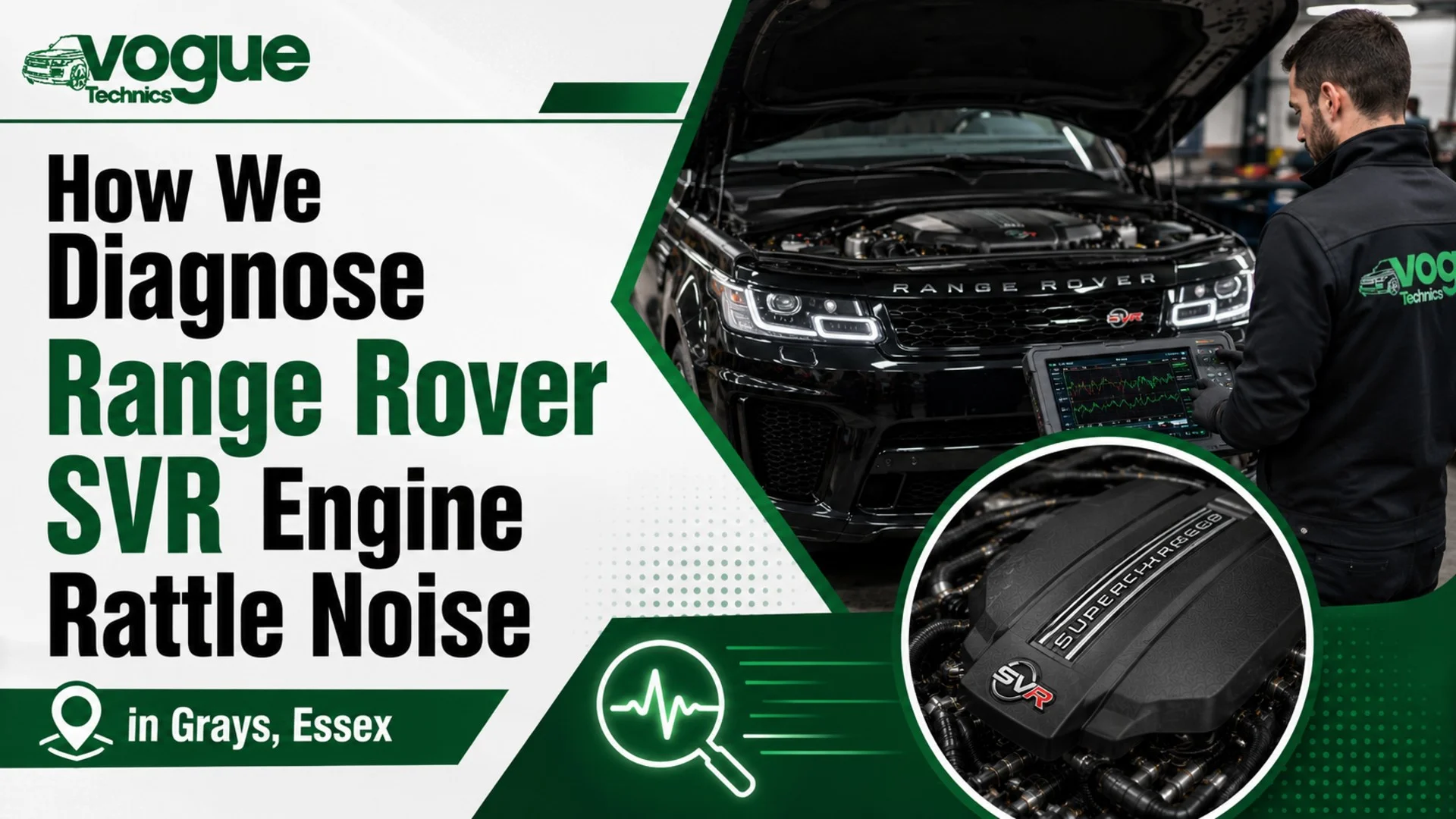
Guesswork isn't a diagnosis, and on an engine as mechanically dense as the AJ133 V8, assuming the cause without proper testing usually means paying for parts that weren't the problem. Here's what a thorough inspection actually involves.
Our Diagnostic Process, Step by Step
OBD and ECU fault code scanning comes first. Even if your dashboard shows no warning light, a full scan can reveal stored or pending codes related to cam timing, misfires, or sensor readings that point us toward the source before we touch a single bolt.
Oil pressure and compression testing follows. This tells us whether the lubrication system is delivering the pressure the engine needs, and whether any cylinders are showing signs of internal wear that could explain a knocking or rattling sound.
Physical timing chain and supercharger inspection is the hands-on stage, checking chain tension, inspecting guides for wear, and assessing the supercharger pulley and bearing for play or noise under manual rotation.
Why Choose a Range Rover Specialist Over a General Garage?
The AJ133 engine isn't like a standard family car engine, and general garages don't always have the specific experience or diagnostic tools calibrated for Jaguar Land Rover platforms. Working specifically on Range Rover and Land Rover vehicles day to day means recognising the difference between, say, a supercharger bearing rattle and a timing chain rattle by sound alone, before the diagnostic even confirms it, and it means not replacing expensive parts on a hunch.
What to Expect During Your Inspection Booking
When you bring your SVR to us in Grays, expect a clear conversation before any work starts. We'll talk through when the noise happens, how long it lasts, and any other symptoms you've noticed, then run the diagnostic process above. You'll get a plain-English explanation of what we found, what it means, and what your options are, no pressure to authorise work you don't understand.
Range Rover SVR Engine Rattle Repair Costs & Options
Repair costs on this engine vary widely depending on what's actually wrong, which is exactly why an accurate diagnosis matters before anyone quotes you a number.
Timing Chain Replacement Cost Explained
Timing chain replacement on the AJ133 V8 is a labour-intensive job, since the supercharger and various ancillaries need to come off to access the front of the engine. Costs typically reflect both the parts (chain, guides, tensioner, and often gaskets) and a significant number of labour hours. It's not a cheap job, but it's considerably less expensive than the alternative, an engine that's suffered timing-related internal damage from a chain that's jumped or snapped.
Supercharger Repair vs Replacement
If the noise traces back to the supercharger pulley or bearing rather than the timing chain, repair options range from replacing just the worn bearing or pulley assembly through to a full supercharger unit replacement if internal wear is more extensive. We'll always aim for the least invasive, most cost-effective fix that actually resolves the noise for good.
Preventive Maintenance to Avoid Future Rattling
A lot of engine rattle cases we see could have been caught earlier with routine attention. Worth building into your maintenance routine:
- Regular oil changes using the correct viscosity oil for the climate and engine, since oil quality directly affects lifter and tensioner performance
- Periodic diagnostic scans, even without an obvious symptom, to catch cam timing drift early
- Listening for changes, since a rattle that's new or has changed character is more informative than one that's been consistent for months
- Addressing small noises early, rather than waiting until they're loud enough to worry about, since chain and tensioner wear is progressive
Book an Engine Inspection With Voguetechnics
If your Range Rover SVR is rattling on startup, ticking at idle, or making a noise you can't quite place, the most useful thing you can do is get it properly assessed before it becomes a bigger job. We work on Range Rover and Land Rover vehicles specifically, based in Grays, Essex, and we'd rather give you an honest answer, even if that answer is "this is nothing to worry about", than have you drive around wondering.
Why local Range Rover owners in Essex trust us: we focus on this vehicle family rather than trying to be generalists, which means faster, more accurate diagnosis and repairs done right the first time.
Get a repair quote today, bring your SVR in for a diagnostic inspection and we'll tell you exactly what's causing the noise, what it'll cost to fix, and what happens if you leave it.
Frequently Asked Questions
Why does my Range Rover SVR rattle on startup? Most commonly it's oil drain-back from the hydraulic lifters and timing chain tensioner overnight. The engine needs a moment to rebuild oil pressure to these components after sitting, which produces a brief rattle that clears once pressure normalises.
Is timing chain rattling dangerous? It can be if left unaddressed. A worn chain or failed tensioner that's allowed to worsen risks the chain skipping timing, which can cause valve and piston contact, serious, expensive engine damage. Early-stage rattling caught and repaired promptly is far less risky.
Can low oil pressure cause rattling? Yes. Insufficient oil pressure means components like hydraulic lifters and the timing chain tensioner don't get the support they need, which can produce ticking or rattling noises, particularly noticeable at startup or idle.
Why does the noise disappear after warming up? Warmer oil flows more easily and reaches full operating pressure faster, which quiets components that were briefly under-lubricated on cold start. It doesn't necessarily mean there's no underlying wear, just that it's less audible once oil pressure is fully established.
How much does timing chain replacement cost? It varies depending on the extent of wear and whether guides, tensioner, and related components need replacing alongside the chain itself. Because of the labour involved in accessing the timing chain on this engine, it's a significant job, but far cheaper than repairing damage from a chain that's already failed.
Should I drive with timing chain noise? Short trips while you arrange an inspection are generally fine if the noise is mild and limited to startup. But if the noise is present while driving, getting louder, or accompanied by a warning light, it's best to get it looked at before continuing to use the vehicle regularly.
Final Thoughts
A rattling noise from your Range Rover SVR isn't something to ignore, but it's also not automatically a disaster. The difference between a routine cold-start quirk and a serious timing chain fault usually comes down to duration, consistency, and whether other symptoms are present alongside it. The only way to know for certain is a proper diagnostic inspection rather than guessing based on forum posts or assuming the worst.
If you're in Grays, Essex, or the surrounding area and your SVR's engine noise has you second-guessing every startup, bring it in and let us tell you exactly what's going on. It's a far better position to be in than wondering, and catching a problem early is almost always cheaper than waiting for it to announce itself.