Range Rover SVR Engine Misfire Causes: Complete UK Diagnostic Guide
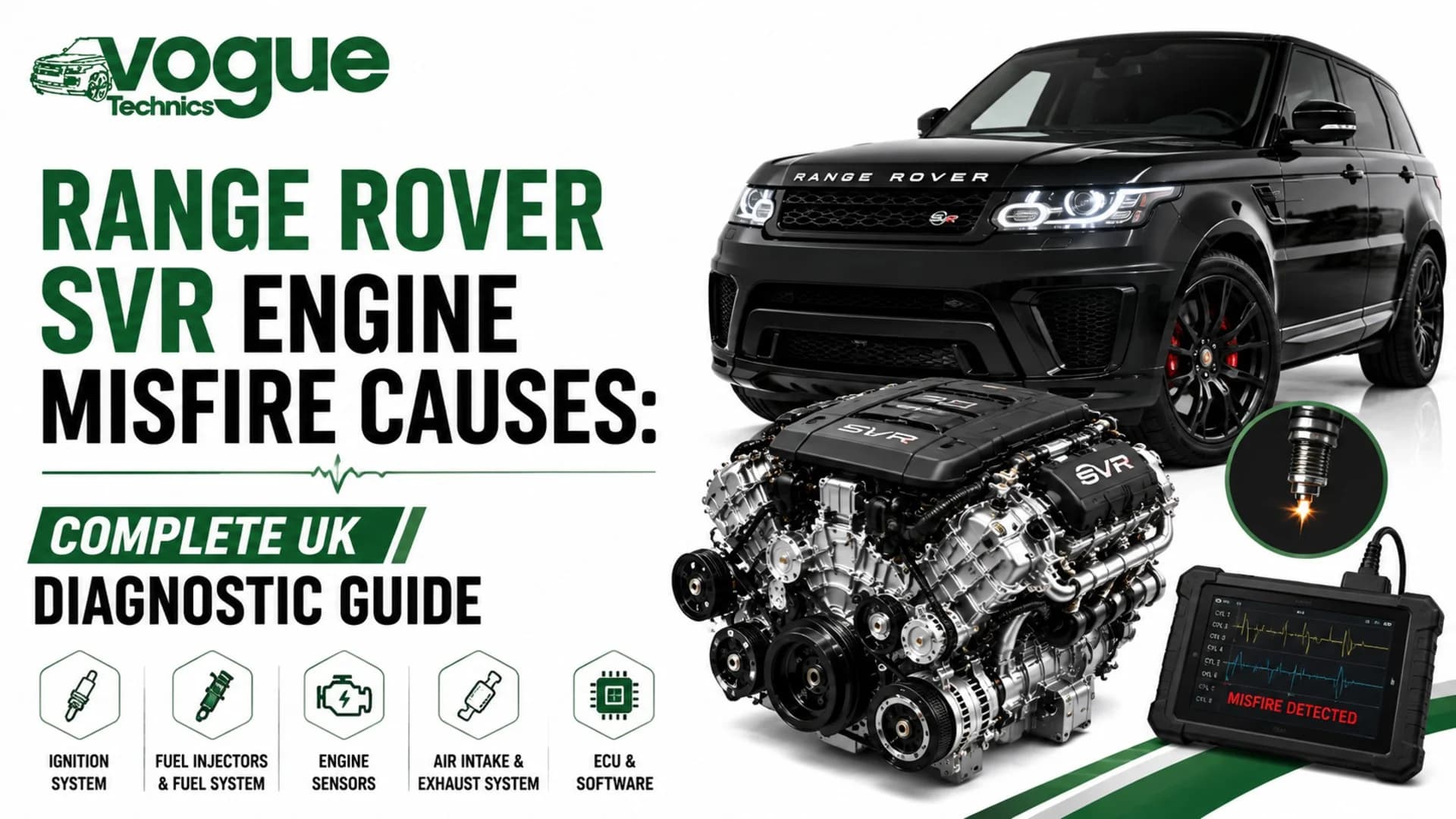
If your Range Rover Sport SVR has started shaking at idle, hesitating under acceleration, or thrown up a flashing engine light and "Restricted Performance" warning, you're dealing with a misfire, and on a 5.0-litre Supercharged V8, that's not something to shrug off. This engine is powerful, complex, and expensive to get wrong. A misfire that gets ignored for a few weeks can turn a £300 diagnostic job into a £3,000 catalytic converter replacement.
We've diagnosed and repaired enough AJ133 engines to know that most owners searching for answers aren't looking for a vague list of "possible causes." They want to know what's actually happening inside their engine, what it means for their car, and what it's going to take to fix it. That's what this guide covers.
What Causes a Range Rover SVR Engine Misfire?
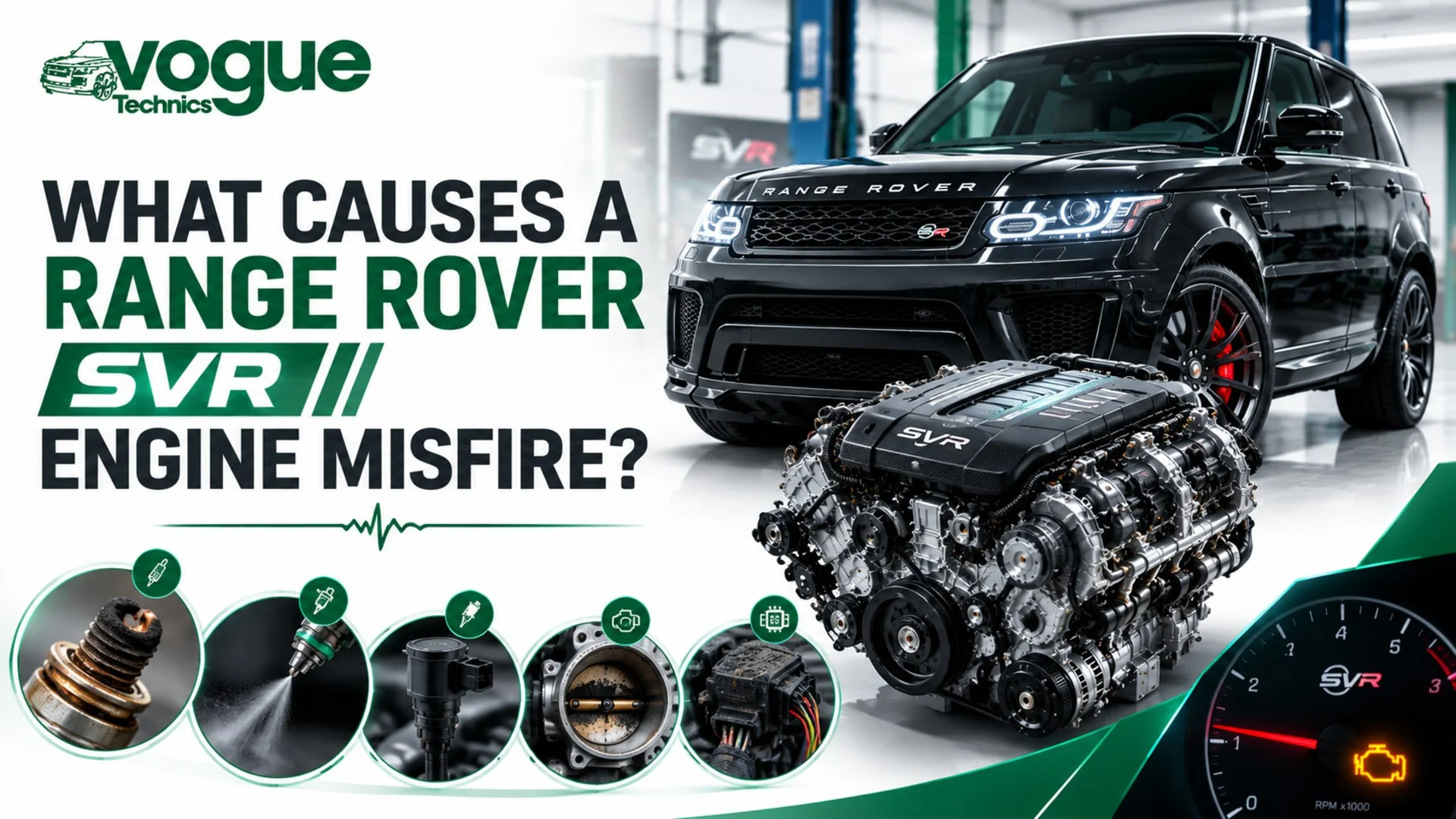
A misfire happens when one or more cylinders fail to combust properly. On the AJ133 5.0-litre Supercharged V8, that can stem from five broad diagnostic categories: ignition, fuel, air intake, timing, and mechanical wear. Understanding which category you're dealing with is the difference between a same-day fix and a parts-swapping guessing game.
Ignition Coil and Spark Plug Failures
Ignition problems are one of the most frequent causes of an SVR misfire, and they're usually the first thing worth ruling out.
Ignition coils on the AJ133 can fail individually, which typically produces a single, consistent cylinder misfire code rather than a random one. A failing coil often shows these patterns:
- Misfire that worsens under load, because the coil struggles to deliver consistent voltage under demand
- Intermittent misfire that comes and goes, often linked to a coil connector or wiring fault rather than the coil itself
- Misfire on the same cylinder every time, a strong sign of a single failed coil rather than a systemic issue
Spark plugs matter just as much. JLR's own technical guidance notes that the spark plugs play a direct role in the AJ133's misfire-detection system, and using anything other than factory-approved plugs can trigger false or genuine misfire readings. Worn or fouled plugs typically cause rough idle, hesitation, and a cold-start misfire that improves once the engine warms up.
Faulty or Contaminated Fuel Injectors
Fuel injector problems are a well-documented issue on this engine. JLR's technical bulletin SSM63697 specifically flags 5.0 AJ133 fuel injector concerns as a cause of poor running, hard starting, rough idle, misfires, and even engine detonation, with poor fuel quality and contamination identified as a common trigger for restricted injector flow.
In practice, this means:
- Leaking or clogged injectors disrupt the air-fuel mixture, causing rough idle and misfire under acceleration
- Contaminated fuel, even from a single bad tank, can restrict flow across multiple injectors at once, producing a random multi-cylinder misfire
- Injector wiring or connector faults can mimic a mechanical injector failure, which is why proper testing matters before replacement
This is a category where DIY guesswork gets expensive fast. Replacing injectors without confirming flow and pulse data first is one of the most common (and costly) mistakes we see.
Vacuum Leaks and Air Intake Faults
A lean condition, too much air, not enough fuel, is a well-known cause of misfire on 5.0-litre Range Rover engines. Current diagnostic guidance connects lean-running conditions directly to air-box, PCV, and intake leaks, and recommends a smoke test to pinpoint the source rather than replacing components on a hunch.
Common culprits include:
- A PCV diaphragm failure, which allows unmetered air into the intake
- A vacuum leak around the intake manifold or supercharger housing
- MAF sensor faults, which throw off the fuel trims and confuse the ECM's fuel calculations
If your fuel trims are running high on the diagnostic scan, this category should be near the top of your list.
Timing Chain Wear on the 5.0 AJ133 V8
Timing chain issues are less common early on but become more likely as mileage climbs. Worn timing chain guides, a stretched chain, or a failing tensioner can throw off camshaft timing just enough to cause a misfire, often accompanied by a rattling noise on cold start that fades as oil pressure builds.
This is a mechanical fault that won't show up on a simple coil swap or injector test, which is exactly why skipping straight to timing chain inspection when other causes are ruled out saves time and money.
Low Compression and Internal Engine Wear
If ignition, fuel, and air have all checked out, the next step is compression. Low or uneven compression across cylinders points to internal wear, piston rings, valve seats, or in more serious cases, a head gasket issue.
A compression test followed by a leak-down test (if compression is low) tells you exactly where the air is escaping, past the rings, the valves, or the head gasket, which determines whether you're looking at a moderate repair or a full engine rebuild.
Supercharger and Intercooler Coolant Intrusion (Advanced Cause)
This one catches a lot of owners and even some general garages off guard. On the AJ133, coolant can occasionally intrude into the cylinders through internal supercharger intercooler leakage. It's not a headline cause, but it's a genuine one, and it produces a misfire pattern that can look identical to an ignition or fuel fault until a specialist traces it back to the cooling system. If you've replaced coils, plugs, and injectors and the misfire persists, this is worth investigating.
How Do You Diagnose a Range Rover SVR Misfire?
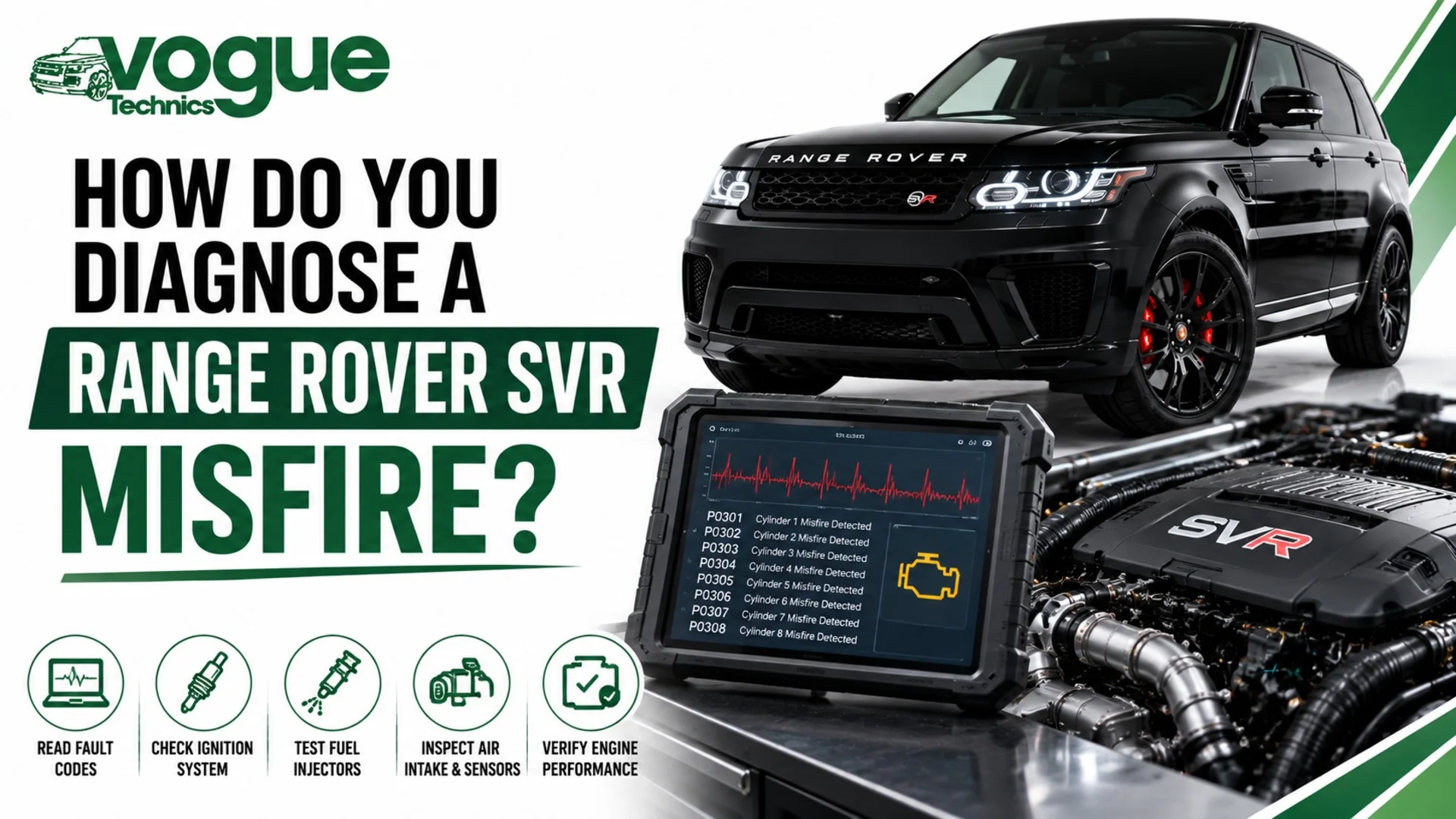
Diagnosing a misfire properly isn't about guessing which part looks suspicious. It's about following a sequence that narrows the cause systematically.
What Do P0300–P0308 and P0316 Misfire Codes Mean?
Your diagnostic scan will usually return one of these codes. Here's what each one actually tells you:
Code | Meaning |
| P0300 | Random or multiple cylinder misfire |
| P0301 | Cylinder 1 misfire |
| P0302 | Cylinder 2 misfire |
| P0303 | Cylinder 3 misfire |
| P0304 | Cylinder 4 misfire |
| P0305 | Cylinder 5 misfire |
| P0306 | Cylinder 6 misfire |
| P0307 | Cylinder 7 misfire |
| P0308 | Cylinder 8 misfire |
| P0316 | Misfire detected during startup |
A single-cylinder code (P0301–P0308) points you toward that cylinder's coil, plug, or injector first. A P0300 random misfire is trickier, it usually suggests a shared cause like fuel contamination, a vacuum leak, or low fuel pressure affecting multiple cylinders at once. P0316 specifically flags a startup misfire, which often narrows things down to cold-start fuel delivery or plug fouling.
Bank 1 vs Bank 2 Misfire: What It Tells You
On a V8 like the AJ133, misfires clustered on one bank rather than scattered randomly are diagnostically significant. If several cylinders on the same bank are misfiring, it often points toward something affecting that bank specifically, a fuel delivery issue, an intake leak on that side, camshaft timing on that bank, or a shared electrical supply fault. Real-world diagnostic cases show this pattern occurring even when the coils, plugs, and injectors on that bank initially test fine, which is why bank-level reasoning is a genuinely useful diagnostic shortcut rather than a technicality.
The Correct Diagnostic Sequence (Coil → Injector → Fuel Pressure → Smoke Test → Compression)
Skipping around causes wasted money. Here's the order that actually works:
- Scan the codes and note whether it's a single cylinder, multiple cylinders, or startup-specific
- Identify the misfiring cylinder(s) using live data and the misfire counter
- Inspect and test the spark plug on the affected cylinder
- Swap or test the ignition coil to rule out an electrical fault
- Test the fuel injector for flow and pulse
- Check fuel pressure at the rail
- Run a smoke test on the intake to catch vacuum leaks
- Perform a compression test if the above rule out
- Run a leak-down test if compression is low
- Check timing chain and camshaft synchronisation as a final mechanical check
Following this order means you're never replacing a £150 injector when the real fault is a £15 vacuum hose.
Range Rover SVR Misfire at Idle vs Under Acceleration
The timing of the misfire narrows things down further:
- Misfire at idle only, often points to a vacuum leak, PCV fault, or a fouled spark plug, since these issues are more noticeable at low airflow
- Misfire under acceleration or load, more likely tied to fuel delivery (injector or fuel pressure) or a coil that's struggling under higher voltage demand
- Misfire under load and at idle, suggests a more fundamental fault like low compression or a timing issue
Why Does My SVR Misfire When Cold vs When Hot?
Temperature-dependent misfires are a diagnostic clue in themselves.
- Cold-start misfire is commonly linked to fuel injector leakage, plug fouling, or coolant intrusion, issues that show up before the engine reaches operating temperature and full electrical/fuel stability
- Warm-engine misfire more often points to heat-sensitive electrical faults, expanding components affecting a marginal vacuum leak, or fuel vaporisation issues once things heat up
If you can tell us which pattern you're seeing, it cuts diagnostic time significantly.
Is It Safe to Drive a Range Rover SVR With a Misfire?
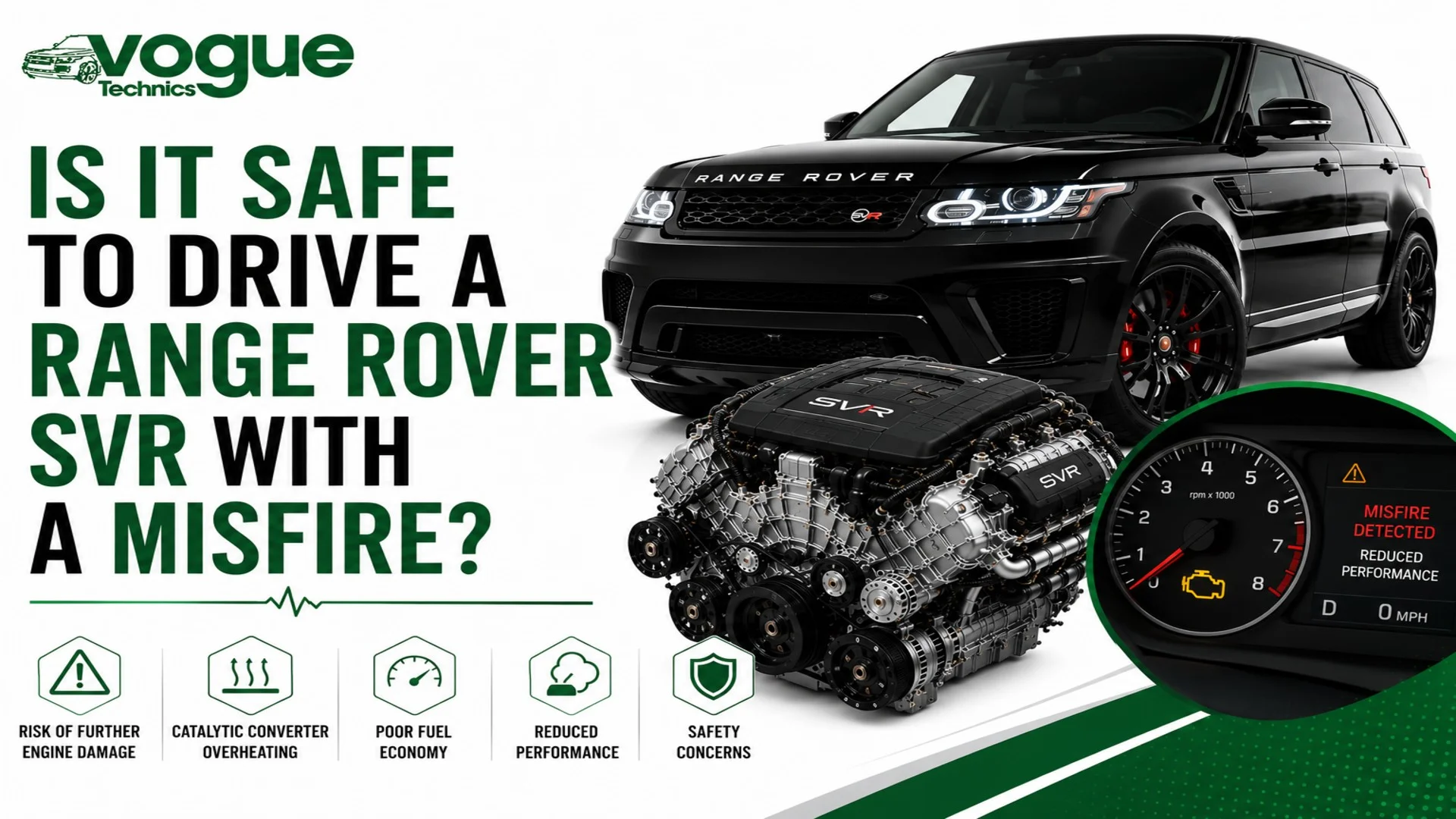
Short answer: not for long. A misfire isn't just an annoyance, it has knock-on effects that get more expensive the longer they're left.
Can a Misfire Damage the Catalytic Converter?
Yes, and this is one of the most important warnings in this entire guide. A misfire sends unburned fuel straight into the exhaust system. That unburned fuel can overheat and damage the catalytic converters, and on an SVR, replacing a pair of catalysts is a serious expense.
JLR's own SVR-specific technical guidance (SSM75642) instructs technicians to investigate a noticeable misfire whenever P0420 or P0430 catalyst codes appear, and explicitly warns against replacing the catalytic converters before the root misfire cause has been identified and fixed. In other words: fixing the catalyst without fixing the misfire just means you'll damage the new one too.
If your engine light is flashing (as opposed to staying solid), stop driving as soon as it's safe to do so. A flashing light indicates an active, severe misfire that's actively risking catalyst damage in real time.
Why Replacing Parts Without a Proper Diagnosis Wastes Money
We've seen owners arrive having already replaced eight coils, eight spark plugs, and a set of injectors, only for the misfire to persist because the actual cause was a vacuum leak or a timing chain tensioner. On an engine with eight cylinders, guessing gets expensive quickly:
- Eight ignition coils replaced unnecessarily can run into four figures
- A full injector set replaced on a hunch, rather than confirmed by flow testing, is a similarly costly gamble
- Oxygen sensors and catalytic converters replaced without addressing the underlying misfire will simply fail again
Proper diagnosis, codes, live data, targeted component testing, almost always costs less than the parts you'd otherwise replace on a guess.
When Does an SVR Misfire Need a Specialist, Not a Generic Garage?
A general garage can read a code. Diagnosing why an AJ133 is misfiring, especially intermittent, cold-start, or bank-specific patterns, takes familiarity with this specific engine's known failure points, JLR's technical bulletins, and the right diagnostic sequence. If a generic garage has already replaced parts without resolving the issue, that's usually the point to bring in a specialist who works on these engines regularly.
Get a Professional Range Rover SVR Misfire Diagnosis in Essex, UK
Why Choose Voguetechnics for AJ133/SVR Diagnostics
Based in Grays, Essex, Voguetechnics works specifically with Range Rover, Range Rover Sport, and SVR engines, including the 5.0-litre Supercharged AJ133 V8. We diagnose before we replace, reading codes, pulling live data, and testing individual components rather than swapping parts and hoping. That approach saves our customers money and gets the actual fault fixed the first time.
Our Diagnostic and Repair Process
- Full OBD-II scan and live data review, including misfire counters and fuel trims
- Cylinder- and bank-specific fault tracing
- Component testing (coils, injectors, fuel pressure) before any parts are replaced
- Smoke testing for vacuum and intake leaks
- Compression and leak-down testing where mechanical wear is suspected
- Clear explanation of findings and cost before any repair work begins
Get a Free, No-Obligation Engine Quote
If your Range Rover SVR is misfiring, running rough, or showing a check engine light, don't wait for it to get worse. Get in touch with Voguetechnics for a straightforward, no-obligation quote and let us trace the actual cause, not just the symptom.
Frequently Asked Questions About Range Rover SVR Misfires
What causes a Range Rover SVR engine misfire? The most common causes are ignition coil or spark plug failure, faulty or contaminated fuel injectors, vacuum or intake leaks, timing chain wear, and low cylinder compression. Less commonly, coolant intrusion from the supercharger intercooler system can also cause a persistent misfire.
What does P0300 mean on a Range Rover SVR? P0300 indicates a random or multiple cylinder misfire, meaning the engine has detected misfiring across more than one cylinder without a consistent pattern. This often points to a shared cause like fuel contamination or a vacuum leak rather than a single failed component.
Can bad spark plugs cause an SVR misfire? Yes. Worn or fouled spark plugs are a common and relatively inexpensive cause of misfire, particularly noticeable as rough idle or a cold-start misfire that improves once the engine warms up.
Can a misfire damage the catalytic converter? Yes. Unburned fuel from a misfiring cylinder can overheat and damage the catalytic converters. JLR's own SVR technical guidance specifically warns against replacing catalysts before the underlying misfire has been diagnosed and fixed.
Should I drive a Range Rover SVR with a flashing engine light? No. A flashing check engine light indicates an active, severe misfire and you should stop driving as soon as it's safe to do so, since continued driving risks catalytic converter damage.
How much does Range Rover SVR misfire diagnosis cost? Costs vary depending on how many components need testing, but a proper diagnostic process, codes, live data, and targeted testing, is almost always cheaper than replacing parts on a guess. Contact Voguetechnics for a free, no-obligation quote specific to your vehicle.
Can a vacuum leak cause an SVR misfire? Yes. A vacuum or intake leak creates a lean condition, too much air relative to fuel, which is a well-documented cause of misfire on the 5.0-litre AJ133, often confirmed through a smoke test.
If your Range Rover SVR is showing any of the signs covered here, rough idle, hesitation, a flashing engine light, or a Restricted Performance warning, the sooner it's properly diagnosed, the less it's likely to cost you. Get in touch with Voguetechnics in Grays, Essex, for a free engine quote and let our specialists trace the real cause of your misfire, not just the symptom.