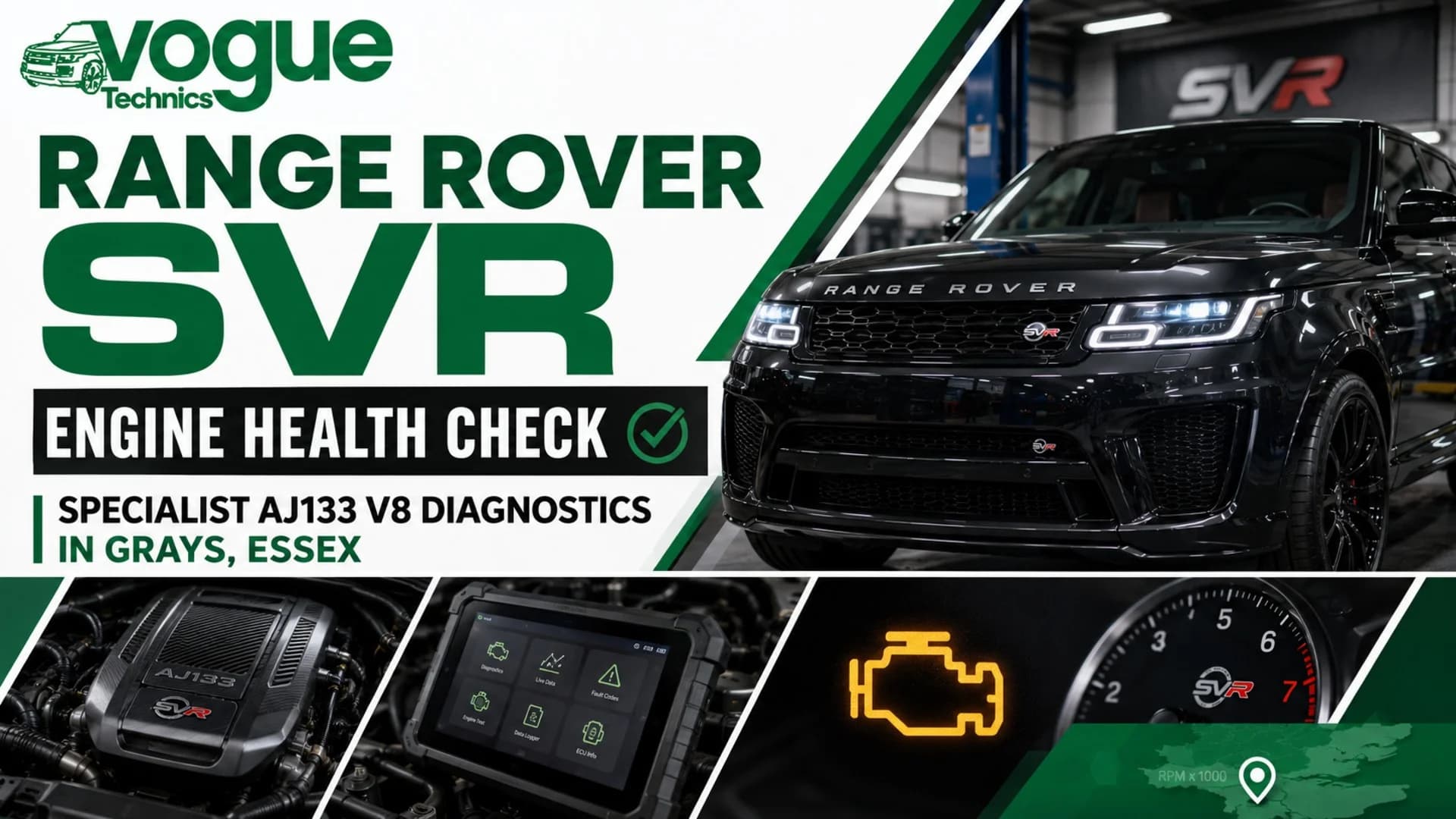
Range Rover SVR Engine Health Check | Specialist AJ133 V8 Diagnostics in Grays, Essex
That faint rattle on cold start. The coolant level that keeps dropping a little every few weeks. The warning light that came on for a second and then vanished. If you own a Range Rover Sport SVR, you already know these small signals matter more than they would on an ordinary car , because behind that badge sits a 5.0-litre supercharged V8 that punishes neglect and rewards proper diagnosis.
A Range Rover SVR engine health check isn't a luxury add-on. It's the difference between catching a £200 problem early and facing a £15,000 rebuild later. At Voguetechnics in Grays, Essex, we've built our diagnostic process specifically around the AJ133 engine's known failure points , not a generic OBD scan that tells you almost nothing about what's actually happening inside the block.
This guide walks through exactly what a proper SVR engine health check involves, what the AJ133 is prone to, and how to read the difference between a healthy engine and one heading for trouble.
What Is Included in a Range Rover SVR Engine Health Check?
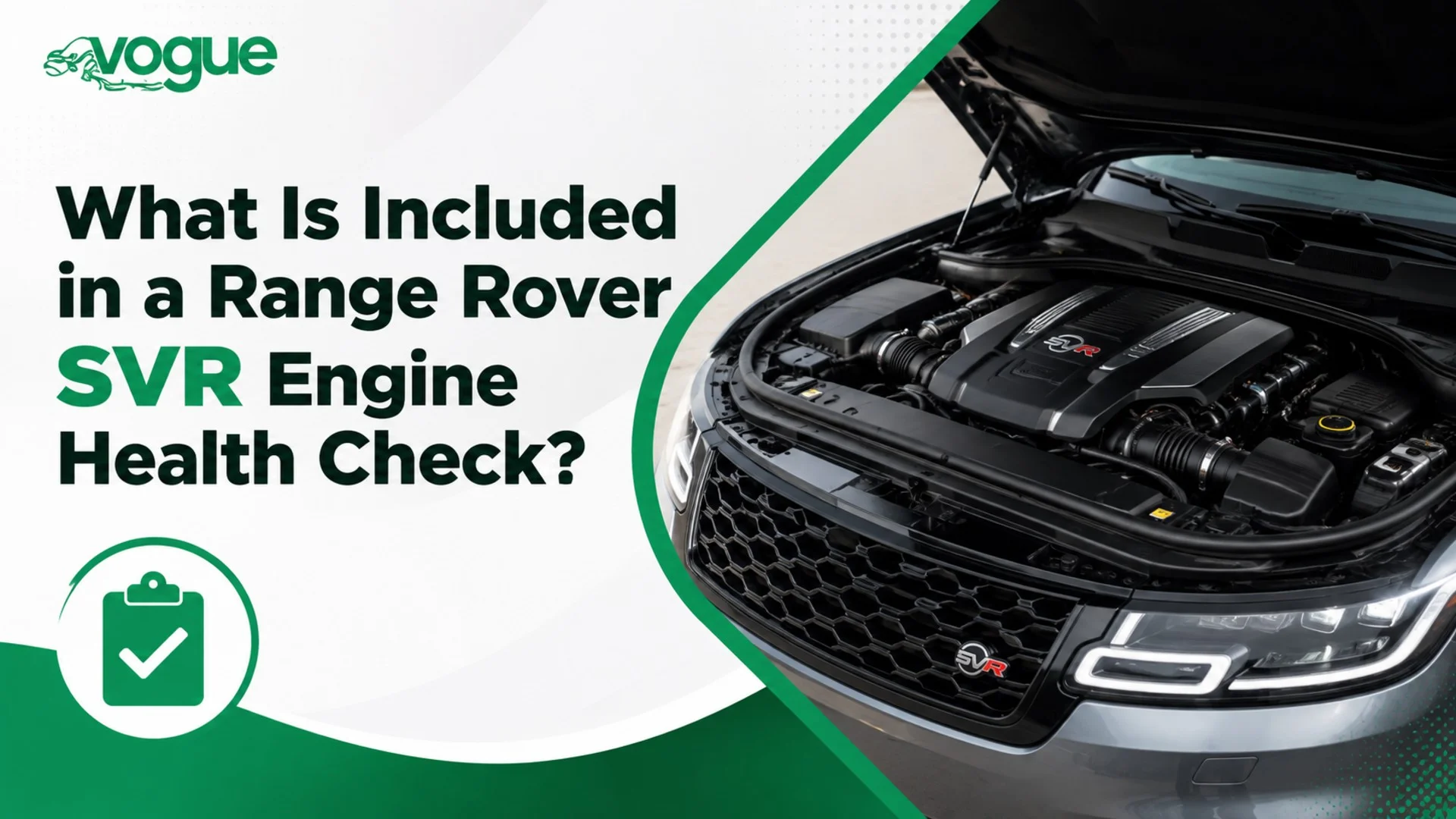
A genuine engine health check goes well beyond plugging in a code reader. It combines electronic diagnostics with hands-on mechanical testing to build a complete picture of the engine's real condition , not just what the ECU happens to be reporting that day.
Why the AJ133 5.0-Litre Supercharged V8 Needs a Specialist Health Check
The AJ133 is a high-output, forced-induction petrol V8, producing between 550 bhp and 575 bhp depending on the model year, with roughly 700 Nm of torque running through a supercharged induction system. That combination of boost pressure, heat, and mechanical load means wear patterns show up differently , and faster , than on a naturally aspirated engine.
Timing chains stretch under sustained high-rev use. Superchargers run hot and their couplers degrade. Cooling systems work overtime to manage the extra thermal load from forced induction. None of this is unusual for a performance V8, but it does mean a standard service check isn't designed to catch it early.
What Makes This Different From a Standard OBD Scan
A basic OBD scan reads stored fault codes and stops there. It's a starting point, not a diagnosis. Two engines with identical fault codes can be in completely different mechanical condition , one might need a sensor, the other might be developing internal wear that hasn't triggered a code yet.
Our health check layers electronic diagnostics with physical testing:
- Live data analysis , fuel trims, misfire counters, and camshaft-to-crankshaft correlation while the engine runs
- Compression and leak-down testing , measuring actual cylinder health rather than inferring it from codes
- Cooling system pressure testing , confirming whether coolant loss is external, internal, or component-related
- Physical and audible inspection , cold start behaviour, engine noise, and supercharger condition
Each layer rules things in or out. A fault code says "look here." The physical test says "here's what's actually wrong."
Who Should Book an SVR Engine Health Check
Buying a Used Range Rover SVR
Used SVR values swing enormously based on engine condition, and a seller's word isn't verification. A pre-purchase engine health check tells you exactly what you're buying before you commit , including whether that "small oil consumption" the listing didn't mention is actually a bearing wear issue in the making.
Owners Noticing Warning Signs
Cold-start rattle, coolant that needs regular topping up, a warning light that flickers and clears , these are exactly the symptoms owners tend to monitor rather than act on. Catching them early with proper diagnostics is almost always cheaper than waiting for them to escalate.
Pre-Service or Pre-Sale Inspection
Whether you're preparing to sell or simply want a baseline understanding of your engine's condition before your next service interval, a health check gives you a documented reference point , useful for service history, negotiation, or peace of mind.
Range Rover SVR Engine Health Check , Our Step-by-Step Process
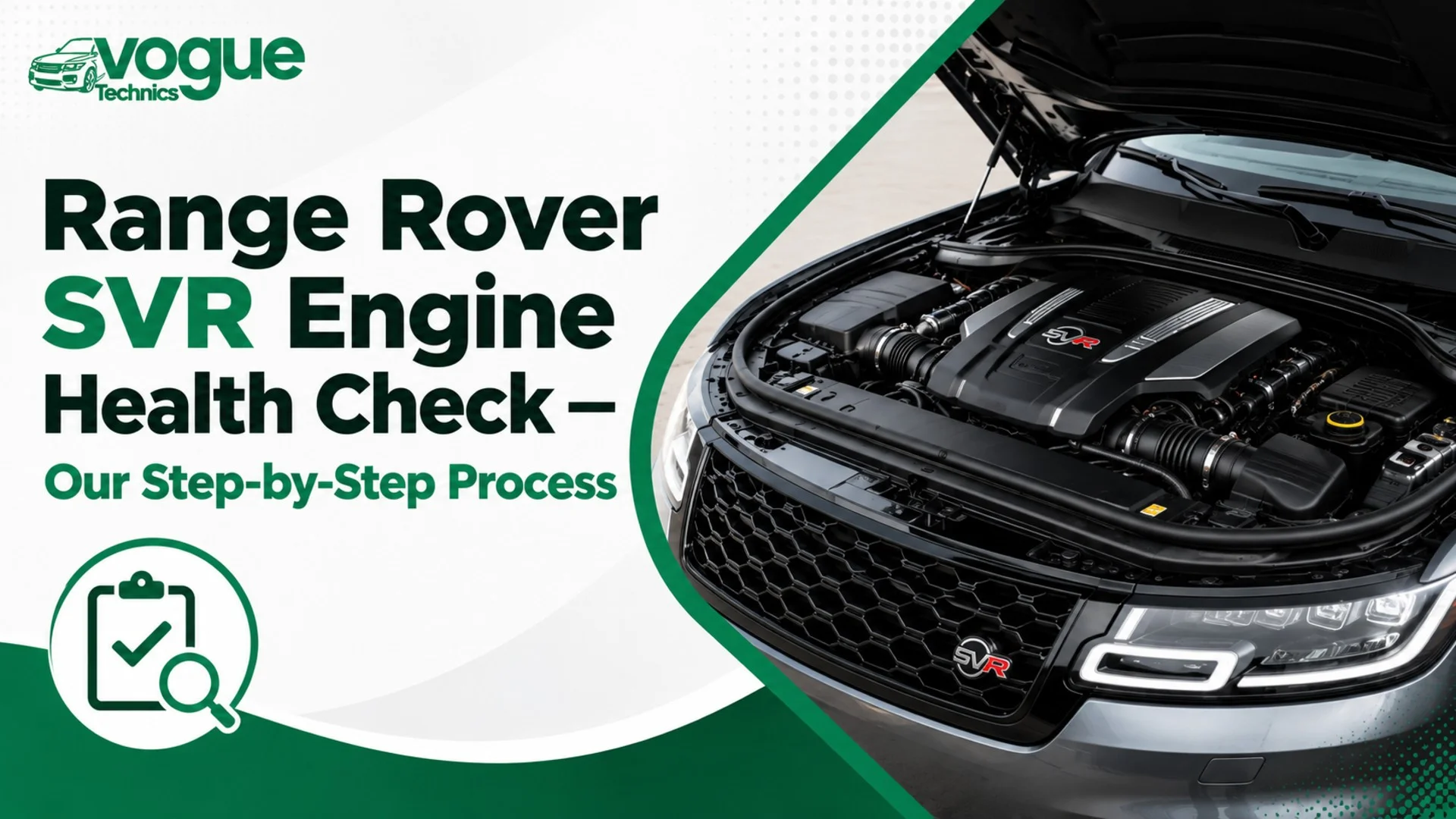
This is where our approach differs from most garages offering an "engine check." Rather than treating diagnostics, compression testing, and cooling inspection as separate services, we run them as one connected process , because on the AJ133, these systems affect each other directly.
Step 1 , Diagnostic Scan and Fault Code Analysis
We start with a full ECU interrogation, reading both stored and pending diagnostic trouble codes (DTCs). Pending codes matter just as much as stored ones , they show a fault developing before it's severe enough to trigger the warning light.
Reading Live Engine Data and Fuel Trims
Fuel trim values tell us whether the engine is compensating for a vacuum leak, a MAF sensor issue, or an air intake fault. Misfire counters, cylinder by cylinder, often point us toward specific ignition or fuel delivery problems long before a driver notices anything from the seat.
Step 2 , Cold Start and Engine Noise Inspection
A cold engine tells you things a warm one hides. Oil hasn't fully circulated, tolerances are tighter, and any timing chain slack or bearing wear tends to be most audible in the first few seconds after startup.
What Timing Chain Rattle Sounds Like on Cold Start
A healthy AJ133 should fire and settle into a smooth idle within a couple of seconds. A rattle or knocking sound lasting longer than that , particularly from the front of the engine , is a classic early sign of timing chain tensioner fatigue or guide wear. It doesn't always mean immediate failure, but it does mean the chain system needs proper assessment rather than being ignored.
Step 3 , Compression and Leak-Down Testing
This is where we move from "what the ECU thinks" to "what's actually happening inside the cylinders."
What Healthy Compression Readings Look Like
A healthy AJ133 should show consistent compression across all eight cylinders, typically within a tight range of each other. It's not just about hitting a target number , even, balanced readings matter more than any single figure.
Interpreting Uneven Cylinder Compression
A significant variation between cylinders , say, one or two reading noticeably lower than the rest , points toward piston ring wear, valve seating issues, or cylinder wall scoring. At that point, a leak-down test confirms exactly where the compression is escaping: past the rings, past the valves, or through a head gasket.
Step 4 , Cooling System and Coolant Pressure Test
Coolant loss on an SVR gets blamed on head gaskets more often than it should be. In reality, the cooling system has several points that fail before the gasket ever does.
Checking for Head Gasket and Coolant Pipe Leaks
We pressure test the entire cooling system to isolate the source: water pump seals, thermostat housing, coolant crossover pipes, or hose connections are far more common culprits than the head gasket itself. Only where pressure loss persists with no external leak found do we move to combustion leak testing to properly rule a head gasket issue in or out.
Step 5 , Supercharger and Oil System Inspection
The supercharger and oil system work under constant load on this engine, and both show wear signatures that are easy to catch early if you know what to listen and look for.
Signs of Supercharger Coupler and Bearing Wear
A whining or grinding note from the supercharger under load, reduced boost response, or a noticeable drop in power delivery usually points to coupler wear or bearing degradation. We also check oil pressure readings and inspect oil condition, since unusual oil consumption is often an early indicator of internal wear well before a fault code appears.
Common Range Rover SVR Engine Problems We Detect
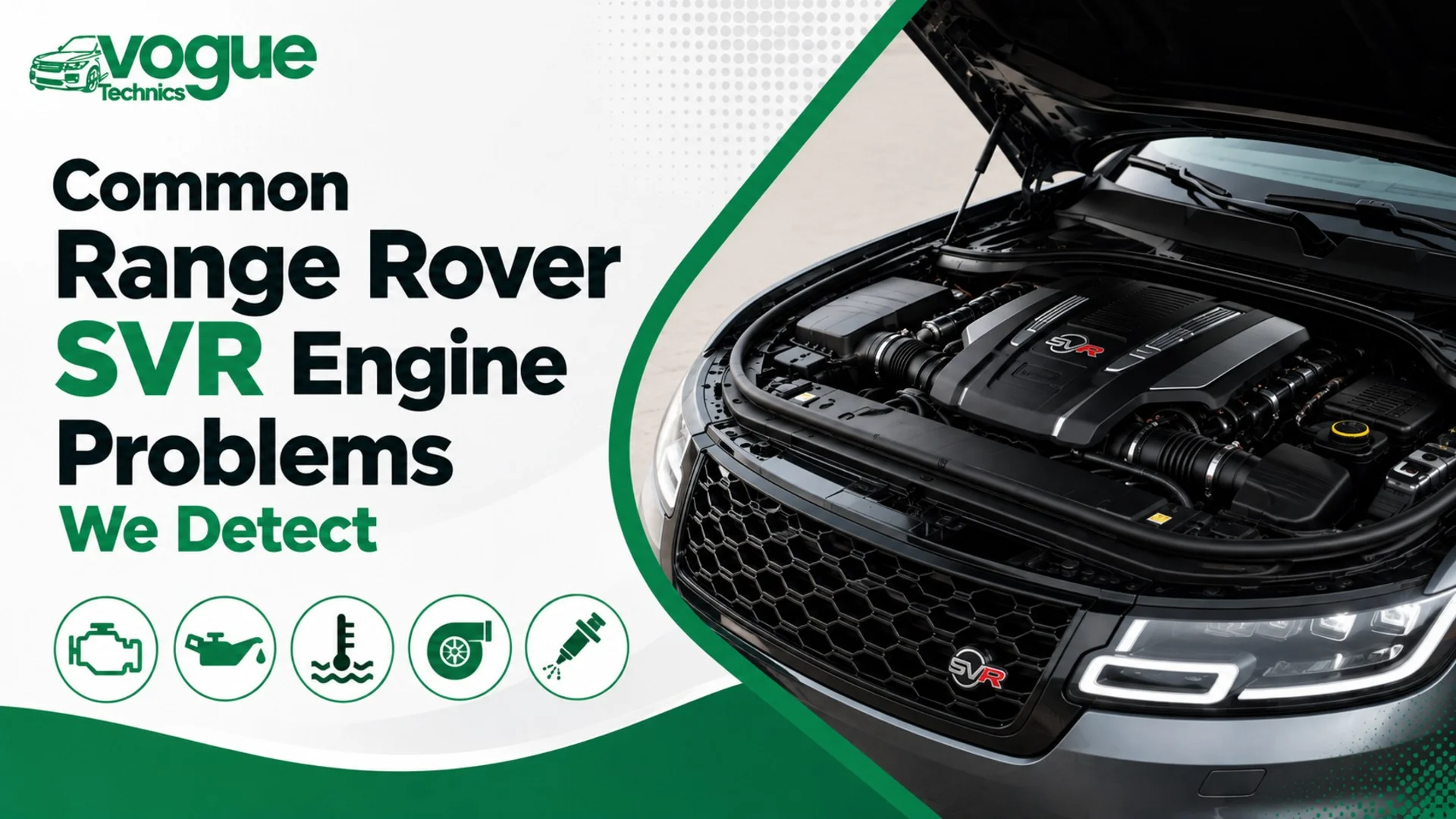
Understanding the AJ133's known weak points helps put any test result into context. Here's what we see most often during SVR engine inspections.
Timing Chain Stretch and Tensioner Wear
The most commonly reported mechanical concern on this engine. As the chain stretches over time and mileage, the tensioner works harder to keep it under proper tension. Left unaddressed, this leads to timing inaccuracy, rattling, and in advanced cases, chain failure , one of the more expensive repairs on this engine if caught late.
Coolant Loss and Overheating Issues
As covered above, this is rarely a single-cause problem. Water pumps, thermostats, and crossover pipes are common failure points that mimic more serious issues if not properly diagnosed.
Oil Consumption and Low Oil Pressure
Some oil consumption is expected on high-performance V8s, but a consistent, increasing pattern , combined with fluctuating oil pressure readings , usually signals internal wear that's worth investigating before it progresses.
Misfires and Ignition Coil Faults
Misfires on the AJ133 are frequently traced back to ignition coils or spark plug condition rather than anything more serious, which is exactly why proper diagnosis matters before assuming the worst.
How to Tell If Your SVR Engine Is Healthy or At Risk
Most content online focuses on what failure looks like. Fewer sources explain what a genuinely healthy AJ133 should look and sound like , so here's the other side of that picture.
Test | Healthy Indication | Warning Indication |
| Compression | Even readings across all cylinders | Noticeable variation between cylinders |
| Leak-down | Low leakage percentage | High leakage, indicating rings/valves/gasket wear |
| Oil pressure | Stable across rev range | Low or fluctuating readings |
| Coolant pressure | Holds pressure steadily | Gradual or rapid pressure loss |
| Diagnostic scan | No active or pending critical DTCs | Timing, misfire, or fuel trim codes present |
| Oil condition | Clean, normal viscosity | Metal contamination or excessive dilution |
| Cold start | Smooth, quiet within seconds | Rattling, knocking, or delayed idle stabilisation |
| Exhaust | Clear under load | Blue or white smoke present |
SVR Engine Health Score Explained
To make results easier to interpret, we score every inspection across the categories above , compression, leak-down, oil pressure, coolant condition, fault codes, timing chain condition, supercharger operation, oil consumption, cold-start behaviour, and service history.
- 90–100 (Excellent): No concerns; engine performing as expected for age and mileage
- 75–89 (Healthy): Minor wear consistent with normal use; no action needed
- 60–74 (Monitor): Early-stage indicators worth tracking at next service
- 40–59 (Needs Investigation): Clear warning signs requiring further diagnosis
- Below 40 (High-Risk): Significant wear or failure indicators present
This gives you a single, honest reference point rather than a page of raw numbers to interpret on your own.
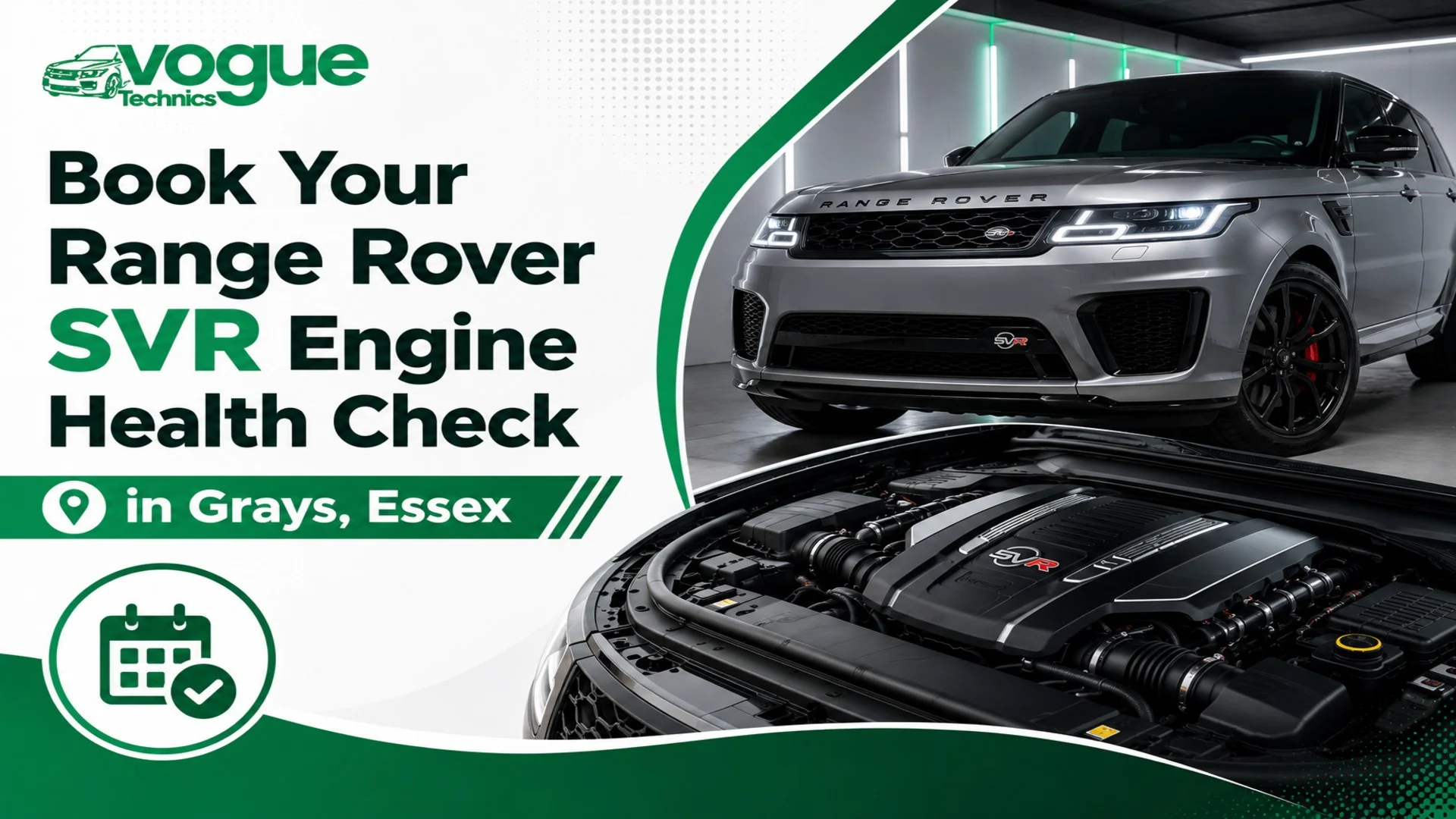
Book Your Range Rover SVR Engine Health Check in Grays, Essex
How Much Does an SVR Engine Health Check Cost?
Pricing depends on the depth of testing required , a standard diagnostic and compression assessment costs less than a full inspection including leak-down testing, cooling system pressure testing, and supercharger evaluation. We'll always confirm exact pricing before starting any work, and if you decide to proceed with a repair or rebuild afterward, we factor the diagnostic cost into the overall job wherever possible.
What You Receive After the Inspection
Every health check comes with a written report covering your SVR Engine Health Score, the results from each test stage, photos or readings where relevant, and clear next-step recommendations , whether that's "no action needed" or "here's what needs attention and why."
Frequently Asked Questions
How Long Does a Range Rover SVR Engine Diagnostic Take?
A full health check, including compression, leak-down, and cooling system testing, typically takes between two and four hours depending on what the initial scan and inspection reveal. A basic diagnostic scan alone takes considerably less time, but it also tells you considerably less.
Can a Main Dealer Scan Miss Internal Engine Faults?
Yes. A dealer-level scan reads fault codes accurately, but fault codes only flag what the ECU has been programmed to detect electronically. Mechanical wear , like early-stage timing chain stretch, cylinder wear, or bearing degradation , often doesn't trigger a code until it's advanced. That's exactly why physical testing matters alongside the scan.
Is a Health Check Worth It Before Buying a Used SVR?
Almost always, yes. The cost of a pre-purchase engine health check is small compared to the potential cost of discovering a timing chain, supercharger, or cooling system issue after you've already bought the car. It also gives you real leverage in price negotiations if issues are found.
What Equipment Is Required to Properly Diagnose These Engines?
Beyond a factory-level diagnostic scanner capable of reading live data and fuel trims, proper assessment requires compression testing equipment, a leak-down tester, and cooling system pressure testing tools. Relying on a code reader alone simply isn't enough for an engine of this complexity.
Book Your Inspection With Voguetechnics
Whether you're buying a used SVR, noticing early warning signs, or simply want a clear, honest picture of your engine's condition, our team in Grays, Essex specialises specifically in AJ133 diagnostics , not generic checks borrowed from a standard service menu.
Get in touch with Voguetechnics today to book your Range Rover SVR engine health check, or ask us about our related services covering AJ133 timing chain inspections, cooling system diagnostics, and pre-purchase inspections for used Range Rover Sport SVR models.