
Range Rover SVR Engine Coolant Leak: Causes, Symptoms, Diagnosis & Repair in Grays, Essex
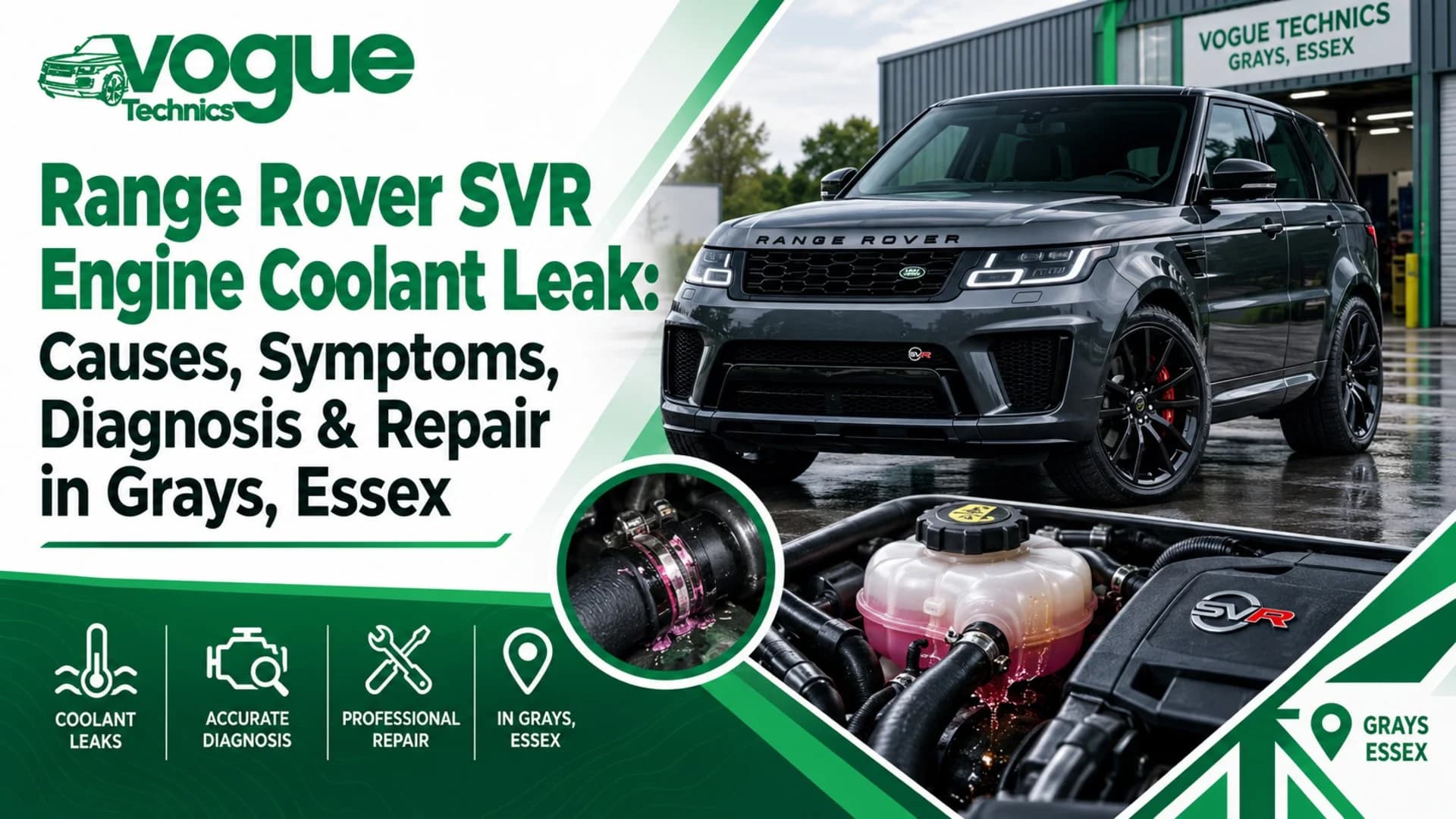
If your Range Rover Sport SVR keeps asking for coolant, or that low coolant warning has popped up more than once this month, you're not imagining it. The 5.0-litre supercharged V8 that makes this car so exciting to drive is also known for developing coolant leaks, and ignoring one is how a simple pipe fix turns into a five-figure engine rebuild.
This guide walks through exactly why SVRs lose coolant, how to tell a minor leak from a serious one, and what to actually do about it before it costs you more than it should.
Why Is My Range Rover SVR Losing Coolant? (Common Causes)
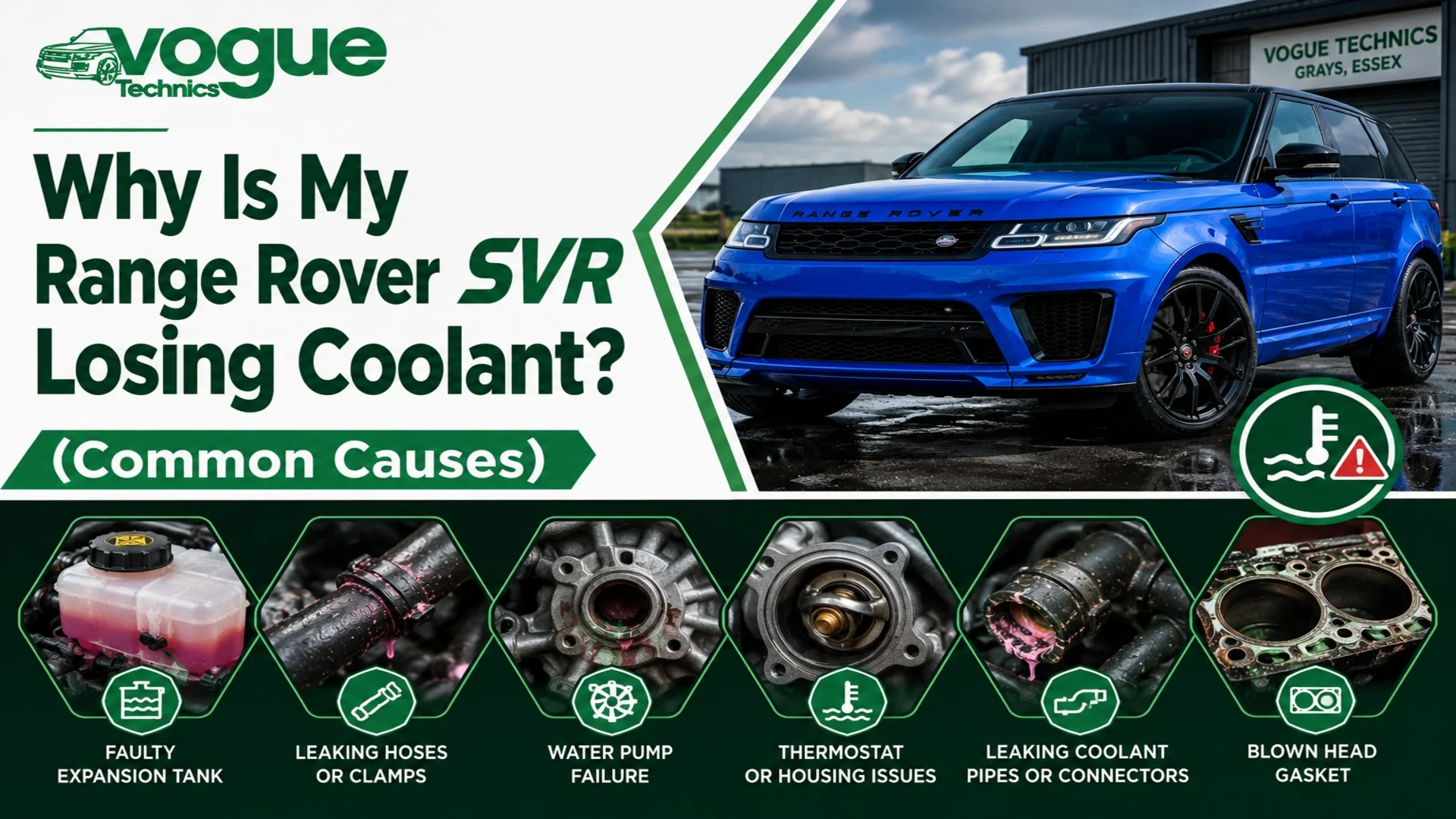
The AJ133 5.0-litre supercharged V8 is a genuinely clever piece of engineering, but it runs hot, it's tightly packaged, and several of its cooling components are made from materials that don't age well under constant heat cycling. Here's what tends to fail first.
Cracked or Brittle AJ133 Coolant Crossover Pipe
The coolant crossover pipe sits deep in the engine valley, running between the cylinder banks, and it's often made partly from plastic. Over years of heating and cooling, that plastic becomes brittle and eventually cracks or splits at the seams. Because of where it sits, a leak here is one of the harder ones to spot without getting the car on a ramp.
Thermostat Housing Leaks on the 5.0L Supercharged V8
The thermostat housing regulates when coolant starts circulating through the radiator. Its seals and gaskets are a common wear point on the SVR, and once they degrade, you'll typically see a slow, steady drop in coolant level rather than a dramatic puddle.
Water Pump Seal Failure
The water pump keeps coolant moving through the entire system. When its internal seal fails, coolant can weep out gradually, sometimes leaving a faint residue near the pump housing that's easy to miss during a quick visual check.
Radiator, Hose and Expansion Tank Leaks
These are the more "conventional" leak points, cracked radiator seams, perished hoses, or a hairline fracture in the expansion tank. They're usually easier to diagnose because they tend to leave visible staining or drips.
Is the Supercharger Cooling Circuit Different From the Engine Cooling System?
Yes, and this is something a lot of generic coolant-leak content skips entirely. The SVR's supercharger has its own charge-air cooling circuit, separate from the main engine cooling system, designed to cool the intake air after it's been compressed. It's a genuinely distinct system with its own coolant pump, hoses, and small radiator.
How the Charge-Air Cooling Circuit Works on the SVR
This secondary circuit keeps supercharged intake air cooler and denser, which helps the engine make its full power safely. If a leak develops here rather than in the main cooling system, symptoms can look slightly different, you might notice a small, gradual coolant drop with no change in main engine temperature at all. This is exactly why an accurate diagnosis needs someone who knows the SVR's layout, not just cooling systems in general.
How Do I Know If My SVR Has a Coolant Leak? (Symptoms & Diagnosis)
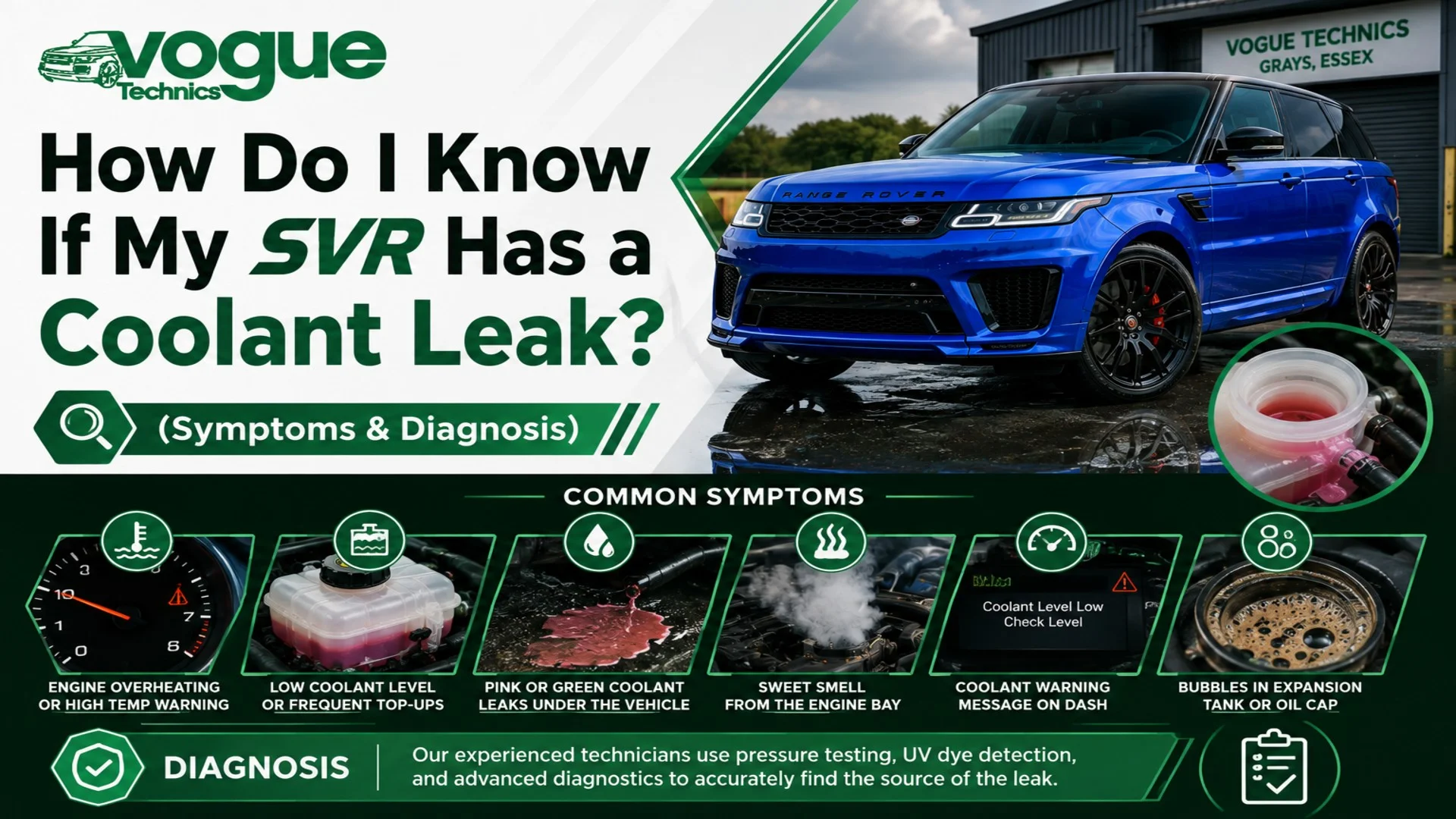
Coolant leaks don't always announce themselves with a puddle on your driveway. Some are obvious. Others are much sneakier, and those are the ones that catch owners out.
Visible Coolant Leak Symptoms
Low Coolant Warning Light
This is usually the first sign most owners notice. It's tempting to just top up and carry on, but a recurring warning means coolant is going somewhere, and finding out where matters more than refilling the tank.
Coolant Puddle or Sweet Smell From the Engine Bay
Coolant has a distinctly sweet smell, quite different from oil or fuel. If you catch that smell after parking, or notice a puddle under the front or rear of the engine bay, that's a fairly clear external leak.
Can an SVR Lose Coolant With No Visible Leak?
Yes, and this catches out a lot of owners. It's entirely possible for coolant to drop steadily with no puddle, no staining, and no obvious wet patches anywhere.
Signs of a Hidden or Internal Coolant Leak
- Coolant level keeps dropping despite no visible external leak, this points toward internal loss, often through a small crack or worn seal that only leaks under pressure
- White smoke from the exhaust, this can indicate coolant is entering the combustion chamber, a more serious sign
- Sweet smell without any visible drips, coolant vapour can sometimes be smelled before any liquid is ever seen
- Overheating in traffic or under load, but fine at steady speeds, suggests reduced coolant volume or circulation rather than a straightforward leak
If any of these sound familiar, don't just keep topping up and hoping. A hidden leak left unaddressed is far more likely to lead to overheating damage than a visible one, simply because it's easier to underestimate.
How We Diagnose a Coolant Leak at Voguetechnics
Getting the diagnosis right the first time saves you money, because it means we're not guessing our way through parts.
We pressurise the cooling system to simulate normal operating pressure without the engine running. This makes even small external leaks visible, at the crossover pipe, thermostat housing, hose connections, or radiator seams, that wouldn't show up during a quick glance under the bonnet.
Combustion Gas Test for Internal Leaks
If the pressure test doesn't reveal an external source, we check for combustion gases in the coolant itself. Their presence is a strong indicator that coolant is being drawn into the combustion chamber, which usually points toward a head gasket issue rather than a simple hose or pipe leak.
Coolant Leak or Head Gasket Failure, How to Tell the Difference
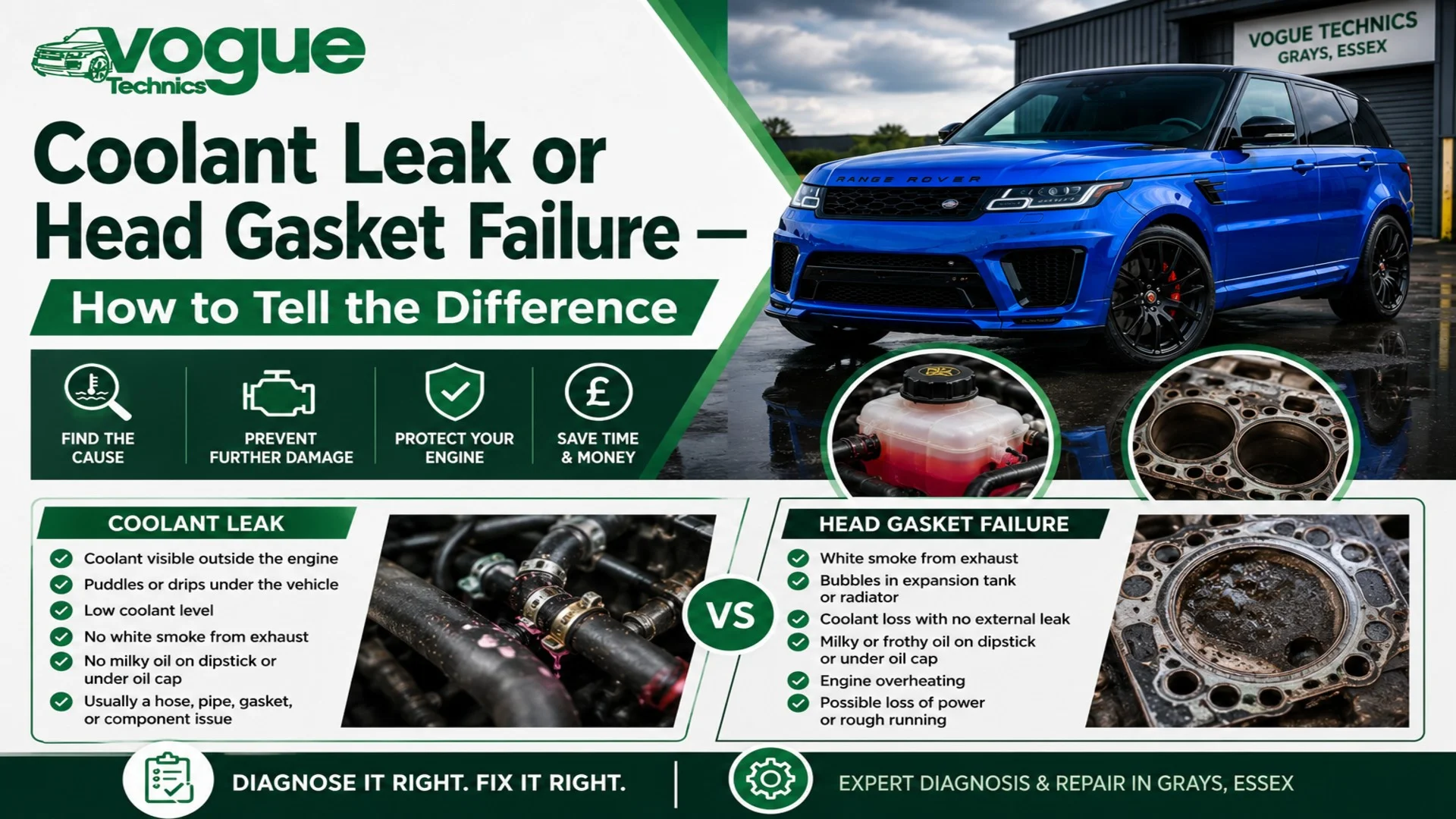
This is one of the most important distinctions for any SVR owner to understand, because the cost difference between the two is significant.
External Leak vs Internal Leak: Key Differences
Signal | External Leak | Internal Leak (e.g. Head Gasket) |
| Puddle underneath the car | Usually yes | Usually no |
| Coolant level | Drops gradually or suddenly | Drops steadily, often unexplained |
| Visible staining or wet hoses | Common | Rare |
| Exhaust smoke | Not typically present | White smoke often present |
| Engine oil condition | Unaffected | May appear milky or contaminated |
| Likely repair | Pipe, hose, pump, or housing replacement | Head gasket repair or more extensive work |
When Coolant Loss Signals a Bigger Engine Problem
If you're topping up coolant regularly with no visible leak anywhere, or you've noticed white smoke or a rough idle alongside the coolant loss, it's worth getting it checked sooner rather than later. A head gasket issue caught early is a repair. Left to run hot repeatedly, it can turn into cylinder head or cylinder liner damage, a much bigger job.
Is It Safe to Drive an SVR With a Coolant Leak?
Short answer: it depends on how much coolant you're losing and how fast.
A very slow, minor leak with the temperature gauge sitting normal might get you to a garage safely. But if the warning light is on, the temperature gauge is climbing, or you've noticed white smoke, the safest move is to stop driving and get it looked at. Continuing to drive an overheating supercharged V8 risks warping the cylinder head or damaging the gasket, turning a moderate repair into an engine-out job.
Range Rover SVR Coolant Leak Repair, Voguetechnics, Grays, Essex

Once we know exactly where the coolant is going, the repair itself is usually straightforward, it's the diagnosis that makes the difference between fixing the actual problem and just replacing parts on a guess.
What's Included in Our SVR Coolant Leak Repair
- Full cooling system pressure test to pinpoint the exact leak source
- Replacement of the failed component, crossover pipe, thermostat housing, water pump, hose, or radiator, using parts suited to the SVR's specific application
- Cooling system refill, bleed, and re-pressurisation to eliminate trapped air
- A follow-up road test and re-check to confirm the leak is fully resolved, not just masked
Range Rover SVR Coolant Leak Repair Cost Guide
Costs vary depending on which component has failed and how accessible it is. A thermostat housing or hose replacement is generally more straightforward and less labour-intensive than a coolant crossover pipe, which sits deeper in the engine valley and takes longer to access. Water pump and radiator jobs sit somewhere in between. If a head gasket is involved, that's a considerably larger job due to the extra labour and parts required.
Rather than quote a single figure that won't apply to your specific fault, we'll always confirm the cause first with a proper diagnostic, then give you a clear, itemised quote before any work begins, no surprises on collection.
Why Range Rover SVR Owners in Essex Trust Voguetechnics
Range Rover Sport SVRs aren't a common sight at every local garage, and that's exactly the problem, a lot of general mechanics simply haven't spent enough time with the AJ133 engine to diagnose these leaks quickly or accurately. Based in Grays, Essex, we work specifically on Land Rover and Range Rover models, which means we're familiar with exactly where these leaks tend to originate on the SVR, what parts genuinely need replacing, and what can be safely left alone.
That familiarity matters. It's the difference between a same-day accurate diagnosis and a car that goes back and forth between garages while the real fault gets missed.
Frequently Asked Questions
What Causes a Range Rover SVR to Leak Coolant?
The most common causes are a cracked coolant crossover pipe, a failing thermostat housing seal, water pump seal wear, and general hose or radiator deterioration. The SVR's supercharger also has its own charge-air cooling circuit, which can develop separate leaks from the main engine cooling system.
How Much Does an SVR Coolant Leak Repair Cost?
It depends entirely on which component has failed. Simpler jobs like a hose or thermostat housing replacement cost less than a crossover pipe replacement, and a head gasket repair is a larger job again. We always diagnose first and quote before starting any work.
Can I Drive My SVR With Low Coolant?
Not recommended. If the warning light is on or the temperature gauge is rising, it's safer to stop driving and have it checked. Continuing to run a supercharged V8 low on coolant risks overheating damage to the cylinder head or gasket.
How Do I Know If It's a Head Gasket Rather Than a Simple Leak?
Watch for white exhaust smoke, milky engine oil, or coolant that keeps disappearing with no visible external leak anywhere. These point toward an internal issue rather than a hose, pipe, or pump problem, and it's worth getting a combustion gas test done to confirm before assuming the worst.
Does a Coolant Leak Always Cause Overheating?
Not immediately, but it usually will eventually if left unaddressed. A slow leak might only show up as a dropping coolant level for a while before the volume gets low enough to affect cooling capacity and push engine temperature up, particularly under load or in traffic.
Get Your SVR Checked Before a Small Leak Becomes a Big Repair
Coolant leaks on the Range Rover Sport SVR rarely fix themselves, and the longer one runs, the more likely it is to turn into something more serious than a pipe or hose. If your coolant level keeps dropping, you've had a warning light more than once, or something just doesn't smell right under the bonnet, it's worth getting it looked at properly rather than waiting to see what happens.
Based in Grays, Essex, we diagnose and repair Range Rover SVR coolant leaks regularly, and we'll always tell you exactly what's wrong and what it'll cost before we touch anything. Get in touch with the team at Voguetechnics to book your SVR in for a cooling system check.