Range Rover P400e Problems: Charging, Battery, Engine and Recalls
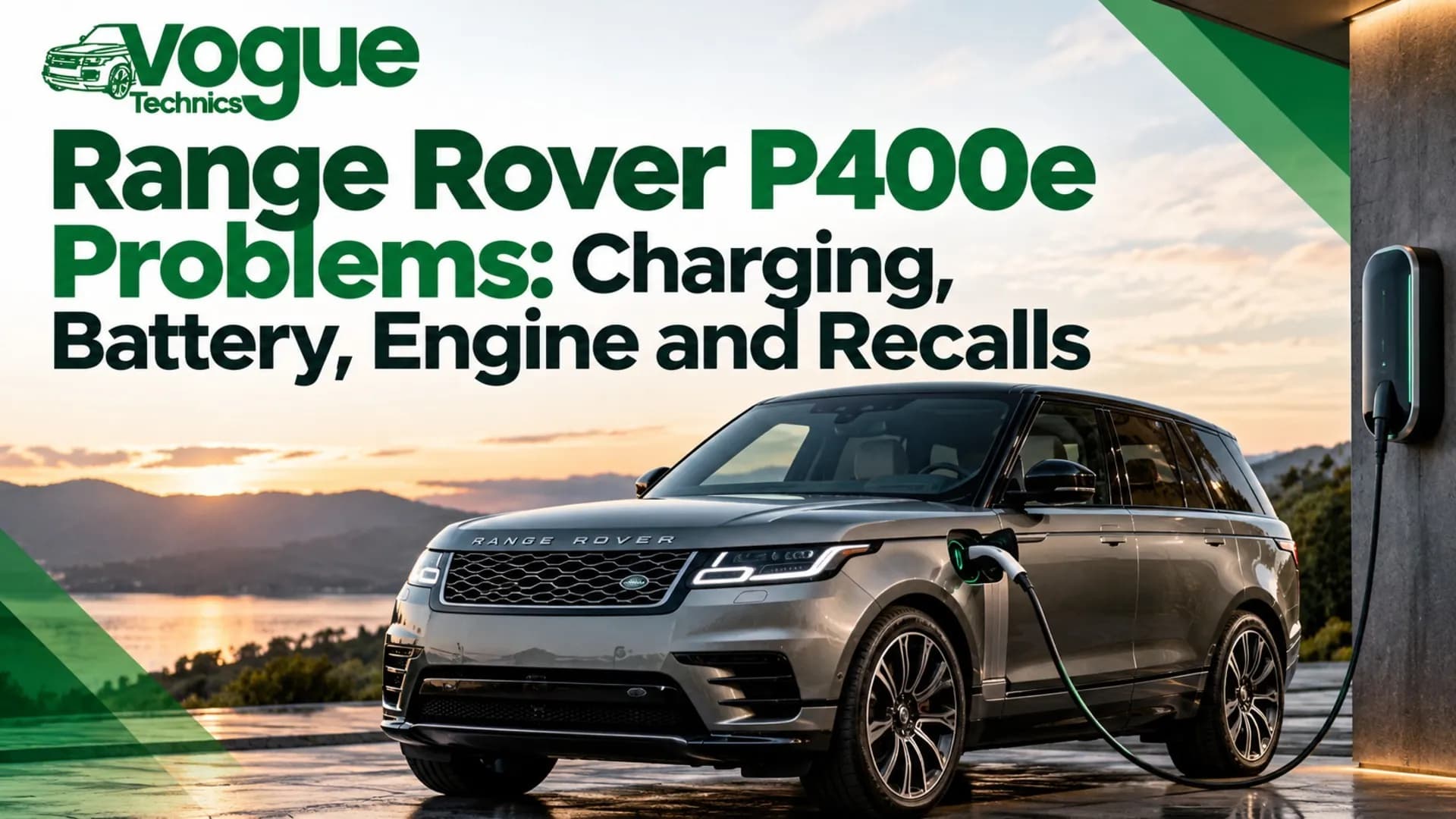
The P400e combines a 2.0-litre turbocharged petrol engine with an electric motor and a plug-in battery. That combination gives it more to go wrong than a conventional Range Rover.
The Range Rover P400e problems reported most often fall into three groups:
- Charging faults: the car stops charging, stalls near full, or shows charging errors.
- Battery and range issues: shorter-than-expected electric range and battery-management faults.
- Engine-side faults: including a recall for the water pump drive belt, which can lead to overheating and an engine-bay fire.
Many charging faults turn out to be software problems, charger problems or problems with the household supply, rather than hardware failures. Diagnose before replacing anything expensive.
What Is the P400e?
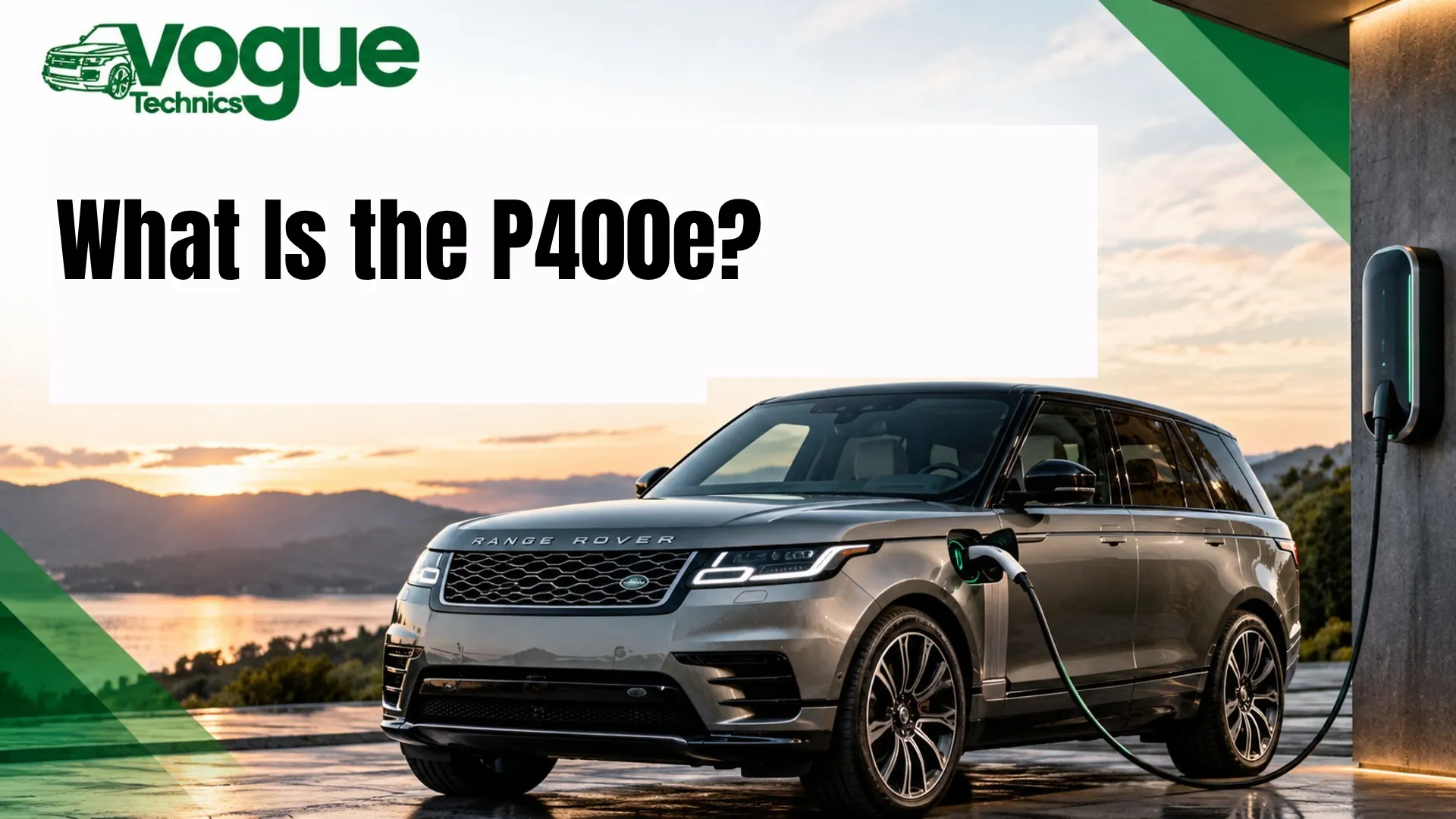
The P400e badge was used on the plug-in hybrid versions of the Range Rover (L405) and Range Rover Sport (L494) from about 2018.
It pairs a 2.0-litre four-cylinder Ingenium turbo petrol engine with an electric motor in the gearbox and a high-voltage battery under the boot floor.
How the Hybrid System Works
The car can run on electric power alone for short distances, use the petrol engine on its own, or combine the two. Several systems work together:
Component | What it does | Typical problem area |
| High-voltage battery | Stores energy for electric driving | Cell, temperature sensor or management faults |
| Battery energy control module (BECM) | Manages charging and battery health | Charging stopping or not starting |
| On-board charger and DC/DC converter | Converts mains power; supplies the 12V system | Charging errors, 12V warnings |
| 2.0 Ingenium petrol engine | Main power and charging when needed | Cooling, timing chain, particulate filter |
| Gasoline particulate filter (GPF) | Traps exhaust soot | Clogging if the engine rarely gets hot |
Common Range Rover P400e Problems
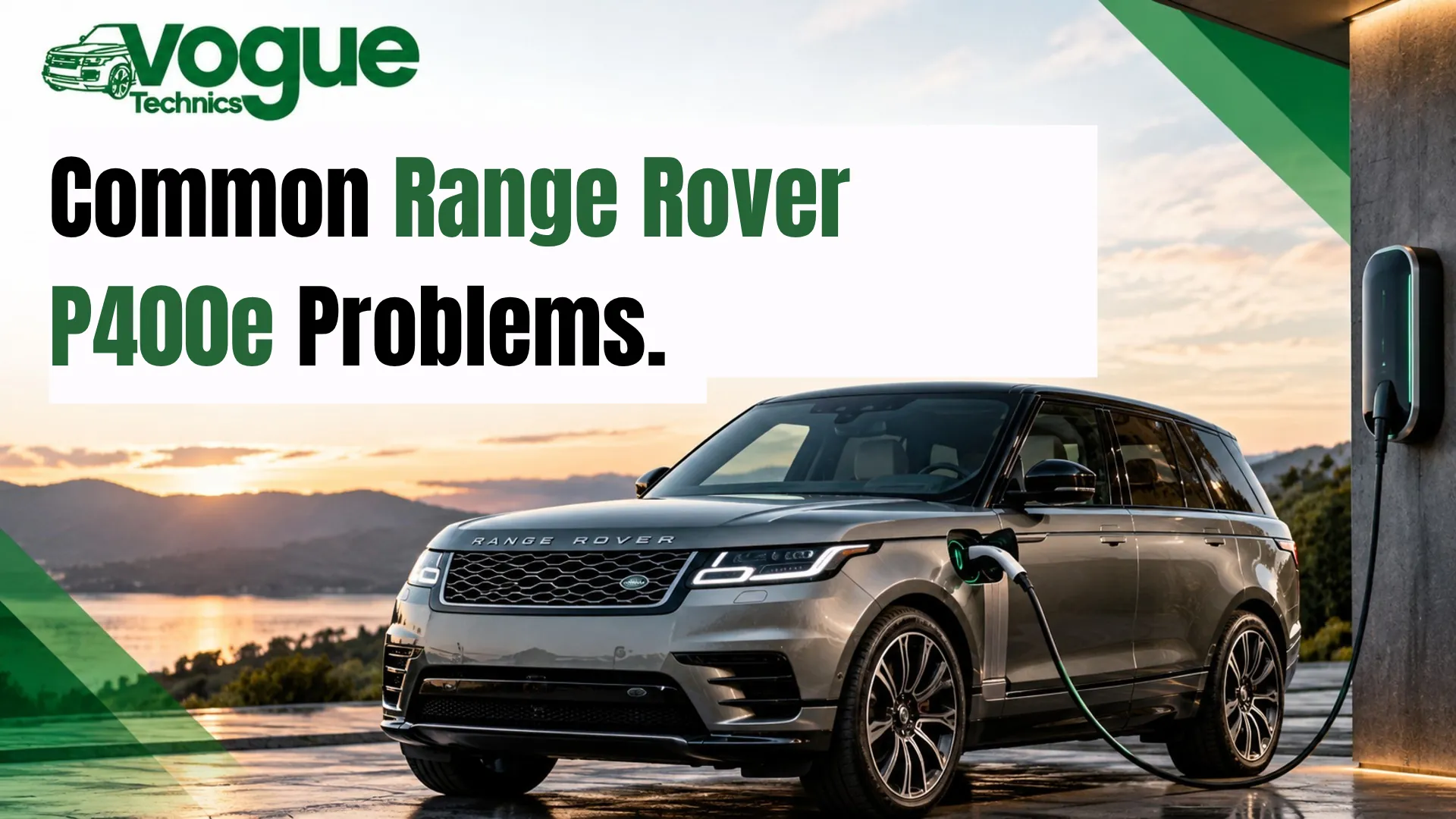
Charging and High-Voltage Battery Faults
Charging stops near full or won't start
- Owners report charging that stalls at around 99%, or messages showing a few minutes "remaining" that never finish (Motor Hungry).
- Other owners report charging errors that came back even after the software was reinstalled (RRSport.co.uk).
- Possible causes include:
- software versions;
- the battery management module;
- the on-board charger;
- the charging cable or wallbox;
- the household electrical supply.
Shorter electric range than expected
- Real electric range is often well below the original advertised figure. This happens especially in cold weather and on faster roads.
- A sudden drop in range compared with what your car normally achieves is worth checking. Normal seasonal variation is not a fault.
Power loss or no restart
- Some owners have reported the car shutting down and not restarting.
- Motor Hungry reports this was resolved for some cars by a later software update.
Brake pedal feel
- Some drivers describe an inconsistent pedal feel on hybrid models, linked to how regenerative and friction braking blend together.
- Any doubt about braking should be checked immediately by a qualified technician.
Most battery and charging faults on newer cars fall under Land Rover's hybrid warranty or dealer software updates. Check what cover your car has before paying for repairs.
Engine, Cooling and Emissions Faults
Water pump belt recall (2018–2021 model years)
- Transport Canada recall 2023-189 covers Range Rover and Range Rover Sport PHEVs from the 2018–2021 model years (Transport Canada).
- The water pump drive belt can come off. The engine can then overheat and rupture a coolant elbow, spraying coolant onto the turbo heat shield. That can start a fire.
- The remedy is a new coolant elbow and turbo coolant feed pipe.
- UK owners should check by VIN through the GOV.UK recall checker or a Land Rover retailer.
Gasoline particulate filter (GPF)
- If the car is mostly driven in electric mode, the petrol engine rarely gets hot enough to burn soot out of the filter.
- That can cause warnings and loss of power.
- Regular drives with the engine running help prevent it.
2.0 Ingenium timing chain
- The P400e's petrol engine belongs to the same 2.0 Ingenium family as other Land Rover models.
- Timing-chain wear has been widely discussed on the 2.0 Ingenium (see our Ingenium timing chain guide).
- A rattle on cold start should be checked promptly. Vogue Technics carries out timing chain replacement on these engines.
Turbo and cooling
- Because the engine starts and stops frequently and can sit cold for long periods, cooling and turbo health matter.
- Investigate any coolant loss, overheating warning or turbo whistle.
- Our turbo replacement service starts by checking the oil and cooling supply.
Buying or Owning a P400e
Checks, Warning Signs and When to Stop
Before buying a used P400e, check:
- All recalls are complete, especially the water pump belt recall.
- Software is up to date, and there is a record of any dealer software campaigns.
- Charging works on a home or public charger, and the car charges to full.
- Electric range is reasonable for the season.
- The engine starts cleanly from cold, with no timing rattle and no warning lights.
- A specialist health check covers the hybrid system, fault codes and coolant condition.
Our engine diagnostics and health check covers fault codes, oil and coolant checks, and timing and turbo assessment, with a written report.
Stop and seek help immediately if you notice any of these:
- an overheating warning;
- steam or a coolant smell;
- smoke from the engine bay;
- a high-voltage battery warning together with smoke or a burning smell. Leave the car and call the emergency services.
Book an inspection if you notice:
- repeated charging failures;
- a sudden drop in electric range;
- a GPF or engine warning;
- rattling on start-up.
Frequently Asked Questions
Range Rover P400e Problems FAQs
What are the most common Range Rover P400e problems?
Owners most often report charging faults, shorter electric range, battery-management issues and software glitches. On the engine side there is a recall for the water pump drive belt, and the GPF can clog if the engine is rarely used.
Is there a recall on the Range Rover P400e?
Yes. A recall covers 2018–2021 model-year Range Rover and Range Rover Sport PHEVs for a water pump belt that can detach and lead to a coolant leak and fire risk. Check your VIN.
Why won't my P400e charge to 100%?
It may be a software or battery-management issue, a charger or cable problem, or the household supply. Try another charger first. If the fault persists, have the vehicle diagnosed.
Is the P400e reliable?
It is more complex than a standard Range Rover, and owners report more electrical and charging faults. Well-maintained cars with completed recalls and current software are the safest choice.
Does the P400e engine need special care?
Yes. Drive it regularly with the petrol engine running so the GPF can clean itself. Keep to service intervals, and investigate cooling or timing noises early.
If your P400e has an engine, cooling or warning-light fault, contact Vogue Technics on 01375 531355. Please give your registration, mileage and symptoms.