Range Rover NOx Sensor Fault: Symptoms, Replacement Cost & Expert Repair in Essex
The engine light comes on. Then an AdBlue warning appears, and a few miles later the car feels flat, as if someone has pulled a handbrake halfway. Before you book a new sensor, stop for a moment. A Range Rover NOx sensor fault is one of the most commonly misdiagnosed problems on modern diesels, and fitting the wrong part is an expensive way to find that out.
At Voguetechnics in Grays, Essex, we prove the cause before we replace anything. Below you'll find where the sensors sit, what the symptoms look like, what a repair realistically costs in the UK, and how a proper fix is carried out.
The short version: the sensor is often the problem, but not always. Wiring, the AdBlue system and the SCR catalyst can all trigger the same warnings.
What Is a Range Rover NOx Sensor Fault and Where Is the NOx Sensor Located?
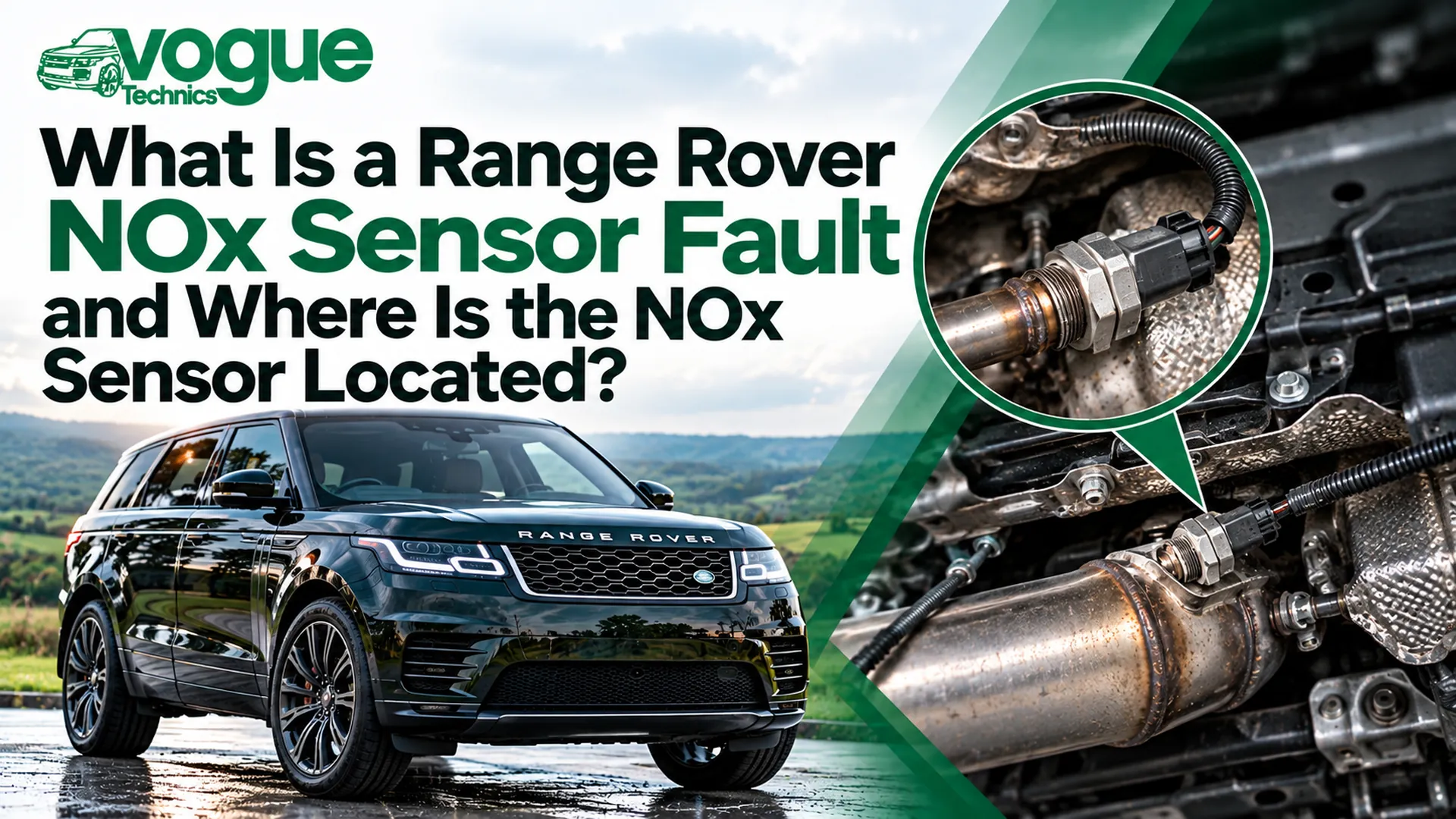
Your Range Rover diesel uses NOx (nitrogen oxide) sensors to measure exhaust emissions. The engine control unit reads those figures and decides how much AdBlue to inject into the exhaust. When a sensor gives readings that don't make sense, or stops responding, the system logs a fault and often restricts the engine to protect the emissions equipment.
Most diesel Range Rovers carry two sensors:
- Upstream sensor: sits before the SCR catalyst and measures the NOx leaving the engine.
- Downstream sensor: sits after the catalyst and checks how much NOx the system has actually removed.
The ECU compares the two readings. If the numbers don't line up, it assumes something is wrong. That could be the sensor, but it could equally be a poor AdBlue dose or a tired catalyst.
Where Is the NOx Sensor on a Range Rover, Range Rover Sport, Velar and Evoque?
Owners search for Range Rover NOx sensor location because the answer changes by model. Here is a general guide. Exact positions vary with engine and year, so treat it as a starting point.
Model | Typical sensor positions | Access difficulty |
| Range Rover (L405) | Exhaust, either side of the SCR/DPF unit | Moderate, underbody access needed |
| Range Rover Sport | Exhaust, before and after the SCR catalyst | Moderate |
| Range Rover Velar | Exhaust, fitted around the SCR box | Moderate to difficult |
| Range Rover Evoque | Exhaust, near the SCR/DPF assembly | Moderate |
If you're searching for the Evoque NOx sensor location specifically, expect it under the car, along the exhaust run, with a control module often mounted close by. On several models the sensor head screws into the pipe and a small module clips to the chassis nearby.
Don't rely on location alone to judge the fault. A sensor in the right place can still be giving false readings because of a wiring or module problem.
Why Do Range Rover NOx Sensors Keep Failing?
There's a reason Range Rover sensor problems come up so often in searches. NOx sensors live in one of the harshest spots on the car.
- Constant heat. Exhaust temperatures cycle hard, and the ceramic sensing element can crack over time.
- Soot and moisture. Short journeys leave condensation and carbon behind, which can foul the sensor.
- AdBlue quality and contamination. Poor fluid or crystallised deposits can interfere with readings.
- Wiring and connector damage. Road water, salt and vibration take their toll on plugs and loom.
- Age and mileage. Even a healthy sensor has a finite working life.
It isn't only a Land Rover issue. Mercedes-Benz NOx sensor issues follow the same pattern, and plenty of Mercedes NOx sensor issues are caused by the same heat, soot and wiring problems. Where manufacturers use similar SCR systems, similar failures appear.
What Are the Symptoms of a Range Rover NOx Sensor Fault and Is the Sensor Always to Blame?
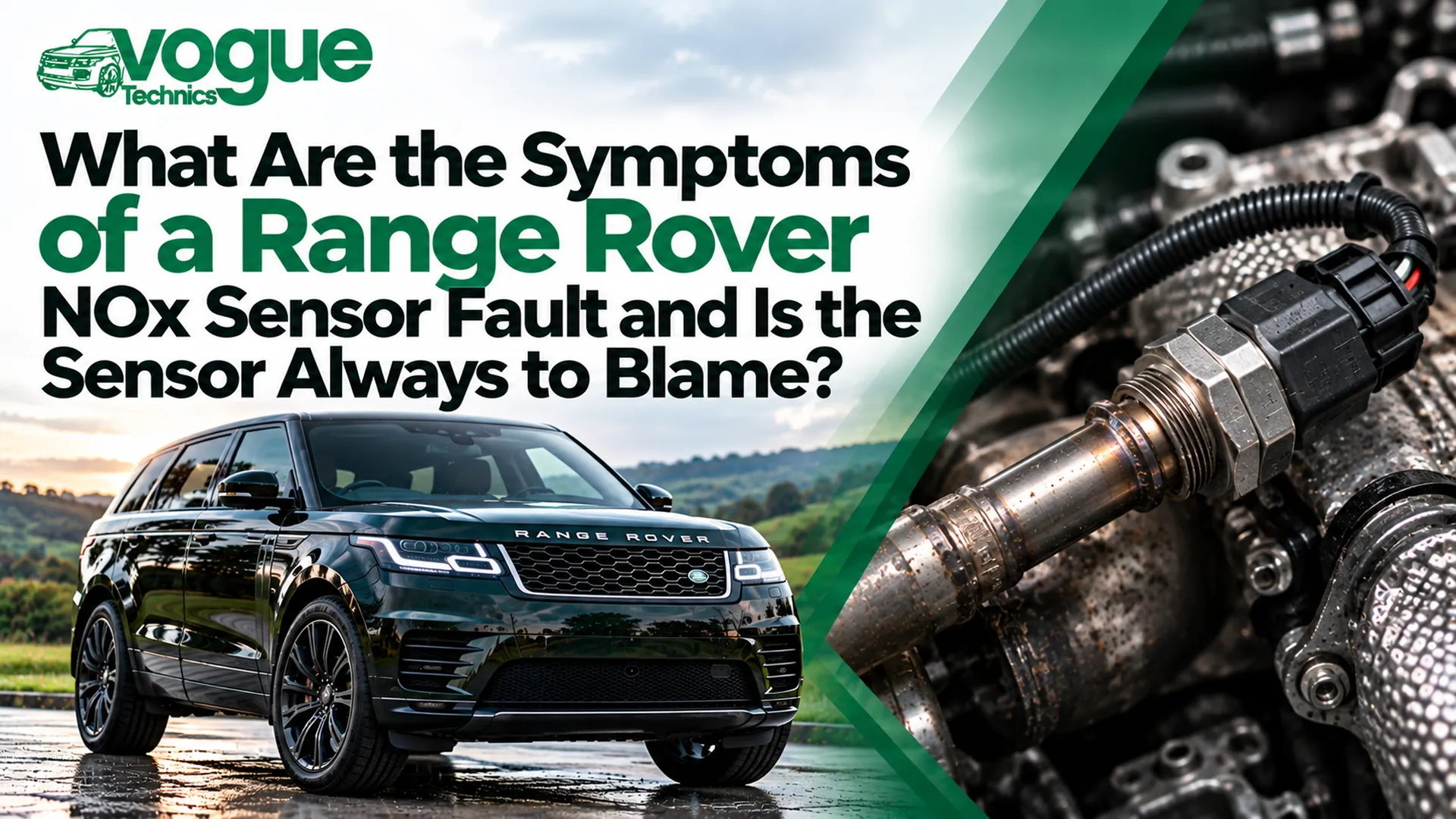
A failing sensor rarely announces itself with one clean symptom. It tends to show up as a cluster of warnings that look alarming and vague at the same time.
Which Warning Lights and Fault Symptoms Point to a NOx Sensor Problem?
These are the Range Rover NOx sensor fault symptoms we see most often:
- Engine management light with emissions-related codes
- AdBlue or exhaust fluid warning, sometimes with a countdown to a no-start
- Limp mode and reduced power
- Higher fuel consumption than usual
- Failed emissions readings at MOT
- Intermittent warnings that clear and return
These symptoms apply across the range. A Range Rover Sport NOx sensor fault and a Range Rover Velar NOx sensor fault can look almost identical on the dash, even though the cause underneath may differ.
Here are some fault code families that commonly point toward a NOx issue. Exact codes vary by model, so a proper scan is essential.
Code type | What it usually suggests |
| NOx sensor circuit or signal codes | Sensor, wiring or connector fault |
| NOx sensor plausibility codes | Sensor reading out of range, or a genuine emissions problem |
| SCR efficiency codes | Catalyst or AdBlue dosing problem |
| AdBlue quality or level codes | Fluid contamination or supply fault |
A short example from the workshop: an owner arrived with an AdBlue warning and a fresh sensor already fitted elsewhere. The fault returned within days. Testing showed damaged wiring near the connector, and the new sensor had never stood a chance. That's why we test before we replace.
What Does a Range Rover NOx Exceedance Message Mean?
A Range Rover NOx exceedance warning means the system believes the car is emitting more nitrogen oxide than it should. It's an emissions alert, not a verdict on one component.
The cause can be:
- A genuinely faulty NOx sensor reading incorrectly
- A weak SCR catalyst that isn't cleaning the exhaust properly
- A problem with AdBlue dosing or fluid quality
- Wiring or module faults feeding false data to the ECU
Ignoring it can lead to limp mode, a failed MOT and, over time, damage to expensive emissions parts. The fix depends entirely on finding which of the above is behind it.
How Much Does Range Rover NOx Sensor Replacement Cost in the UK?
Owners want a number, and it's a fair question. A Range Rover NOx sensor replacement typically sits in a broad range because the price depends on which sensor has failed and what else is wrong.
As a rough guide, independent specialists in the UK often charge from around £350 to £900 for a sensor replacement including fitting and adaptation, while main dealers tend to charge more. Where additional work is needed, such as wiring repair or AdBlue system repairs, the total rises.
What Affects the Cost of a Range Rover NOx Sensor Fault Fix?
Several factors move the final bill:
- Genuine versus aftermarket sensor. Cheap parts often fail early or fail to communicate with the ECU.
- Upstream versus downstream. Prices and access differ between the two.
- Labour and access. Seized fixings and tight spaces add time.
- Adaptation and coding. A new sensor usually needs the ECU to learn it.
- Related AdBlue or SCR repairs. If the root cause lies elsewhere, those costs apply.
A quick comparison helps put it in context:
Approach | Upfront cost | Risk of repeat fault |
| Cheap sensor, no diagnosis | Lowest | High |
| Genuine or quality sensor after proper diagnosis | Moderate | Low |
| Ignoring the fault | Nothing now | Very high, with costly damage later |
A cheap wrong sensor usually costs more in the end, because you pay for the part, the labour and then the correct repair on top. Treat the figures above as a guide only, since your quote depends on your car and the findings from diagnosis.
Can You Keep Driving With a Range Rover NOx Sensor Fault?
Sometimes, for a short while. But it isn't a fault to live with.
- The car can drop into limp mode without warning.
- Some systems count down to a no-start if AdBlue-related faults persist.
- You risk a failed MOT emissions check.
- Prolonged faults can stress the SCR catalyst, which is far costlier than a sensor.
If the warning appears, book a diagnosis soon rather than waiting for the car to make the decision for you.
How Does Voguetechnics Diagnose, Reset and Repair a Range Rover NOx Sensor Fault?
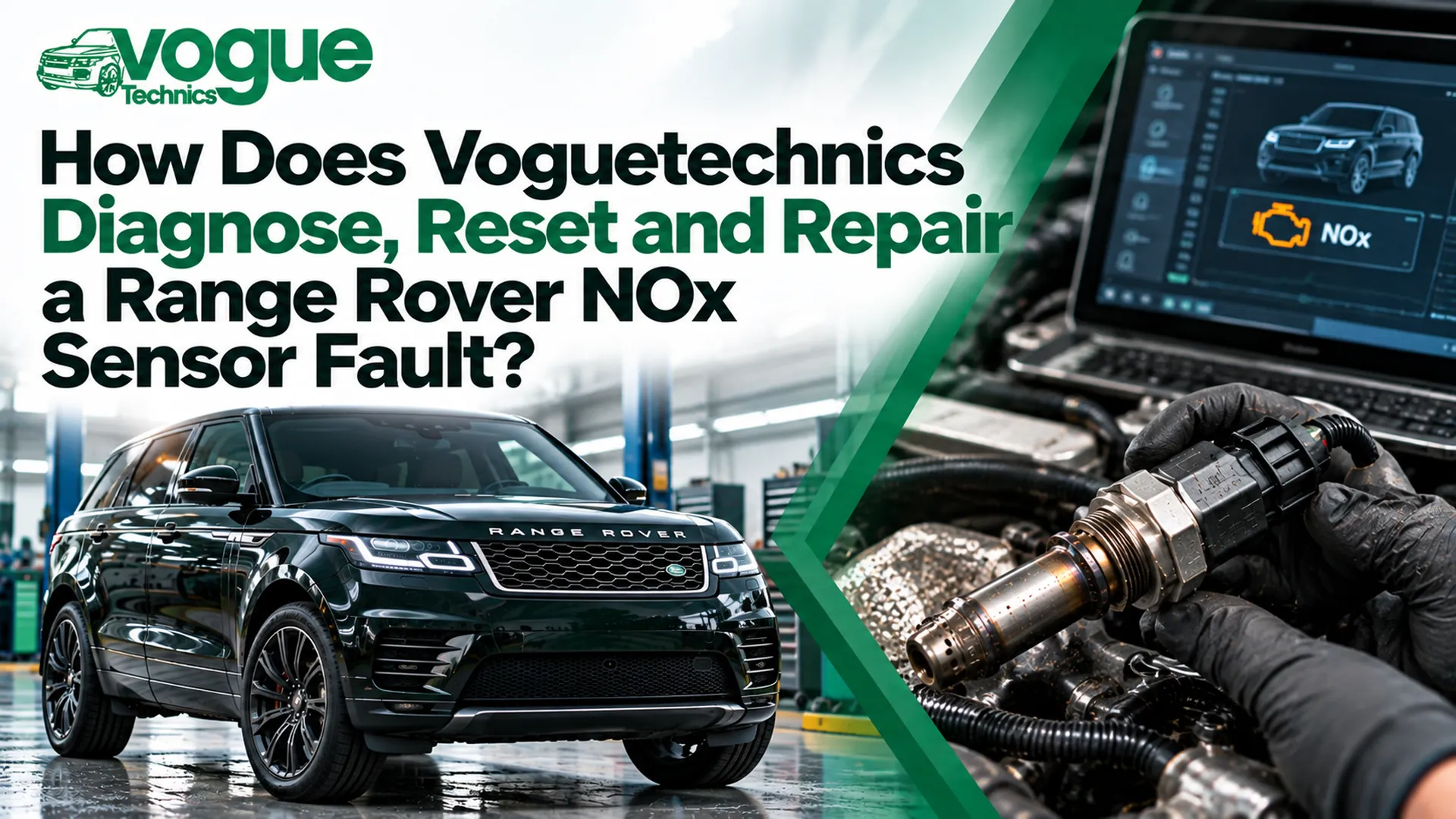
This is where proof matters. Our approach is simple: find the cause, fix the cause, then confirm the fix holds.
Can a NOx Sensor Fault Be Reset Without Replacing the Sensor?
Sometimes a Range Rover NOx sensor fault reset clears the warning, but it rarely lasts if the underlying problem is still there. Clearing a code without finding the cause just hides the symptom, and the light usually returns.
A reset can hold when the fault was a one-off, such as a brief signal glitch or a low-voltage event. It won't hold if the sensor is failing, a connector is damaged or the AdBlue system is struggling.
Here is how we carry out a proper Range Rover NOx sensor fault fix:
- Full diagnostic scan to read all stored and pending codes.
- Live data analysis comparing upstream and downstream sensor readings.
- Wiring and connector inspection to rule out loom damage.
- AdBlue system check for fluid quality, dosing and crystallisation.
- Repair or replacement using a suitable sensor, matched to your exact vehicle.
- Adaptation and reset so the ECU recognises the new part.
- Road test and re-scan to confirm the fault doesn't return.
We repair emissions systems properly. We don't delete them, and we won't suggest anything that leaves your car non-compliant.
Frequently Asked Questions
Can I drive a Range Rover with a faulty NOx sensor?
For a short distance, usually yes, but it's risky. Limp mode, a failed emissions test and possible catalyst damage all become more likely the longer you wait.
How much does a Range Rover NOx sensor fault repair cost?
Typically from around £350 to £900 for a sensor and fitting, rising if wiring or AdBlue repairs are needed. A diagnosis gives you a firm figure.
How long does NOx sensor replacement take?
Most jobs are completed within a few hours to a day, depending on access and parts availability.
Do Mercedes diesels have the same NOx sensor issues?
Yes, similar SCR designs share similar weak points, including heat, soot and wiring faults.
Where is the NOx sensor on my Range Rover?
It's in the exhaust system, around the SCR catalyst. The exact position depends on your model and engine.
Will a new sensor fix my AdBlue warning?
Only if the sensor is the real cause. That's why testing comes first.
Get Your Range Rover NOx Sensor Fault Fixed Properly
A Range Rover NOx sensor fault is easy to misread and costly to guess at. The right approach is to test first, replace only what's proven faulty and confirm the repair with a road test.
Book a diagnostic with Voguetechnics in Grays, Essex. We'll tell you exactly what's wrong and quote before any work begins. Call us or use our booking form today.