Range Rover Evoque Turbo Replacement Cost: What Affects the Price

Range Rover Evoque turbo replacement cost depends on which engine and turbo version your car has and on what caused the failure. It also depends on whether supporting parts, such as the oil feed and return pipes, the intercooler and boost hoses, need renewing so the new turbo lasts. Some Evoques are covered by a recall on the turbo oil feed pipe, and many "turbo failures" turn out to be boost leaks, actuator faults or DPF problems. Diagnosis must come first, followed by an itemised written quote for your car. This guide explains each factor.
Which Evoque Engine and Turbo Do You Have?
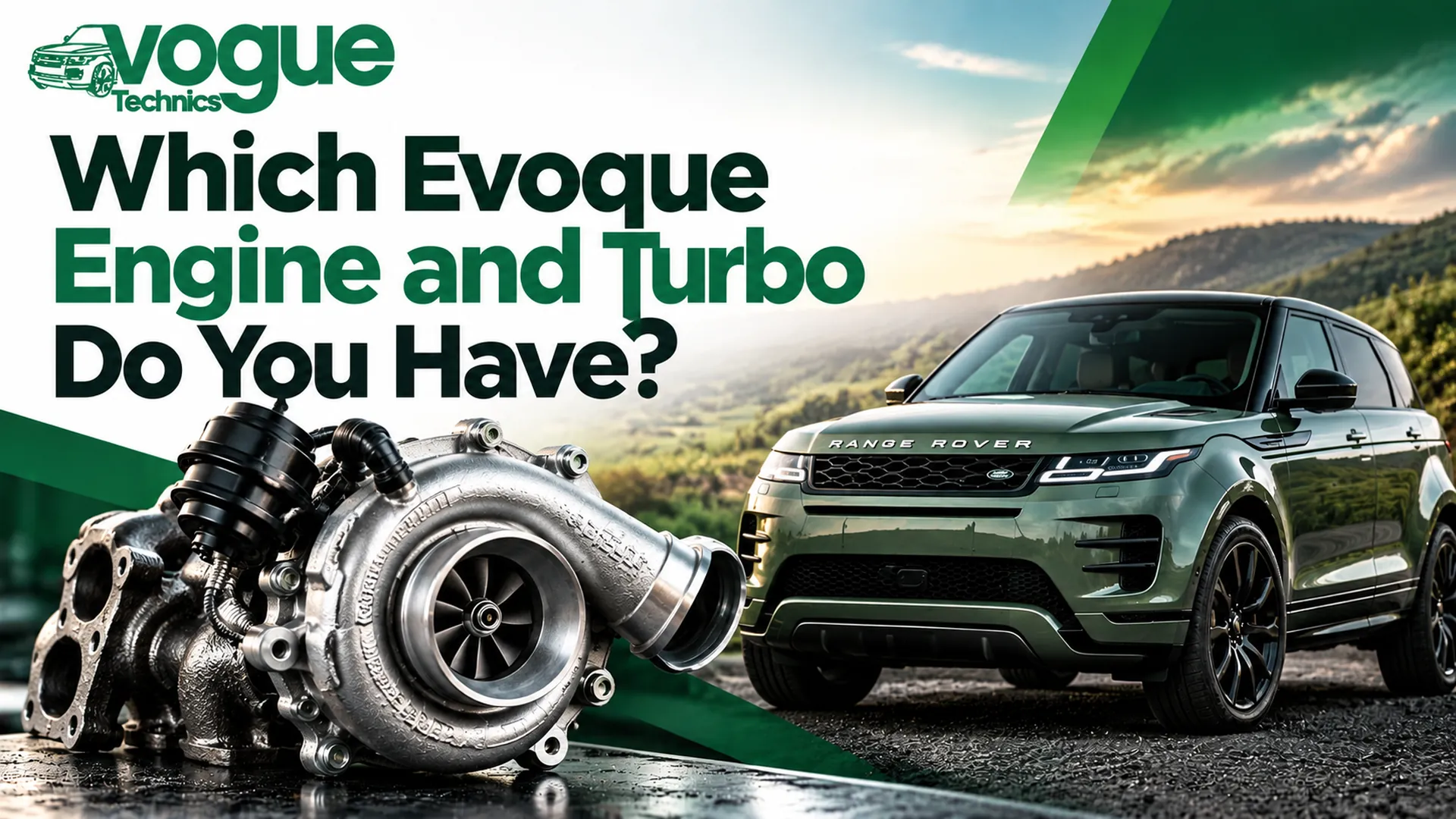
The Evoque has been built in two generations with several turbocharged engines. Getting the engine and turbo version right matters, because fitting the wrong unit or set-up causes boost faults.
Engines and Turbo Versions
Generation | Engine | Turbo points to know |
| L538 (2011–2018) | 2.2 TD4 / SD4 / eD4 diesel | Two replacement versions exist. Later cars (2014 on) use a vacuum-actuated turbo, and fitting the wrong version or set-up can trigger boost codes |
| L538 | 2.0 Si4 petrol | Turbocharged petrol with its own turbo and oil feed |
| L538 (2015 onwards) | 2.0 Ingenium diesel | Ingenium turbo with variable vanes |
| L551 (2019 onwards) | 2.0 Ingenium diesel and petrol, mild hybrid | Ingenium turbos. Some 2020–2024 diesels are covered by the oil feed pipe recall |
| L551 | P300e 1.5 plug-in hybrid | Small three-cylinder turbo engine plus a hybrid system |
The years are approximate. Confirm your engine code and the original turbo part number before ordering a replacement.
Is It Really the Turbo?
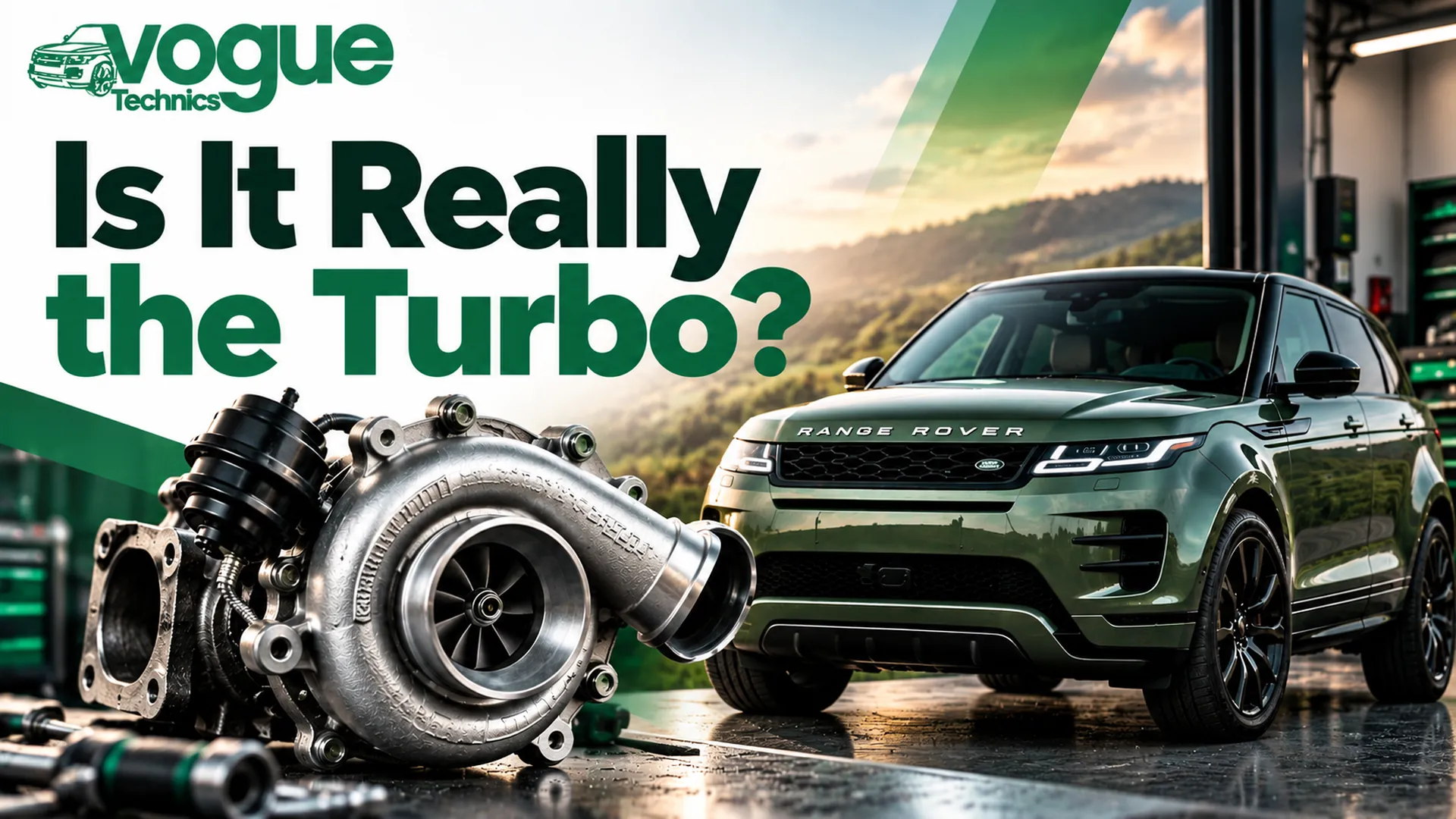
A turbo is expensive, so it is worth making sure it is actually the faulty part. Several other faults can cause turbo-like symptoms on an Evoque, and some are far simpler to fix.
Symptoms and Other Possible Causes
Symptom | Possible causes | What to check |
| Loss of power or limp mode | Boost leak, split intercooler hose, actuator or wastegate fault, blocked DPF | Fault codes, live boost data, hoses |
| Under-boost or over-boost codes | Actuator or wastegate adjustment, vacuum supply, wrong turbo version | Actuator operation and the turbo version fitted |
| A whine that rises with revs | Turbo bearing wear | Shaft play and turbo inspection |
| Blue or black smoke | Oil past the turbo seals, or over-fuelling | Oil in the intake or exhaust, injector checks |
| Oil around the turbo | Loose oil feed pipe or clamp (recall on some cars) | Recall status and the feed pipe |
| Repeated DPF warnings | Short-trip use. A blocked DPF raises back pressure and stresses the turbo | DPF condition and regeneration history |
Our engine health check includes an electronic scan, a warning-light investigation and a turbo inspection, with a written report.
What Decides the Cost
The Main Cost Factors
Recall status. Campaign N875 covers the turbocharger oil delivery pipe on some 2020–2024 Discovery Sport, Evoque and Velar models. On those cars the pipe may not have been tightened sufficiently and could leak oil in the engine bay. Recall work is free at authorised repairers. Check your car on the GOV.UK vehicle recall checker before paying for turbo-related work.
The cause of failure. Turbos usually fail because of oil starvation, contaminated or diluted oil, a restricted oil feed pipe, carbon on the variable vanes or high back pressure from a blocked DPF. If the cause is not fixed, the new turbo can fail the same way.
Cost factor | Why it matters |
| Diagnosis | Separates a turbo failure from boost leaks, actuators and DPF faults |
| Turbo type | New, remanufactured or rebuilt units differ in scope |
| Correct version | Must match your engine and turbo part number |
| Oil feed and return pipes | A restricted or loose feed is a common cause of failure |
| Oil, filter and flush | Debris must not reach the new turbo |
| Intercooler and boost hoses | Oil or debris left inside can damage the new turbo |
| Gaskets and fixings | Usually renewed |
| DPF and EGR condition | High back pressure shortens turbo life |
| Labour | Depends on the engine and access |
| Set-up and testing | Actuator set-up, boost check, fault-code clear and road test |
Our turbo replacement service inspects the oil feed and return lines, the intercooler and the intake pipework before fitting. New oil feed and return pipes and an oil system flush come as standard.
What Your Written Quote Should Show
Ask for these items in writing so you can compare quotes like for like:
- Diagnosis: the fault codes, inspection findings and cause of failure
- Recall check: whether any open recall applies
- Engine and turbo: engine code, turbo part number and version
- Turbo type: new, remanufactured or rebuilt
- Oil system: feed and return pipes, oil, filter and any flush
- Intercooler and hoses: cleaning or replacement
- Gaskets and fixings: what is renewed
- Related work: DPF, EGR or actuator, if needed
- Set-up and testing: actuator set-up, boost check and road test
- Extras: how further faults will be approved before any work goes ahead
- Warranty: written terms for parts and labour
If the turbo has shed debris into the engine, further checks may be needed. Our engine repair service starts every job with a precise fault check. For an itemised quote, call Vogue Technics on 01375 531355. Have your registration and a description of the symptoms ready.
FAQs
Evoque Turbo FAQs
Why don't you give a fixed price for Evoque turbo replacement?
The cost depends on the engine, the turbo version, the cause of failure and the supporting parts needed. These are only known after diagnosis, so an itemised quote is the reliable way to find your cost.
Is my Evoque covered by a turbo recall?
Some 2020–2024 Evoques are included in a recall on the turbocharger oil feed pipe. Enter your registration on the GOV.UK recall checker, or ask a Land Rover retailer.
Why does my Evoque show under-boost or over-boost codes?
These codes can come from the actuator, the wastegate set-up, a vacuum fault or a boost leak, not just the turbo. Diagnosis should confirm the cause first.
Can I drive my Evoque with a failing turbo?
It is not advisable. A failing turbo can send oil or debris into the intake and engine, and limp mode reduces performance. Have it checked as soon as symptoms appear.
How can I make a new Evoque turbo last?
Change the oil on time with the correct specification, let the engine idle briefly after hard driving, keep the DPF healthy with regular longer runs and deal with oil leaks and warning lights early.