
Range Rover Crankshaft Pulley Failure: Symptoms, Causes, Model-Year Risks and Expert Repair in Essex
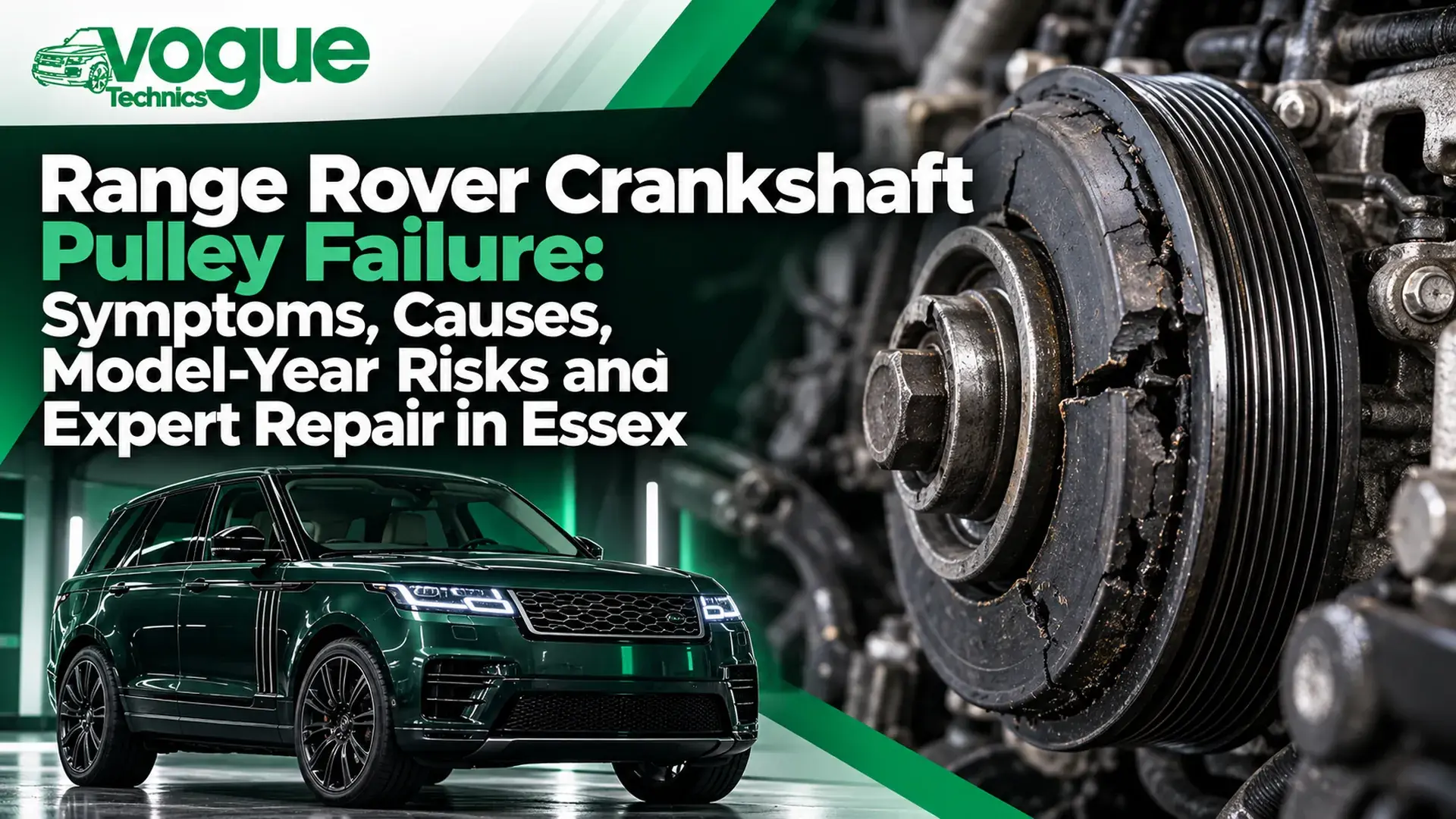
A rattle at the front of the engine, a belt that squeals on cold start, or a battery light that won't switch off. If any of that sounds familiar, don't write it off as "just a noisy belt." Range Rover crankshaft pulley failure can leave you stranded with no charging, no power steering and a rising temperature gauge.
At Vogue Technics in Grays, Essex, we see this fault on Range Rover models of all ages. Caught early, it's a straightforward repair. Left alone, the pulley can separate, the belt can fail and the damage can spread well beyond one part.
This guide explains what the pulley does, what causes it to fail, which symptoms to watch for, how model year affects the risk and what replacement involves.
What Causes Range Rover Crankshaft Pulley Failure?
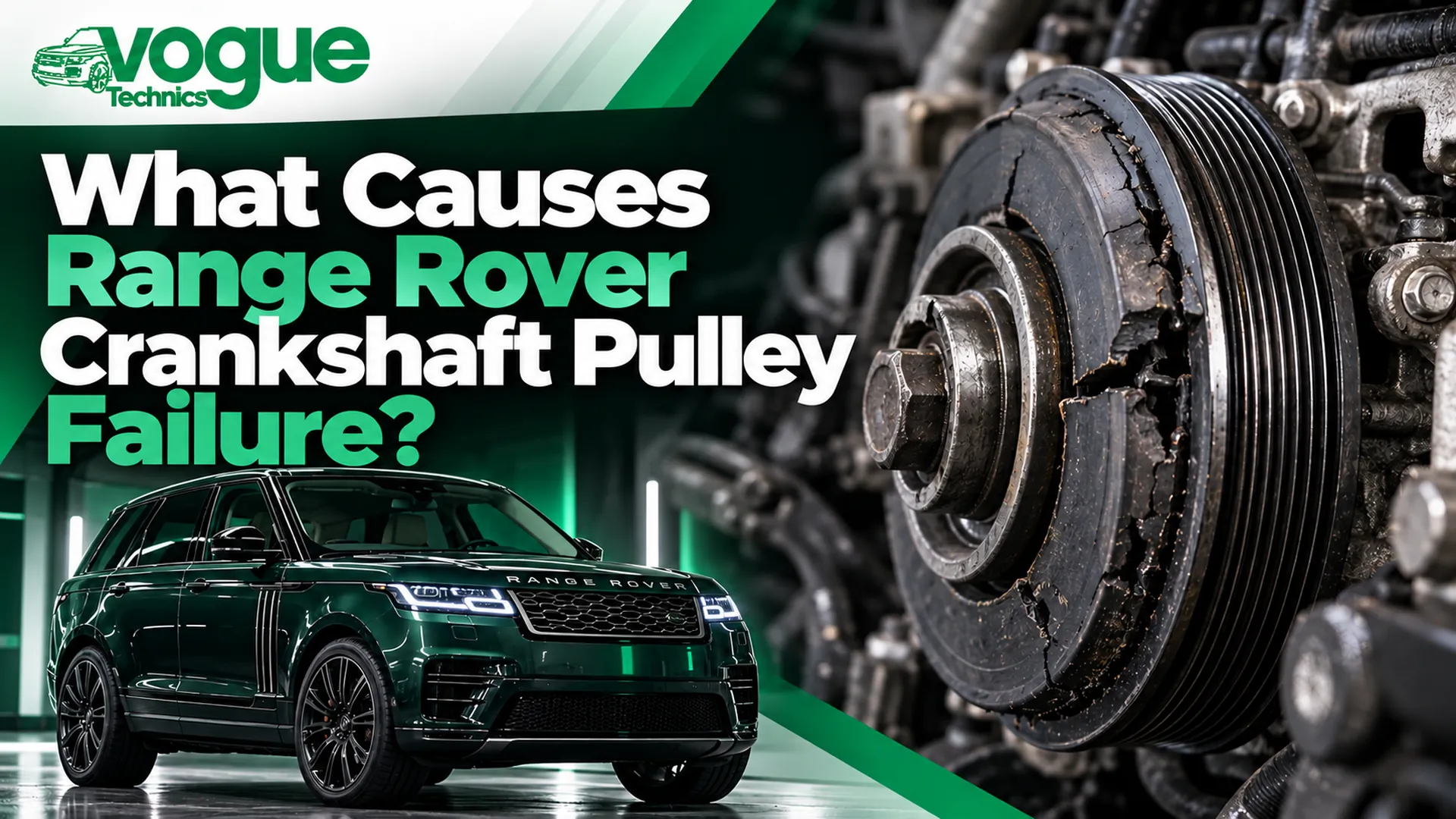
The short answer: the bonded rubber inside the pulley breaks down, and the outer ring starts to move when it should be locked in place. Everything else follows from that.
What Does the Crankshaft Pulley Do on a Range Rover?
The crankshaft pulley sits on the front of the engine and does two jobs. It drives the serpentine belt, and on most designs it also acts as a harmonic damper, absorbing the vibrations the crankshaft creates as the engine runs.
That belt then powers the parts you rely on every drive:
- The alternator, which charges the battery and runs the electrics
- The power steering pump (where fitted), which keeps steering light
- The water pump, which circulates coolant and prevents overheating
- The air conditioning compressor, which keeps the cabin comfortable
When the pulley fails, every one of these is affected at once. That is why a "small noise" up front deserves attention.
Why Does a Range Rover Crankshaft Pulley Fail?
Most pulleys are built in layers: an inner hub, an outer ring and a layer of bonded rubber between the two. The rubber absorbs vibration, but it's also the weak point. Heat, age and constant flexing slowly break it down until the ring can wobble, slip or separate.
Here are the usual causes, based on what we see on the ramp:
Cause | How it develops | Warning sign |
| Rubber perishing | Years of heat cycling harden and crack the bonded layer | Rattle at idle, visible cracks |
| Outer ring separation | The ring shifts on the hub as the bond fails | Wobble, belt squeal, belt slipping off track |
| Belt misalignment | A shifted ring pulls the belt out of line | Uneven belt wear, frayed edges |
| Oil contamination | Leaks from the front crank seal soften the rubber | Oily residue around the pulley |
| High mileage | Cumulative fatigue on the damper | Noise that grows over weeks |
| Missed inspections | Early wear goes unnoticed | Sudden failure with little warning |
Mileage and age matter more than most owners expect. A car that has done mostly short trips or heavy towing can wear a pulley faster than its age suggests.
How Do You Spot Range Rover Crankshaft Pulley Failure Symptoms?
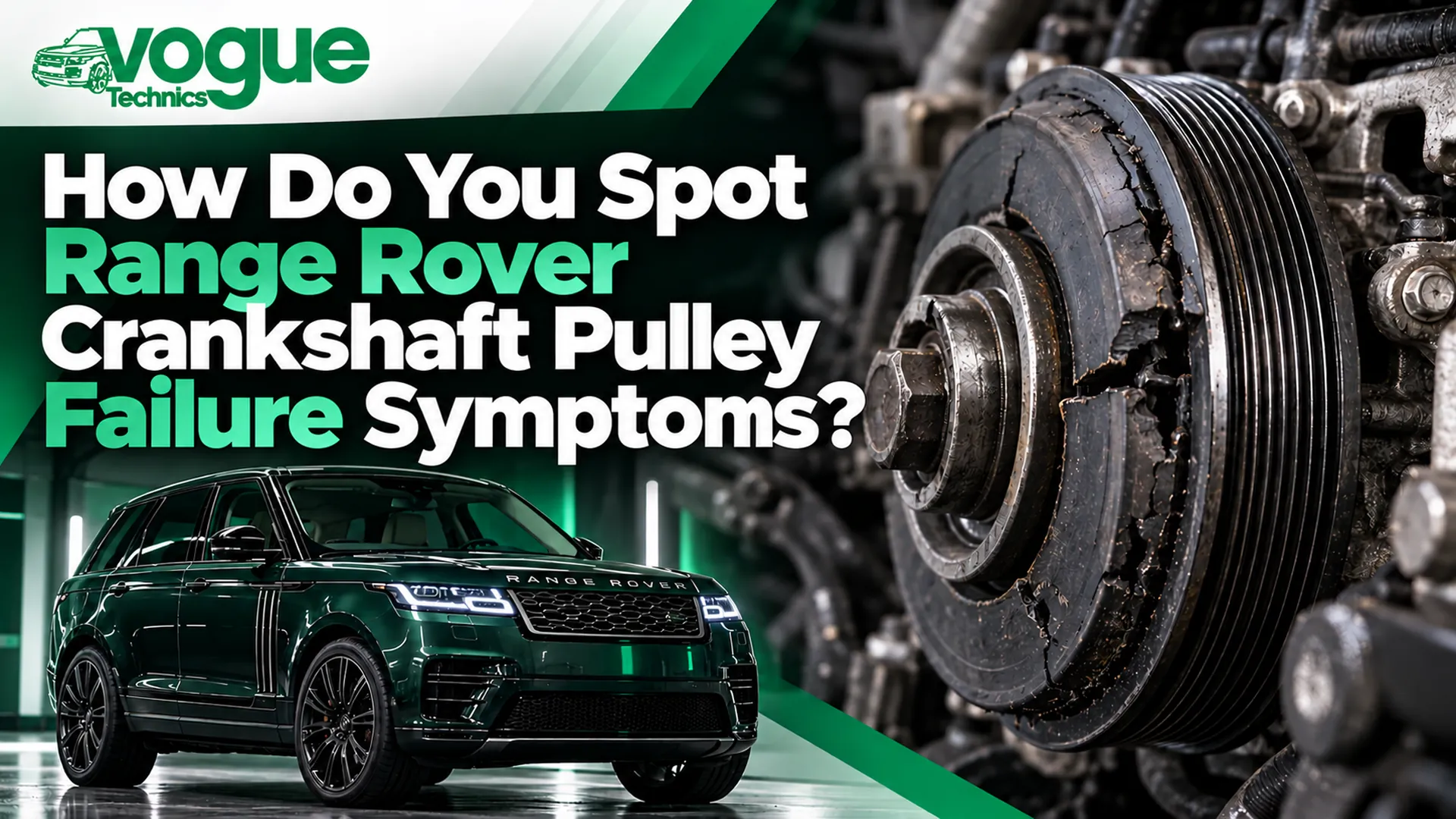
Symptoms usually start small and build. The trick is catching them before the belt gives up.
What Are the Most Common Range Rover Crankshaft Pulley Failure Symptoms?
Watch and listen for these signs:
- A rattling or "death rattle" noise from the front of the engine, often loudest at idle or on cold start
- Visible wobble or play in the pulley when the engine runs (always inspect with the engine off and keys out, or leave it to a professional)
- A squealing or shredded belt, or one that keeps coming off its track
- A battery or charging warning light because the alternator isn't being driven properly
- Heavy steering or poor cooling, as the power steering pump and water pump lose drive
- Engine vibration that wasn't there before
Not every noise at the front of the engine is the pulley. Failing belt tensioners, idler pulleys and alternator bearings can sound similar. That's why a proper diagnosis matters before parts are ordered.
A real-world example: an owner books in a Range Rover because it "rattles for a few seconds on a cold morning, then goes quiet." There's nothing dramatic, and the car drives fine. On inspection, the pulley's outer ring has started to shift. Two weeks later, that same noise would have turned into a snapped belt on the motorway.
Is It Safe to Drive a Range Rover With a Failing Crankshaft Pulley?
We wouldn't risk it.
If the pulley separates, the serpentine belt can fail instantly. You lose charging, so the battery drains. You may lose power steering assistance. And without the water pump turning, the engine can overheat fast, which is how a cheap repair becomes an expensive one.
If you notice a rattle, a wobble, a charging light or a belt problem, stop driving as soon as it's safe and book a check. An early inspection costs far less than recovery, a cooked engine or a roadside breakdown.
Which Range Rover Model Years Are Most Affected by Crankshaft Pulley Failure?
No model year is immune, and no year is guaranteed to fail. What changes is age, mileage and how the car has been used. Here's how we look at it.
Does the Crankshaft Pulley Fail on a 2012, 2013 or 2014 Range Rover?
Owners of a 2012 Range Rover crankshaft pulley failure, a 2013 Range Rover crankshaft pulley failure or a 2014 Range Rover crankshaft pulley failure are usually dealing with age and mileage. After a decade or more of heat cycles, the bonded rubber is often tired, particularly on cars with high mileage or patchy service history.
At service time, we recommend checking:
- The condition of the rubber layer for cracking or bulging
- Any movement between the hub and outer ring
- Belt wear patterns that suggest misalignment
- Oil residue from the front crank seal
If your car sits in this age range and the pulley has never been inspected, it's worth adding to your next service.
What About 2016, 2017 and 2018 Range Rover Crankshaft Pulley Failure?
A 2016 Range Rover crankshaft pulley failure, a 2017 Range Rover crankshaft pulley failure or a 2018 Range Rover crankshaft pulley failure is generally less common than on older cars, simply because the parts have had fewer years and miles. But heavy towing, lots of short journeys and missed servicing can still bring problems forward.
Here's a quick reference by model year:
Model years | Typical risk factors | What to inspect | Suggested check |
| 2012-2014 | Age-related rubber breakdown, higher mileage | Rubber layer, ring movement, belt wear | Every service, or sooner if you hear a rattle |
| 2016-2018 | Towing, short trips, skipped services | Belt alignment, early wobble, oil seepage | Annually or at each belt inspection |
These are general guidelines, not guarantees. Your car's history matters more than the badge on the tailgate, so a quick inspection beats guessing.
How Do You Fix Range Rover Crankshaft Pulley Failure and What Will It Cost?
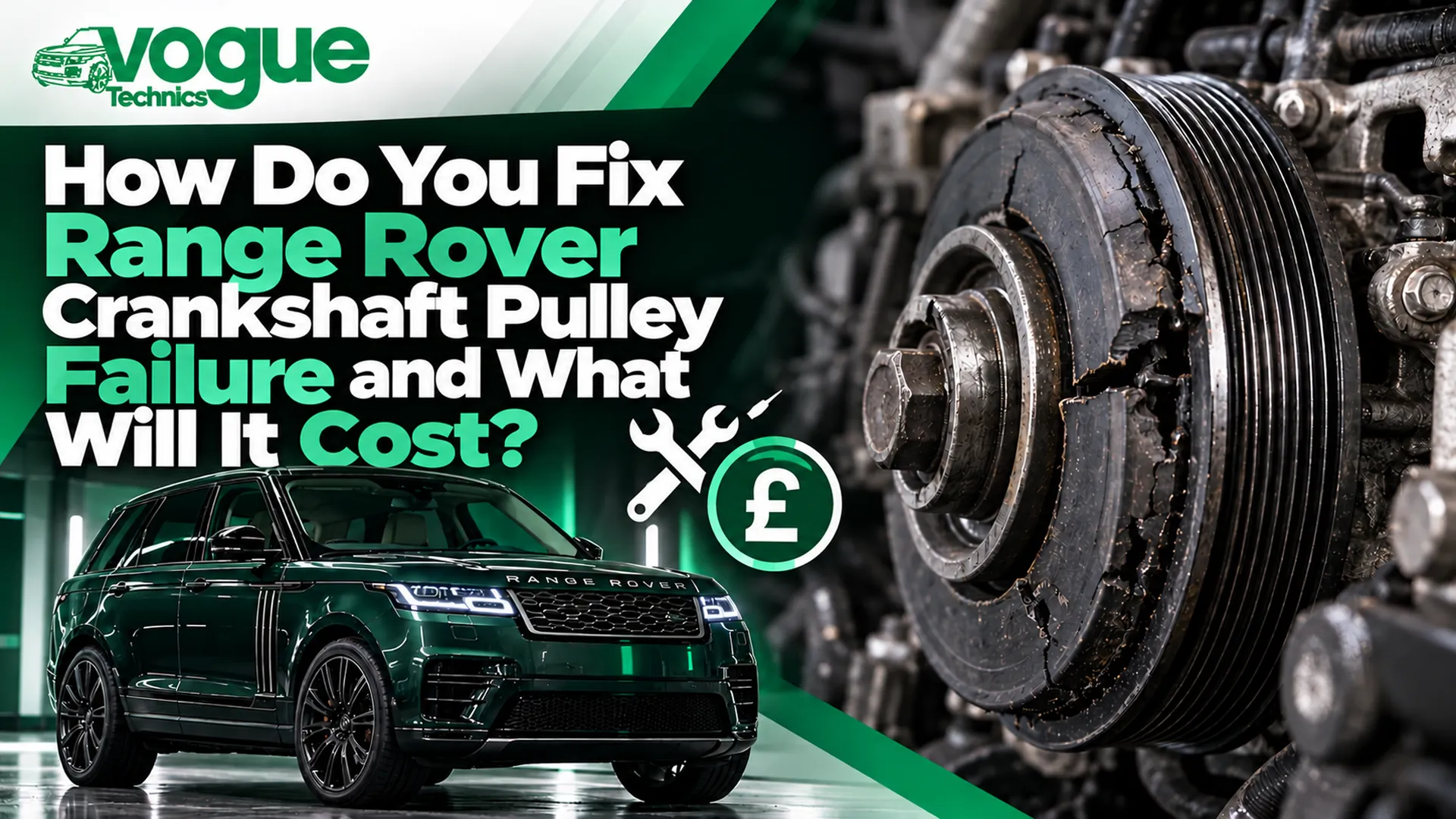
The lasting fix is replacement. A failed pulley can't be patched or re-bonded safely, and a worn one only gets worse.
Should You Repair or Replace a Failed Range Rover Crankshaft Pulley?
Replace it. And because the pulley drives the belt, it makes sense to inspect (and usually replace) the belt and check the tensioner at the same time.
Here's how we handle the job at our workshop:
- Diagnosis. We confirm the pulley is the fault, not the tensioner, idler or alternator.
- Belt removal. We release tension and remove the belt safely.
- Pulley replacement. The old pulley comes off and the new one is fitted and tightened to manufacturer specification.
- Belt and tensioner inspection. We replace worn parts so the same fault doesn't return.
- Test run. We run the engine up to temperature and watch for noise, wobble and belt tracking.
- Leak check. We check the front crank seal area, since oil can shorten the new pulley's life.
You drive away with a repair that has been tested, not just assembled.
Why Choose a Land Rover Specialist Near Grays, Essex?
A general garage can often fit a pulley. A specialist knows what usually causes the failure and what to check around it.
Vogue Technics works on Land Rover and Range Rover vehicles every day, so we spot patterns quickly. That saves diagnostic time and prevents repeat visits.
What you get from us:
- Range Rover experience across multiple model years and engines
- Proper diagnostic equipment, not guesswork
- Honest advice, including telling you when a part doesn't need replacing
- Itemised quotes, with no vague extras
- Warranty-backed work, so you know the repair is covered
- Local convenience for drivers across Grays, Thurrock and wider Essex
Internal link suggestions: link "Land Rover servicing" to your servicing page, "diagnostics" to your diagnostics page and "request a quote" to your contact form.
How Much Does Range Rover Crankshaft Pulley Replacement Cost in the UK?
The price depends on your engine, the quality of parts used and whether the belt and tensioner also need replacing. Diagnostic time and any related issues, such as an oil leak from the crank seal, can also affect the final bill.
Rather than quote a generic number that may not suit your car, we give a clear, itemised quote once we know your model, engine and symptoms. Send us your registration and a short description of what you're noticing, and we'll tell you exactly what to expect.
Range Rover Crankshaft Pulley Failure: Frequently Asked Questions
How do I know if my crankshaft pulley is bad?
Listen for a rattle at idle or on cold start, and look for a wobbling pulley, a squealing belt or a charging warning light. Any of these means it's time for an inspection.
What causes crankshaft pulley failure?
The most common cause is the bonded rubber layer breaking down through age, heat and mileage. Oil contamination, belt misalignment and missed inspections can speed it up.
Can I drive with a bad crankshaft pulley?
We don't recommend it. If the pulley separates, you can lose charging, steering assistance and water pump drive, which risks overheating and engine damage.
How long does a Range Rover crankshaft pulley last?
There's no fixed lifespan. It depends on mileage, age, driving style and maintenance. Regular inspections catch wear before it becomes failure.
How long does replacement take?
It varies by engine and what else needs attention, but many cars can be completed within a day once parts are available.
Is a rattling crankshaft pulley the same as a bad belt tensioner?
They can sound alike, which is why diagnosis matters. A trained eye can tell them apart and avoid replacing the wrong part.
Will a failed pulley damage my engine?
It can. If the belt fails and the water pump stops, the engine can overheat quickly, causing damage far costlier than the pulley itself.
Don't Wait for a Rattle to Become a Breakdown
Range Rover crankshaft pulley failure usually gives you warning: a noise, a wobble, a light on the dash. The cars that end up on a recovery truck are the ones where those warnings were ignored.
If you've noticed any of the symptoms above, book a diagnostic with Vogue Technics in Grays, Essex. We'll find the cause, explain it plainly and quote before any work begins.
Call us, message us or send your registration through our quote form today, and get your Range Rover back on the road with confidence.