Range Rover 4.2 Supercharged Engine Problems: Faults, Symptoms and Checks
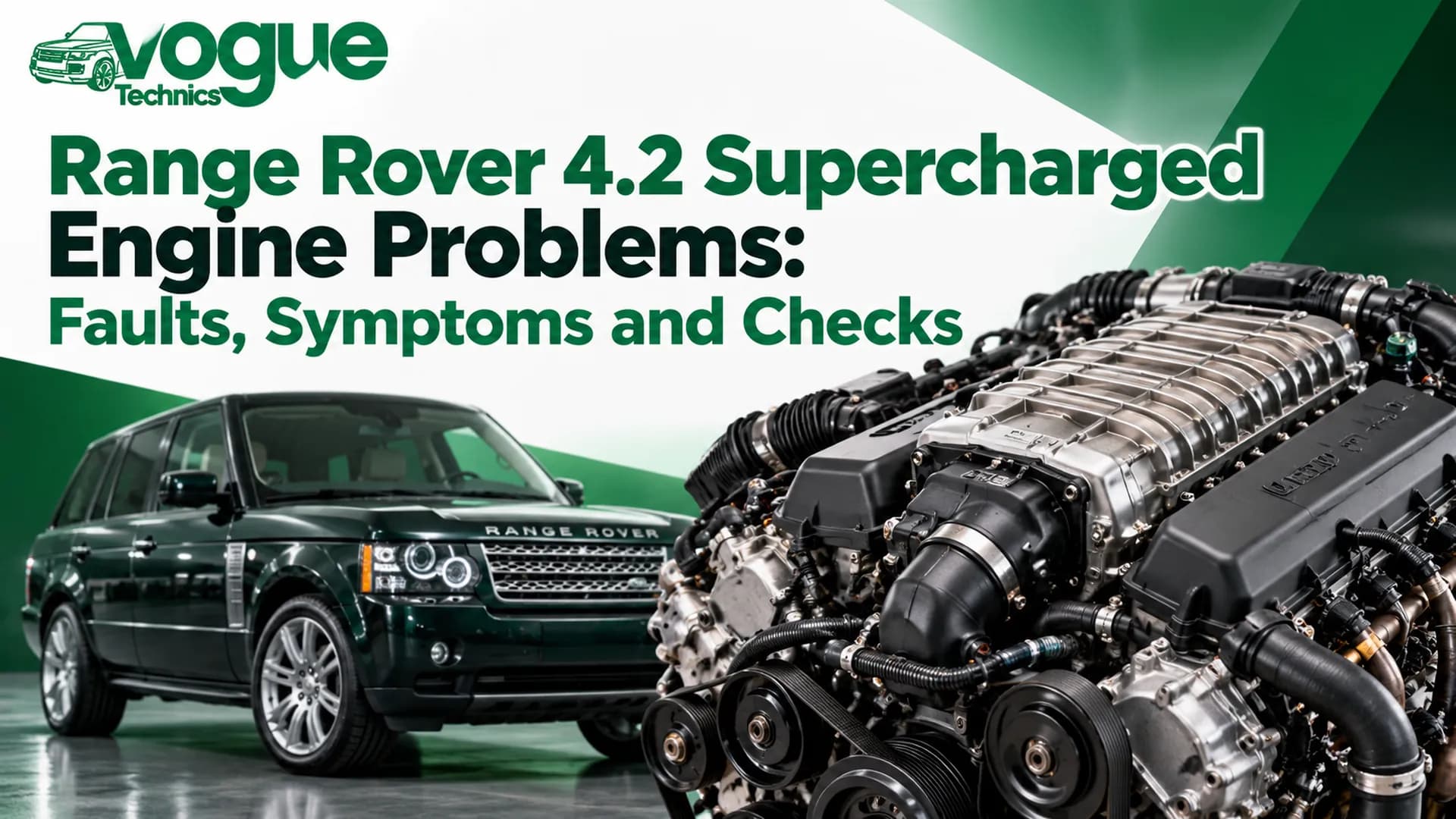
The 4.2 supercharged V8 gave the mid-2000s Range Rover and Range Rover Sport serious performance. Most examples are now more than 15 years old, though, so age-related wear matters as much as any design weakness.
The Range Rover 4.2 supercharged engine problems reported most often are:
- timing-chain, tensioner and guide wear on high-mileage engines;
- a rattle from the supercharger at idle;
- cooling-system leaks and overheating;
- oil leaks from ageing gaskets;
- misfires caused by ignition parts or air leaks.
Owners generally describe the engine as robust when it has been serviced properly. Neglect is what turns small faults into expensive ones.
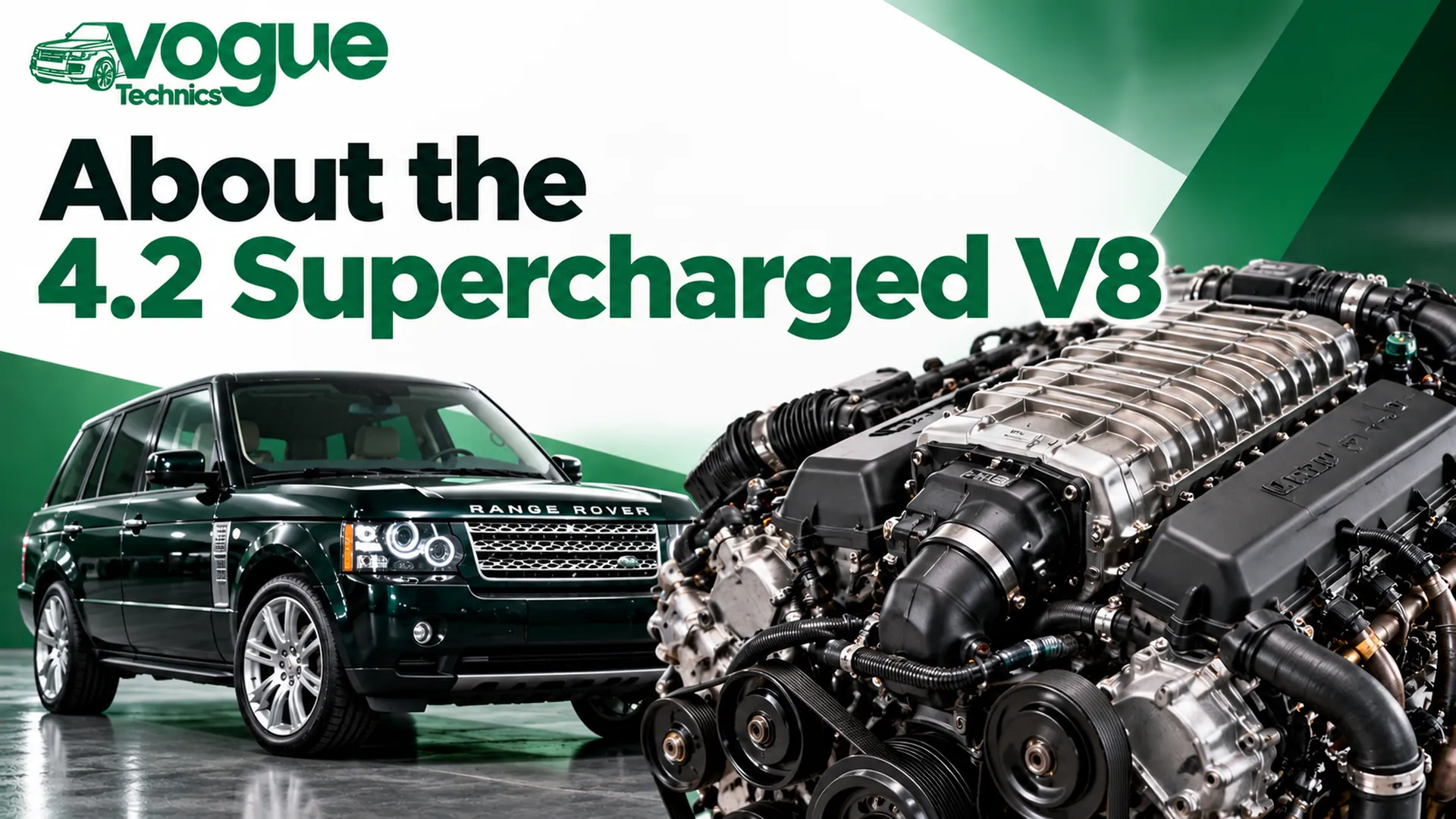
About the 4.2 Supercharged V8
Where It Was Fitted
Model | Approx. years | Notes |
| Range Rover Vogue (L322) | Mid-2000s to 2009 | Introduced when Jaguar V8s replaced the BMW engines |
| Range Rover Sport (L320) | 2005–2009 | Badged "Supercharged" |
This engine belongs to Jaguar's AJ-V8 family. It uses an Eaton supercharger mounted in the "V" between the cylinder banks. From 2009–2010 it was replaced by the 5.0 supercharged V8, which is a different engine with its own known issues.
Autocar's L322 buying guide confirms that the 4.2 supercharged V8 joined the line-up alongside the Jaguar 4.4 once the BMW engines were dropped. For background on the model, see our Range Rover Vogue Mk3 history.
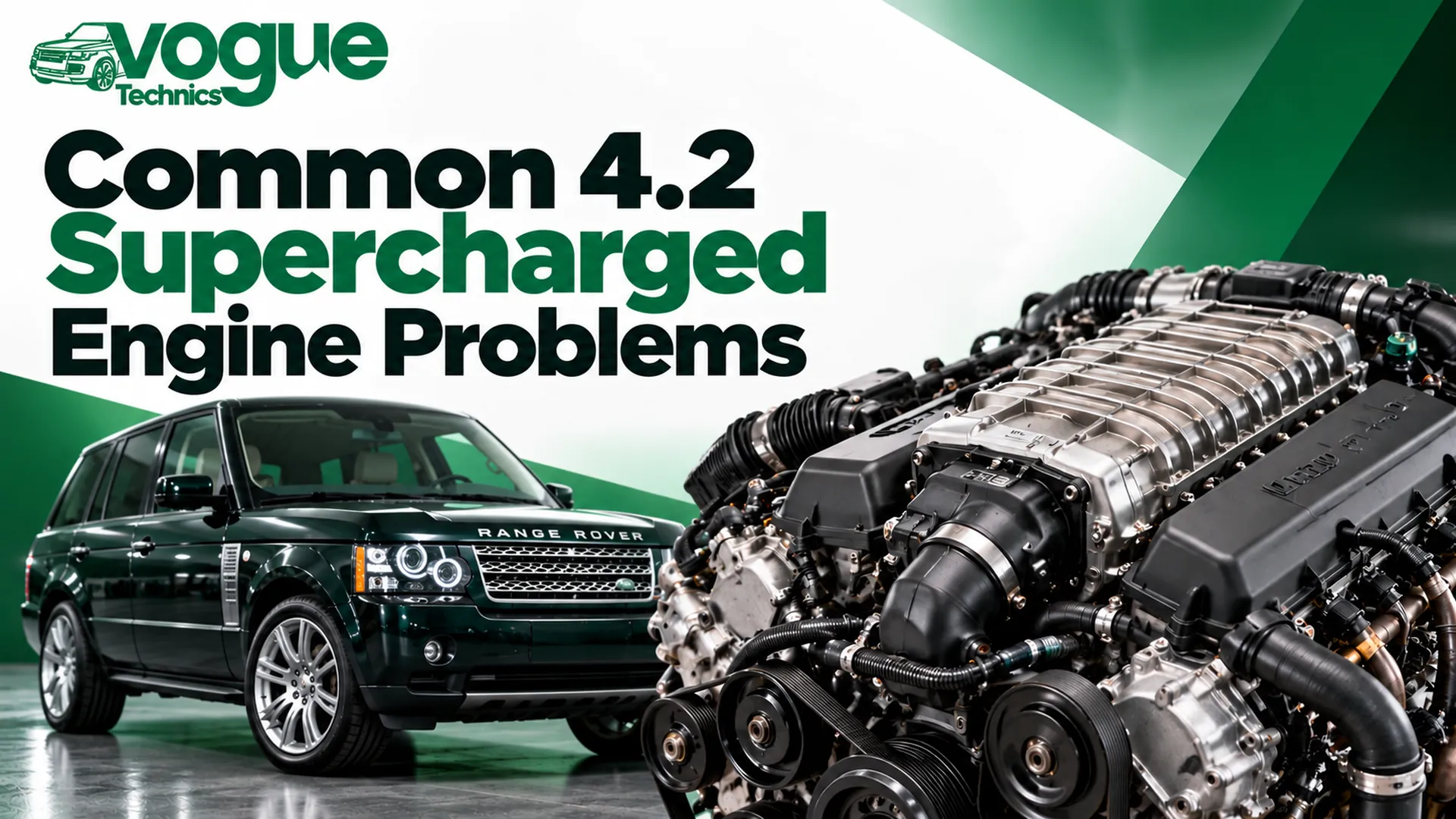
Common 4.2 Supercharged Engine Problems
Timing Chain, Guides and Supercharger Noise
Timing chains, tensioners and guides
- High-mileage engines can develop slack in the timing chains as the tensioners and plastic guides wear.
- One owner on RRSport.co.uk described:
- a clunking noise at idle;
- a check engine light with lean codes on both banks;
- the fault fixed by fitting a complete chain and guide kit (RRSport.co.uk).
- A stretched chain lets the valve timing drift, which affects running and can eventually risk engine damage.
- Vogue Technics carries out timing chain replacement on Range Rover V8 petrol engines.
Supercharger rattle at idle
- Autocar advises buyers of 4.2-litre cars to listen for a rattle from the supercharger at idle (Autocar).
- This noise usually comes from the drive coupling in the supercharger nose rather than from the engine itself.
- Have it identified properly so you don't confuse it with timing-chain noise.
Cooling, Leaks and Misfires
Cooling-system leaks and overheating
- Plastic coolant pipes, the thermostat and the water pump all age.
- Unexplained coolant loss, a sweet smell or a rising temperature gauge should be investigated straight away.
- Running an aluminium engine hot can damage the cylinder heads and head gaskets. If the engine has overheated, pressure and combustion-gas tests will show whether head gasket replacement is needed.
Oil leaks
- Ageing cam cover gaskets and seals commonly weep oil.
- Oil reaching the exhaust manifolds is a fire risk and should be fixed promptly.
Misfires and lean running
Typical causes include:
- worn spark plugs or failing coil packs;
- air leaks from intake manifold gaskets or vacuum lines;
- timing faults, as described above.
One owner's thread on fullfatrr.com describes misfires and lean running after a rebuild, traced to manifold gaskets that had been reused (fullfatrr.com). The quality of any work done matters as much as the parts used.
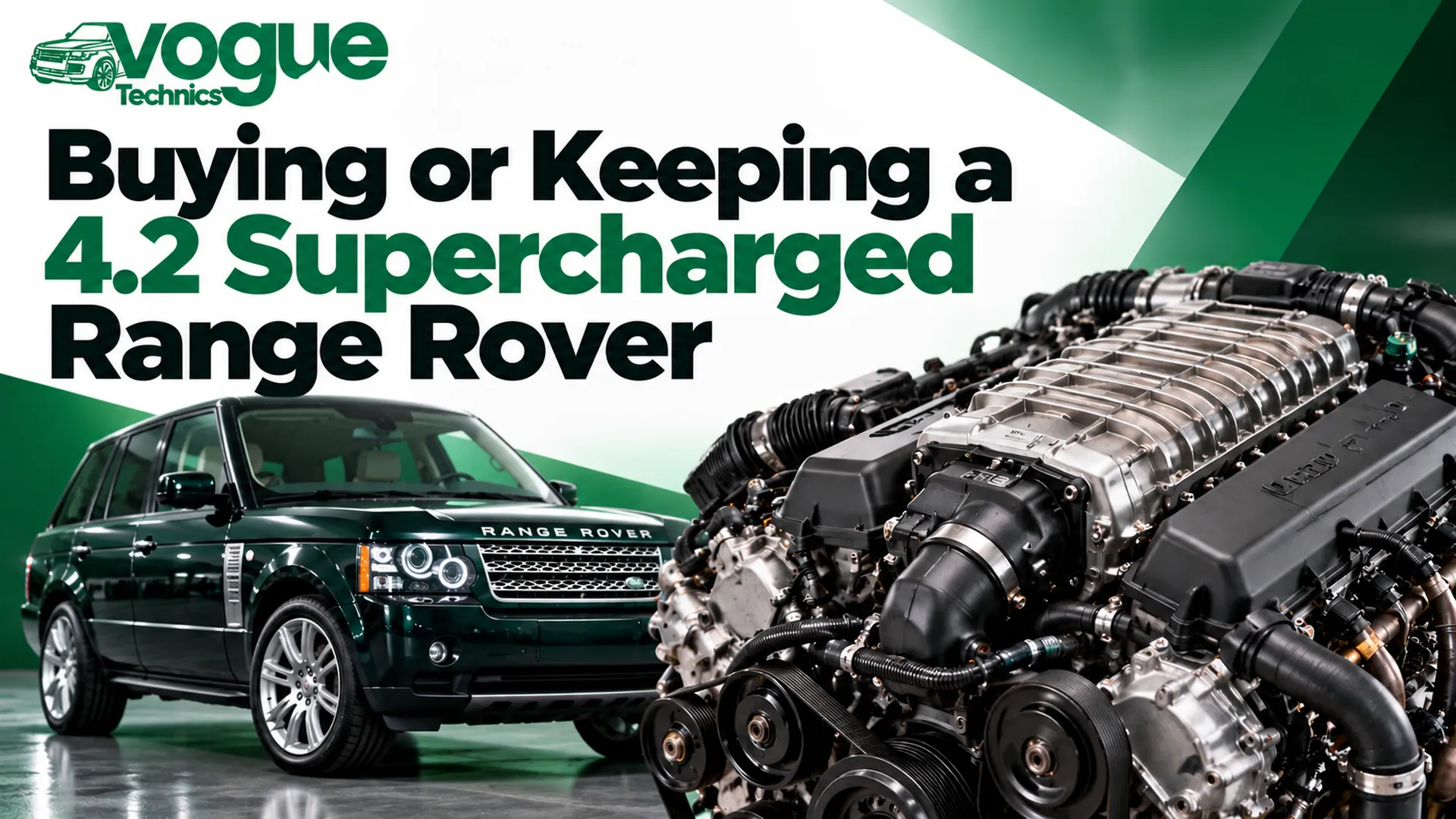
Buying or Keeping a 4.2 Supercharged Range Rover
Warning Signs and When to Stop
Symptom | Possible cause | Urgency |
| Temperature gauge rising, steam | Coolant leak, thermostat, water pump | Stop immediately |
| Clunking or rattle at idle | Timing chain, guides or tensioners | Book promptly |
| Rattle from the front of the supercharger | Supercharger drive coupling | Book an inspection |
| Rough running, lean codes | Air leak, ignition fault or timing | Book a diagnosis |
| Burning-oil smell, oil drips | Gasket or seal leak | Book promptly; fire risk |
| Oil pressure warning | Oil supply fault | Stop immediately |
Before buying, check:
- The service history, especially oil-change intervals.
- A cold start. Listen for chain or supercharger rattle.
- The coolant level and condition, and any history of overheating.
- Any oil leaks around the cam covers and the back of the engine.
- Stored fault codes. A specialist engine health check covers fault codes, oil and cooling checks, and a compression test where needed.
If the engine has serious internal damage, an engine rebuild can restore it, provided the block and crank can be saved and the work is done properly.
Frequently Asked Questions
4.2 Supercharged Engine Problems FAQs
Is the Range Rover 4.2 supercharged engine reliable?
Owners generally describe it as robust when it has been serviced regularly. On older engines, the main concerns are timing-chain wear, cooling-system leaks and oil leaks.
What causes a rattle on a 4.2 supercharged Range Rover?
At idle, it may come from the supercharger drive coupling or from slack timing chains and guides. A specialist can identify which it is.
Does the 4.2 supercharged engine have timing chain problems?
High-mileage engines can develop worn tensioners and guides, which let the chains slacken. A chain and guide kit is the usual fix.
Is the 4.2 supercharged the same as the 5.0 supercharged V8?
No. The 5.0 supercharged V8, from around 2009–2010, is a different engine with its own known faults.
Why is my 4.2 supercharged losing coolant?
Common causes are ageing plastic pipes, the thermostat housing or the water pump. Have the cooling system pressure-tested before the engine overheats.
If your 4.2 supercharged Range Rover has any of these symptoms, contact Vogue Technics on 01375 531355. Please share your registration, mileage and symptoms.