Range Rover 3.6 TDV8 Turbo Failure: Symptoms, Causes and Replacement Cost in the UK
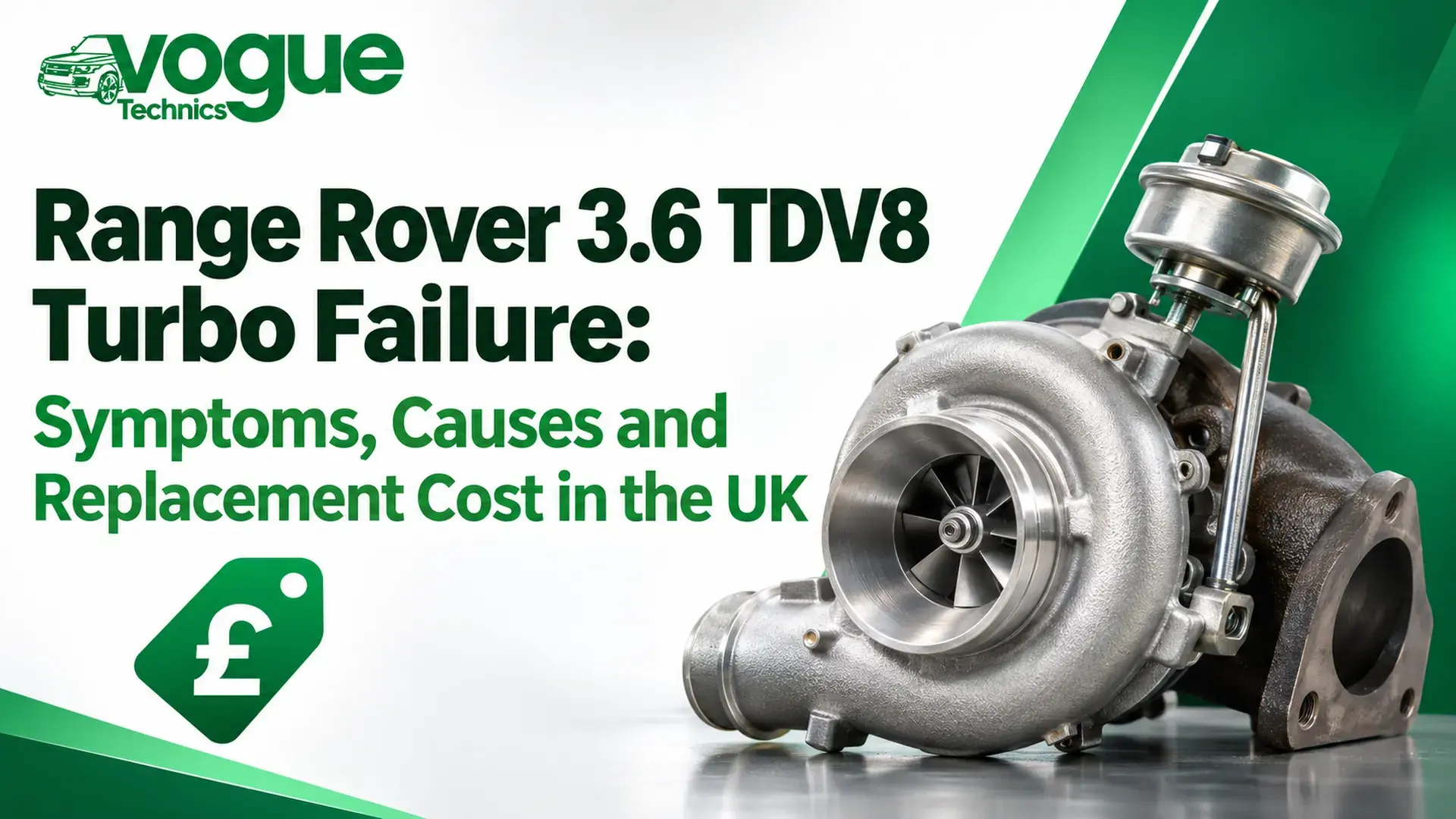
Your Range Rover pulls away from the lights, the dash flashes a warning, and the power drops off like someone lifted your foot off the pedal. A thin whistle starts under the bonnet, and a puff of blue smoke follows when you let off the throttle. If that sounds familiar, you are probably dealing with Range Rover 3.6 TDV8 turbo failure.
It is one of the best-known faults on the L322 Vogue and the Range Rover Sport. It is also one of the most misunderstood. Many owners replace a turbo, only to see the new one fail within months because the real cause was never fixed.
This guide explains why these turbos fail, how to spot the early signs, what replacement costs in the UK, and how to avoid paying twice. We work on these engines at Voguetechnics.co.uk in Grays, Essex, so the advice below comes from what we see on the ramp, not from a spec sheet.
What Causes Range Rover 3.6 TDV8 Turbo Failure?
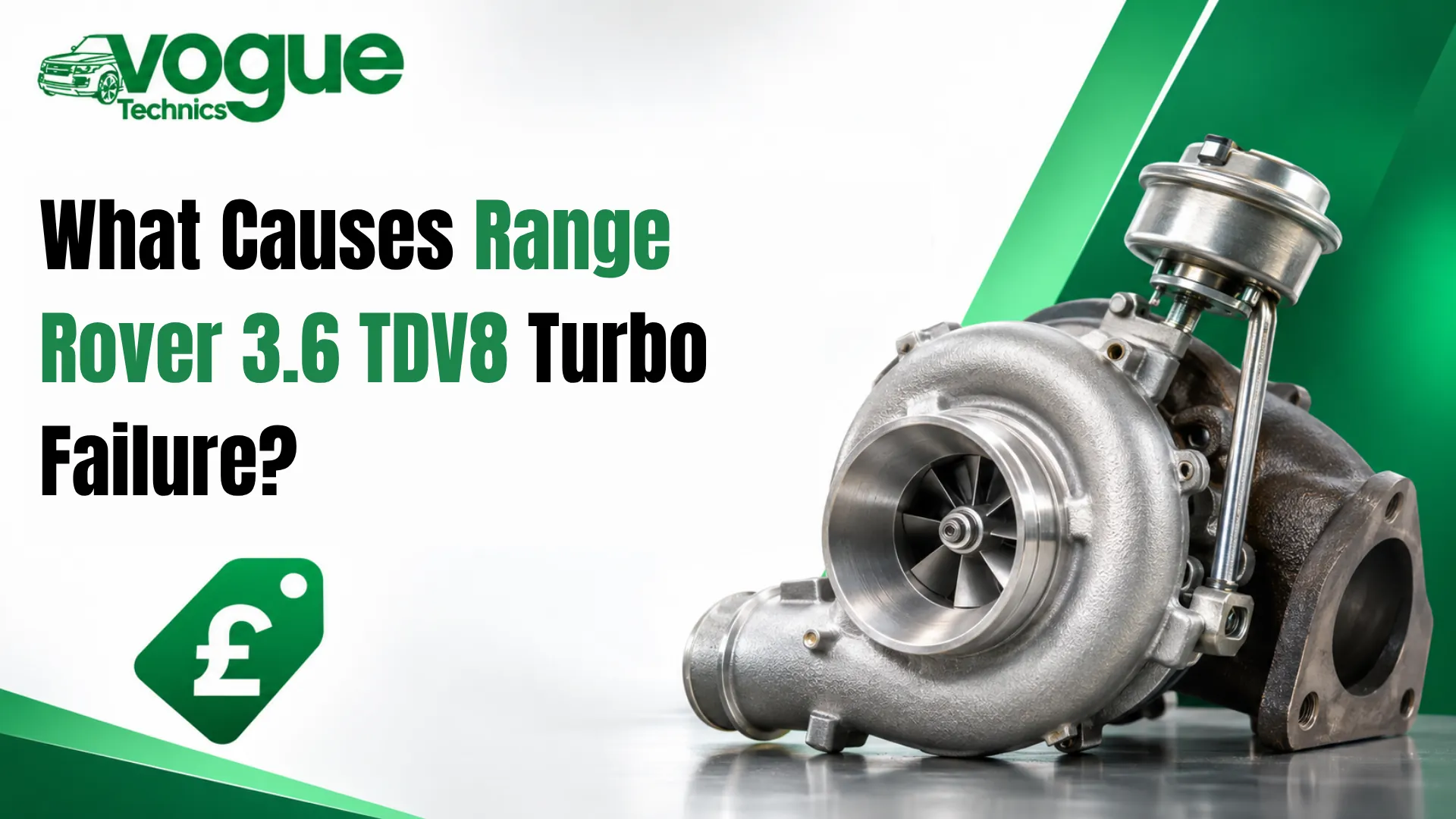
The 3.6 TDV8 is a Ford/PSA-built Lion V8 diesel with twin variable-geometry turbochargers, one for each cylinder bank. It was fitted to the Range Rover L322 from 2006 to 2009 and to the Range Rover Sport. It makes strong, smooth power, but it asks a lot of its turbos.
Turbo failure on this engine is rarely random. In most cases it traces back to one of three things: oil, heat or contamination.
Why Do 3.6 TDV8 Turbos Fail So Often on the L322 and Range Rover Sport?
These are heavy vehicles. A Range Rover Sport or Vogue weighs well over two tonnes, so the turbos work hard every time you accelerate, tow or climb a slip road onto the M25.
Add age and mileage. Most 3.6 TDV8 vehicles on UK roads are now well over a decade old, and the seals, hoses and oil feed components around the turbos have aged too. The variable-geometry vanes inside each turbo also build up carbon over time, which makes them stick and stops the turbo from regulating boost properly.
Common wear points we see on these engines:
- Carbon-fouled variable-geometry vanes that stick open or closed
- Worn turbo bearings from poor lubrication
- Perished or leaking oil feed and return lines
- Damaged compressor wheels from debris entering the intake
- Actuator faults that confuse the boost control
How Does Oil Starvation and Poor Servicing Damage the Turbos?
A turbo spins at speeds well over 100,000 rpm. Its bearings float on a thin film of engine oil. If that oil is dirty, thin or delayed, the bearings wear fast and the shaft begins to wobble.
That is why servicing matters more on a TDV8 than most owners expect. Stretching oil changes past 10,000 miles, using the wrong grade, or ignoring a slow oil leak all put the turbos at risk.
A simple rule we give customers: change the oil and filter every 6,000 to 8,000 miles or once a year, even if the book says longer. It costs far less than a turbo.
Can Blocked EGR Valves and Split Intercooler Hoses Cause Turbo Damage?
Yes, and this is the part many garages miss.
A clogged EGR valve or cooler sends soot back into the intake. That soot builds up on the turbo vanes and restricts airflow. Meanwhile, a split intercooler hose lets boost pressure escape, so the turbos spin faster to make up the difference. Both put extra strain on the turbos.
If you replace a failed turbo without checking these parts, the new unit inherits the same problem. A proper repair always looks at the whole system, not just the part that failed.
What Are the Symptoms of a Failing 3.6 TDV8 Turbo?
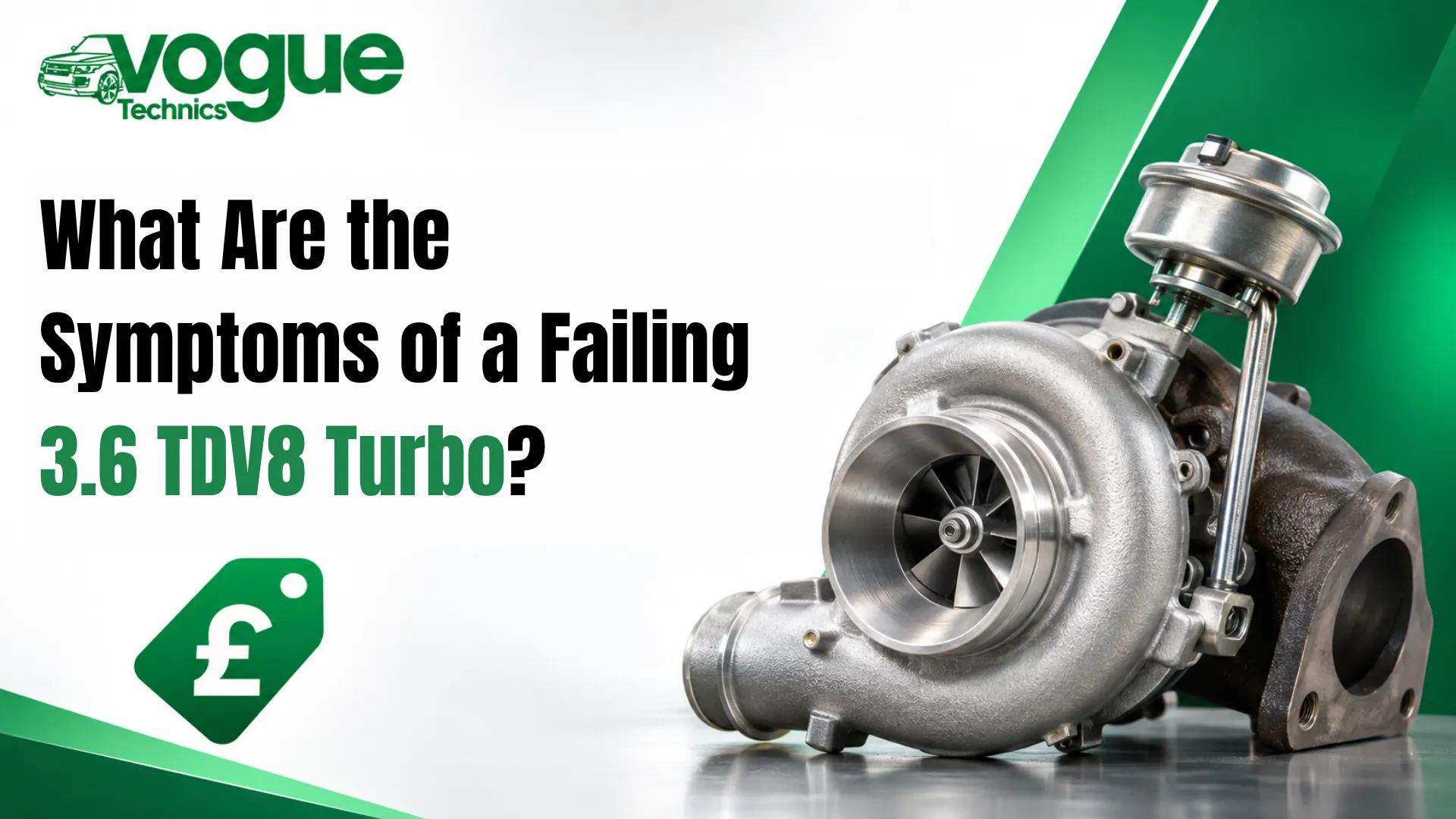
Most turbos give warnings before they fail completely. The trick is recognising them early, because a caught problem is often a smaller bill.
How Do I Know If My Range Rover 3.6 TDV8 Turbo Is Failing?
Here are the Range Rover 3.6 TDV8 turbo failure symptoms we see most often:
- Loss of power: the vehicle feels flat, especially when overtaking or going uphill
- A high-pitched whine or siren sound: this gets louder as revs rise
- Limp mode: the engine management cuts power to protect itself
- Excessive smoke: blue, grey or black from the exhaust
- Higher oil consumption: topping up between services when you never used to
- Slow, laggy acceleration: the boost arrives late or not at all
- Warning lights: engine management or boost-related fault codes
One symptom alone does not confirm a failed turbo. Two or three together usually do. Before you commit to a repair, ask for a diagnostic scan and a physical inspection of the turbo, hoses and oil lines.
Is Blue or White Smoke, Whistling or Limp Mode a Turbo Warning Sign?
Often, yes. Here is how to read each one.
Symptom | What it often points to |
| Blue smoke | Oil passing the turbo seals into the intake or exhaust |
| Black smoke | Too much fuel or too little air, often a boost leak or sticking vanes |
| White smoke | Coolant or unburnt fuel; needs checking, not always the turbo |
| Whistling or whining | Worn bearings or a boost leak at a hose or joint |
| Limp mode | Boost out of range, often a stuck actuator or leaking hose |
A whistle on its own can also come from a split intercooler hose, which is much cheaper to fix. This is another reason to diagnose before you replace.
Is It Safe to Keep Driving With a Failing Turbo?
We would advise against it. A worn turbo can drop metal fragments into the engine or send oil into the intake, and in the worst cases that can damage far more than the turbo itself.
A good example: a customer once drove a few hundred miles with a whining turbo, hoping it would settle. By the time the vehicle reached us, the compressor wheel had shed material and the intercooler pipework was full of oil. A single-turbo job became a larger repair.
If you notice the symptoms above, get the car checked promptly. Waiting rarely saves money.
Could It Be Something Else, Such as the Thermostat Housing or Injectors?
Possibly. The 3.6 TDV8 has other known weak spots, and some mimic turbo trouble:
- Thermostat housing leaks: coolant loss and a sweet smell from the engine valley
- Worn injectors: rough running and poor performance
- Cracked inlet manifold or split hoses: boost leaks that cause power loss
- Blocked EGR: hesitation and smoke
This is why we diagnose the whole engine before quoting. It protects you from paying for a turbo you do not need.
How Much Does Range Rover 3.6 TDV8 Turbo Replacement Cost in the UK?
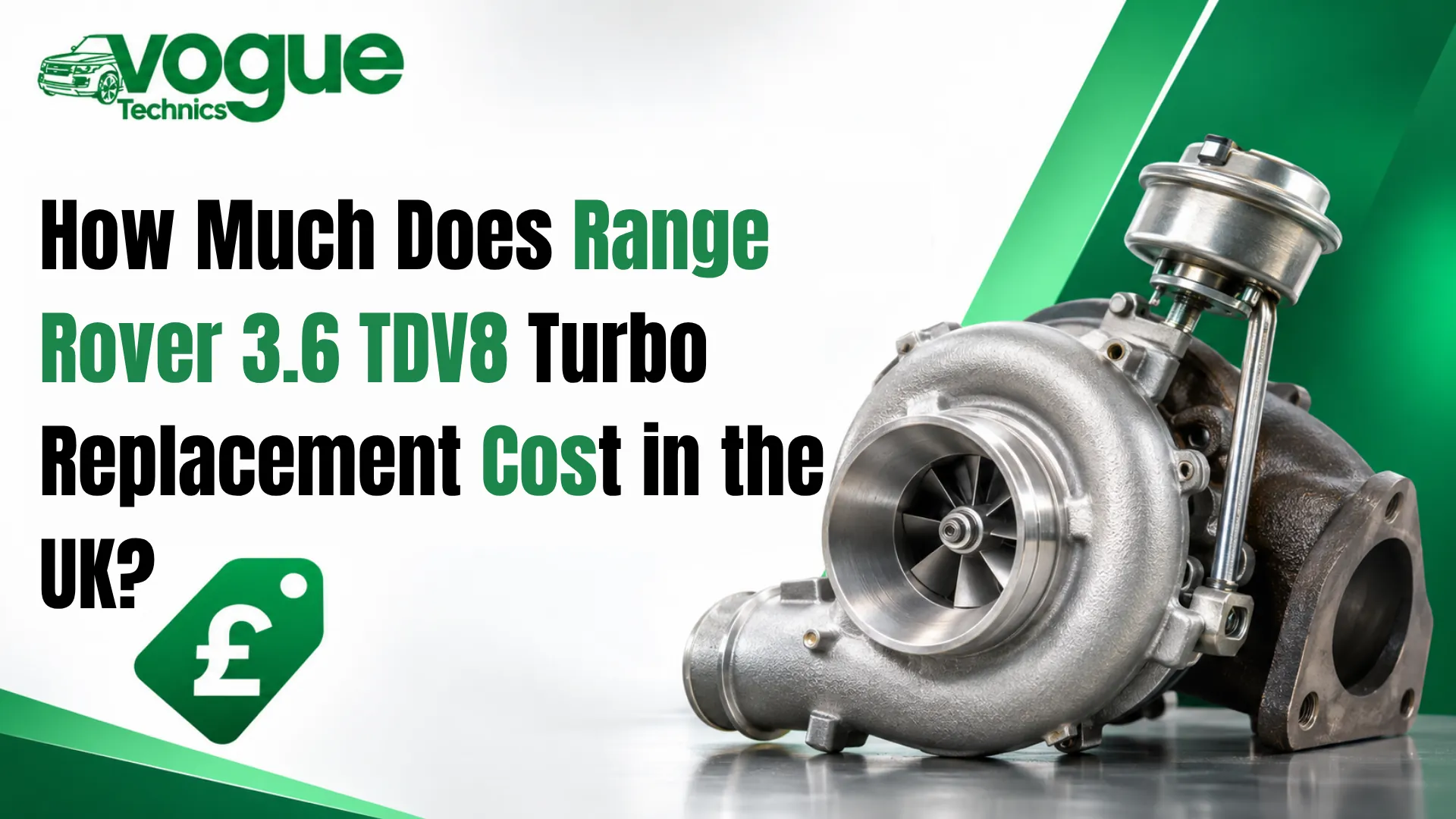
This is the question most owners really want answered. The honest reply is that it depends on the vehicle, the parts, and what else needs attention.
What Is the Average Turbo Replacement Cost for a Range Rover Sport or Vogue?
As a general guide, UK owners can expect these ranges. They are estimates, and the final price depends on the diagnosis.
Repair | Typical UK cost (parts and labour) |
| One reconditioned turbo, fitted | £900 to £1,500 |
| Pair of reconditioned turbos, fitted | £1,600 to £2,800 |
| New turbo (each), fitted | £1,300 to £2,200 |
| Related work (hoses, oil feed pipes, EGR cleaning) | £150 to £600 |
The Range Rover 3.6 TDV8 turbo replacement cost is higher than on many cars because access is tight. A good share of the bill is labour, as the job means removing several components to reach the turbos.
For the Range Rover Sport 3.6 TDV8 turbo replacement and the Range Rover Vogue 3.6 TDV8 turbo replacement, the work is essentially the same. The L322 can take slightly longer in some cases because of how it is packaged.
A tip worth knowing: ask whether one turbo or both are being replaced. If one has failed through age or wear, the other is often close behind. Doing both together can save on duplicated labour later.
Should I Choose a Reconditioned or New Turbo?
Both can work well. The right choice depends on your budget and plans for the vehicle.
Reconditioned | New | |
| Cost | Lower | Higher |
| Lifespan | Good if rebuilt properly | Typically the longest |
| Best for | Daily drivers on a sensible budget | Owners keeping the car long term |
| Watch for | Quality varies by supplier | Price, and cheap copies |
The key is quality. A poorly rebuilt unit is a false economy. Always ask where the turbo comes from and what warranty covers it.
Is a 3.6 TDV8 Worth Repairing, and How Reliable Is It Compared With the 4.4 TDV8?
For most owners, yes, as long as the rest of the vehicle is sound. A well-maintained 3.6 TDV8 can still do high mileage, and a Range Rover in good condition is worth looking after.
Here is how the two engines compare on reliability.
3.6 TDV8 | 4.4 TDV8 | |
| Years used | 2006 to 2009 (L322, Sport) | From 2010 onwards |
| Turbo trouble | Well documented | Improved, but not immune |
| Common issues | Turbos, EGR, hoses, thermostat housing | Timing chain and oil feed concerns |
| Overall | Strong when serviced, costly when neglected | Generally more refined, still needs care |
Whether you run the 3.6 or the 4.4, service history beats model year. A car with regular oil changes and documented repairs is a far safer bet than a cheaper one with gaps.
If you are buying, check for the following before you hand over any money:
- Full service history, with oil changes on time
- Signs of oil around the turbo and intercooler pipes
- Smoke on a cold start and under load
- Fault codes from a proper diagnostic scan
- Evidence that the EGR and hoses have been looked at
Where Can I Get a 3.6 TDV8 Turbo Replaced Near Me in Essex?
If you are in Essex, East London, Kent or the surrounding areas, you do not need to travel far for specialist help.
Why Choose Voguetechnics.co.uk for Range Rover Turbo Replacement in Grays?
We are based in Grays, Essex, and we work on Land Rover and Range Rover diesels regularly. Here is what that means for you:
- Diagnosis first: we find the cause, not just the symptom
- The whole system checked: turbos, EGR, hoses, oil feeds and intercooler
- Clear, written quotes: you see what is needed before work starts
- Quality parts: reconditioned or new, with options explained honestly
- Local and easy to reach: convenient from the M25 and the Dartford Crossing
We would rather tell you a repair is not needed than sell you one that is. That approach has built most of our repeat business.
How Do I Get a Free Quote and What Does Our Warranty Cover?
Getting started is simple:
- Contact us through Voguetechnics.co.uk with your vehicle details and symptoms.
- We book a diagnostic check.
- You get a clear quote covering parts, labour and any related work.
- Once you approve, we carry out the repair and test the vehicle.
Ask us about warranty terms on parts and labour when you request your quote, so you know exactly what is covered.
What Common Questions Do Owners Ask Before Booking?
Is the Range Rover 3.6 TDV8 a reliable engine?
It can be, with proper servicing. It has known weak points, especially the turbos, but a well-kept example is capable of high mileage.
What is the most common 3.6 TDV8 problem?
Turbo failure is the most talked-about issue, followed by EGR clogging, split hoses and thermostat housing leaks.
How much does a Range Rover 3.6 TDV8 turbo failure cost to fix?
Typically £900 to £1,500 for a single reconditioned turbo, fitted, and more if both turbos or related parts need work. A diagnosis gives the accurate figure.
Can I drive with a failing turbo?
It is not recommended. Continued driving can cause further damage and a bigger repair bill.
Which is better, the 3.6 TDV8 or the 4.4 TDV8?
The 4.4 is generally considered more refined, but both need regular maintenance. Condition and history matter more than the badge.
Should I replace one turbo or both?
If one has failed through wear, the other is often near the end of its life. We will advise after inspecting both.
How long does a turbo replacement take?
Access is tight on these engines, so allow a day or more, depending on what else is needed.
Final Thoughts
Range Rover 3.6 TDV8 turbo failure is a common problem, but it is not a lost cause. Catch the symptoms early, find the real cause, and use quality parts, and the engine can serve you for many more miles.
If your Range Rover is whistling, smoking or dropping into limp mode, do not wait for it to get worse. Contact Voguetechnics.co.uk in Grays, Essex for a free quote. We will diagnose the problem properly and give you a straight answer on what it needs.