Land Rover 3.0 TDV6 Engine: Specs, Common Failures, Rebuild and Replacement in the UK
If your Land Rover 3.0 TDV6 engine has thrown up a low oil pressure warning, started knocking from underneath, or already stopped on the hard shoulder, you probably want three answers: what has gone wrong, what the fix costs, and who can do it properly.
This guide covers all three. It explains what the 306DT engine is and which vehicles carry it, why these engines fail, and how to choose between a rebuild, a reconditioned replacement and a used unit. At voguetechnics.co.uk, we supply and fit 306DT engines from our base in Grays, Essex, so the advice below comes from the kind of work we deal with every week.
What Is the Land Rover 3.0 TDV6 Engine and Which Models Use It?
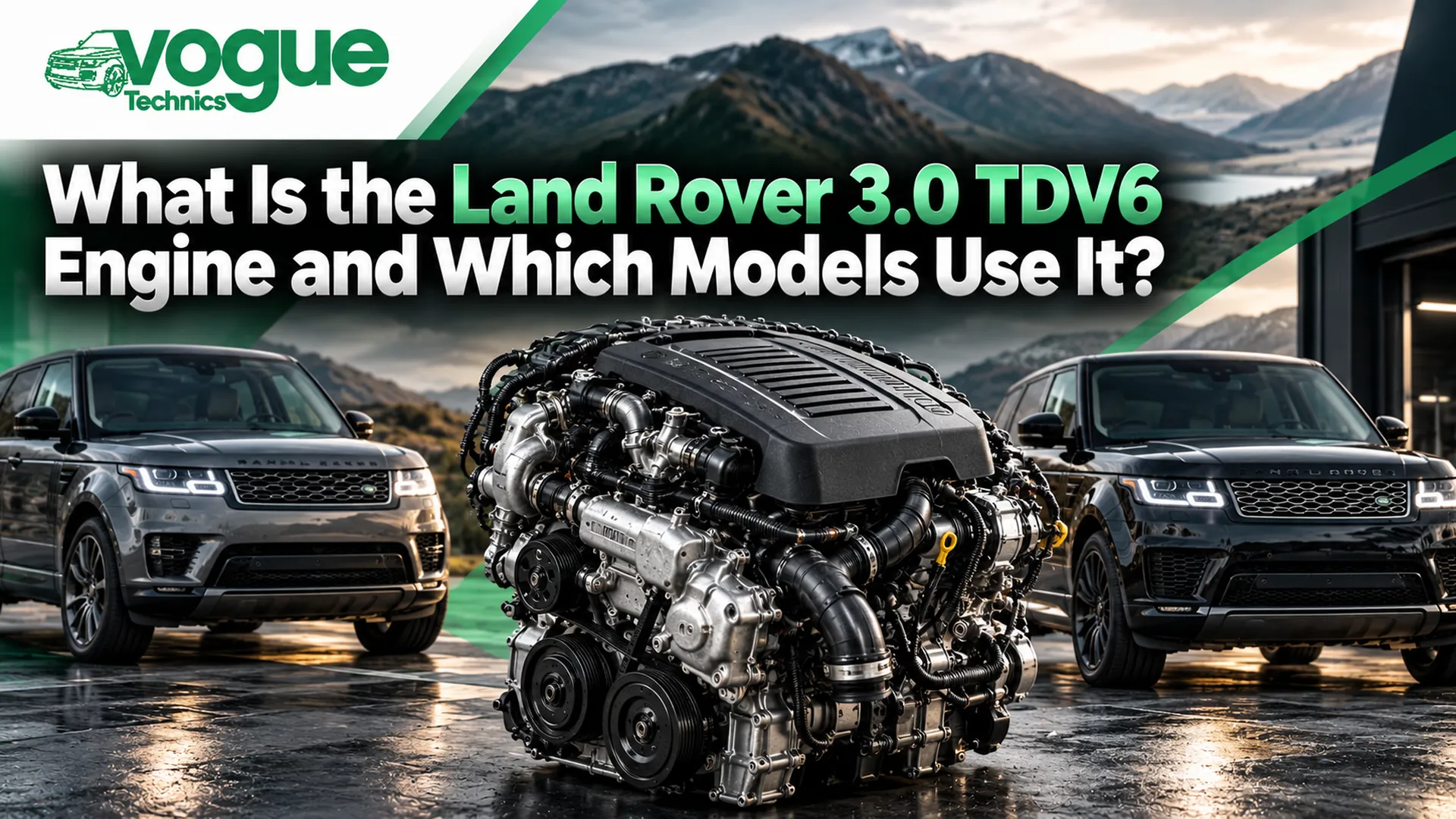
The Land Rover 3.0 TDV6 is a 2,993cc, twin-turbocharged, direct-injection V6 diesel with the engine code 306DT. It grew out of the Ford/PSA "Lion" V6 diesel family, which Land Rover first used as the 2.7 TDV6. Land Rover enlarged it to 3.0 litres, added a sequential twin-turbo setup and a common rail fuel system, and fitted it across the Discovery and Range Rover line-up.
Its appeal is easy to see. It delivers strong low-down torque of around 600 Nm in most applications, tows well, and returns sensible economy for a heavy 4x4. That is why so many are still on the road well past 100,000 miles.
How Do You Tell the 3.0 TDV6 (306DT) Apart from the SDV6?
This is where many owners and even some listings get confused. TDV6 and SDV6 are not two separate engines. They are different tunes and output levels of the same 306DT family, so the engine code alone won't tell you which one is in your vehicle.
Feature | 3.0 TDV6 | 3.0 SDV6 |
| Engine family | 306DT, Lion V6 diesel | 306DT, Lion V6 diesel |
| Capacity | 2,993cc | 2,993cc |
| Layout | 60-degree V6, 24-valve | 60-degree V6, 24-valve |
| Turbocharging | Sequential twin turbo | Sequential twin turbo, higher boost and revised control |
| Power (approx.) | 245 to 258 PS depending on model and year | 292 to 306 PS depending on model and year |
| Torque (approx.) | Around 600 Nm | Around 600 Nm or slightly higher |
| Timing system | Rubber timing belt | Rubber timing belt |
| Typical use | Discovery 4, Range Rover, Range Rover Sport | Higher-spec Range Rover, Range Rover Sport, Discovery 5 |
Both share the same bottom-end design, which is why crankshaft and bearing problems appear on both. Before you order any replacement, confirm your engine number and vehicle specification so the correct unit is matched to your VIN.
Which Discovery and Range Rover Models Have the 306DT Engine?
The 3.0 diesel V6 has been fitted to a wide group of vehicles, including:
- Discovery 4 (L319): the most common home for the 3.0 TDV6.
- Discovery 5 (L462): the later Td6 and SDV6 versions of the same V6 diesel family.
- Range Rover (L322 and L405): from the later L322 years onward, then carried into the L405.
- Range Rover Sport (L320 and L494): both generations offered it as TDV6 and SDV6.
- Range Rover Velar (L560): early V6 diesel versions drew on the same engine lineage.
Power outputs and fitment vary by year and market, so always check your registration details before ordering parts or an engine.
What Causes Land Rover 3.0 TDV6 Engine Failure?
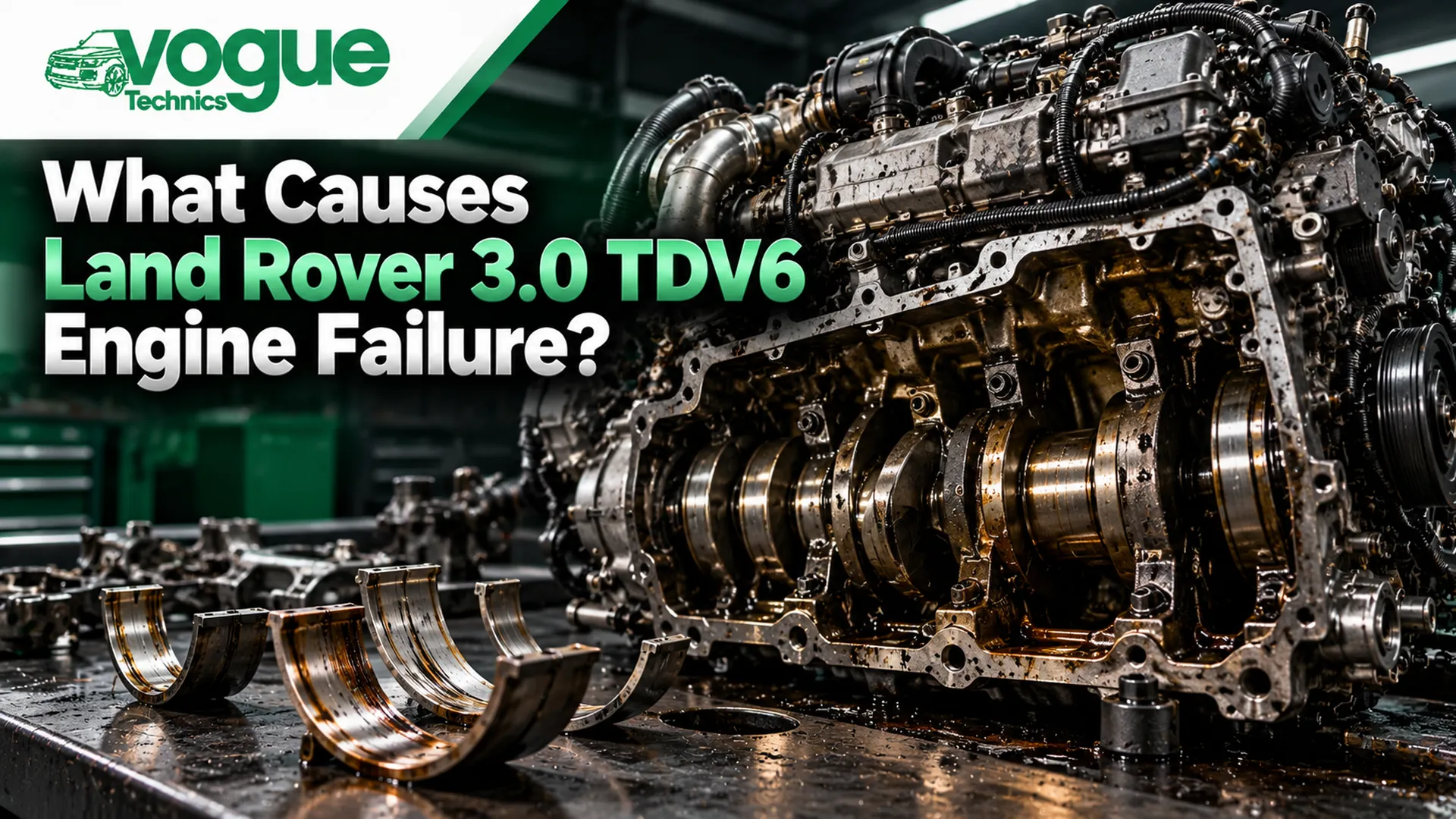
Most serious 3.0 TDV6 failures follow the same pattern: oil supply problem, bearing wear, crankshaft damage, then engine seizure. Once metal starts wearing metal in the bottom end, the damage usually spreads quickly. A bearing that is slightly worn today can become a spun bearing, a damaged crankshaft, or a broken connecting rod within a short time.
Other faults exist, such as injectors, turbochargers, EGR valves and DPFs. These are usually repairable without replacing the engine. The crankshaft and bearing problem is the one that most often ends in a rebuild or replacement.
How Do You Spot Crankshaft and Bearing Failure Early?
The warning signs can be subtle at first. Watch for:
- Low oil pressure warnings, especially at idle or when the engine is hot.
- A rhythmic knock from the bottom end that rises with engine speed.
- Metallic glitter in the oil or filter when you service the vehicle.
- Loss of power or rough running that doesn't clear with a scan and basic checks.
- Unusual vibration at idle or on light throttle.
If you notice any of these, stop driving the vehicle. Continuing to drive on a failing bottom end can turn a repairable situation into a complete write-off for the engine. Have it recovered to a specialist, who can drop the sump, inspect the bearings, and check for debris in the oil system.
A real-world scenario: an owner brings in a Discovery 4 that "just started rattling" on the motorway. The oil looks fine on the dipstick, but the filter shows fine metal particles. Caught at that stage, the work is often more manageable than when the same engine is driven for another few hundred miles and the crankshaft fractures.
Can Oil, Timing Belt, Turbo and Injector Faults Be Prevented?
Much of the preventable damage comes down to maintenance discipline:
- Oil changes: use the oil specification in your handbook and don't stretch intervals. Many specialists recommend changing oil more often than the longest service schedule suggests, particularly for vehicles that tow or make short trips.
- Timing belt: it is a rubber belt, so it ages with time as well as mileage. Replace the belt, tensioner and pulleys together, and follow the manufacturer schedule or shorten it if the service history is unclear.
- Turbocharger and boost system: check intercooler hoses, the turbo actuator and the intake manifold for leaks or sticking components. A boost leak shows up as lazy acceleration and warning lights.
- Injectors, EGR and DPF: fuel injector faults, a clogged EGR valve or a blocked diesel particulate filter cause rough running and fault codes, but they are not the same problem as bearing failure. A proper diagnostic scan separates the two.
If you are buying a used Discovery or Range Rover, always ask for documented oil change history. It tells you more about the engine's future than the odometer does.
Should You Rebuild or Replace a Land Rover 3.0 TDV6 Engine?
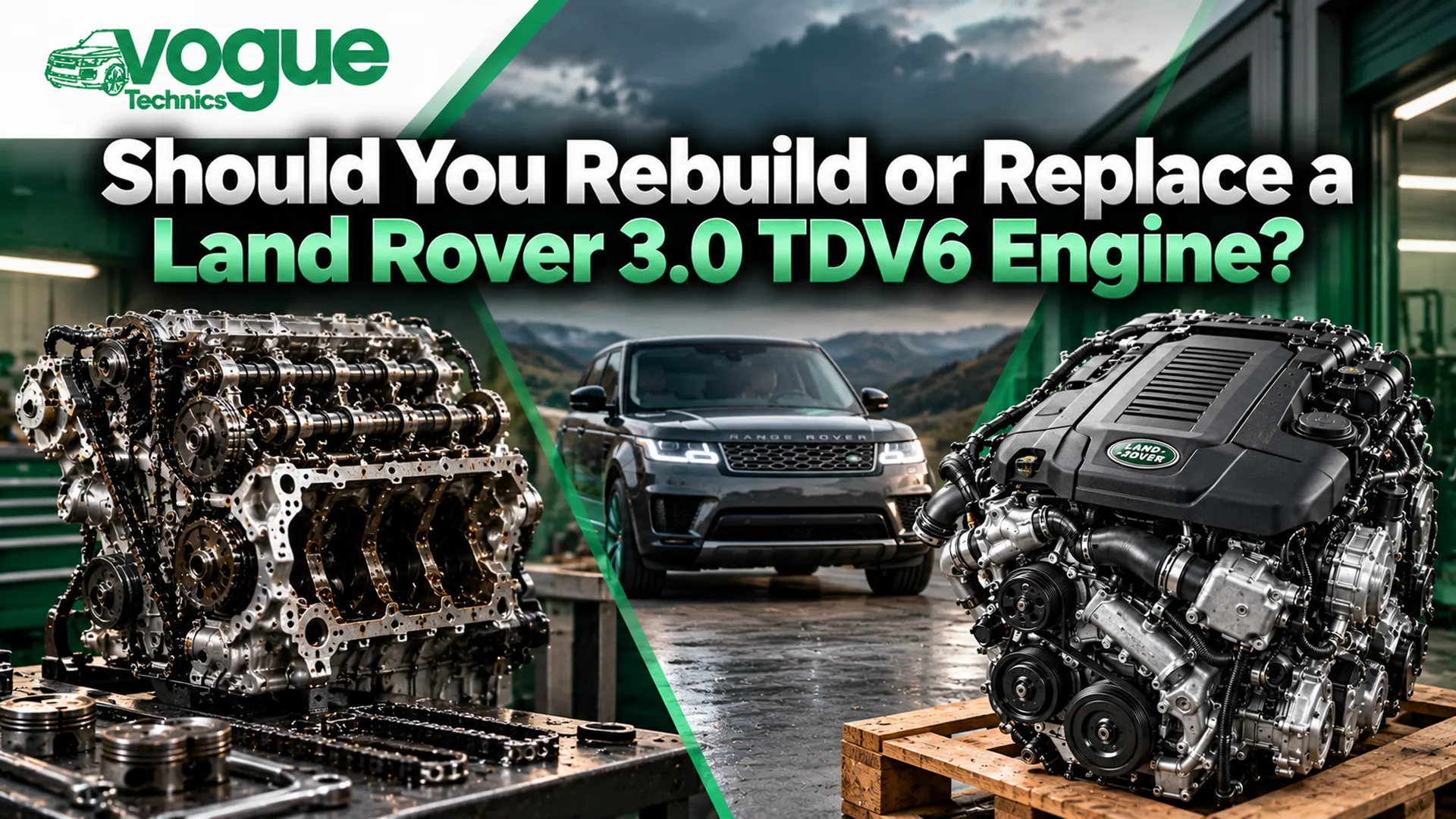
If the crankshaft or bearings have failed, you generally have three routes: rebuild your existing engine, fit a reconditioned replacement, or fit a used engine. The best choice depends on the extent of the damage, your budget, how long you plan to keep the vehicle, and the warranty you want.
Option | Typical cost | Downtime | Warranty | Best for |
| Rebuild your own engine | Mid to high, depends on damage | Longer, as parts are sourced and machined | Depends on workshop | Low-damage cases or special requirements |
| Reconditioned replacement (exchange) | Mid to high, usually good value | Often quicker | Usually the strongest | Owners keeping the vehicle long-term |
| Used engine | Lowest upfront | Short | Limited or none | Short-term fixes or lower-value vehicles |
Used engines are a gamble. You inherit someone else's maintenance history, and if the donor engine came from a vehicle with a bearing problem, you could end up repeating the failure.
How Much Does a 3.0 TDV6 Engine Replacement or Rebuild Cost in the UK?
There isn't one fixed price, because it depends on several factors:
- Whether the crankshaft, block, heads or ancillaries are damaged
- The model and year of the vehicle
- Whether you choose rebuild, reconditioned, or used
- Fitting time, which differs between a Discovery 4 and a Range Rover L405
- Extra parts that should be replaced while the engine is out, such as the timing belt kit, oil pump, turbo and hoses
The practical advice is to avoid the cheapest quote without understanding what it includes. A low price that leaves out the timing kit, oil system cleaning or a decent warranty often costs more in the long run. A properly done job means flushing the oil system, replacing worn ancillaries, and checking that the cause of failure is addressed, not just the symptoms.
For a real quote, we need your registration, mileage and a brief description of the fault.
Why Choose Vogue Technics for 306DT Supply and Fit in Grays, Essex?
At voguetechnics.co.uk, we focus on Land Rover and Range Rover engines, which means we know how the 306DT behaves, where it fails, and what to check before a replacement goes in. Customers choose us because:
- We supply and fit, so one team handles the engine, the installation and the follow-up.
- Engines are tested before supply, with the checks explained to you.
- We replace the supporting parts that commonly cause repeat failures.
- You get a clear written quote and warranty terms before work starts. [Insert warranty length and conditions]
- We are based in Grays, Essex, with easy access from London, Kent, Suffolk and the rest of the South East.
How Do I Get a Quote for a 3.0 TDV6 Engine Replacement?
Getting a quote takes a few minutes:
- Send your registration number, so we can confirm the exact engine and specification.
- Tell us the symptoms, mileage and whether the vehicle has been driven since the fault.
- Receive a clear quote covering the engine, fitting and warranty.
- Book your slot, and we will arrange recovery if needed.
Frequently Asked Questions About the Land Rover 3.0 TDV6 Engine
Is the Land Rover 3.0 TDV6 a good engine?
Yes, when it is maintained properly. It offers strong torque, good towing ability and reasonable fuel economy. Its main weakness is the bottom end, so oil changes and early attention to warnings matter.
How many miles will a 3.0 TDV6 last?
Many reach well over 100,000 miles, and some go much further. Mileage matters less than service history, oil quality and how early faults were dealt with.
What are the signs of TDV6 crankshaft failure?
Low oil pressure warnings, a deep knocking noise, metal particles in the oil, vibration and power loss are the usual signs.
Does the 3.0 TDV6 have a timing belt or chain?
It has a rubber timing belt. Replace the belt, tensioner and pulleys together, following the manufacturer schedule or sooner if the history is unknown.
What oil does the 3.0 TDV6 use?
Use the oil grade and specification listed in your owner's handbook for your exact model and year. Using the wrong oil can affect the DPF and lubrication.
Is it cheaper to rebuild or replace a TDV6?
It depends on the damage. A rebuild can suit limited damage, while a reconditioned replacement often gives better value, a quicker turnaround and stronger warranty cover when the block or crankshaft is badly damaged.
Can I fit a reconditioned 306DT engine?
Yes. A reconditioned 306DT is a common and sensible solution, provided it matches your vehicle's specification and is fitted with the supporting parts that prevent a repeat failure.
How long does a TDV6 engine replacement take?
It varies by model and parts availability, but a supply-and-fit job is often completed within days rather than weeks once the engine is confirmed.
Final Word
The Land Rover 3.0 TDV6 engine is capable, torquey and worth keeping when it has been looked after. If yours is showing warning signs or has already failed, acting quickly gives you far more options, and a correct diagnosis helps you avoid paying twice.
If you are in Essex or the surrounding area and need a rebuild, reconditioned 306DT or full supply-and-fit, contact voguetechnics.co.uk. Send us your registration and we will give you a clear, honest quote.