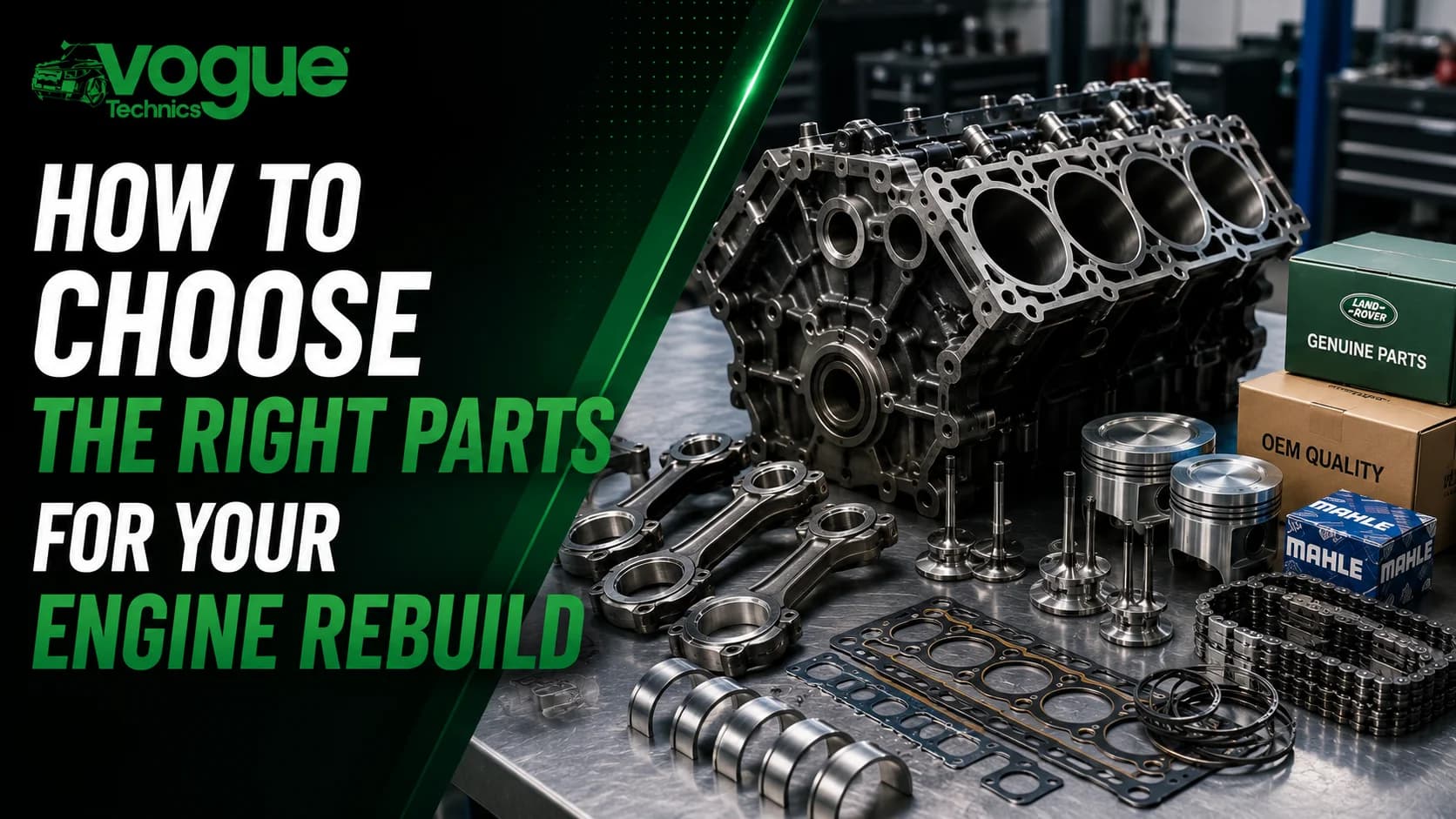
How to Choose the Right Parts for Your Engine Rebuild
Why Parts Quality Decides Whether a Rebuild Lasts
An engine rebuild is only ever as good as the parts that go into it, which is why "which parts" is one of the most important — and most overlooked — decisions in the whole job. Quality pistons, rings, bearings, gaskets and seals machined and fitted to the correct tolerances are what let a rebuilt engine perform and last like a factory unit. Cut-price components might shave the invoice today, but they're the reason some "rebuilds" fail within a year, turning a saving into a double bill. On an engine, the cheapest parts are almost never the cheapest outcome.
The OEM-versus-quality-aftermarket question matters too, and the honest answer is that it depends on the component and the engine — some parts should be OEM, others have excellent aftermarket equivalents, and knowing which is which is exactly the expertise a specialist brings. The wrong choice isn't just about longevity; the wrong-spec part can cause running faults and fail an MOT. This is why we select rebuild parts deliberately for each engine rather than fitting whatever's cheapest, and back the finished work with warranty. If you're weighing up a rebuild, talk to us about the parts as much as the price — it's where the real quality lives.
Thinking about an engine rebuild? The parts you choose can make or break your car's performance.
An engine rebuild is one of the most important decisions you’ll make for your vehicle. Whether your car has clocked high mileage, suffered mechanical failure, or simply needs a performance refresh, a rebuild can give it a new lease of life. But the real secret to a successful rebuild lies in one thing, it is choosing the right parts.
At VOGUE TECHNICS, we’ve rebuilt hundreds of engines for BMW, Range rover, and premium vehicles across the UK. Our customers often ask: “Which parts should I choose for my engine rebuild, and how do I know what’s best for my car?”
This guide will break down the key components, the difference between OEM and aftermarket parts, cost considerations, and except tips to ensure your car engine rebuild performs as well as or even better than the original.
1. Understanding What an Engine Rebuild Involves
Before choosing parts, it’s important to understand what engine rebuilding actually means. It is a comprehensive process where your car’s engine is removed, dismantled, cleaned, and rebuilt using new or reconditioned components. It’s designed to restore full performance, efficiency, and reliability. When engine rebuild is done by a specialist the goal is to deliver a vehicle that feels factory fresh, smooth, powerful and dependable.
2. Why Choosing the Right Parts Matters
Every component inside your engine works in harmony. If one part fails or doesn’t meet specifications, it can compromise the entire rebuild. The quality of parts directly affects the engine performance, power output, fuel efficiency, lifespan, overall long term reliability and rebuild cost. Low quality parts might save money initially but can lead to premature wear or even complete engine failure. That’s why sourcing the correct, high quality components is non-negotiable.
3. OEM vs Aftermarket Parts, What’s the Difference?
When rebuilding an engine, you’ll often need to choose between OEM (original equipment manufacturer) parts and aftermarket parts.
The OEM parts are made by the same manufacturer that produced your car’s original components. Its pros are that they fit perfectly, are compatible, provide reliable performance, and have a longer lifespan. However they are high in price and provide limited flexibility for performance upgrades.
The aftermarket components are made by third part manufacturers. They are cheap, provide a wide variety for performance tuning, and may provide major upgrades in material and design. However their quality varies between brands, and may require expert fitting or tuning.
In here, we recommend OEM or premium grade aftermarket depending on your goals.
4. The Core Components You’ll Need For An Engine Rebuild
Here are the most critical parts involved in most engine rebuilds. Here are the most critical parts involved in most engine rebuilds, and how to choose wisely.
· Piston and Piston rings
These are the hearts of your engine, sealing the combustion chamber and driving power. Always opt for forged or high quality aluminium pistons designed for your specific engine model.
· Bearings
Crankshaft and connecting rod bearings must withstand immense friction and pressure. High grade tri-metal bearings are recommended for durability.
· Gaskets and Seals
Gaskets that prevent oil and coolant leaks always choose OEM or premium grade gasket sets, cheap versions often fail under heat and pressure.
· Timing chains or Belts
Incorrect or low quality timing parts can cause catastrophic engine damage. Replacing the full timing kit (chain/belt, tensioner, guides) during rebuild is essential.
· Valves and Valve Seats
If your engine has high mileage or overheating history, inspect and replace worn valves or seats to ensure efficient combustion and compression.
· Oil pump and water pump
These are crucial for lubrication and cooling. New pumps should always be installed during an engine rebuilding service, never reuse old ones.
· Sensors and Ancillaries
Modern engines rely on sensors for air, fuel, and temperature management. Always test and replace faulty ones to avoid performance issues post rebuild.
5. Balancing Performance And Budget
Many customers ask: ‘what will my engine rebuild cost?’
The answer is the rebuild cost varies depending on your car’s make, model, and parts selection. A standard rebuild using OEM parts may typically cost £2000 - £4000. A performance rebuild with upgraded internals may cost around £4000 - £7000 or more. While it’s tempting to cut costs, remember using inferior parts often leads to double spending in the long run.
Here at VOGUE TECHNICS, we help customers find the perfect balance combining affordability with uncompromising reliability.
6. Performance Upgrade When And Why To Consider Them
During engine rebuild, you have a unique opportunity to enhance performance. Some popular upgrades include forged pistons and connecting rods for high horsepower, upgraded camshaft for improved timing, ported cylinder for better airflow, high performance gasket and seals for racing or heavy duty applications. These improvements can deliver noticeable engine performance gains, but they must be matched with compatible parts and precise tuning.
7. Importance of Machining and Precision Fitting
Even the best components won’t perform if the machining and assembly aren’t perfect. That’s why professionals and specialists invest in precision equipment. By using advanced CNC and honing machines it can restore exact tolerances on engine blocks, crankshafts and beads. This ensures every new part fits perfectly, eliminating vibration, oil loss, and power inefficiency.
8. Verifying Compatibility and Authenticity
Each engine has unique part specifications. Before buying, always verify the part numbers match your engine code, the components you are going to install meet manufacturer specifications and authentic sellers.
We here source directly from trusted suppliers and approved distributors. This guarantees genuine, high performance results every time.
9. The Role of an Engine Rebuild Specialist
An engine rebuild is not a DIY project, it’s a precise craft requiring expertise, tools, and experiences. Choosing the right specialist ensures your car gets what it deserves.
10. Post Rebuild and Quality Assurance
Once the rebuild is complete, thorough testing is vital. We perform compression and leak down tests, oil pressure and temperature checks, and road performance evaluations. This ensures your car engine rebuild is running flawlessly before delivery, giving you the confidence that your investment will last for years to come.
Conclusion
Choosing the right parts for your engine rebuild isn’t just about replacing what’s broken. It’s about restoring your car’s heart with great precision, quality and care. At VOGUE TECHNICS, our engine rebuilding service combines expert craftsmanship with premium components and rigorous testing. Whether you’re after reliability, performance, or value, we’ll guide you through every step.
Call at 01375 531355 today to visit our workshop, book an inspection with our specialists, get recommendations about right parts and let’s build a machine that exceeds expectations. Your car deserves a second life.
FAQS
1. How do I know which parts my engine rebuild needs?
Get a full engine inspection. A rebuild specialist will check worn or damaged parts like pistons, bearings, and gaskets before replacement.
2. Are OEM parts better than aftermarket ones?
OEM parts guarantee fit and reliability, while premium aftermarket parts can boost performance. The best choice depends on your goals and budget.
3. Can I mix OEM and aftermarket parts?
Yes, but only if they’re fully compatible. Always get expert advice to ensure everything fits and performs perfectly.
4. How much does an engine rebuild cost?
A standard rebuild costs £2,000–£4,000, while performance upgrades can go £4,000–£7,000+. It depends on your car and part quality.
5. Why choose a specialist over DIY?
Engine rebuilding needs skill, tools, and precision. Professionals guarantee lasting performance and peace of mind.