
Discovery Sport Engine Problems: Common Faults, Repair Costs and Expert Solutions in the UK

A rattle on a cold start. A warning light that appears on the motorway. A garage quote that makes you look twice. If you own a Land Rover Discovery Sport, you have probably searched for discovery sport engine problems at least once, and you are not alone.
The Discovery Sport is a capable, comfortable family SUV, but some of its engines have well-documented weak points. This guide covers which faults to watch for, which model years and engines carry the most risk, and what repair, reconditioning and replacement really cost in the UK. It comes from the team at voguetechnics.co.uk, based in Grays, Essex.
What Are the Most Common Discovery Sport Engine Problems?

Most Land Rover Discovery Sport engine problems fall into a short list: timing chain wear, turbocharger failure, oil leaks, emissions-system blockages and, on some petrol models, oil or fuel dilution. Which one you meet depends mainly on the engine under your bonnet.
Knowing your engine code and mileage is the fastest way to work out what is likely to go wrong. That is why every proper diagnosis starts with the registration number.
Which Discovery Sport 2.0 Ingenium and 2.2 TD4 Diesel Engine Problems Should Owners Watch For?
Diesel is the most common fuel in the Discovery Sport, so most discovery sport diesel engine problems reports concern the 2.2 (SD4/TD4-era) and the 2.0 Ingenium (204DTD). The recurring faults are:
- Timing chain stretch and tensioner wear. On the 2.0 Ingenium the chain sits at the rear of the engine, so even a small job can mean removing the engine or gearbox. That raises labour costs sharply.
- Turbocharger wear or failure. Contaminated or degraded oil, and long gaps between services, shorten turbo life.
- DPF clogging. Short, slow journeys stop the filter from regenerating, which leads to warning lights and limp mode.
- EGR valve blockage. Soot builds up, causing rough running, loss of power and smoke.
- Injector seal leaks. Failed copper seals allow combustion gases past the injector, leaving black deposits and poor running.
- Oil leaks. Common sources are the rocker cover, sump and oil cooler seals.
- Overheating. This is usually down to coolant leaks, a weak water pump or a failing thermostat, and it can turn a small fault into a major one fast.
Owners searching for discovery sport 2.0 engine problems, discovery sport td4 engine problems or discovery sport 2.2 engine problems are almost always describing one of the faults above. Keeping the original names straight helps: the 2.0 diesel was sold as the TD4 before the Ingenium branding took over, and the two names refer to closely related engines.
Is Timing Chain Failure the Biggest Risk, and What Are the Warning Signs?
Yes. Timing chain failure is the most expensive fault to ignore on the Ingenium diesel. A stretched chain can jump a tooth or snap, and the result can be bent valves, damaged pistons and an engine that is beyond a simple repair.
Watch for these warning signs:
- A metallic rattle for a few seconds after a cold start
- An engine management light, often with timing correlation fault codes
- Rough idle, hesitation or sudden loss of power
- Limp mode with no obvious cause
If you hear a rattle, stop driving it and book a diagnosis. Catching a chain early can save you thousands compared with waiting for a failure.
What Petrol Engine Problems Does the Discovery Sport Have?
Discovery sport petrol engine problems are less widely reported than diesel faults, partly because fewer petrol models were sold. The issues that do come up include:
- Oil dilution, where unburnt fuel thins the oil and reduces protection
- Carbon build-up on injectors and intake components
- Misfires, usually from coils, plugs or injectors
- Coolant leaks and overheating on higher-mileage cars
Regular oil changes matter even more on a petrol turbo, and short-trip use makes dilution worse.
Which Discovery Sport Years Are Most Affected by Engine Problems?
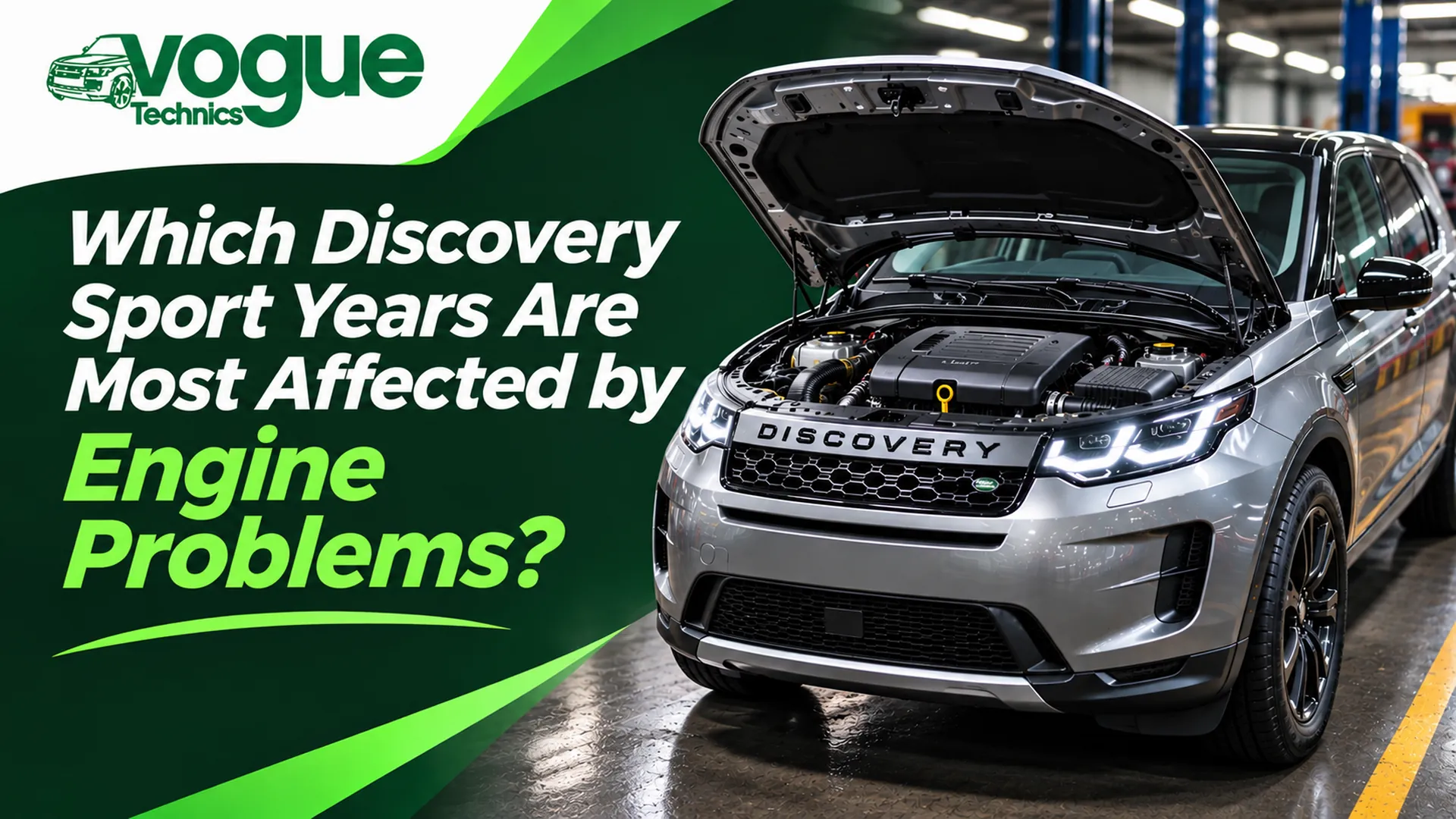
The earlier cars generate the most complaints, simply because they have the most miles and the most history. From 2019 onwards the range changed, and complaints about engine failure became less frequent.
Are 2016 and 2017 Discovery Sport Engines More Likely to Fail Than 2018 to 2022 Models?
In general, yes. Searches for 2016 discovery sport engine problems and 2017 discovery sport engine problems are common because these were early production years for the Ingenium diesel, and they are now old enough for age and mileage to show.
Model Year | Typical Engines | Commonly Reported Issues | Risk Level |
| 2015–2016 | 2.2 diesel, early 2.0 Ingenium | Oil leaks, timing chain wear, turbo and DPF faults | Higher |
| 2017 | 2.0 Ingenium diesel, 2.0 petrol | Timing chain stretch, injector seals, DPF and EGR blockage | Higher |
| 2018 | 2.0 Ingenium diesel and petrol | Chain wear on high-mileage cars, turbo wear, oil dilution | Moderate |
| 2019–2022 | Updated 2.0 diesel and petrol, some mild hybrid | Fewer engine failures; emissions-system and sensor faults more typical | Lower |
Treat this table as a guide rather than a guarantee. A well-serviced 2016 car can outlast a neglected 2020 one. Service history and oil change intervals tell you more than the year alone.
On a 2022 discovery sport engine problems search, you will mostly find software, sensor and emissions faults rather than the serious mechanical failures seen on earlier cars.
When you check a used car, look at:
- Whether oil changes happened at least yearly or every 10,000 miles (shorter is better)
- Any record of timing chain, turbo or injector work
- Cold-start behaviour, which should be quiet and smooth
What Do Owners Say About Discovery Sport Engine Problems on Forums?
Read a discovery sport engine problems forum and the same themes keep appearing: timing chain noise, early turbo failure, limp mode and costly quotes from main dealers. Forums are useful for spotting patterns, but they over-represent the unlucky owners, because people with trouble-free cars rarely post.
Our professional view is to separate genuine design weaknesses from avoidable ones. Chain wear and injector seal failures are genuine patterns. Clogged DPFs and diluted oil are often linked to how the car is driven and maintained. That is good news, because maintenance habits are the part you control.
If a forum post matches your symptoms, treat it as a reason to get a proper diagnosis, not as a diagnosis in itself.
Repair or Replace: What Does Discovery Sport Engine Replacement Cost in the UK?

The Land Rover Discovery Sport engine replacement cost varies widely, because it depends on the engine code, the condition of the car and whether you choose a repair, a reconditioned unit or a replacement engine.
How Much Does a Discovery Sport Engine Repair, Rebuild or Replacement Cost?
The ranges below are indicative UK figures to help you plan. Exact prices depend on your registration, engine type and what else needs doing.
Option | What It Involves | Indicative Cost | Best For |
| Targeted repair | Fixing one fault, such as a turbo, injector seals, EGR or an oil leak | Roughly £300 – £2,500 | Isolated faults on a healthy engine |
| Timing chain repair | Chain, tensioners and guides, often with engine or gearbox removal | Roughly £1,500 – £3,500+ | Early chain wear caught before damage |
| Reconditioned engine, fitted | Rebuilt engine to specification, normally with a warranty | Roughly £3,500 – £6,500+ | Cars worth keeping long term |
| Used engine, fitted | Second-hand unit with limited history | Lower upfront cost | Budget fixes, with more risk |
Do not buy on price alone. Labour on this engine can account for a large share of the bill, so a cheap engine fitted badly costs more in the end.
Is a Reconditioned Engine Better Than a Used One, and How Do You Get a Quote From Voguetechnics?
For most owners, a reconditioned engine is the better choice. The difference comes down to what you actually know about the unit:
- Reconditioned engines are stripped, inspected, rebuilt with new components where needed and tested. They usually come with a warranty.
- Used engines are removed from donor vehicles. Their mileage and history are often uncertain, so the risk is higher.
When you compare quotes, check what the warranty covers, whether fitting is included, and whether the supplier asks for your registration, which any serious supplier will.
At voguetechnics.co.uk, our team in Grays, Essex can advise whether your engine is worth repairing or whether replacement makes more sense. Send us your registration and a description of the symptoms, and we will give you a clear, no-pressure quote.
Frequently Asked Questions
What are the most common Discovery Sport engine problems?
Timing chain wear, turbocharger failure, DPF and EGR blockages, injector seal leaks and oil leaks. Diesel models see these most often.
Which Discovery Sport year should I avoid?
Early cars, especially 2015 to 2017, show more engine complaints. A full service history matters more than the year, so judge each car on its records.
Is the 2.0 Ingenium diesel reliable?
It can be, when it is serviced on time with the correct oil. Chain stretch and turbo wear are its main weak points, and the rear-mounted chain makes repairs labour-heavy.
Can I keep driving with a timing chain rattle?
It is not advisable. A rattle can mean the chain is stretched, and continued driving risks serious engine damage.
How much does a Discovery Sport engine replacement cost?
Typically several thousand pounds, depending on the engine and whether it is reconditioned or used. A written quote based on your registration is the only reliable figure.
Are Discovery Sport petrol engines more reliable than diesel?
Fewer widespread failures are reported on petrol, but oil dilution and carbon build-up can still affect them, so regular servicing remains essential.
Does a reconditioned engine come with a warranty?
From a reputable supplier, yes. Always ask for the warranty terms in writing before you commit.
Conclusion: Act Early and Protect Your Discovery Sport
Most discovery sport engine problems give warning before they become expensive. A cold-start rattle, a flashing warning light or a sudden drop in power are all signals worth acting on quickly. Regular oil changes, longer drives to clear the DPF and a prompt diagnosis protect both your engine and your wallet.
If you are facing a fault, a worrying quote or a decision between repair and replacement, speak to the team at voguetechnics.co.uk in Grays, Essex. Enter your registration, describe the symptoms, and we will tell you plainly what your Discovery Sport needs.