BMW 520d Engine: Codes, Common Problems and UK Replacement Options (Supply & Fit)
Your 520d is struggling. It may be rattling on a cold start, dropping into limp mode on the motorway, or sitting on the drive with a quote for a new engine that costs more than the car is worth.
At that point you need straight answers: which engine you have, what has actually gone wrong, and whether it is cheaper to repair, rebuild or replace.
This guide covers all three. It explains how to identify your BMW 520d engine by code, which faults to watch for, and what a replacement really involves in the UK. Vogue Technics, based in Grays, Essex, supplies and fits reconditioned and used replacement engines nationwide. If you already know what you need, enter your registration at the top of the page for a free, no-obligation quote.
Which Engine Does a BMW 520d Have? (M47, N47 and B47 by Model and Year)
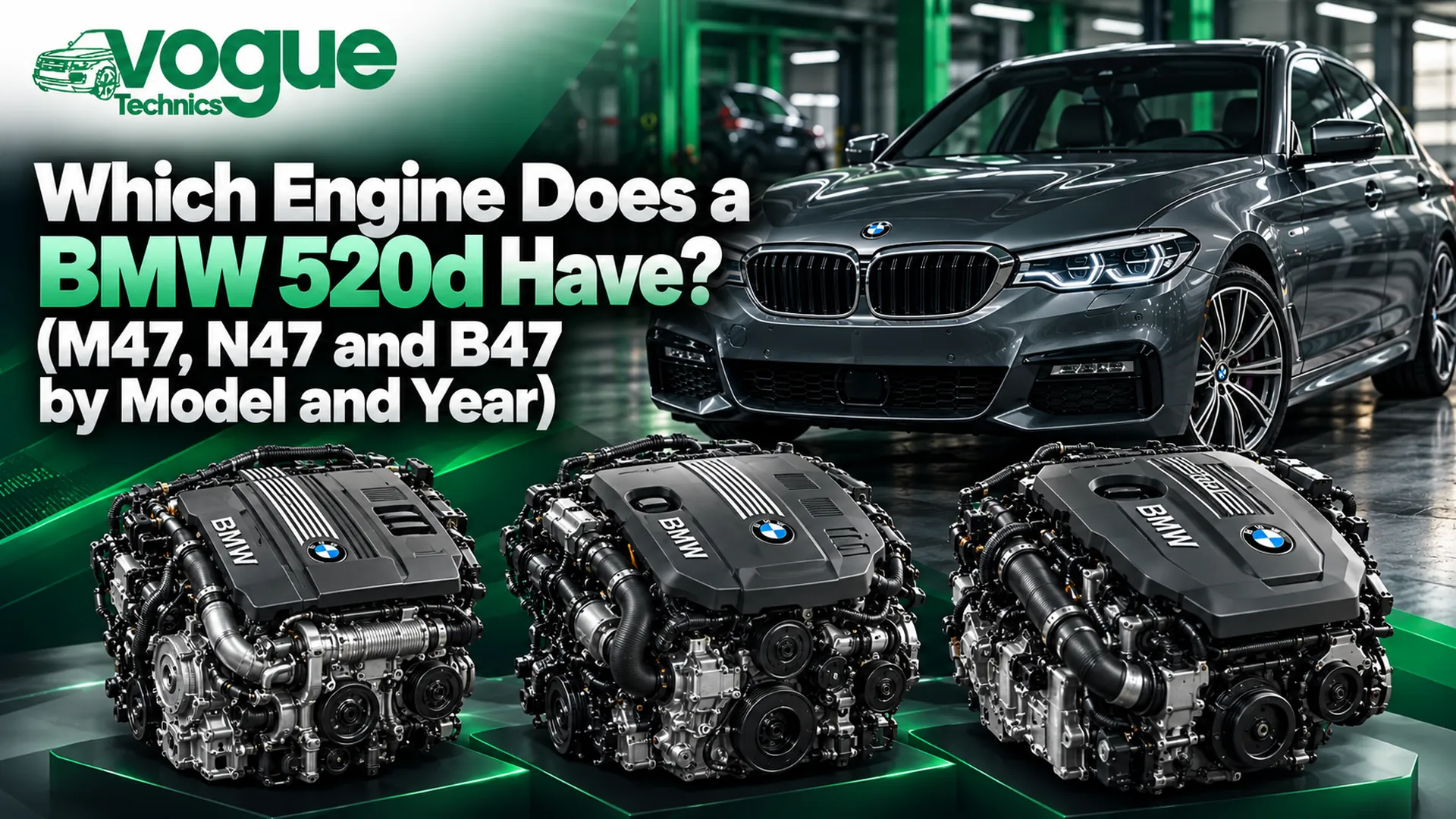
The BMW 520d is a 2.0 litre, four-cylinder turbo diesel (1,995 cc), but three different engine families have powered it over the years. Fitting the wrong one is one of the costliest mistakes in an engine swap, so the code matters more than the badge on the boot.
The older M47 was used in early E60 and E61 models. The N47 took over and powered most F10 and F11 cars. The newer B47 arrived with later F10/F11 facelift cars and runs through the G30 and G31 generations.
BMW 520d Engine Code by Generation (E60, F10, G30)
Use this table as a starting point. Production dates overlap between facelifts, so always confirm against your engine number before ordering.
Generation | Body styles | Typical engine code | Approx. output |
| E60 / E61 | Saloon / Touring | M47TU2 (204D4), later N47D20 | Roughly 163 to 177 PS |
| F10 / F11 | Saloon / Touring | N47D20 (later cars B47D20) | About 184 PS / 380 Nm (N47) |
| G30 / G31 | Saloon / Touring | B47D20 | About 190 PS / 400 Nm |
Output varies by year and tune. Cars with xDrive use the same engine families, but the drivetrain differs, which can affect compatibility.
Where to find your engine code:
- The engine number is stamped on the block, usually on the crankcase near the gearbox join.
- Your V5C and service history sometimes list it.
- Your registration lets us check it for you. That is the safest route, because the wrong code means the wrong ECU, loom and ancillaries.
Internal link opportunity: link "engine number" to a dedicated "How to Find Your BMW Engine Number" guide.
N47 vs B47: Which 520d Engine Is More Reliable?
The B47 is generally the more dependable engine, mainly because it avoids the N47's best-known weakness: the timing chain.
The N47 is a capable engine with strong low-end torque and sensible fuel economy. Its chain sits at the rear of the engine, though, so a failure often means a major strip-down. The B47 moved to a more modular design with a front-mounted chain and a refined TwinPower Turbo setup. It is cleaner, more efficient and quieter, and it has a better record at high mileage.
N47 | B47 | |
| Typical output | About 184 PS / 380 Nm | About 190 PS / 400 Nm |
| Timing chain position | Rear of engine | Front of engine |
| Main concern | Chain stretch and failure | Fewer widespread faults |
| Used purchase risk | Higher on high-mileage cars | Lower |
| Replacement cost | Generally lower | Generally higher |
That does not make every N47 a bad buy. A well-serviced one with regular oil changes can do very high mileage. It does mean you should inspect the chain history before buying a car or an engine.
Common BMW 520d Engine Problems and Signs of Failure
Most 520d engines do not fail without warning. They give you signs first, and acting early often decides whether you need a repair or a full replacement.
Does the BMW 520d Have Timing Chain Problems?
Yes, the N47 engine is known for them. The B47 is far less affected. The BMW 520d uses a timing chain, not a belt, which is meant to last the life of the engine. On the N47 it can stretch or fail early, especially where oil changes were stretched to the long-service intervals.
Watch for these signs:
- A rattle or chain-slap noise on cold starts
- Limp mode or a loss of power
- Engine management or timing-related fault codes
- Long cranking or a no-start
If you hear a rattle, stop driving the car and have it diagnosed. A chain that jumps can cause valve and piston damage, which turns a repair into a replacement.
In practice, it is common for a car to arrive with "a bit of a noise" that the owner has ignored for weeks. By then the repair cost has often doubled. Early diagnosis is the cheapest decision you will make.
What Else Causes BMW 520d Engine Failure? (EGR, DPF, Turbo, Oil Loss)
Not every fault means a dead engine. Many 520d complaints come from the emissions and fuel systems, and they can be fixed without replacing the engine. Here is how symptoms usually map to causes:
- Loss of power or limp mode: blocked DPF, failing turbo or faulty boost control
- Black or blue smoke: injector problems, turbo seal wear or oil burning
- Poor MPG: clogged EGR valve, injector wear or a regeneration problem
- Overheating: thermostat failure, coolant loss or EGR cooler issues
- Oil use or leaks: gaskets, seals and the oil filter housing
- Won't start: glow plugs, a fuel system fault, or a severe mechanical failure
A diagnostic scan should come first. It can separate a few hundred pounds of repair from a few thousand. If your car keeps returning with the same symptoms, or the oil is contaminated with metal or coolant, the engine itself is often the problem.
Not sure which category your car falls into? Send us your registration and symptoms for a free assessment.
BMW 520d Engine Repair, Rebuild or Replacement: Which Is Right for You?
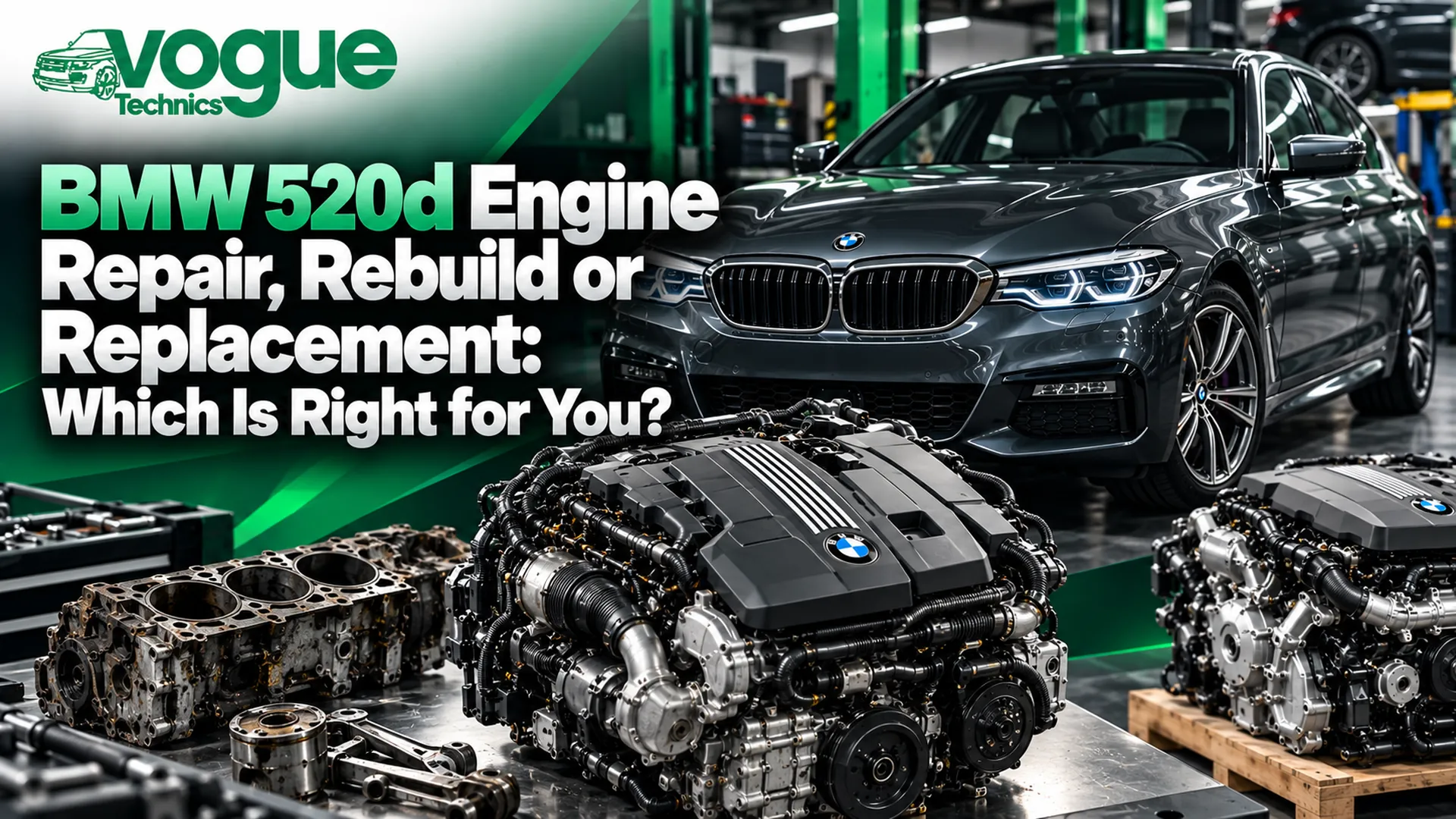
Once the fault is confirmed, you have three routes. The right one depends on the damage, your mileage and what the car is worth to you.
Option | Best when | Main advantage | Main drawback |
| Repair | Fault is isolated (turbo, injectors, EGR, DPF) | Lowest cost | Won't help if the block or internals are damaged |
| Rebuild | Engine is repairable but worn internally | Keeps your original unit | Labour-heavy, and outcome depends on the damage |
| Replacement | Severe damage or a recurring failure | Fastest, with warranty-backed peace of mind | Higher upfront cost |
For most owners with severe internal damage, replacement is the quicker and more predictable route. A reconditioned or used unit comes tested and ready to fit, while a rebuild adds uncertainty over timescale and cost.
How Much Does a BMW 520d Engine Replacement Cost in the UK?
Expect the cost to vary widely based on engine code, condition, mileage and whether you want supply only or supply and fit. A used engine is typically the cheapest option, a reconditioned engine sits in the middle, and a fully rebuilt or low-mileage unit costs the most.
What moves the price:
- Engine family: B47 units usually cost more than N47 or M47.
- Condition: used, reconditioned or rebuilt.
- Mileage: lower-mileage donor engines cost more.
- Labour: a 520d engine swap is a substantial job, so fitting is a major part of the total.
- Extras: ancillaries, new gaskets, turbo, injectors and a fresh timing chain set if needed.
- Warranty level: longer cover usually means a higher price.
Rather than guess, get a quote based on your registration. That way the price reflects your exact engine, not a generic average. Get a free, no-obligation quote and compare used and reconditioned options side by side.
Is a Reconditioned BMW 520d Engine Worth Buying?
For most owners, yes. A reconditioned engine usually offers the best balance of price, reliability and warranty.
Pros:
- Worn components are inspected, replaced and tested
- Usually costs less than new
- Better assurance than an untested used unit
- Often carries a stronger warranty
Cons:
- Costs more than a basic used engine
- Quality varies between suppliers, so ask what was replaced and tested
A used engine can make sense on an older E60 where the car's value is low, as long as it comes from a known donor with documented mileage. On a newer F10, F11 or G30 that you plan to keep, reconditioned or low-mileage is usually the smarter long-term choice.
Why Buy a BMW 520d Replacement Engine From Voguetechnics.co.uk?
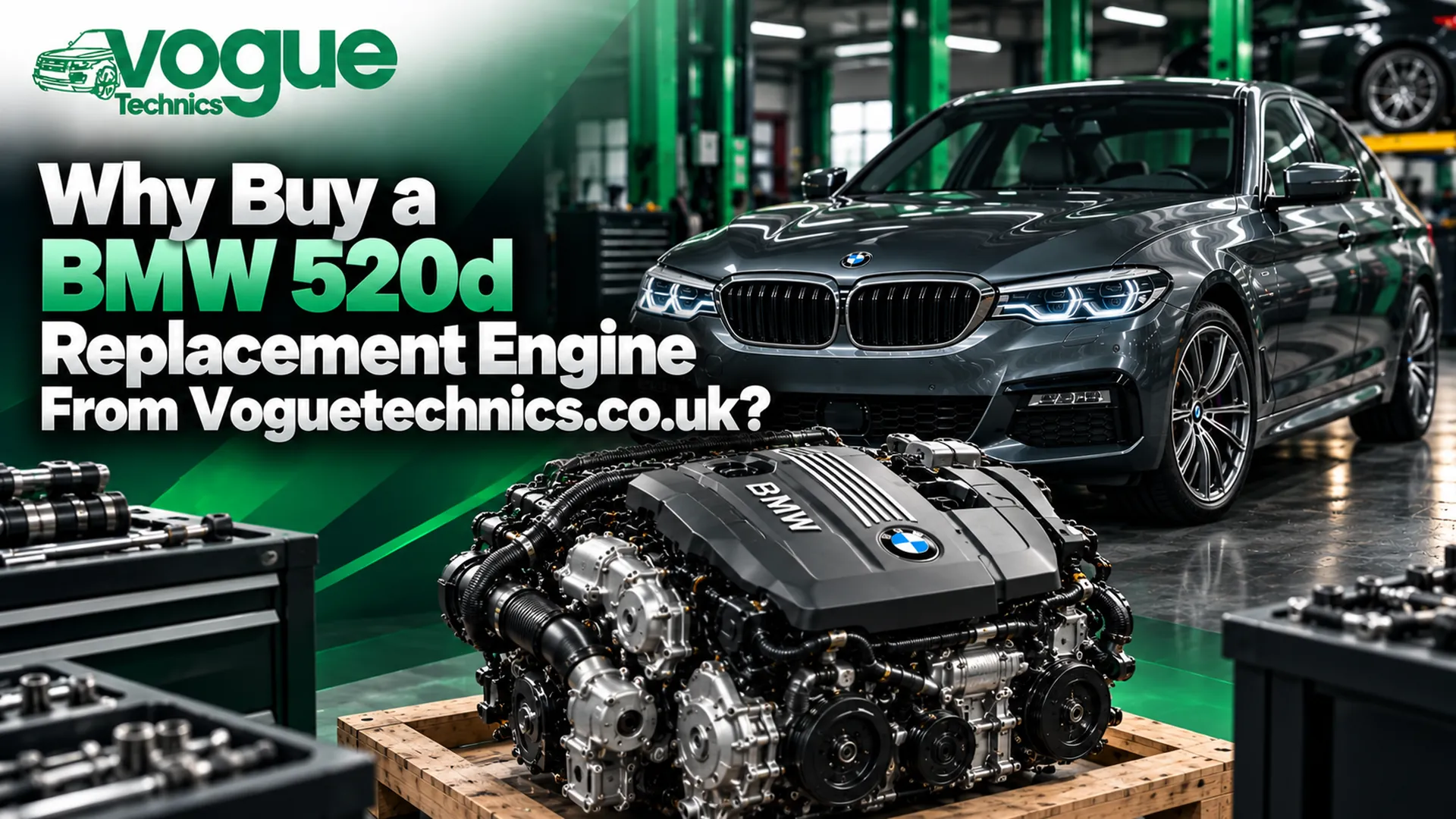
Buying an engine is a high-trust purchase. You are handing over a lot of money for something you cannot easily inspect, so you want to deal with a supplier who can explain what they are selling and stand behind it.
We are based in Grays, Essex, and supply engines for the BMW 520d across the UK, including the F10, F11, G30 and G31 ranges. We match the engine to your exact registration, which cuts out the guesswork and the risk of an incompatible unit. You also get a straight answer when we think a repair will serve you better than a replacement.
How Does Our Supply and Fit Service Work? (Reg Check, Quote, Delivery, Fitting)
- Reg check: you enter your registration, and we confirm the engine code and specification.
- Free quote: you receive clear options for used or reconditioned engines, with supply only or supply and fit.
- Delivery or collection: engines are delivered nationwide, or you can arrange local fitting with us in Grays, Essex.
- Fitting and warranty: the engine is installed and covered by warranty. Confirm the exact terms and length when you receive your quote.
Ready to get your 520d back on the road? Enter your registration above or call us for a free, no-obligation quote.
BMW 520d Engine FAQs
How long does a BMW 520d engine last?
With regular servicing and clean oil, a 520d engine can reach 150,000 to 200,000 miles or more. Neglected N47 units can fail much earlier.
Does a BMW 520d have a timing belt or chain?
A chain. It is designed to last, but N47 chains can stretch or fail early, so listen for rattles.
Which BMW 520d engine should I buy?
The B47 is the safer pick for reliability. A well-maintained N47 with a documented chain history can also be a good choice.
Is a used BMW 520d engine worth buying?
It can be, if the mileage and donor history are verified and a warranty is included. For longer ownership, a reconditioned engine is usually safer.
How long does an engine replacement take?
Often a few days once the correct engine is sourced, depending on the car's condition and any additional parts needed.
Is the BMW 520d engine reliable overall?
Yes, when maintained properly. The most common problems come from neglected servicing, emissions-system blockages and the N47 timing chain.
Final Word
The BMW 520d is a strong, efficient and comfortable car, and the right engine will keep it that way for years. The key is to identify your engine code, diagnose properly, and choose the repair, rebuild or replacement route that fits your car and your budget.
If you are ready to move forward, enter your registration for a free quote on a used or reconditioned BMW 520d engine, supply only or supply and fit, from voguetechnics.co.uk in Grays, Essex.