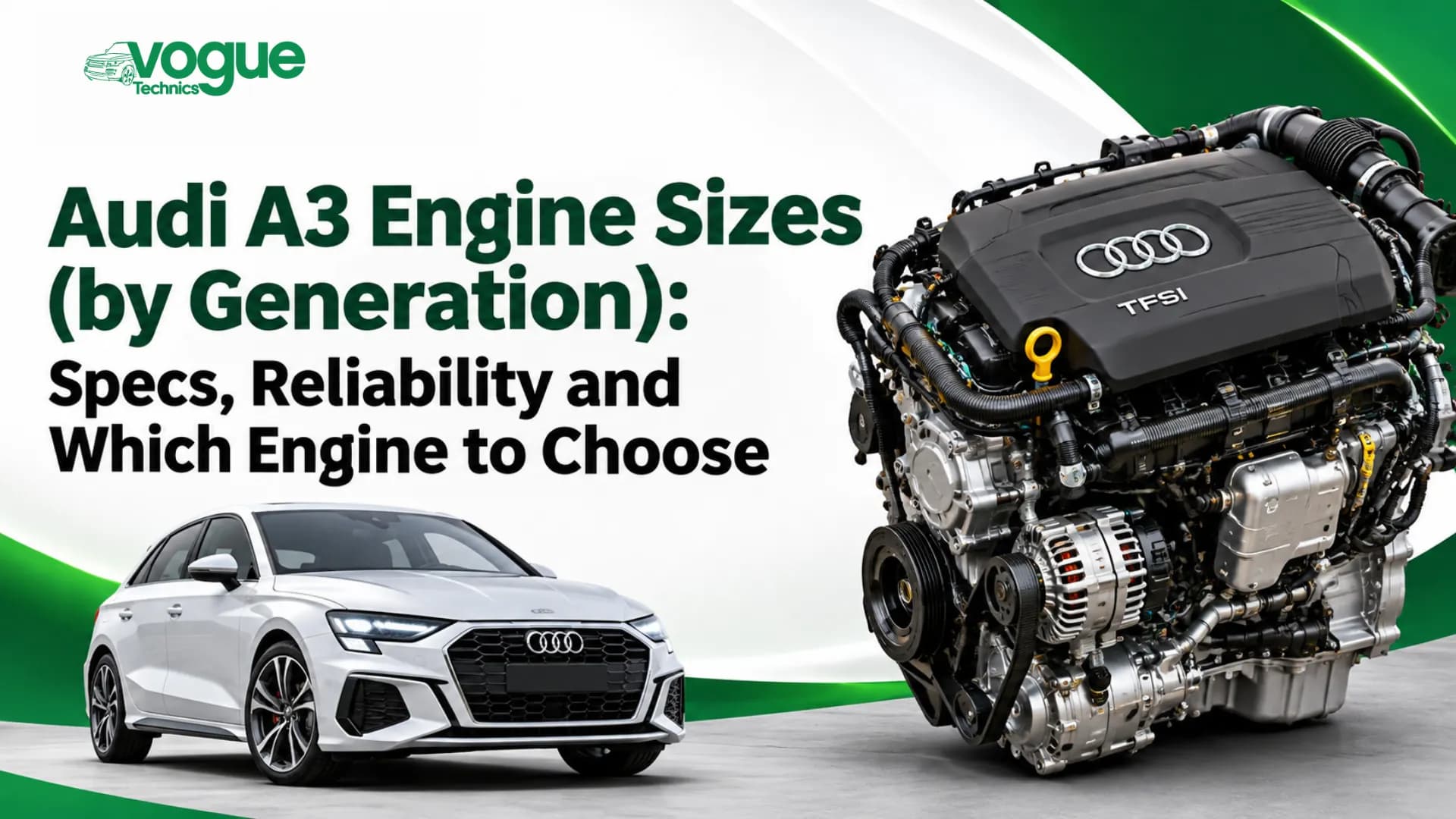
Audi A3 Engine Sizes (by Generation): Specs, Reliability and Which Engine to Choose
You're looking at a used Audi A3 and the listing says "1.4 TFSI" or "2.0 TDI". Another one says "35 TFSI". Which one is actually the better buy? And which model years hide expensive problems?
The Audi A3 has been on sale since 1996, and the engine range has changed a lot since then. The right choice depends on the generation you're buying, the engine code and how the car has been looked after. This guide covers every Audi A3 engine size by generation, which engine is best, which years need caution and how to check a used car before you pay.
What Engine Sizes Are Available for the Audi A3 Across Every Generation?
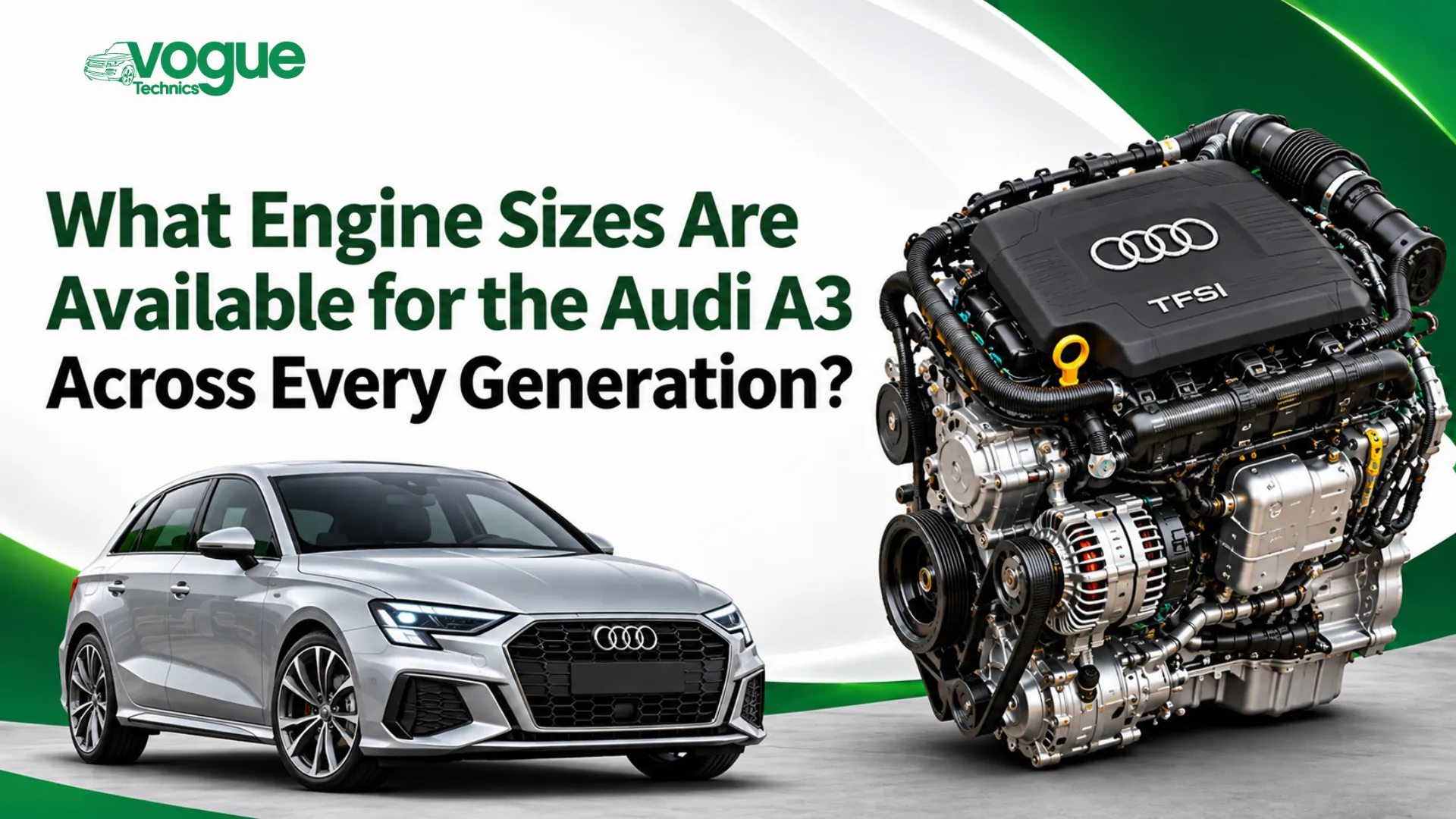
Audi has fitted everything from a 1.0-litre three-cylinder petrol to a 2.5-litre five-cylinder in the RS3. The sizes make more sense once you split the range by generation.
Audi A3 Models by Year: Which Engines Came with the 8L, 8P, 8V and 8Y?
Audi uses internal codes for each generation. You'll see them in adverts, forums and parts catalogues, so it helps to know them:
- 8L is the first generation (1996 to 2003).
- 8P is the second generation (2003 to 2012).
- 8V is the third generation, also called the Audi A3 Mk3 (2012 to 2020).
- 8Y is the fourth generation (2020 to present).
Here is how the Audi A3 engine specs break down by generation. Power figures are approximate and vary by market and model year.
Generation | Years | Petrol engine sizes | Diesel engine sizes | Performance models |
| 8L | 1996-2003 | 1.6, 1.8, 1.8T | 1.9 TDI | S3 1.8T (210-225 PS) |
| 8P | 2003-2012 | 1.2 TFSI, 1.4 TFSI, 1.6, 1.8 TFSI, 2.0 FSI, 2.0 TFSI, 3.2 V6 | 1.6 TDI, 1.9 TDI, 2.0 TDI | S3 2.0 TFSI (265 PS), RS3 2.5 TFSI (340 PS) |
| 8V (Mk3) | 2012-2020 | 1.0 TFSI, 1.2 TFSI, 1.4 TFSI, 1.5 TFSI, 1.8 TFSI, 2.0 TFSI | 1.6 TDI, 2.0 TDI | S3 2.0 TFSI (300-310 PS), RS3 2.5 TFSI (367-400 PS) |
| 8Y | 2020-present | 1.0 TFSI, 1.5 TFSI, 2.0 TFSI | 2.0 TDI | Plug-in hybrid, S3 (310 PS), RS3 (400 PS) |
Some context on the numbers:
- Engine size is the displacement, not the power. A 1.0 TFSI turbo three-cylinder in an 8V or 8Y can match the output of an older, larger 1.6 petrol, because forced induction does the work.
- PS versus HP. Audi quotes metric horsepower (PS). Searches for "Audi A3 HP" usually mean horsepower, and 1 PS is slightly less than 1 bhp. For buying purposes, the difference is small.
- Body styles. The Audi A3 hatchback comes as a three-door and a five-door Sportback. Saloon and cabriolet versions use the same engines.
- The Audi A2 is a different car. It was a small, lightweight supermini sold between 2000 and 2005, positioned below the A3. It shares some Volkswagen Group engine technology but is a separate model. Don't mix up A2 and A3 parts or specs.
If you're buying an Audi A3 8P (the second generation), check whether it is a pre-facelift or post-facelift car. The 2008 facelift brought updated engines and, in some cases, more reliable internals.
What Are the 2021 Audi A3 Engine Sizes and Specs?
Anyone searching 2021 Audi A3 engine sizes by generation is looking at the 8Y, launched in 2020. It sits on the Volkswagen Group's MQB platform, shared with the Golf. The 2021 line-up in the UK looked like this:
- 1.0 TFSI (30 TFSI): 999cc three-cylinder turbo petrol, around 110 PS. It suits city driving and short commutes.
- 1.5 TFSI (35 TFSI): 1,498cc four-cylinder turbo petrol, around 150 PS, with cylinder-on-demand technology that shuts down cylinders under light load. The best all-rounder in the range.
- 2.0 TFSI (40 TFSI): 1,984cc turbo petrol, offered at around 190 PS on selected versions.
- 2.0 TDI (30 TDI and 35 TDI): 1,968cc turbo diesel, in around 116 PS and 150 PS forms.
- Plug-in hybrid (40 TFSI e): a 1.4-litre petrol engine paired with an electric motor, with combined output of around 204 PS.
- S3 and RS3: the 2.0-litre S3 at around 310 PS and the 2.5-litre five-cylinder RS3 at around 400 PS.
Some 8Y petrol versions also use a 48-volt mild-hybrid system. Always confirm the exact specification from the VIN or the engine code on the V5C and under the bonnet.
Which Audi A3 Has the Best Engine, and Which Year Should You Avoid?
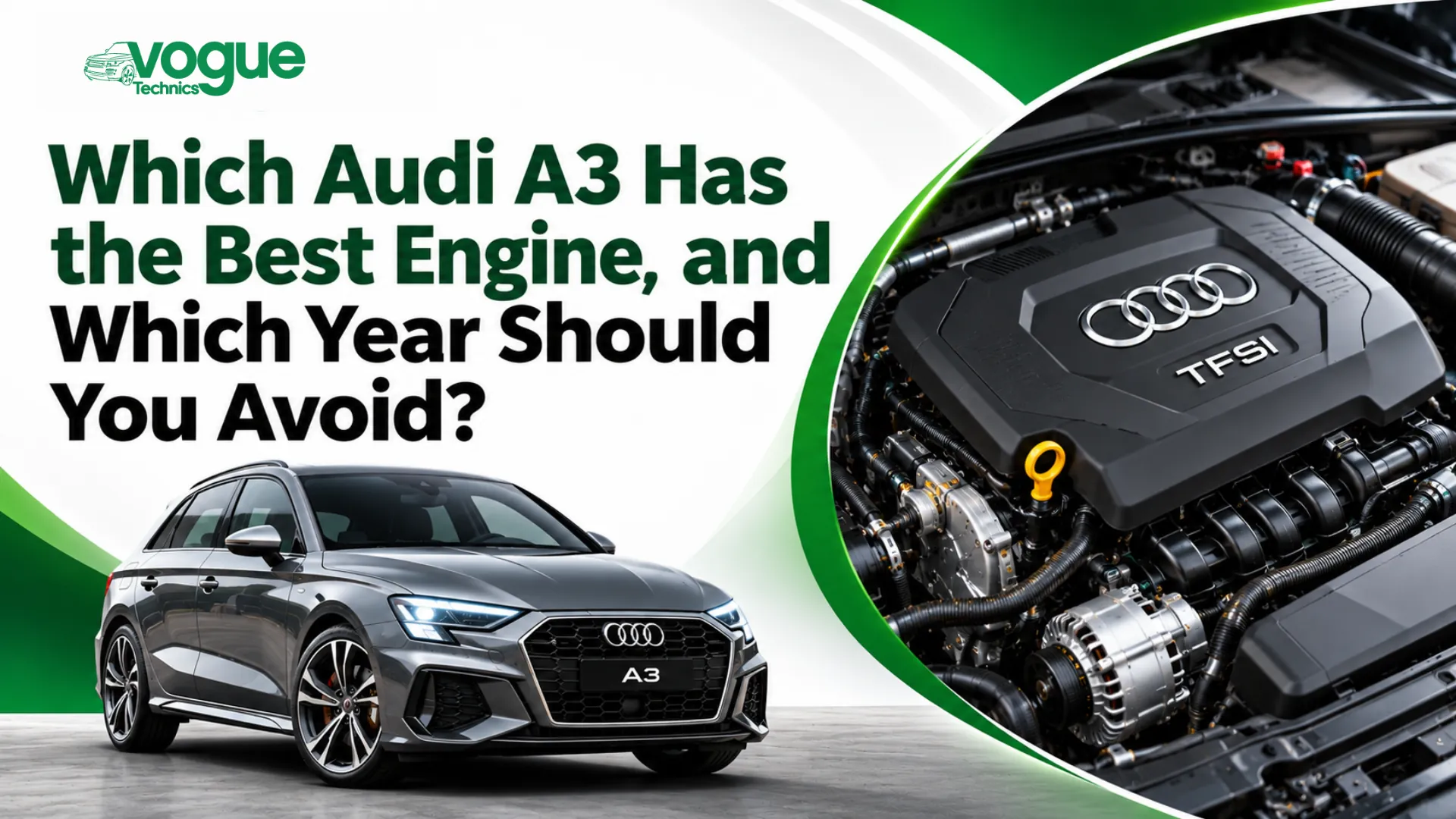
There is no single best engine. There is a best engine for the way you drive. Still, some engines have earned a better reputation than others.
Which Audi A3 Engine Is Best for Reliability, Economy and Performance?
This comparison draws on what we see in workshops and on the engines' wider reputations. Condition and service history matter more than the badge.
Engine | Best for | Strengths | Watch out for |
| 1.4 TFSI (8P/8V) | Mixed driving | Smooth, efficient, good torque | Water pump and thermostat housing leaks, carbon build-up on early direct-injection units |
| 1.5 TFSI (late 8V/8Y) | All-rounders | Refined, economical, strong low-down pull | Newer, so less long-term data |
| 1.6 TDI | Economy | Cheap to run, easy motorway cruising | DPF and EGR trouble on short journeys |
| 2.0 TDI | High mileage | Torque, range, long-distance comfort | Pump and injector issues on some earlier units, DPF clogging |
| 2.0 TFSI (EA888) | Performance | Strong power, tuneable, good sound | Early units can burn oil and suffer timing chain tensioner wear |
| S3 / RS3 | Enthusiasts | Excellent performance, quattro grip | Higher running and repair costs, tuning history |
My honest summary: for a used buyer, the 1.5 TFSI (late 8V and 8Y) is the best balance of economy, refinement and reliability. For heavy motorway use, a well-serviced 2.0 TDI 150 PS is hard to beat. If you want performance without S3 running costs, the 2.0 TFSI 190 PS in the 8V is a strong middle ground.
What Year Audi A3 Should You Stay Away From, and Why?
No single year is a blanket "avoid". Problems follow specific engines and service histories. These are the patterns to watch:
- Early 8P 1.8 TFSI and 2.0 TFSI (around 2005 to 2010): some units suffered oil consumption and timing chain tensioner wear. Ask for oil consumption history and listen for a rattle on cold start.
- 8P 2.0 TDI with high mileage: worn pump-injector components or fuel pumps can lead to costly bills on certain engine codes.
- DSG and S tronic gearboxes (various years): the 7-speed dry-clutch versions in some 8V cars can show jerky low-speed behaviour. Clutch pack and mechatronic faults are the main things to test for.
- Direct-injection petrol engines (any generation): carbon build-up on the intake valves is a known trait. It shows up as rough idle and hesitation, and it is fixable.
- Short-trip diesels: blocked diesel particulate filters and EGR valves are common on cars that never get a proper motorway run.
Services history is the biggest warning light. A car with missed oil changes or no record of DSG servicing is a risk in any year.
Which Year Is the Audi A3 Best to Buy Used?
If you want the best balance of price and reliability, aim for late 8V cars (2016 to 2019). By then, Audi had ironed out many early faults, the 1.5 TFSI and the updated 2.0 TDI were available, and prices have dropped enough to give good value.
For a tighter budget, a post-facelift 8P (2009 to 2012) with a full service history can be a sensible buy, especially in 2.0 TDI form. Just budget for age-related wear.
How Do You Choose the Right Audi A3 Engine for Your Driving Needs?
A good engine on paper can still be the wrong fit for the way you drive. Match the engine to your routine, not just the brochure.
Which Audi A3 Engine Suits City Driving, Motorway Miles or Performance Use?
Three real-world examples show how to match the engine to the driver:
- The city commuter doing 6,000 miles a year in stop-start traffic should look at the 1.0 TFSI or 1.4 TFSI. A diesel would likely suffer DPF problems from the short journeys.
- The motorway driver covering 20,000 miles a year will get the best economy and cruising ease from a 2.0 TDI or 1.6 TDI. Longer runs let the DPF clear itself.
- The enthusiast who wants to enjoy the drive should consider the 2.0 TFSI, S3 or RS3. Budget for higher tyre, brake and insurance costs, and check carefully for tuning modifications.
Servicing costs differ too. Diesels cost more to maintain when DPF or injector faults appear, while turbo petrols tend to need attention to carbon deposits and cooling parts. A well-maintained car in any of these categories will cost less over time than a neglected one.
What Should You Check on a Used Audi A3 Before Buying?
Before you hand over money, run through this checklist:
- Service history: look for regular oil changes, and DSG servicing if it's an automatic. Gaps matter more than a low price.
- Cold start: listen for chain rattle or ticking in the first few seconds. A cold engine reveals problems a warm one hides.
- Gearbox behaviour: on a DSG or S tronic, test low-speed crawling, hill starts and gear changes under both light and hard acceleration.
- Warning lights: any engine management, DPF or oil pressure lights deserve an explanation, not a promise.
- Leaks: check around the water pump, thermostat housing and sump.
- Codes and tuning: a diagnostic scan can reveal stored faults and flag remapped engines.
If you can't tell whether a fault is serious, get the car inspected before buying. A proper pre-purchase check costs far less than a surprise engine bill.
Where Can You Get an Audi A3 Engine Inspected, Serviced or Repaired in Grays, Essex?
If you already own an A3, or you're about to buy one, a knowledgeable workshop saves you money and stress.
How Does Voguetechnics Help Audi A3 Owners with Engine Diagnostics and Repairs?
At Voguetechnics in Grays, Essex, we work on Audi A3 engines across the 8P, 8V and 8Y generations. Here is what that looks like in practice:
- Diagnostics and inspection: we read fault codes, check compression and cooling, and test for the known weak points of your specific engine code.
- Pre-purchase checks: we look over a car you're considering and tell you plainly what we find.
- Servicing and repairs: timing chain work, carbon cleaning, water pump replacement, DPF and EGR work, and more.
- Clear quotes: you get a written price before work starts, and we explain what's needed and what can wait.
We serve drivers across Grays, Thurrock, Basildon, Romford and East London. Send us your registration and a short description of the symptoms, and we'll tell you what we think is going on.
Frequently asked questions
What engine sizes are available for the Audi A3?
Across all generations, sizes range from 1.0 to 2.5 litres. Common ones include the 1.4 TFSI, 1.6 TDI, 1.8 TFSI, 2.0 TFSI and 2.0 TDI, plus the 3.2 V6 in the early 8P.
Which Audi A3 has the best engine?
For most buyers, the 1.5 TFSI (late 8V and 8Y) is the best all-rounder. For long-distance driving, a well-maintained 2.0 TDI is hard to beat.
What year A3 should I stay away from?
There is no single bad year. Be cautious with early 8P 1.8 and 2.0 TFSI cars with poor oil history, and with any A3 that has no service record.
Which year is the Audi A3 best?
Late 8V cars (2016 to 2019) offer the best mix of refinement, reliability and used-market value.
What is the Audi A3 Mk3?
The Mk3 is the third generation, internally coded 8V, built from 2012 to 2020.
What is the 2021 Audi A3 engine size?
The 2021 A3 (8Y) was offered with 1.0 and 1.5-litre turbo petrols, a 2.0-litre petrol on selected versions, a 2.0-litre diesel, a plug-in hybrid, the S3 and the RS3.
Conclusion: Choose the Engine First, Then Check the Car
The right Audi A3 engine size by generation comes down to how you drive and how the car has been treated. The badge matters less than the service history. Choose the engine that fits your routine, then check the car properly.
Thinking of buying an Audi A3, or worried about a noise or warning light on yours? Contact Voguetechnics in Grays, Essex today. Send us your registration and a short description, and we'll give you straightforward advice and a clear quote.